James G. Watson - Böcker
Visar alla böcker från författaren James G. Watson. Handla med fri frakt och snabb leverans.
3 produkter
3 produkter
278 kr
Skickas inom 10-15 vardagar
Besides the groundbreaking novels and stories that brought him fame, William Faulkner throughout his life wrote letters-to his publisher, his lovers, his family, and his friends. In this first major study of epistolarity in Faulkner's work, James G. Watson examines Faulkner's personal correspondence as a unique second canon of writing, separate from his literary canon with its many fictional letters but developing along parallel lines. By describing the similarity of forms and conventions in Faulkner's personal and fictional correspondence, Watson clearly demonstrates that Faulkner's personal experience as a writer of letters significantly shaped his imaginative work early and late.Letters are always about themselves; they re-create a world between the sender and the receiver. In this illuminating study, Faulkner's personal letters are treated as a form of reflexive writing: first-person narratives in which Sender self-consciously portrays Self to a specific Receiver, likewise portrayed in the letter-text. This duality of actual experience and imaginative re-creation measures the personal distances between the life of the writer and the written self-image. It reveals that letters are at once fragments of autobiography and fictions of self.Such "laws of letters" apply equally to the letters that appear throughout Faulkner's novels and stories. The twenty-one letters and telegrams in The Sound and the Fury, for example, portray character, propel plot, and convey important themes of failed communication and broken identity. From Soldiers' Pay to his last work, Faulkner's carefully lettered canon of fiction is dramatic evidence of his understanding of epistolarity and of the extent to which he adapted letters, including some of his own, to shape his fictional world.
301 kr
Skickas inom 10-15 vardagar
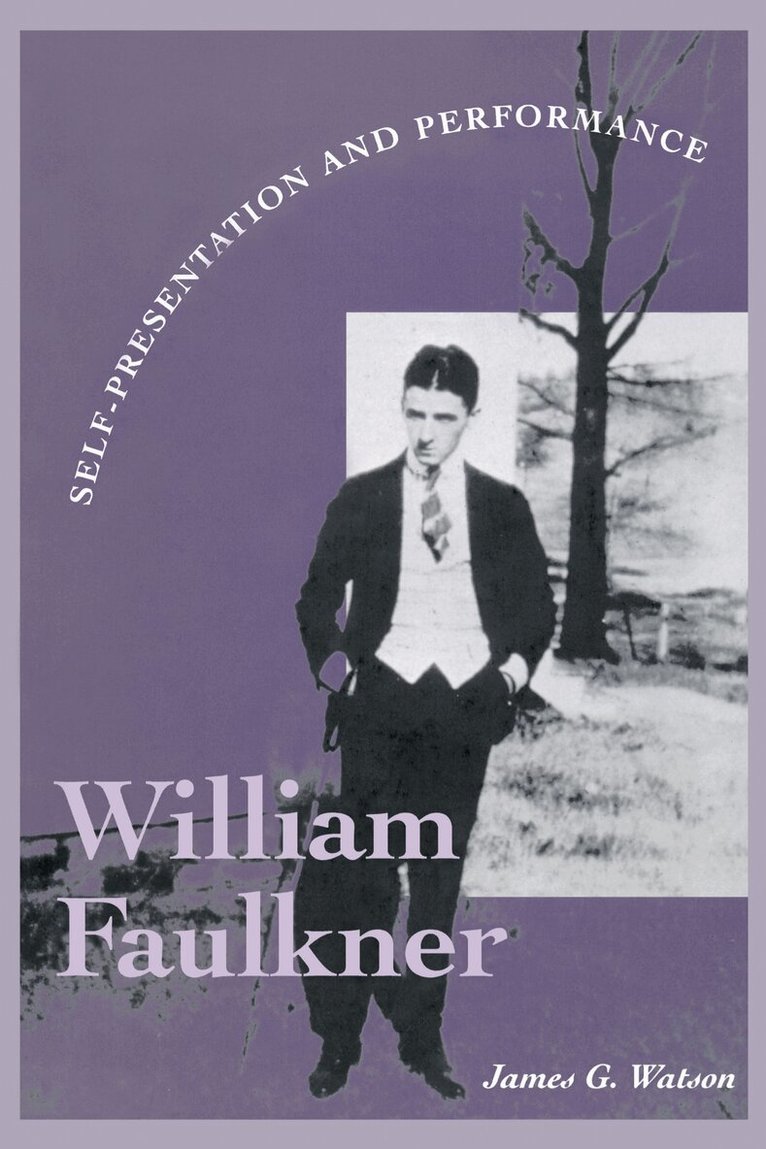
In his life and writings, William Faulkner continually created and "performed" selves. Even in letters, he often played a part-gentleman dandy, soldier, farmer-while in his fictions these and other personae are counterpoised against one another to create a world of controlled chaos, made in Faulkner's own protean image and reflective of his own multiple sense of self. In this groundbreaking book, James Watson draws on the entire Faulkner canon, including letters and photographs, to decipher the complicated ways in which Faulkner put himself forth as the artist he felt himself to be through written performances and displays based on the life he actually lived and the ones he imagined living. The topics Watson treats include the overtly performative aspects of The Sound and the Fury, self-presentation and performance in private records of Faulkner's life, the ways in which his complicated marriage and his relationships to male mentors underlie his fictions' recurring motifs of marriages and fatherhood, Faulkner's readings of Melville, Hawthorne, and Thoreau and the problematics of authorial sovereignty, his artist-as-God creation of a fictional cosmos, and the epistolary relationships with women that lie in the correspondence behind Requiem for a Nun.
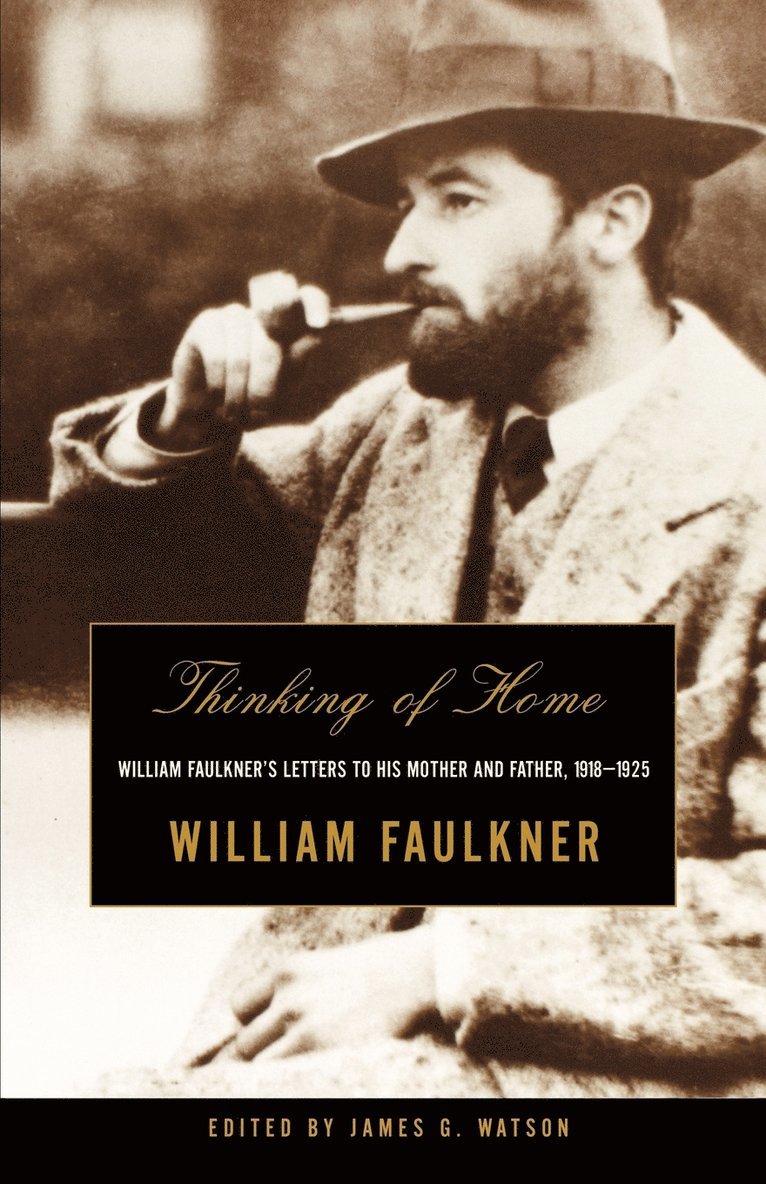
Thinking of Home
William Faulkner's Letters to His Mother and Father, 1918-1925
Häftad, Engelska, 2000
214 kr
Skickas inom 7-10 vardagar
"How often have I lain beneath rain on a strange roof, thinking of home," says Darl Bundren in William Faulkner's As I Lay Dying. How much Faulkner himself is speaking may be suggested by this moving collection of nearly 150 letters. Written during his twenties, these letters describe Faulkner's first encounters with the North ("...I made my first subway trip yesterday. The experience showed me that we are not descended from monkeys, as some say, but from lice."); his brief World War I military service, which grew in the retelling; the productive New Orleans months with Sherwood Anderson; and his first trip to Europe, with cold autumn days in Paris ("Good thing the Lord gave these folks wine--they rate a recompense of some kind for this climate.") Fascinating in themselves for their close observation of people and places, the letters also offer glimmers of The Sound and the Fury and other future works, as the young writer stores up characters, settings, and events that will re-emerge, transformed, int the great novels of his maturity. Never before published, these letters are from the Faulkner collection at the Harry Ransom Humanities Research Center at the University of Texas at Austin. "These letters, for years sequestered and unavailable, are among the most informative, touching, and eloquent William Faulkner ever wrote. No Faulkner specialist can be without this book; no Faulkner admirer should be without it."—Joseph Blotner, author of Faulkner: A Biography