James J. Cooke – författare
Visar alla böcker från författaren James J. Cooke. Handla med fri frakt och snabb leverans.
10 produkter
Rainbow Division in the Great War
1917-1919
Inbunden, 1994
1243 kr
Lägg i varukorg
The Rainbow Division (42nd Infantry Division) was the premier National Guard division to fight on the Western Front in the Great War. Made up of units from 26 states and the District of Columbia, the Rainbow was a unique attempt to combine units from every section of the nation and to get them to …
U.S. Air Service In the Great War
1917-1919
Inbunden, 1996
1098 kr
Lägg i varukorg
When the United States went to war in April 1917 the Army's Air Service had one squadron of obsolete aircraft. By November 1918 the Air Service had aero squadrons which were specialized in air combat, observation, bombing, and photography. Each combat division habitually had an air observation …
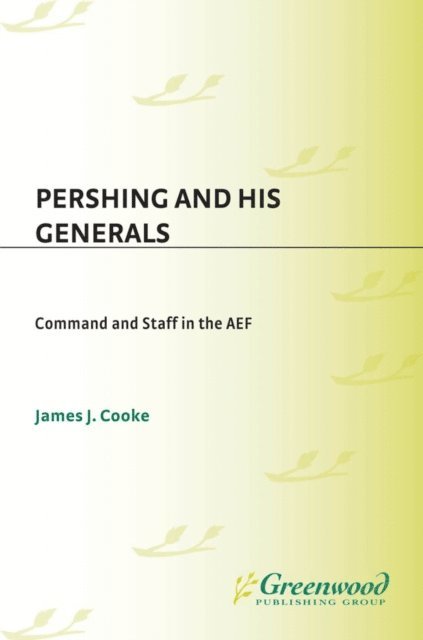
Pershing and His Generals
Command and Staff in the AEF
Inbunden, 1997
1098 kr
Lägg i varukorg
When the United States entered the Great War in April of 1917, there were few officers with any staff training, and none had actually served on large, complex staffs in combat. This work traces the development of the staff of the AEF and describes how Pershing found the generals to command those …
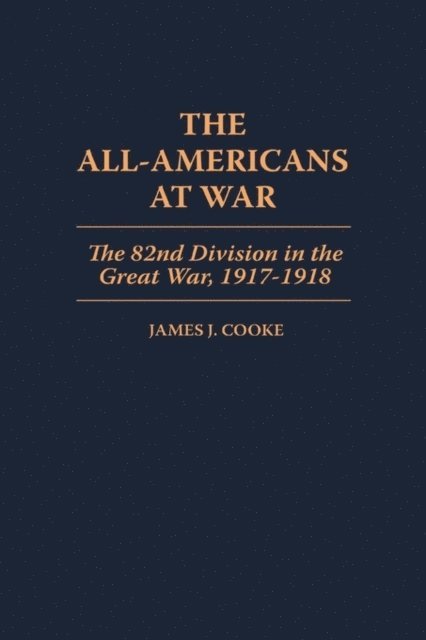
All-Americans at War
The 82nd Division in the Great War, 1917-1918
Inbunden, 1999
880 kr
Lägg i varukorg
This is the first study to analyze the content, training, and performance of a World War I draft division from its formation onward. The 82nd division consisted heavily of non-English speaking European immigrants and conscripts fresh from farming towns in Tennessee and North Carolina. Despite these …
All-Americans at War
The 82nd Division in the Great War, 1917-1918
E-bok, 1999
963 kr
Lägg i varukorg
This is the first study to analyze the content, training, and performance of a World War I draft division from its formation onward. The 82nd division consisted heavily of non-English speaking European immigrants and conscripts fresh from farming towns in Tennessee and North Carolina. Despite these …
Pershing and His Generals
Command and Staff in the Aef
E-bok, 1997
1178 kr
Lägg i varukorg
When the United States entered the Great War in April of 1917, there were few officers with any staff training, and none had actually served on large, complex staffs in combat. This work traces the development of the staff of the AEF and describes how Pershing found the generals to command those …
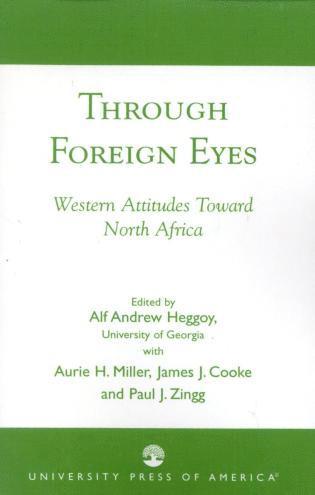
Through Foreign Eyes
Western Attitudes Toward North Africa
Av Alf Andrew Heggoy, Aurie H. Miller m. fl.
Häftad, 1982
880 kr
Lägg i varukorg
A collection of essays designed to explore the nature and causes of misconceived and often misguided western attitudes towards the people and institutions of North Africa over a period of roughly one and a half centuries. Throughout their essays, the contributors highlight the double standards of …
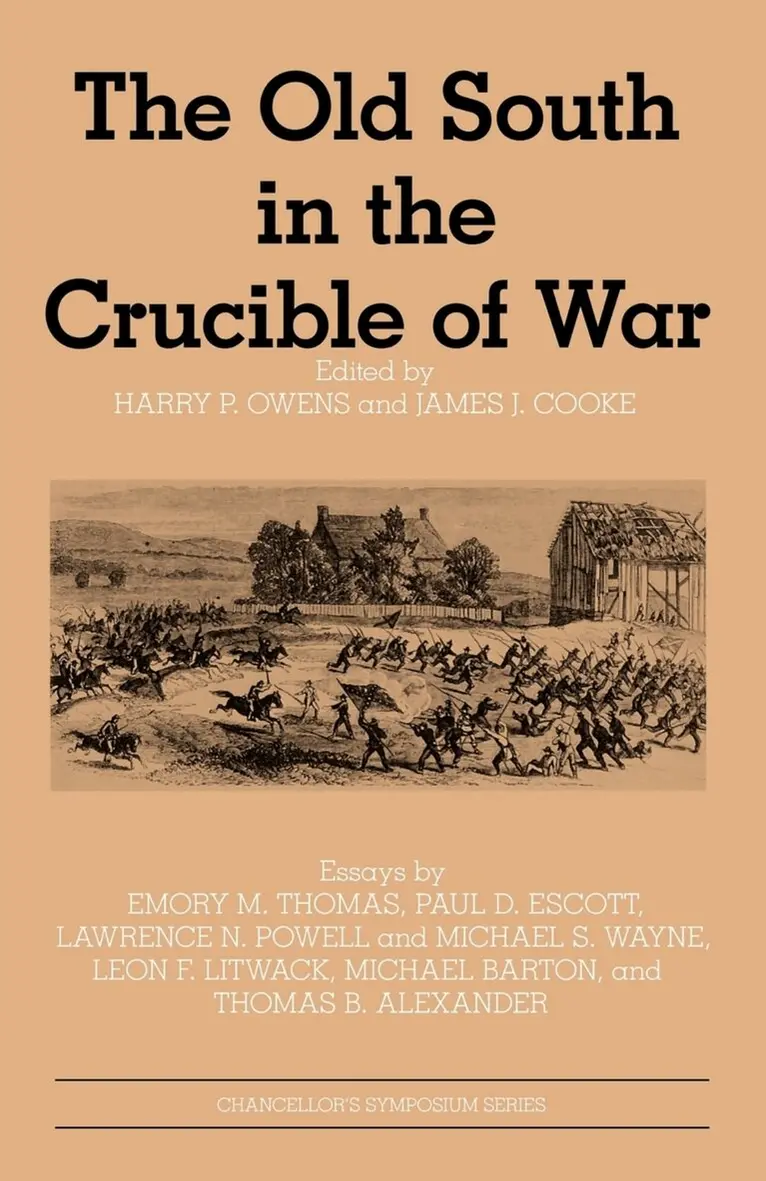
Old South in the Crucible of War
Av Harry P. Owens, James J. Cooke
Häftad, 2011
400 kr
Lägg i varukorg
Not all codes and traditions of the Old South ended abruptly with the Civil War. For many historians, however, there is truth in the thesis that the war marks the division between the Old South and the New South.To assess what happened to the old order during the tumultuous four years of the …
Through Foreign Eyes
Western Attitudes Toward North Africa
Av Alf Andrew Heggoy, Aurie H. Miller m. fl.
Inbunden, 1982
713 kr
Tillfälligt slut
A collection of essays designed to explore the nature and causes of misconceived and often misguided western attitudes towards the people and institutions of North Africa over a period of roughly one and a half centuries. Throughout their essays, the contributors highlight the double standards of …
Proceedings of the Sixth and Seventh Annual Meetings
of the French Colonial Historical Society, 1980-1981
Inbunden, 1982
861 kr
Tillfälligt slut
To find more information on Rowman & Littlefield titles, please visit us at www.rowmanlittlefield.com.