James Kearney - Böcker
Visar alla böcker från författaren James Kearney. Handla med fri frakt och snabb leverans.
4 produkter
4 produkter
1 380 kr
Skickas inom 5-8 vardagar
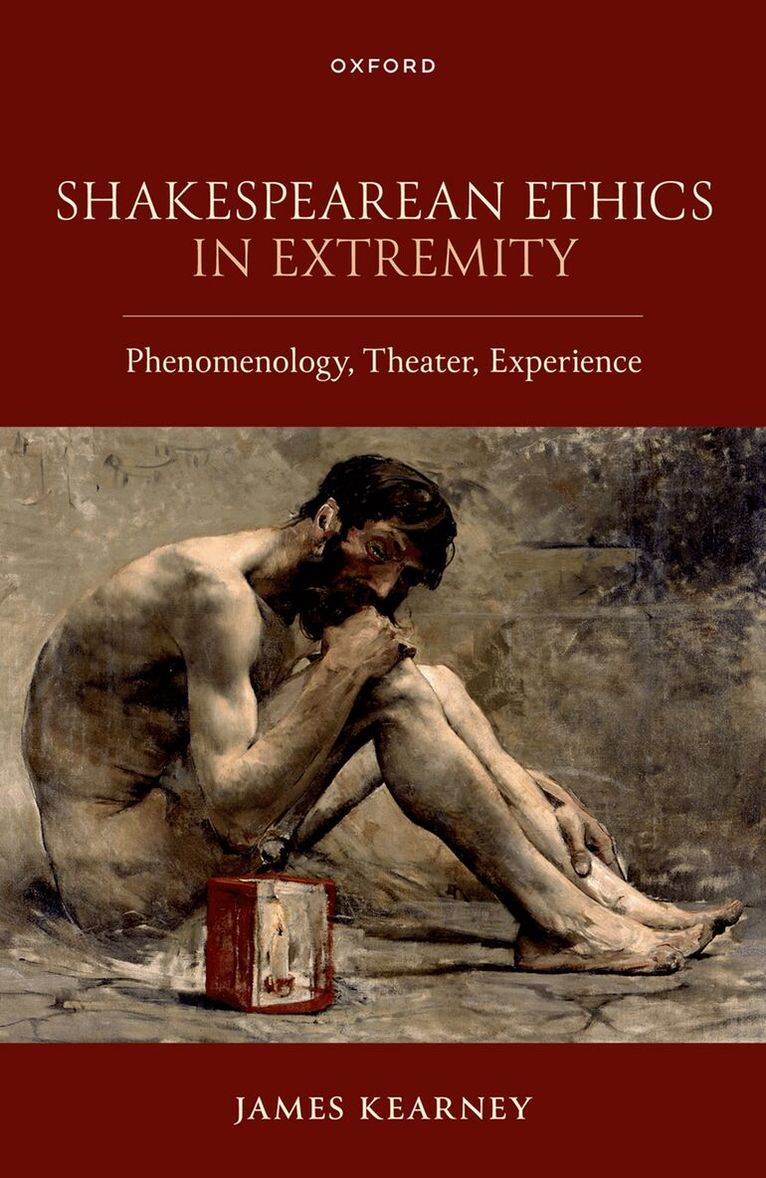
Shakespearean Ethics in Extremity addresses forms of ethical experience on the Shakespearean stage. Early modern theater traffics in the vicarious experience of ethics, often ethics in some extreme or impossible circumstance. It does so not by parading concepts across the stage or ventriloquizing ideas from the philosophical tradition but by bringing to life stories and characters and worlds, by crafting scenes and moments of great emotional and cognitive intensity. What does it feel like to be enjoined to avenge your father's murder? What is it like to banish your daughter or disavow your community? To murder? James Kearney contends that Shakespearean theater, fundamentally oriented to the experiential, invites its audiences to entertain and to be entertained by what the philosopher Bernard Williams calls "a phenomenology of the ethical life."The early modern world inherited and developed rhetorical and philosophical practices geared toward the creation of immersive virtual experience. These phenomenological arts share underlying assumptions about the cultivation and management of the self as well as a straightforward orientation toward ethics. Taking up key concepts from the long history of moral philosophy -- recognition, obligation, decision, luck -- Shakespearean Ethics in Extremity brings together a discursive history of ideas and the more phenomenological realms of body and affect, environment and world. In Shakespearean theater we encounter or witness or simply have our attention called to the ethical problem of other minds, the obligation to neighbor and community, the mysteries of decision, the moral quandaries posed by epistemological uncertainty, the risk of ethico-affective relations, and the vagaries of luck. Each of these concepts points to an elemental aspect of ethical life, and they all have long and rich histories, ancient and modern. With a concentrated focus on formally inventive plays written in the later part of Shakespeare's theatrical career - King Lear, Timon of Athens, Macbeth, Pericles, The Tempest, and The Winter's Tale -- Kearney explores Shakespearean theater as an arena or lab in which the experience of ethics in extremis is simulated or reverse engineered, counterfeited or created.
1 051 kr
Skickas inom 10-15 vardagar
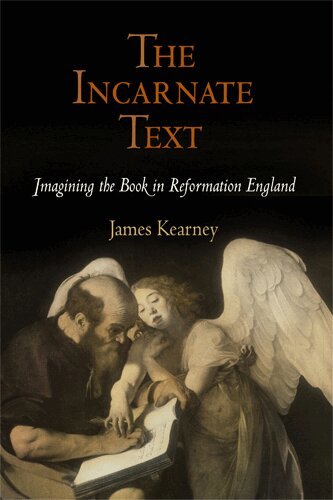
In the course of the Reformation, artistic representation famously came under attack. Statues were destroyed, music and theater were forbidden, and poetry was denounced, all in the name of eradicating superstition and idolatry. The iconoclastic impulse that sparked these attacks, however, proved remarkably productive, generating a profusion of theological, polemical, and literary writing from Catholics and Protestants alike.Reformers like Luther had promised a return to the book, attacking Catholicism as a religion of images and icons. Becoming a religion of the book in the way that Reformers proposed, however, proved impossible: language is inescapably material; books are necessarily things, objects that are seen and touched. The antitheses at the heart of this opposition-word versus thing, text versus image-have had far-reaching effects on the modern world.James Kearney engages with recent work in the history of the book and the history of religion to investigate the crisis of the book occasioned by the Reformation's simultaneous faith in text and distrust of material forms. Drawing in a wide range of topics-from humanism and hermeneutics to secularization and enlightenment, from iconoclasm and anti-Semitism to barbarism and fetishism-and looking to a range of texts-including Erasmus's Jerome, Spenser's Faerie Queene, and Shakespeare's Tempest-The Incarnate Text tells the story of how this crisis of the book helped to change the way the modern world apprehends both texts and things.
2 089 kr
Skickas inom 3-6 vardagar
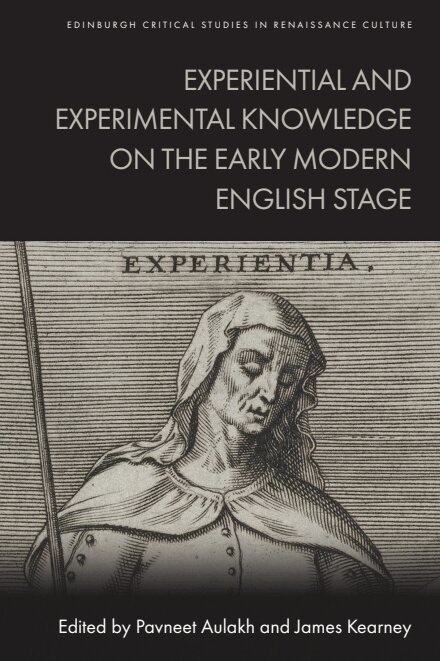
Early modern dramatists entertained audiences by staging experiential and experimental knowledge, especially consequential forms of coming to or arriving at knowledge. The contributors to this collection explore the ways in which the culture’s fascination with forms of knowledge creation – scientific, experiential, religious – shaped early modern drama. Experiential and Experimental Knowledge on the Early Modern English Stage addresses these issues from phenomenological, political and ethical perspectives and in terms of histories of science, cognitive and affective studies, and discourses of the body. Across the volume, the contributors articulate how the early modern stage served as a site where knowledge was not merely performed but produced and interrogated, imagined and transformed.
688 kr
Skickas inom 7-10 vardagar
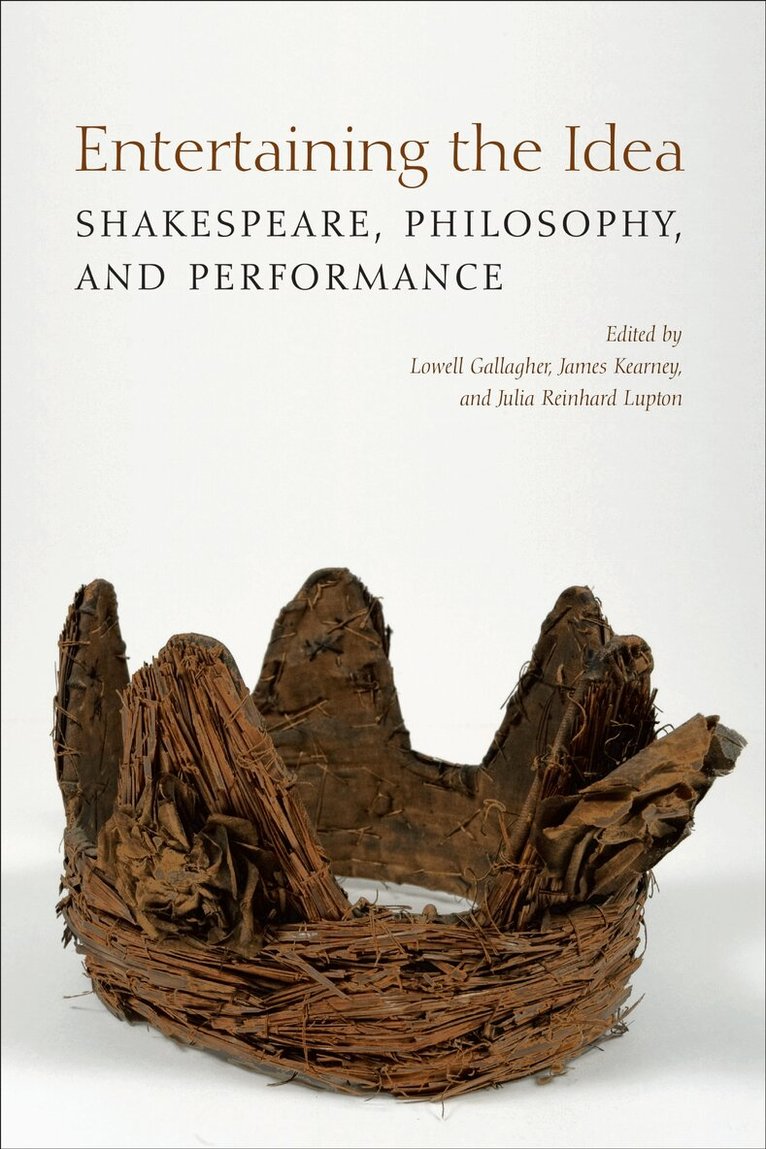
To entertain an idea is to take it in, pay attention to it, give it breathing room, dwell with it for a time. The practice of entertaining ideas suggests rumination and meditation, inviting us to think of philosophy as a form of hospitality and a kind of mental theatre. In this collection, organized around key words shared by philosophy and performance, the editors suggest that Shakespeare’s plays supply readers, listeners, viewers, and performers with equipment for living.In plays ranging from A Midsummer Night’s Dream to King Lear and The Winter’s Tale, Shakespeare invites readers and audiences to be more responsive to the texture and meaning of daily encounters, whether in the intimacies of love, the demands of social and political life, or moments of ethical decision. Entertaining the Idea features established and emerging scholars, addressing key words such as role play, acknowledgment, judgment, and entertainment as well as curse and care. The volume also includes longer essays on Shakespeare, Kant, Husserl, and Hegel as well as an afterword by theatre critic Charles McNulty on the philosophy and performance history of King Lear.