James L. Burch - Böcker
Visar alla böcker från författaren James L. Burch. Handla med fri frakt och snabb leverans.
14 produkter
14 produkter
1 584 kr
Skickas inom 10-15 vardagar
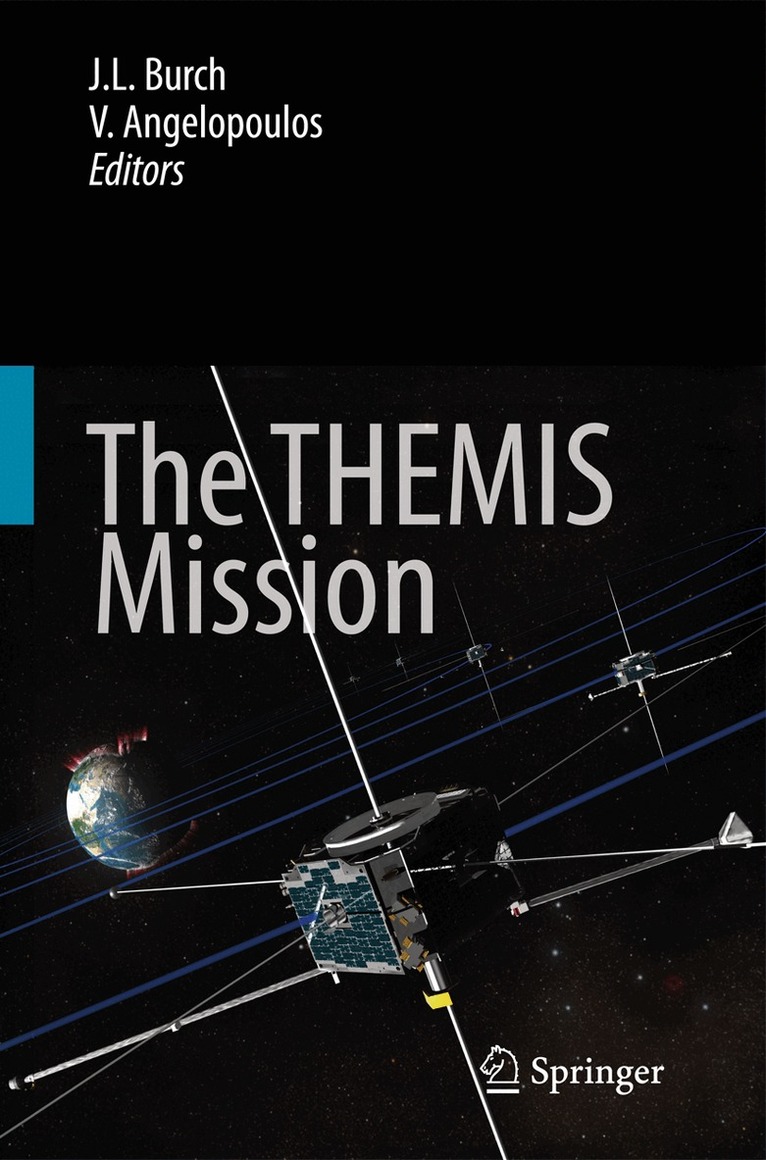
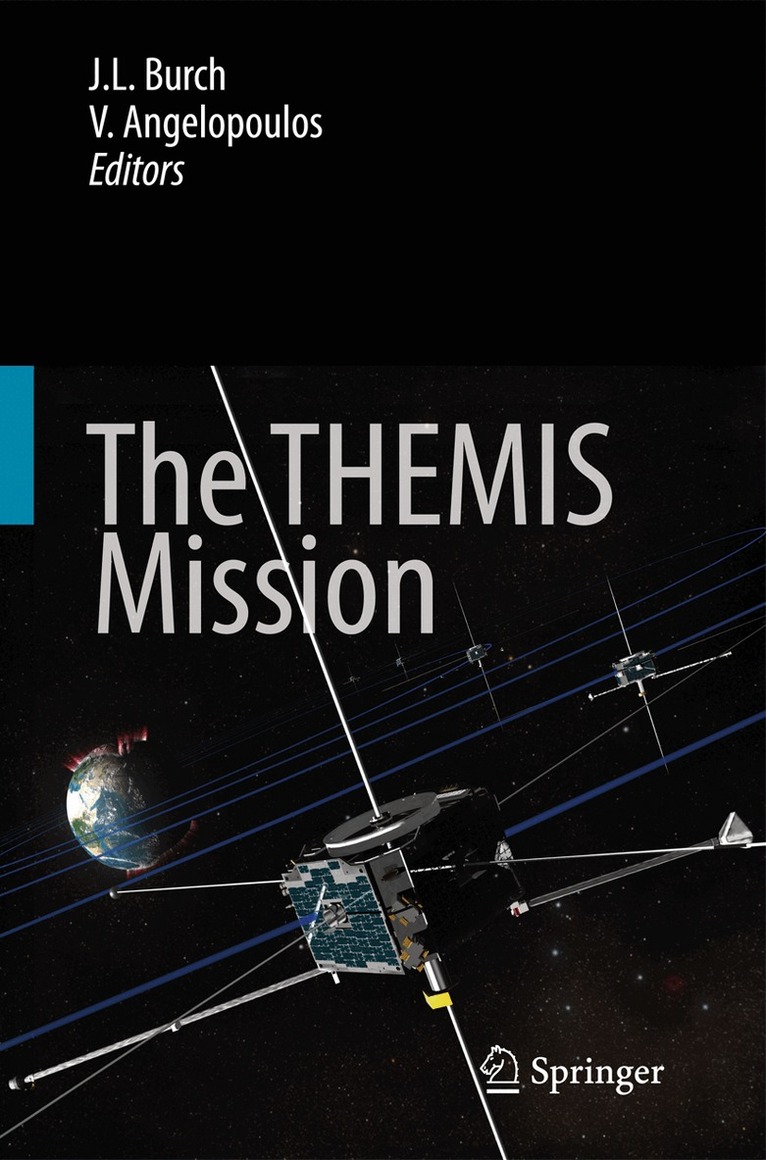
J.L. Burch·V. Angelopoulos Originally published in the journal Space Science Reviews, Volume 141, Nos 1–4, 1–3. DOI: 10.1007/s11214-008-9474-5 © Springer Science+Business Media B.V. 2008 The Earth, like all the other planets, is continuously bombarded by the solar wind, which is variable on many time scales owing to its connection to the activity of the Sun. But the Earth is unique among planets because its atmosphere, magnetic eld, and rotation rates are each signi cant, though not dominant, players in the formation of its magnetosphere and its reaction to solar-wind inputs. An intriguing fact is that no matter what the time scale of solar-wind variations, the Earth’s response has a de nite pattern lasting a few hours. Known as a magnetospheric substorm, the response involves a build-up, a crash, and a recovery. The build-up (known as the growth phase) occurs because of an interlinking of the geom- netic eld and the solar-wind magnetic eld known as magnetic reconnection, which leads to storage of increasing amounts of magnetic energy and stress in the tail of the mag- tosphere and lasts about a half hour. The crash (known as the expansion phase) occurs when the increased magnetic energy and stresses are impulsively relieved, the current system that supports the stretched out magnetic tail is diverted into the ionosphere, and bright, dynamic displays of the aurora appear in the upper atmosphere. The expansion and subsequent rec- ery phases result from a second magnetic reconnection event that decouples the solar-wind and geomagnetic elds.
1 584 kr
Skickas inom 10-15 vardagar
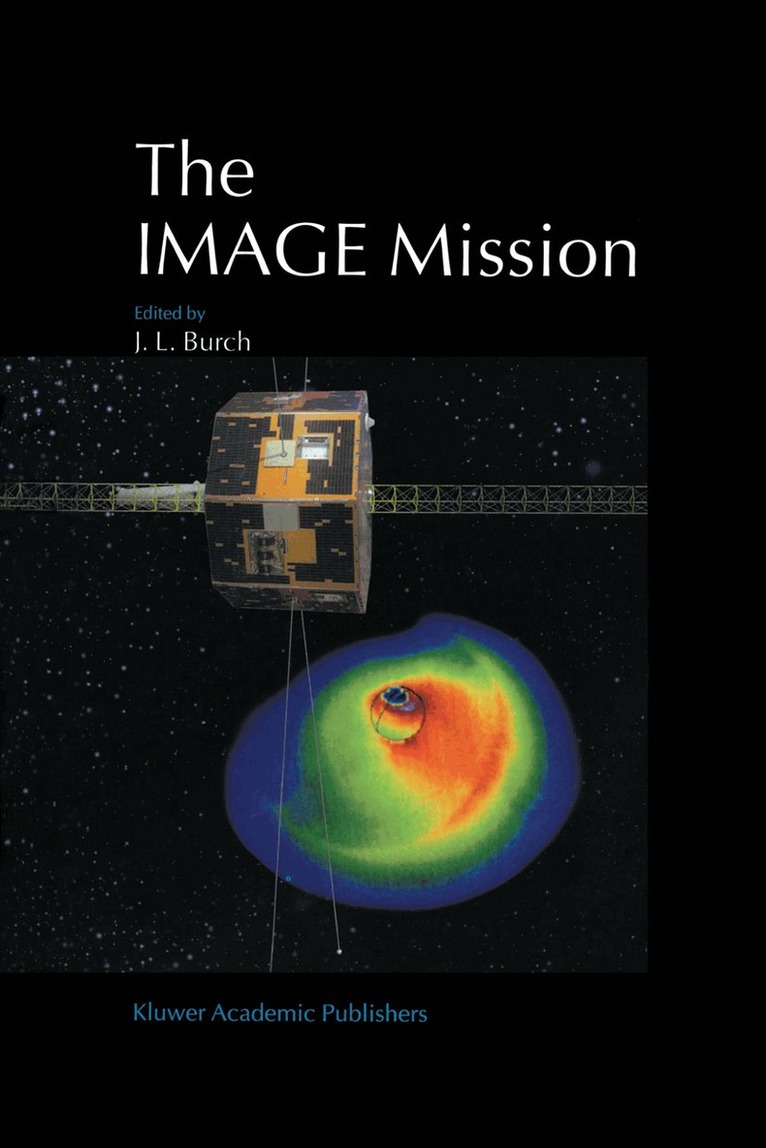
IMAGE (Imager for Magnetopause-to-Aurora Global Exploration) is the first NASA MIDEX mission and the first mission dedicated to imaging the Earth's magnetosphere. It will obtain the first global images of the plasmas that populate the Earth's inner magnetosphere, using new techniques of neutral atom imaging, ultraviolet imaging, and radio sounding. With these images, space scientists will be able to observe, in a way never before possible, the large-scale dynamics of the magnetosphere as its constituent plasma regimes respond to solar-wind-induced variations. Written for both experimentalists and theorists in the field of magnetospheric physics, this volume offers detailed descriptions of the imaging instruments on board the IMAGE spacecraft and of the innovative modelling and image inversion techniques that will be employed in the interpretation of the data. Also included are chapters on the IMAGE science objectives, the spacecraft design and capabilities, science and mission operations, and the processing and distribution of IMAGE's nonproprietary data products.This text is a publicly available resource providing complete and authoritative documentation of the IMAGE instrumentation and science investigation. Short Text (Abstract): IMAGE (Imager for Magnetopause-to-Aurora Global Exploration) is the first NASA MIDEX mission and the first mission dedicated to imaging the Earth's magnetosphere. This volume offers detailed descriptions of the IMAGE instrumentation and of the image inversion techniques used to interpret the data. Also included are chapters on the IMAGE science objectives, the spacecraft design and capabilities, science and mission operations, and the processing and distribution of IMAGE's nonproprietary data products.
Del 159 - Geophysical Monograph Series
Inner Magnetosphere Interactions
New Perspectives From Imaging
2005
1 023 kr
Tillfälligt slut
Published by the American Geophysical Union as part of the Geophysical Monograph Series, Volume 159.We regard the inner magnetosphere as the region surrounded by a geomagnetic shell with an equatorial radius of approximately eight Earth radii. Of much concern to scientists and researchers, and the focus of this monograph, are the interactions that occur in this region of geospace. We include here hot-cold plasma interactions, plasmasphere dynamics, direct effects of the interplanetary magnetic field on the inner magnetosphere, ring-current/ionosphere interactions, ring-current effects on global electric fields, and ring-current/radiation-belt interactions. With new satellite measurements, especially those from IMAGE (Imager for Magnetopause-to-Aurora Global Exploration), and associated observations from ground-based facilities, our understanding of the interactions that take place in the inner magnetosphere has developed rapidly.
Del 222 - Geophysical Monograph Series
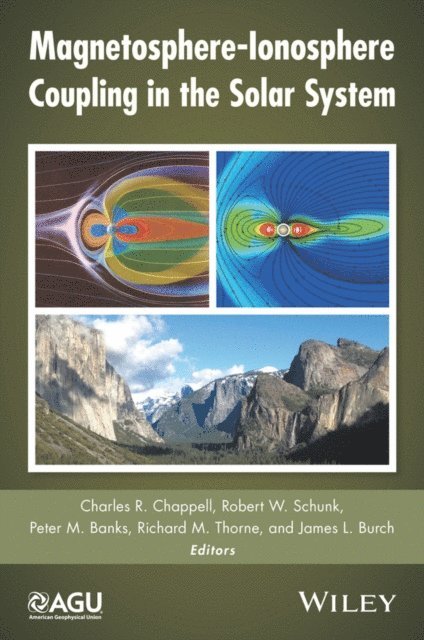
Magnetosphere-Ionosphere Coupling in the Solar System
Inbunden, Engelska, 2017
2 187 kr
Skickas inom 7-10 vardagar
Over a half century of exploration of the Earth’s space environment, it has become evident that the interaction between the ionosphere and the magnetosphere plays a dominant role in the evolution and dynamics of magnetospheric plasmas and fields. Interestingly, it was recently discovered that this same interaction is of fundamental importance at other planets and moons throughout the solar system. Based on papers presented at an interdisciplinary AGU Chapman Conference at Yosemite National Park in February 2014, this volume provides an intellectual and visual journey through our exploration and discovery of the paradigm-changing role that the ionosphere plays in determining the filling and dynamics of Earth and planetary environments. The 2014 Chapman conference marks the 40th anniversary of the initial magnetosphere-ionosphere coupling conference at Yosemite in 1974, and thus gives a four decade perspective of the progress of space science research in understanding these fundamental coupling processes. Digital video links to an online archive containing both the 1974 and 2014 meetings are presented throughout this volume for use as an historical resource by the international heliophysics and planetary science communities.Topics covered in this volume include: Ionosphere as a source of magnetospheric plasmaEffects of the low energy ionospheric plasma on the stability and creation of the more energetic plasmasThe unified global modeling of the ionosphere and magnetosphere at the Earth and other planetsNew knowledge of these coupled interactions for heliophysicists and planetary scientists, with a cross-disciplinary approach involving advanced measurement and modeling techniquesMagnetosphere-Ionosphere Coupling in the Solar System is a valuable resource for researchers in the fields of space and planetary science, atmospheric science, space physics, astronomy, and geophysics.Read an interview with the editors to find out more:https://eos.org/editors-vox/filling-earths-space-environment-from-the-sun-or-the-earth
1 584 kr
Skickas inom 10-15 vardagar
J.L. Burch·V. Angelopoulos Originally published in the journal Space Science Reviews, Volume 141, Nos 1–4, 1–3. DOI: 10.1007/s11214-008-9474-5 © Springer Science+Business Media B.V. 2008 The Earth, like all the other planets, is continuously bombarded by the solar wind, which is variable on many time scales owing to its connection to the activity of the Sun. But the Earth is unique among planets because its atmosphere, magnetic eld, and rotation rates are each signi cant, though not dominant, players in the formation of its magnetosphere and its reaction to solar-wind inputs. An intriguing fact is that no matter what the time scale of solar-wind variations, the Earth’s response has a de nite pattern lasting a few hours. Known as a magnetospheric substorm, the response involves a build-up, a crash, and a recovery. The build-up (known as the growth phase) occurs because of an interlinking of the geom- netic eld and the solar-wind magnetic eld known as magnetic reconnection, which leads to storage of increasing amounts of magnetic energy and stress in the tail of the mag- tosphere and lasts about a half hour. The crash (known as the expansion phase) occurs when the increased magnetic energy and stresses are impulsively relieved, the current system that supports the stretched out magnetic tail is diverted into the ionosphere, and bright, dynamic displays of the aurora appear in the upper atmosphere. The expansion and subsequent rec- ery phases result from a second magnetic reconnection event that decouples the solar-wind and geomagnetic elds.
1 069 kr
Skickas inom 10-15 vardagar
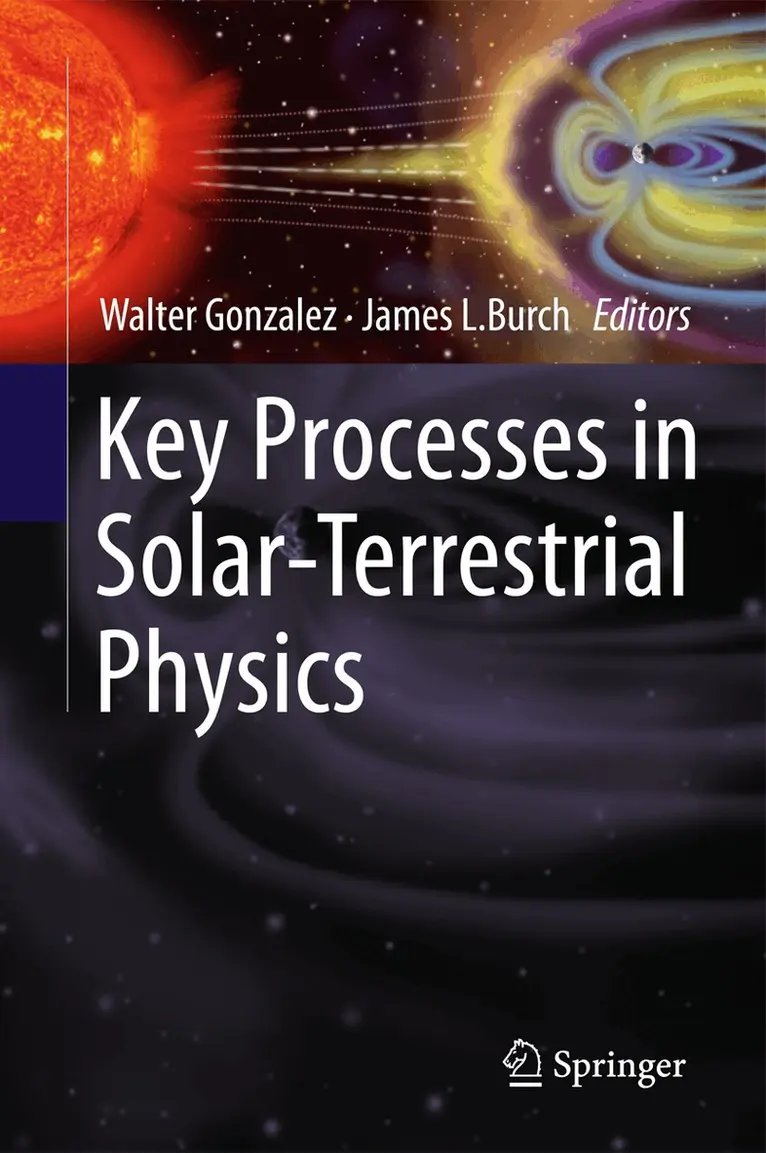
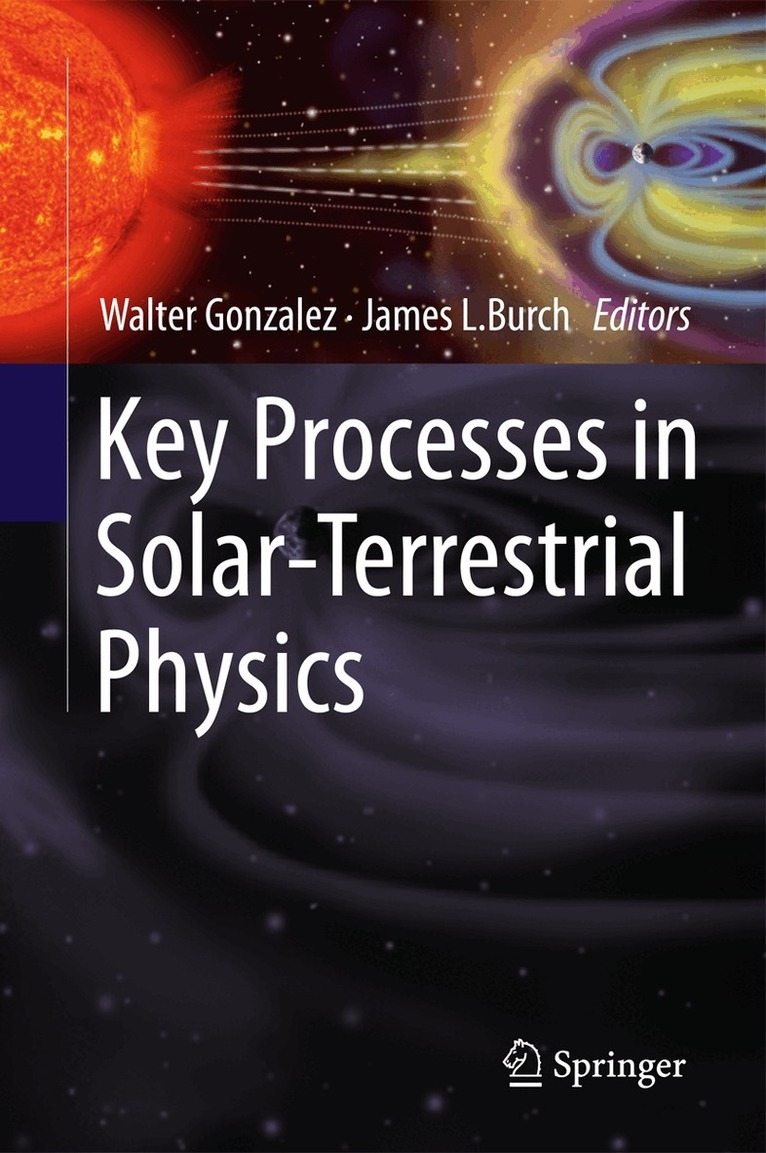
“Key processes in Solar-Terrestrial Physics” deals with a nice selection of key phenomena concerning Solar-Terrestrial relations. During the week of October 4–9, 2009, about 160 participants from 19 countries met at the Itamambuca resort area of Ubatuba, Sao Paulo, Brazil to discuss the influence of solar variability on geophysical and heliospheric phenomena at a conference organized by the International Living With a Star (ILWS) Program of NASA and by the National Institute of Space Research (INPE) of Brazil. Five of the invited review talks of this Conference are being published in this special issue, plus one (on magnetospheric reconnection) especially invited to cover a missing important subject within the Solar-Terrestrial physics domain. Previously published in Space Science Reviews journal, Vol. 158/1, 2011.
2 110 kr
Skickas inom 10-15 vardagar
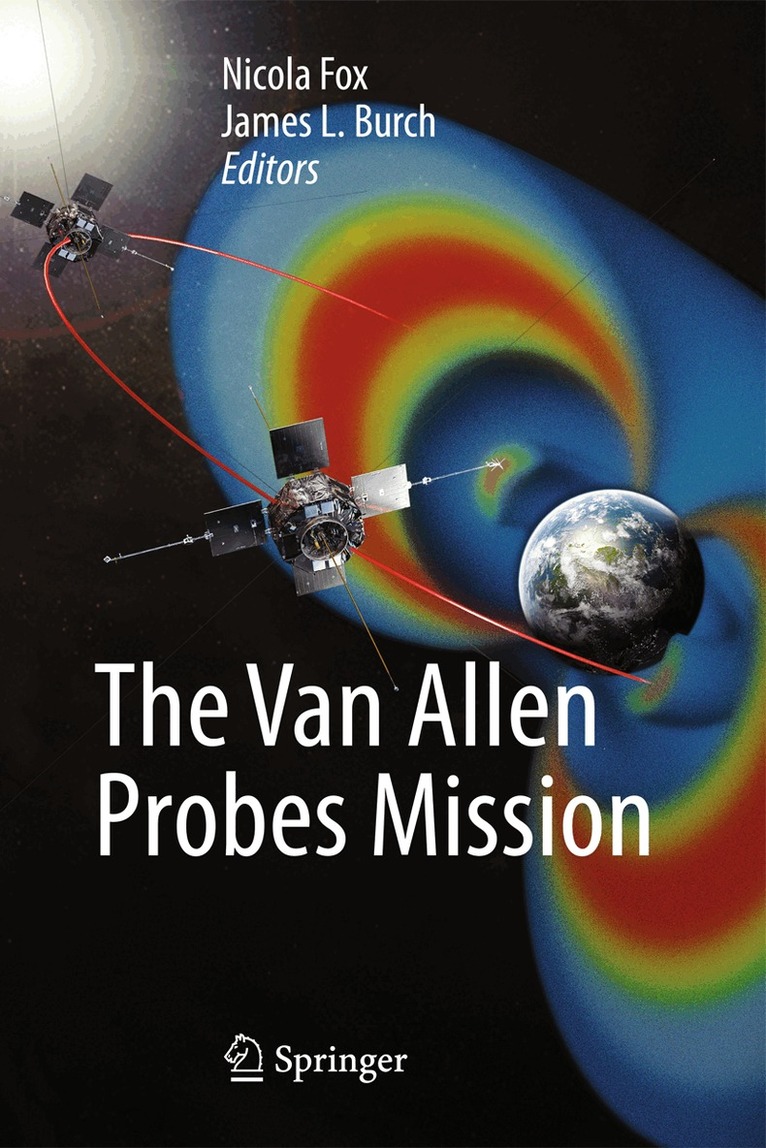
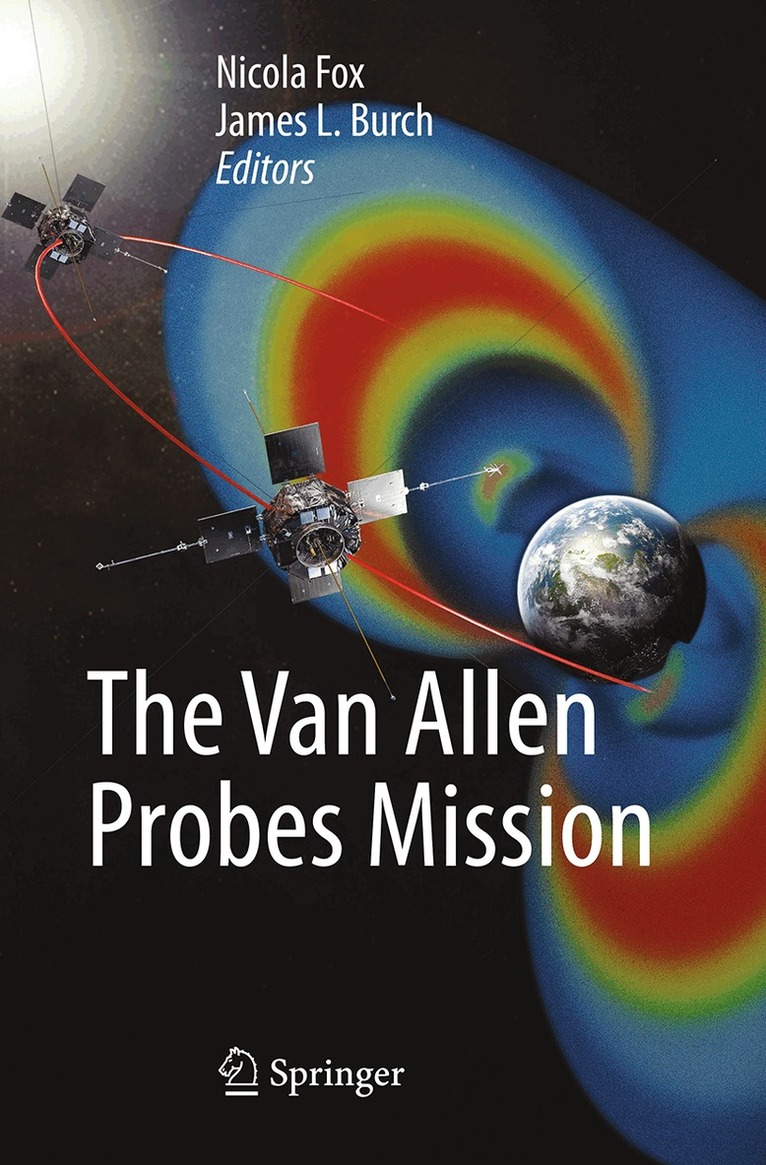
Documents the science, the mission, the spacecraft and the instrumentation on a unique NASA mission to study the Earth’s dynamic, dangerous and fascinating Van Allen radiation belts that surround the planetThis collection of articles provides broad and detailed information about NASA’s Van Allen Probes (formerly known as the Radiation Belt Storm Probes) twin-spacecraft Earth-orbiting mission. The mission has the objective of achieving predictive understanding of the dynamic, intense, energetic, dangerous, and presently unpredictable belts of energetic particles that are magnetically trapped in Earth’s space environment above the atmosphere. It documents the science of the radiation belts and the societal benefits of achieving predictive understanding. Detailed information is provided about the Van Allen Probes mission design, the spacecraft, the science investigations, and the onboard instrumentation that must all work together to make unprecedented measurements within a most unforgiving environment, the core of Earth’s most intense radiation regions. This volume is aimed at graduate students and researchers active in space science, solar-terrestrial interactions and studies of the upper atmosphere.Originally published in Space Science Reviews, Vol. 179/1-4, 2013.
2 110 kr
Skickas inom 10-15 vardagar
Documents the science, the mission, the spacecraft and the instrumentation on a unique NASA mission to study the Earth’s dynamic, dangerous and fascinating Van Allen radiation belts that surround the planetThis collection of articles provides broad and detailed information about NASA’s Van Allen Probes (formerly known as the Radiation Belt Storm Probes) twin-spacecraft Earth-orbiting mission. The mission has the objective of achieving predictive understanding of the dynamic, intense, energetic, dangerous, and presently unpredictable belts of energetic particles that are magnetically trapped in Earth’s space environment above the atmosphere. It documents the science of the radiation belts and the societal benefits of achieving predictive understanding. Detailed information is provided about the Van Allen Probes mission design, the spacecraft, the science investigations, and the onboard instrumentation that must all work together to make unprecedented measurements within a most unforgiving environment, the core of Earth’s most intense radiation regions. This volume is aimed at graduate students and researchers active in space science, solar-terrestrial interactions and studies of the upper atmosphere.Originally published in Space Science Reviews, Vol. 179/1-4, 2013.
1 069 kr
Skickas inom 10-15 vardagar
“Key processes in Solar-Terrestrial Physics” deals with a nice selection of key phenomena concerning Solar-Terrestrial relations. During the week of October 4–9, 2009, about 160 participants from 19 countries met at the Itamambuca resort area of Ubatuba, Sao Paulo, Brazil to discuss the influence of solar variability on geophysical and heliospheric phenomena at a conference organized by the International Living With a Star (ILWS) Program of NASA and by the National Institute of Space Research (INPE) of Brazil. Five of the invited review talks of this Conference are being published in this special issue, plus one (on magnetospheric reconnection) especially invited to cover a missing important subject within the Solar-Terrestrial physics domain. Previously published in Space Science Reviews journal, Vol. 158/1, 2011.
538 kr
Skickas inom 10-15 vardagar
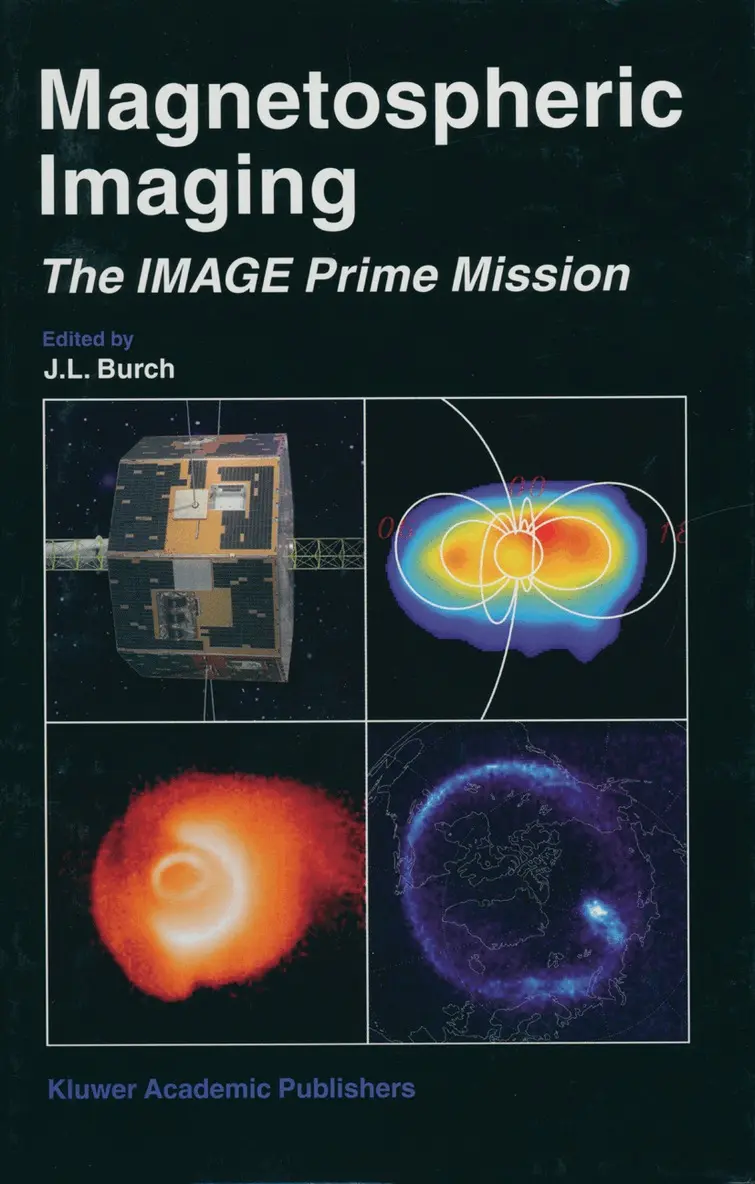
The Imager for Magnetopause-to-Aurora Global Exploration (IMAGE) is a NASA Explorer mission that is the first space mission dedicated to imaging of the Earth's magnetosphere. IMAGE was launched from Vandenberg AFB into an elliptical polar orbit by a Delta II launch vehicle on March 25, 2000. The two-year prime sci entific mission of IMAGE began on May 25, 2000 after instrument commissioning was successfully completed. IMAGE has now been approved for operation until October 1,2005, and an additional two-year extension is now being considered by NASA. The papers in this volume represent many of the scientific results obtained dur ing the IMAGE prime mission and include some of the early correlative research with ground-based measurements, measurements from other spacecraft such as Cluster II, and relevant theory and modeling programs. All of the reported work is related to the overall IMAGE science objective: How does the magnetosphere respond globally to the changing conditions in the solar wind? IMAGE addresses this question with multi-spectral imaging of most of the important plasma pop ulations of the inner magnetosphere, combined with radio sounding of gradients of total plasma content. The new experimental techniques fall into the following areas: neutral atom imaging (NAI) over an energy range from 10 eV to 500 keY for detection of ionospheric outflow, the plasma sheet, and the ring current; far ultraviolet (FUV) imaging at 121-190 nm for detection of precipitating protons and the global aurora; extreme ultraviolet (EUV) imaging at 30.
1 584 kr
Skickas inom 10-15 vardagar
IMAGE (Imager for Magnetopause-to-Aurora Global Exploration) is the first NASA MIDEX mission and the first mission dedicated to imaging the Earth's magnetosphere. This volume offers detailed descriptions of the IMAGE instrumentation and of the image inversion techniques used to interpret the data. Also included are chapters on the IMAGE science objectives, the spacecraft design and capabilities, science and mission operations, and the processing and distribution of IMAGE's nonproprietary data products.
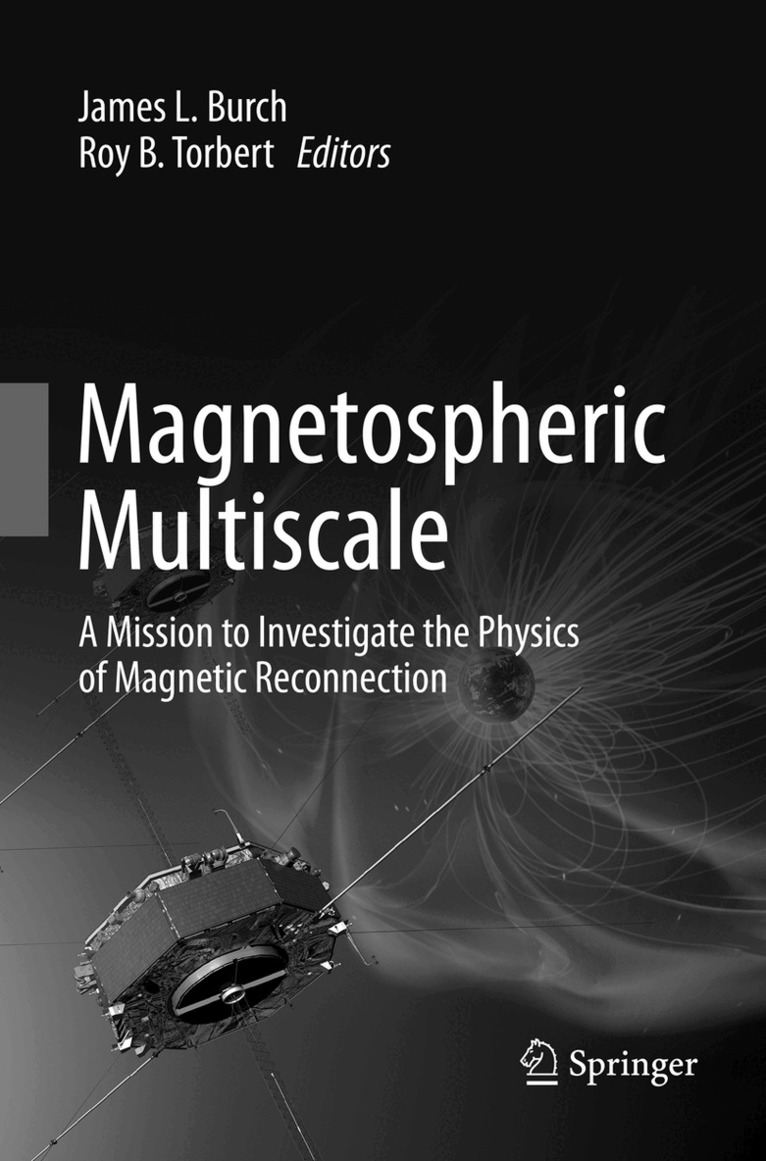
Magnetospheric Multiscale
A Mission to Investigate the Physics of Magnetic Reconnection
Inbunden, Engelska, 2016
538 kr
Skickas inom 10-15 vardagar
NASA’s Magnetospheric Multiscale (MMS) mission is a four-spacecraft Solar Terrestrial Probe mission to study magnetic reconnection, a fundamental plasma physical process in which energy stored in a magnetic field is converted into the kinetic energy of charged particles and heat. The driver of eruptive solar events such as flares and coronal mass ejections, magnetic reconnection is also the process by which energy is transferred from the solar wind to Earth’s magnetosphere. Flying in a tetrahedral formation, the four identically instrumented MMS spacecraft measure the plasma, electric and magnetic fields, and energetic particles in the regions of geospace where magnetic reconnection is expected to occur. With interspacecraft distances varying from 400 km to 10 km and instruments capable of making extremely fast measurements (30 ms for electrons), MMS has the spatial and temporal resolution needed to resolve for the first time the microphysics of the electron diffusion region. Here,the magnetic field and the plasma become decoupled, allowing reconnection to occur. During the first of its two mission phases, MMS targets the dayside magnetopause, where the interplanetary and terrestrial magnetic fields reconnect. In the second phase, MMS increases its apogee from 12 RE to 25 RE and probes the nightside magnetosphere, where energy stored in the stretched field lines of the magnetotail is explosively released in magnetospheric substorms. Launched in March 2015 into a low-inclination elliptical orbit, MMS is now in Phase 1 of science operations.This volume, which describes the MMS mission design, observatories, instrumentation, and operations, is aimed at researchers and graduate students in magnetospheric physics and plasma physics. Researchers using the publicly available MMS data will find it particularly useful.Previously published in Space Science Reviews, Volume 199, Nos. 1-4, 2016.
Magnetospheric Multiscale
A Mission to Investigate the Physics of Magnetic Reconnection
Häftad, Engelska, 2018
538 kr
Skickas inom 10-15 vardagar
NASA’s Magnetospheric Multiscale (MMS) mission is a four-spacecraft Solar Terrestrial Probe mission to study magnetic reconnection, a fundamental plasma physical process in which energy stored in a magnetic field is converted into the kinetic energy of charged particles and heat. The driver of eruptive solar events such as flares and coronal mass ejections, magnetic reconnection is also the process by which energy is transferred from the solar wind to Earth’s magnetosphere. Flying in a tetrahedral formation, the four identically instrumented MMS spacecraft measure the plasma, electric and magnetic fields, and energetic particles in the regions of geospace where magnetic reconnection is expected to occur. With interspacecraft distances varying from 400 km to 10 km and instruments capable of making extremely fast measurements (30 ms for electrons), MMS has the spatial and temporal resolution needed to resolve for the first time the microphysics of the electron diffusion region. Here,the magnetic field and the plasma become decoupled, allowing reconnection to occur. During the first of its two mission phases, MMS targets the dayside magnetopause, where the interplanetary and terrestrial magnetic fields reconnect. In the second phase, MMS increases its apogee from 12 RE to 25 RE and probes the nightside magnetosphere, where energy stored in the stretched field lines of the magnetotail is explosively released in magnetospheric substorms. Launched in March 2015 into a low-inclination elliptical orbit, MMS is now in Phase 1 of science operations.This volume, which describes the MMS mission design, observatories, instrumentation, and operations, is aimed at researchers and graduate students in magnetospheric physics and plasma physics. Researchers using the publicly available MMS data will find it particularly useful.Previously published in Space Science Reviews, Volume 199, Nos. 1-4, 2016.
804 kr
Kommande