James L. Marsh - Böcker
Visar alla böcker från författaren James L. Marsh. Handla med fri frakt och snabb leverans.
9 produkter
9 produkter
559 kr
Skickas inom 7-10 vardagar
This book is an interpretation and critique of Habermas's philosophy of law in his Between Facts and Norms. The main point is that, while Habermas is insightful in laying out a new conceptual and methodological foundation for the philosophy of law, the book is flawed by a fundamental contradiction: that between the notion of a democracy ruled by law and capitalism. Because capitalism is essentially undemocratic both in its internal economic workings and its intended, structural effect on culture and politics, it must adversely affect the most important institutions in western democratic society, the legislature, judiciary, state administration, and public sphere. As a result, instead of a nation effectively "of, by, and for the people," there exists one that is essentially "of, by, and for capital."
416 kr
Tillfälligt slut
Critique, Action, and Liberation is an original work in critical social theory that develops an approach to and method for social and political science. Drawing on the work of Habermas, Marcuse, Adorno, Offe, Marx, and David Harvey, Marsh develops an ethics and a social phenomenology of the self as communicative subject. He then advances an interpretation and critique of modernity, late capitalism, and state socialism.
402 kr
Tillfälligt slut
Presents a North American philosophy of liberation that defends both metaphysics and philosophy of religion, and acts as a critique of neo-imperialism.Process, Praxis, and Transcendence is a North American philosophy of liberation that defends both metaphysics and philosophy of religion. The book moves from an existential phenomenology of the knowing and choosing subject through affirmation of a processive and liberating Christ to a critique and overcoming of neo-imperialism. Its ultimate theme explores what the appropriate theory and praxis of liberation is for those of us living "in the center of the empire" in North America and Western Europe.
1 057 kr
Tillfälligt slut
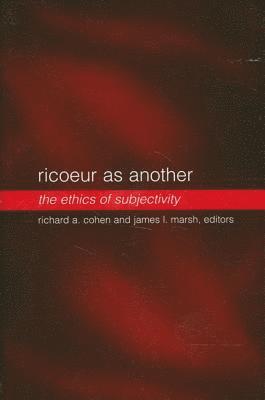
Leading scholars address Paul Ricoeur's last major work, Oneself as Another.This collection of essays by internationally known Paul Ricoeur experts explores the noted philosopher's book, Oneself as Another. Ricoeur's book represents the completion of a decades-long inquiry into the self as he links his earlier studies of symbolism, hermeneutics, phenomenology, the philosophy of language, action theory, and theory of narrative to his most recent concern for ethics and the social constitution of ethical subjectivity.Cohen and Marsh's volume is divided into two parts, the first primarily involving Ricoeur's thought itself, and the second involving the relation of his thought to that of others, such as Levinas, Rawls, Habermas, Apel, Taylor, and MacIntyre. The contributors also offer detailed examinations of Ricoeur's ethical theory and its ontological implications.
441 kr
Skickas inom 5-8 vardagar
Leading scholars address Paul Ricoeur's last major work, Oneself as Another.This collection of essays by internationally known Paul Ricoeur experts explores the noted philosopher's book, Oneself as Another. Ricoeur's book represents the completion of a decades-long inquiry into the self as he links his earlier studies of symbolism, hermeneutics, phenomenology, the philosophy of language, action theory, and theory of narrative to his most recent concern for ethics and the social constitution of ethical subjectivity.Cohen and Marsh's volume is divided into two parts, the first primarily involving Ricoeur's thought itself, and the second involving the relation of his thought to that of others, such as Levinas, Rawls, Habermas, Apel, Taylor, and MacIntyre. The contributors also offer detailed examinations of Ricoeur's ethical theory and its ontological implications.
362 kr
Skickas inom 7-10 vardagar
Although this book derives its inspiration and model from Descartes' Meditations and Husserl's Cartesian Meditations, it attempts to overcome Cartesianism conceived as individualistic, reflective, apodictic, presuppositionless self-recovery. Instead, contends Professor Marsh, the isolated, individualistic, brougeois ego gives way to the social, communal, post-bourgeois self: wordly, linguistic, historical, practical, and critical. The book attempts to overcome Cartesianism both in content and in form. In content, Marsh argues, the social self replaces the isolated ego; this he attempts to establish through a series of chapters progressively expanding their scope and social context. Beginning with an emphasis on individual perception, thought, and freedom, and moving through reflections on knowledge of the other, practical engagments with the other, and hermeneutics, he concludes with critiques of the psychological and social unconscious. The result is not a rejection of individual perception, reflection, and freedom, but their sublation within community, tradition, and history. For Marsh the authentic individual is the social individual, the individual-in-community. This book not only inscribes a progressively expanding circle, but also moves in a circle. It begins with a reflection on the contemporary experience of alientation and history of philosophy, ascends in the next several chapters to considering the perceptual, cognitive, free, social self, and then descends in the last chapter to further discussion of this historical starting points in this practical and philosophical aspects. Dialectical phenomenology as method bends back on itself to reflect in a manner both critical and redemptive on its own starting point and genesis. Post-Cartesian Meditations obviously situates itself withing the modernism/post-modernism debate being carried on by Ricoeur and Derrida, Habermas and Foucault, Searle and Rorty, Bernstein and Caputo. Like post-modernism, the book is critical of naive Cartesian presence, the excesses of technological rationality, the pathology of modernity, the irrationality of bourgeois society. Unlike post-modernism, however, the book argues for a socially mediated self, the legitimacy of technology in contrast to technocracy, the critical redemption of modernity, a dialectical rather than a rejectionistic overcoming of capitalism. Rich in insight, suggestion, and argumentation, this book has much to offer students and instructors of philosophy generally, but will be particularly useful to those interested in phenomenological developments, or a Marxist critique of capitalism as a way of life influencing modern philosophical thought.
968 kr
Skickas inom 10-15 vardagar
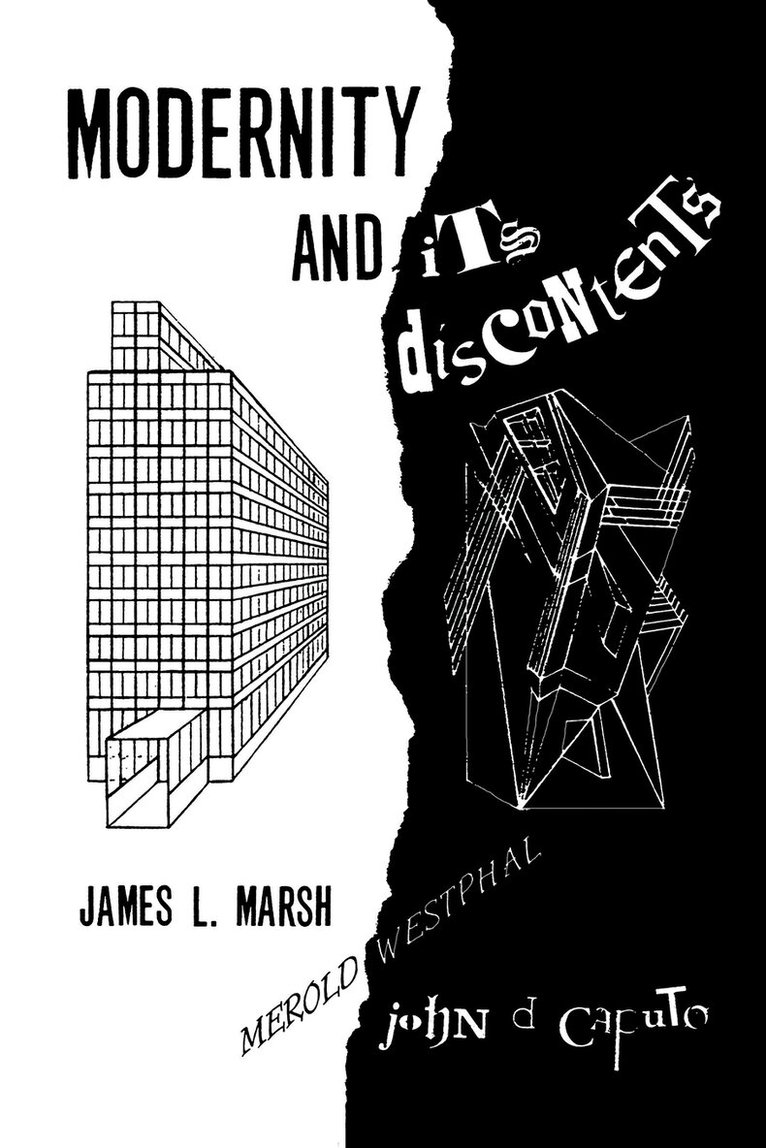
The introduction by Merold Westphal sets the scene: "Two books, two visions of philosophy, two friends and sometimes colleagues...". Modernity and Its Discontents is a debate between Caputo and Marsh in which each upheld their opposing philosphical positions by critical modernism and post-modernism. The book opens with a critique of each debater of the other's previous work. With its passionate point-counterpoint form, the book recalls the philosphical dialogues of classical times, but the writing style remains lucid and uncluttered. Taking the failure of Englightenment ideals as their common ground, the debaters challenge each other's ideas on the nature of post-foundationalist critique. At the core of the argument lies the timely question of the role that each person can play in creating a truly humane society.
362 kr
Skickas inom 7-10 vardagar
The introduction by Merold Westphal sets the scene: "Two books, two visions of philosophy, two friends and sometimes colleagues...". Modernity and Its Discontents is a debate between Caputo and Marsh in which each upheld their opposing philosphical positions by critical modernism and post-modernism. The book opens with a critique of each debater of the other's previous work. With its passionate point-counterpoint form, the book recalls the philosphical dialogues of classical times, but the writing style remains lucid and uncluttered. Taking the failure of Englightenment ideals as their common ground, the debaters challenge each other's ideas on the nature of post-foundationalist critique. At the core of the argument lies the timely question of the role that each person can play in creating a truly humane society.
Faith, Resistance, and the Future
Daniel Berrigan's Challenge to Catholic Social Thought
Inbunden, Engelska, 2012
796 kr
Skickas inom 7-10 vardagar
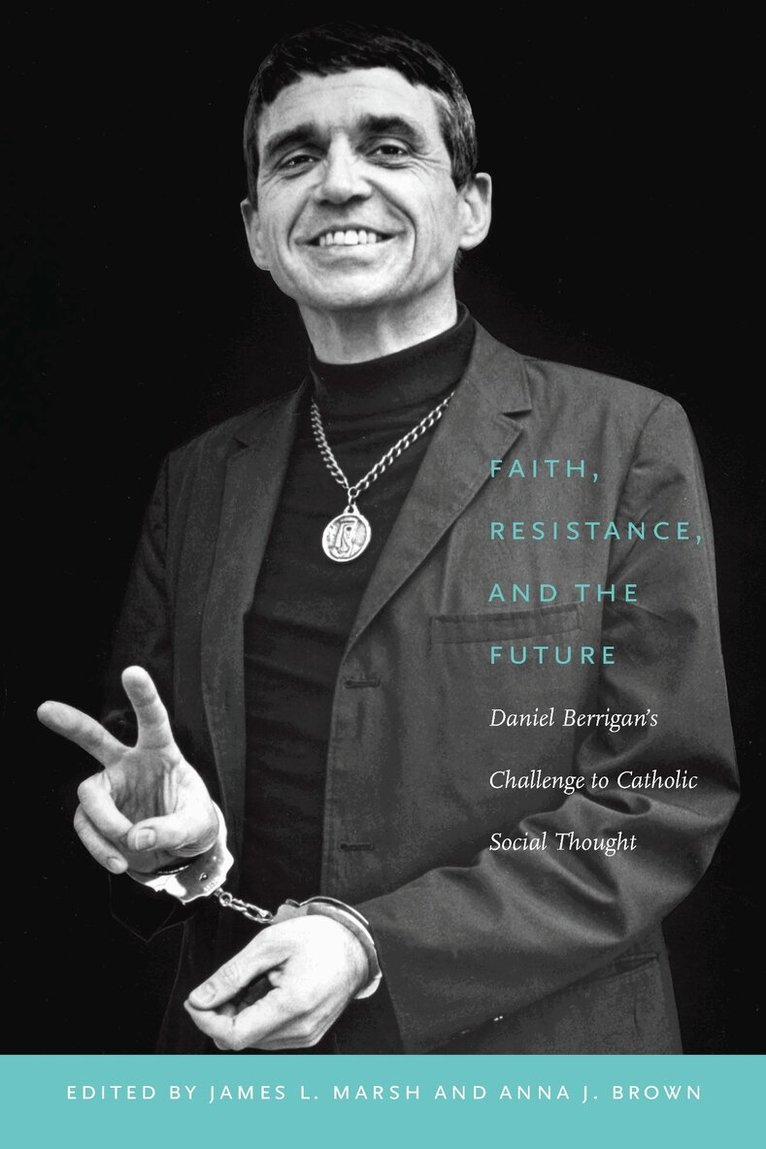
This book presents Daniel Berrigan's contribution and challenge to catholic social thought. His contribution lies in his consistent, comprehensive, theoretical, and practical approach to issues of social justice and peace over the past fifty years. His challenge lies in his critique of capitalism, imperialism, and militarism, inviting Catholic activists and thinkers to undertake not just a reformist but a radical critique of and alternative to these realities. The aim of this book is, for the first time, to make Berrigan's thought and life available to the academic Catholic community, so that a fruitful interaction takes place. How does this work enlighten and challenge such a community?To these ends, the editors have recruited scholars and thinker-activists already familiar with and sympathetic to Berrigan's work and those who are less so identified. The result is a rich, engaging, and critical treatment of the meaning and impact of his work. What kind of challenge does he present to academic-business-as-usual inCatholic universities? How can the life and work of individual Catholic academics be transformed if such persons took Berrigan's work seriously—theoretically and practically? Do Catholic universities need Berrigan's vision to fulfill more integrally and completely their own missions? Does the self-knowing subject and theorist need to become a radical subject and theorist?Even though the appeal of academics is important and perhaps primary, because of the range and depth of Berrigan's work and thought and the power of his writing there is a larger appeal to the Catholic community and to activists working for social justice and peace. This book has, therefore, not only a theoretical and academicappeal but also a popular and grassroots appeal.Given the current and ongoing U.S. military interventions in Iraq, Afghanistan, and Libya, Berrigan's work invites us to think about the justice of such interventions or, given the destructiveness of modern weapons, whether the notion of just war makes any sense. Given the recent crisis on Wall Street, does it make sense anylonger to talk about the possibility of a just capitalism? Given the most recent revelations about Guantánamo, Abu Ghraib, and Bagram, is it not imperative to think about how torture, preventative detention, and extraordinary rendition serve the ends of empire? In light of all of this, doesn't Berrigan's call for a pacific, prophetic community of justice rooted in the Good News of the Gospel make compelling sense?