

Häftad, Engelska, 2018
329 kr
Skickas inom 5-8 vardagar
329 kr
Skickas inom 5-8 vardagar

73 kr
Läs direkt efter köp

65 kr
Läs direkt efter köp

593 kr
Skickas inom 3-6 vardagar

485 kr
Skickas inom 3-6 vardagar
975 kr
Skickas inom 5-8 vardagar
250 kr
Skickas inom 5-8 vardagar
373 kr
Läs direkt efter köp
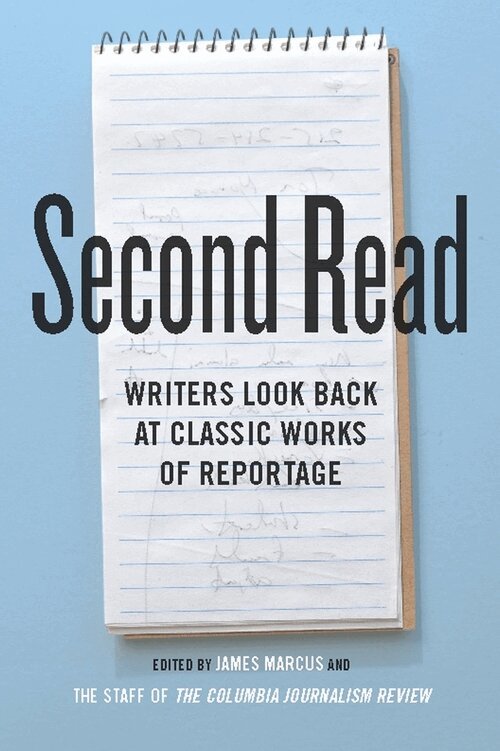
The Columbia Journalism Review''s Second Read series features distinguished journalists revisiting key works of reportage. Launched in 2004 by John Palattella, who was then editor of the magazine''s book section, the series also allows authors address such ongoing concerns as the conflict between narrative flair and accurate reporting, the legacy of New Journalism, the need for reporters to question their political assumptions, the limitations of participatory journalism, and the temptation to substitute "truthiness" for hard, challenging fact. Representing a wide range of views, Second Read embodies the diversity and dynamism of contemporary nonfiction while offering fresh perspectives on works by Norman Mailer, Tom Wolfe, Rachel Carson, and Gabriel García Márquez, among others. It also highlights pivotal moments and movements in journalism as well as the innovations of award-winning writers.Essays include Rick Perlstein on Paul Cowan''s The Tribes of America; Nicholson Baker on Daniel Defoe''s A Journal of the Plague Year; Dale Maharidge on James Agee''s Let Us Now Praise Famous Men; Marla Cone on Rachel Carson''s Silent Spring; Ben Yagoda on Walter Bernstein''s Keep Your Head Down; Ted Conover on Stanley Booth''s The True Adventures of the Rolling Stones; Jack Shafer on Tom Wolfe''s The Electric Kool-Aid Acid Test; Connie Schultz on Michael Herr''s Dispatches; Michael Shapiro on Cornelius Ryan''s The Longest Day; Douglas McCollam on John McPhee''s Annals of the Former World; Tom Piazza on Norman Mailer''s Armies of the Night; Thomas Mallon on William Manchester''s The Death of a President; Miles Corwin on Gabriel García Márquez''s The Story of a Shipwrecked Sailor; David Ulin on Joan Didion''s Slouching Toward Bethlehem; and Claire Dederer on Betty MacDonald''s Anybody Can Do Anything.

318 kr
Skickas inom 5-8 vardagar

201 kr
Skickas inom 5-8 vardagar

445 kr
Läs direkt efter köp
An engaging reassessment of the celebrated essayist and his relevance to contemporary readersMore than two centuries after his birth, Ralph Waldo Emerson remains one of the presiding spirits in American culture. Yet his reputation as the starry-eyed prophet of self-reliance has obscured a much more complicated figure who spent a lifetime wrestling with injustice, philosophy, art, desire, and suffering. James Marcus introduces readers to this Emerson, a writer of self-interrogating genius whose visionary flights are always grounded in Yankee shrewdness.This Emerson is a rebel. He is also a lover, a friend, a husband, and a father. Having declared his great topic to be “the infinitude of the private man,” he is nonetheless an intensely social being who develops Transcendentalism in the company of Henry David Thoreau, Margaret Fuller, Bronson Alcott, and Theodore Parker. And although he resists political activism early on—hoping instead for a revolution in consciousness—the burning issue of slavery ultimately transforms him from cloistered metaphysician to fiery abolitionist.Drawing on telling episodes from Emerson’s life alongside landmark essays like “Self-Reliance,” “Experience,” and “Circles,” Glad to the Brink of Fear reveals how Emerson shares our preoccupations with fate and freedom, race and inequality, love and grief. It shows, too, how his desire to see the world afresh, rather than accepting the consensus view, is a lesson that never grows old.

28 kr
Läs direkt efter köp

9 kr
Läs direkt efter köp
329 kr
Skickas inom 5-8 vardagar
73 kr
Läs direkt efter köp
65 kr
Läs direkt efter köp
593 kr
Skickas inom 3-6 vardagar
485 kr
Skickas inom 3-6 vardagar
975 kr
Skickas inom 5-8 vardagar
250 kr
Skickas inom 5-8 vardagar
373 kr
Läs direkt efter köp
The Columbia Journalism Review''s Second Read series features distinguished journalists revisiting key works of reportage. Launched in 2004 by John Palattella, who was then editor of the magazine''s book section, the series also allows authors address such ongoing concerns as the conflict between narrative flair and accurate reporting, the legacy of New Journalism, the need for reporters to question their political assumptions, the limitations of participatory journalism, and the temptation to substitute "truthiness" for hard, challenging fact. Representing a wide range of views, Second Read embodies the diversity and dynamism of contemporary nonfiction while offering fresh perspectives on works by Norman Mailer, Tom Wolfe, Rachel Carson, and Gabriel García Márquez, among others. It also highlights pivotal moments and movements in journalism as well as the innovations of award-winning writers.Essays include Rick Perlstein on Paul Cowan''s The Tribes of America; Nicholson Baker on Daniel Defoe''s A Journal of the Plague Year; Dale Maharidge on James Agee''s Let Us Now Praise Famous Men; Marla Cone on Rachel Carson''s Silent Spring; Ben Yagoda on Walter Bernstein''s Keep Your Head Down; Ted Conover on Stanley Booth''s The True Adventures of the Rolling Stones; Jack Shafer on Tom Wolfe''s The Electric Kool-Aid Acid Test; Connie Schultz on Michael Herr''s Dispatches; Michael Shapiro on Cornelius Ryan''s The Longest Day; Douglas McCollam on John McPhee''s Annals of the Former World; Tom Piazza on Norman Mailer''s Armies of the Night; Thomas Mallon on William Manchester''s The Death of a President; Miles Corwin on Gabriel García Márquez''s The Story of a Shipwrecked Sailor; David Ulin on Joan Didion''s Slouching Toward Bethlehem; and Claire Dederer on Betty MacDonald''s Anybody Can Do Anything.
318 kr
Skickas inom 5-8 vardagar
201 kr
Skickas inom 5-8 vardagar
445 kr
Läs direkt efter köp
An engaging reassessment of the celebrated essayist and his relevance to contemporary readersMore than two centuries after his birth, Ralph Waldo Emerson remains one of the presiding spirits in American culture. Yet his reputation as the starry-eyed prophet of self-reliance has obscured a much more complicated figure who spent a lifetime wrestling with injustice, philosophy, art, desire, and suffering. James Marcus introduces readers to this Emerson, a writer of self-interrogating genius whose visionary flights are always grounded in Yankee shrewdness.This Emerson is a rebel. He is also a lover, a friend, a husband, and a father. Having declared his great topic to be “the infinitude of the private man,” he is nonetheless an intensely social being who develops Transcendentalism in the company of Henry David Thoreau, Margaret Fuller, Bronson Alcott, and Theodore Parker. And although he resists political activism early on—hoping instead for a revolution in consciousness—the burning issue of slavery ultimately transforms him from cloistered metaphysician to fiery abolitionist.Drawing on telling episodes from Emerson’s life alongside landmark essays like “Self-Reliance,” “Experience,” and “Circles,” Glad to the Brink of Fear reveals how Emerson shares our preoccupations with fate and freedom, race and inequality, love and grief. It shows, too, how his desire to see the world afresh, rather than accepting the consensus view, is a lesson that never grows old.
28 kr
Läs direkt efter köp
9 kr
Läs direkt efter köp