James N. Seiber – författare
Visar alla böcker från författaren James N. Seiber. Handla med fri frakt och snabb leverans.
4 produkter
4 produkter
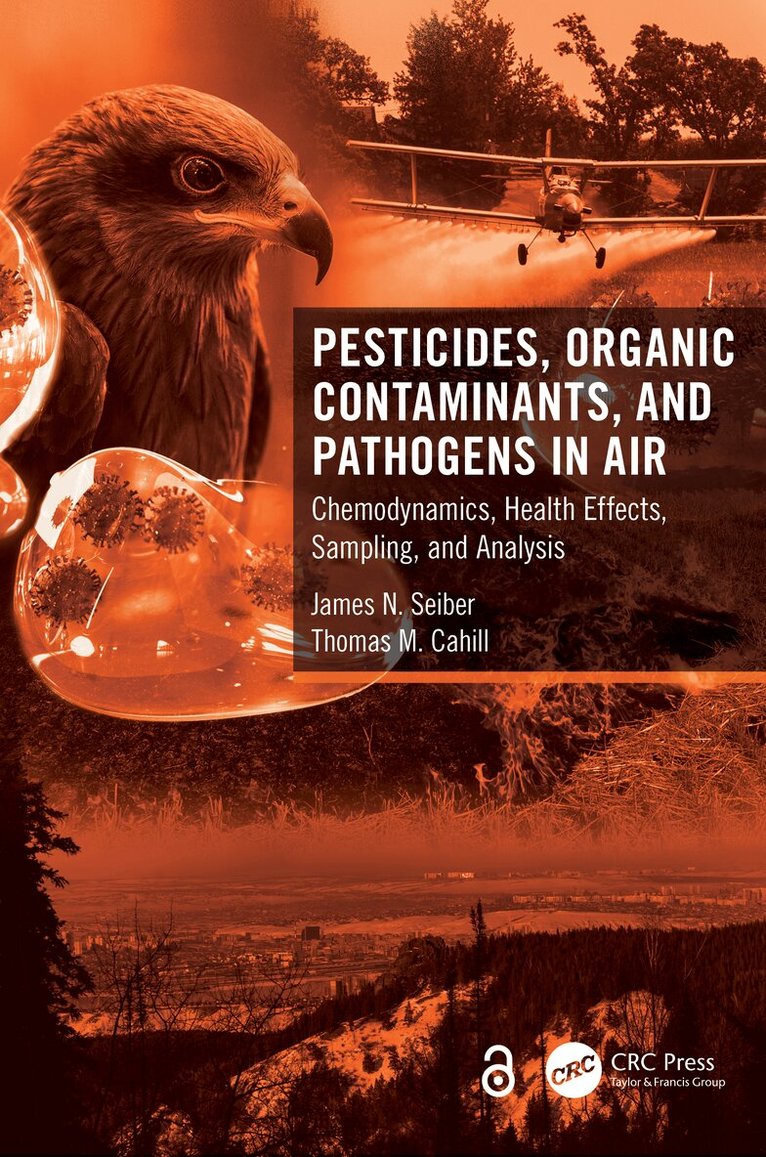
Pesticides, Organic Contaminants, and Pathogens in Air
Chemodynamics, Health Effects, Sampling, and Analysis
Inbunden, Engelska, 2021
1 705 kr
Skickas inom 10-15 vardagar
The air is an important but largely unrecognized source of contaminant fate in the environment, including transport of pesticides and contaminants to nontarget areas and exposures for people and wildlife. This book summarizes and places in perspective the potential transport, transformation, and health implications of pesticides and contaminants in air, including the air we breathe. It delves into the hypothesis that the atmosphere is the most significant environmental compartment affecting the overall transport and fate of many classes of environmental contaminants.The authors draw parallels between sampling, analysis, and impact of airborne toxics and particulate matter with the COVID-19 pandemic. Airborne viruses and fine particulate matter, which are of similar size, have remarkable parallels in how they are transmitted and accumulated in the respiratory tract.FEATURES Assesses exposures of people and wildlife to airborne chemicals Includes case study applications, with relevant data summarized for pesticides and contaminants in air Discusses approaches to modeling pesticides’ and contaminants’ dispersion and fate in air Includes an assessment of the physicochemical properties of pesticides and contaminants that influence sampling and atmospheric mobility and fateThe authors are global experts in air contaminant research, and this book is well organized and helpful for people interested in regulatory, health, and other topics related to pesticides and contaminants in air.James N. Seiber is a Professor Emeritus at the University of California, Davis.Thomas M. Cahill is an Associate Professor in the School of Mathematical and Natural Sciences at Arizona State University.
Del 214 - Chemical Analysis: A Series of Monographs on Analytical Chemistry and Its Applications
Pesticide Residues in Foods
Methods, Techniques, and Regulations
Inbunden, Engelska, 1999
1 943 kr
Skickas inom 7-10 vardagar
Advances in analytical chemistry methodology now allow us to detect the most minute trace amounts of pesticides. As this capacity grows, so does public concern about toxic contamination, resulting in stricter government regulations and a growing demand for even more sensitive, precise, and reliable analysis. Addressing the interplay between regulations and the development of analytical technology, this volume presents the first unified treatment of the regulatory and analytical aspects of pesticide residues. Current regulations, existing and emerging methodologies, state-of-the-art instrumentation, and the basic science of analyzing for pesticides in food and other environmental media are all covered. The book provides step-by-step guidelines to analytical techniques, along with real-world examples from the latest research-showing the reader how to analyze minute traces of pesticides quickly and accurately, using both highly sophisticated and basic, less sensitive techniques. Many safety issues are explored in depth, as are the regulatory aspects of pesticide registration, residue analysis, exposure monitoring, risk assessment, and tolerance enforcement. Timely, authoritative, and practical throughout, Pesticide Residues in Foods is an invaluable reference for analytical chemists and laboratory managers everywhere-in industry, agriculture, environmental sciences, research, and instrument manufacturing-and for anyone with an interest in the broader environmental, agricultural, and consumer-related implications of pesticide use. An invaluable resource for analytical chemists and laboratory managers, Pesticide Residues in Foods provides a complete overview of the theory, practice, and regulatory aspects of pesticide residue analysis today, including:* All regulatory issues, from risk assessment and tolerance to data-quality requirements to laboratory accreditation standards* State-of-the-art methodologies and instrumentation, including high- performance liquid chromatography and mass spectrometry* The application of analytical technology to "green chemistry," such as the reduction of solvents and toxic reagents in the laboratory* Novel solutions to the old problem of keeping the food supply safe from harmful levels of pesticides* Ample examples to help analytical chemists select the most appropriate method for a given residue analysis* Easy-to-use tables and figures throughout the text
Del 951 - ACS Symposium Series
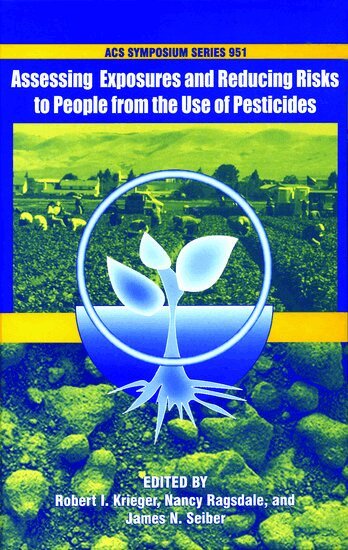
Assessing Exposures and Reducing Risks to People from the Use of Pesticides
Inbunden, Engelska, 2007
938 kr
Skickas inom 5-8 vardagar
Assessing Exposures and Reducing Risks to People from the Use of Pesticides will focus on practices that have been developed in the past 10 years marked from the passage of the Food Quality Protection Act and other pertinent legislation (eg the Clean Air Act Amendments), which deal all, or in part with reducing risks associated with pesticides.
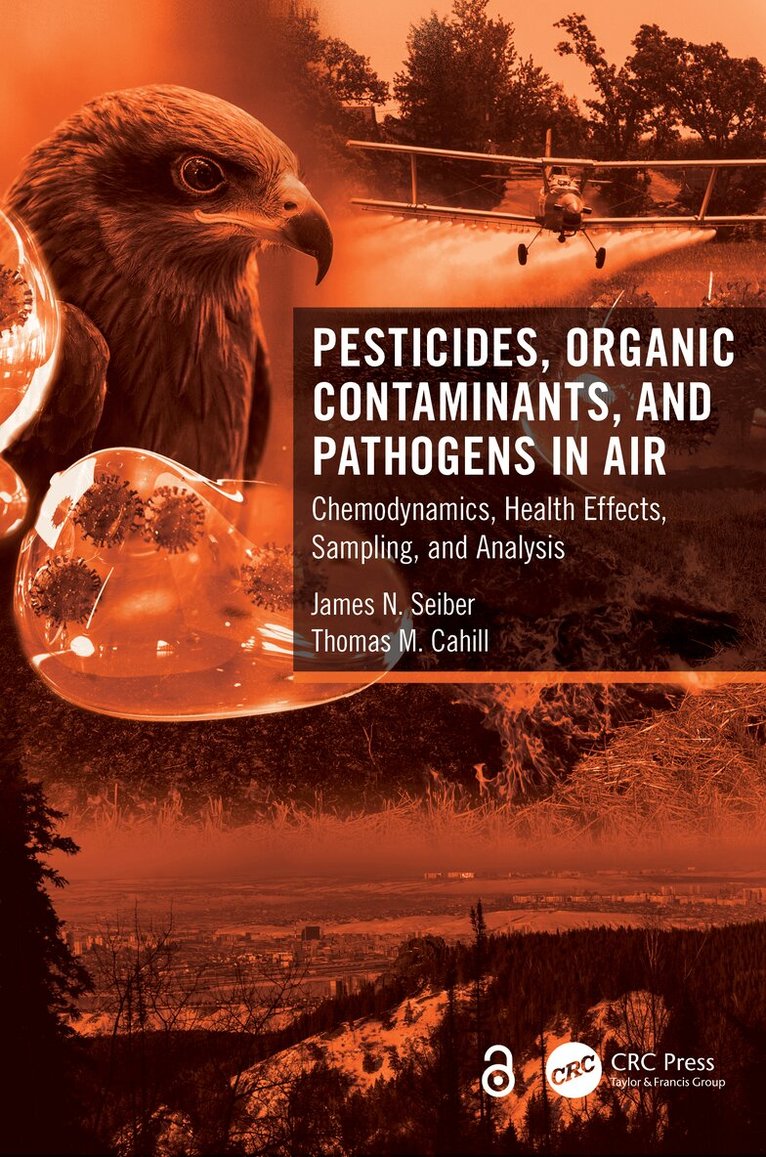
Pesticides, Organic Contaminants, and Pathogens in Air
Chemodynamics, Health Effects, Sampling, and Analysis
Häftad, Engelska, 2024
713 kr
Skickas inom 10-15 vardagar
The air is an important but largely unrecognized source of contaminant fate in the environment, including transport of pesticides and contaminants to nontarget areas and exposures for people and wildlife. This book summarizes and places in perspective the potential transport, transformation, and health implications of pesticides and contaminants in air, including the air we breathe. It delves into the hypothesis that the atmosphere is the most significant environmental compartment affecting the overall transport and fate of many classes of environmental contaminants.The authors draw parallels between sampling, analysis, and impact of airborne toxics and particulate matter with the COVID-19 pandemic. Airborne viruses and fine particulate matter, which are of similar size, have remarkable parallels in how they are transmitted and accumulated in the respiratory tract.FEATURES Assesses exposures of people and wildlife to airborne chemicals Includes case study applications, with relevant data summarized for pesticides and contaminants in air Discusses approaches to modeling pesticides’ and contaminants’ dispersion and fate in air Includes an assessment of the physicochemical properties of pesticides and contaminants that influence sampling and atmospheric mobility and fateThe authors are global experts in air contaminant research, and this book is well organized and helpful for people interested in regulatory, health, and other topics related to pesticides and contaminants in air.James N. Seiber is a Professor Emeritus at the University of California, Davis.Thomas M. Cahill is an Associate Professor in the School of Mathematical and Natural Sciences at Arizona State University.