James T. Johnson - Böcker
Visar alla böcker från författaren James T. Johnson. Handla med fri frakt och snabb leverans.
2 produkter
2 produkter
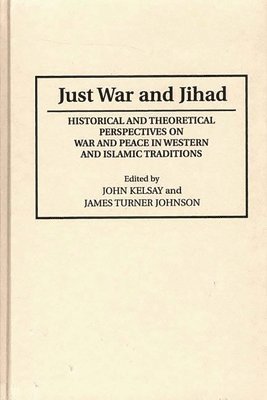
Just War and Jihad
Historical and Theoretical Perspectives on War and Peace in Western and Islamic Traditions
Inbunden, Engelska, 1991
1 009 kr
Skickas inom 10-15 vardagar
In this collaborative examination two diverse groups of scholars look at Western and Islamic approaches to war, peace, and statecraft from their own perspectives in an effort to bridge the gap of knowledge and understanding between the two traditions. Established scholars in religious ethics and international law--James Turner Johnson, John Langan, David Little, and William V. O'Brien--examine the substantial body of literature on the just war tradition that has been produced over time by historians, theologians, ethicists, and international lawyers. The Islamic tradition, which in both its classical and contemporary forms presents a rich variety of materials for discussions of statecraft, including issues connected with the justification, conduct, and ultimate aims of war, is then assessed by a group of leading Islamicists including Fred Donner, Richard C. Martin, Bruce Lawrence, and Ann Mayer. The two major themes stressed by the contributors are the historical and theoretical approaches to war and peace in the two great religious and cultural traditions. In every case, the chapters are broadly historical and comparative in nature. Kelsay and Johnson's Just War and Jihad, together with their companion volume, Cross-Crescent and Sword: The Justification and Limitation of War in Western and Islamic Tradition (Greenwood Press, 1990), represent the outcome of interdisciplinary and cross-cultural dialogues.An introduction takes up the various themes present in the chapters and reflects their significance for comparative studies of cultural attitudes on war and peace. In the book's first major division four chapters deal with foundational concerns. Here the authors identify sources and basic themes of religious thought that influence Western and Islamic approaches to war and peace. The two chapters of Part II take up particular questions connected with the phenomenon of holy war. In the final section two contributors assess the status of the international law on war and peace. For students and scholars of comparative religion, ethics, and international relations this comparative study, which establishes the persistence of certain human concerns across the boundaries of particular cultures, makes timely and important reading.
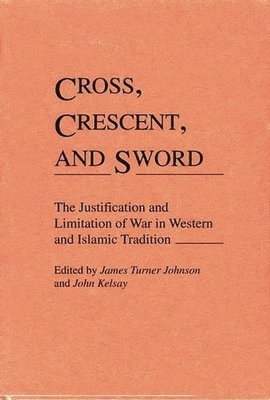
Cross, Crescent, and Sword
The Justification and Limitation of War in Western and Islamic Tradition
Inbunden, Engelska, 1990
942 kr
Skickas inom 10-15 vardagar
The rapid and energetic resurgence of the Islamic religion and the expanded international role played by Islamic nations and political movements provided the impetus for a collaborative examination by scholars of religion and culture intent on bridging the gap of knowledge and understanding between the study of the West and the study of Islam. This book, together with its companion volume, Just War and Jihad: Historical and Theoretical Perspectives on War and Peace in Western and Islamic Traditions (Greenwood Press, forthcoming 1991), examines the topics of the relationship between Western and Islamic religious and cultural traditions on war, peace, and the conduct of statecraft. The ten essays contained here provide scholarly analyses and interpretations of Islamic traditions and of areas of relationship and commonality between these traditions and those of the West. The difficulties inherent in such analysis are compounded by the lack of correspondence between the two religious and cultural traditions, particularly those concerned with defining when war is justified and what limits ought to be observed in justified warfare.The volume is divided into three parts: When is War Justified? What are Its Limits?, Irregular Warfare and Terrorism, and Combatancy, Noncombatancy, and Noncombatant Immunity. Within each of these perspectives two groups of scholars, one whose field of work is the just war tradition of Western culture and one whose area of study is Islamic religion and culture, examine issues that relate to the justification and limitation of war. The first four essays assess justifications for war and restraints on its conduct, including a discussion of the concept of jihad. Two additional groups of essays address specific questions that are especially pressing in the current historical context. The nine chapters range broadly over the historical development of the two traditions, seeking individually and collectively to open up the unfamiliar and to bring elements of the two traditions to bear on contemporary moral problems of armed violence and war. For students of Western and Islamic religion and culture, the volume provides a beginning for cross-disciplinary and cross-cultural dialogue as well as for intensive and systematic study. Scholars of both Western and Islamic traditions will find their understandings of the tradition of jihad and the constellation of ideas and attitudes on war, peace, and politics that are normative in Islamic religion enhanced by Cross, Crescent and Sword, which also provides a means to assess how these ideas and attitudes should be placed in relationship to those of Western culture.