James Titterton - Böcker
Visar alla böcker från författaren James Titterton. Handla med fri frakt och snabb leverans.
3 produkter
3 produkter
215 kr
Skickas inom 7-10 vardagar
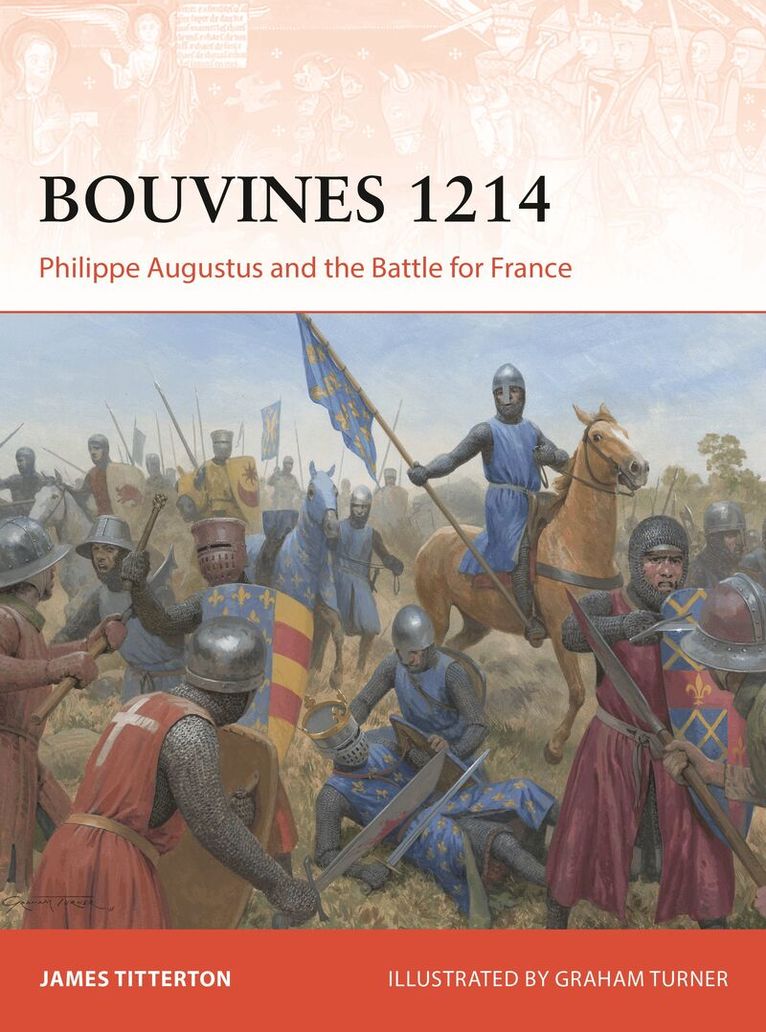
A detailed look at the battle of Bouvines, which saw Philippe II of France defeat the German and English coalition forces, changing the history of Europe forever.In early 1214, a coalition of forces led by Holy Roman Emperor Otto IV and bankrolled by King John of England was assembled to challenge France's King Philippe Augustus. Its aim was to reclaim the empire that John had lost to Philippe over the past decade. A campaign was planned on two fronts: John's army in Poitou and Otto's army in northern France. The battle of Bouvines took place in Flanders in July 1214 – and it was a crushing defeat for the coalition armies. The French knights outmatched them at every turn.Here, medieval historian James Titterton looks at how Philippe's victory changed European history – not only did the coalition lose the lands they had hoped to reclaim, but Otto was deposed as Holy Roman Emperor and John's position was so weakened that he was forced into issuing the Magna Carta in 1215. The Flemish leaders were captured and imprisoned and Philippe set out to expand his authority unopposed. Bouvines was one of the most significant battles in European history, helping to establish the nation of France as it is today and resulting in the brutal defeat of the coalition leaders. With stunning artwork, detailed maps and period images, this book charts the clash of European chivalry and two crowned kings on the field of battle.
Del 53 - Warfare in History
Deception in Medieval Warfare
Trickery and Cunning in the Central Middle Ages
Inbunden, Engelska, 2022
1 195 kr
Skickas inom 7-10 vardagar
First full-length study of the use and perception of deceit in medieval warfare.Deception and trickery are a universal feature of warfare, from the Trojan horse to the inflatable tanks of the Second World War. The wars of the Central Middle Ages (c. 1000-1320) were no exception. This book looks at the various tricks reported in medieval chronicles, from the Normans feigning flight at the battle of Hastings (1066) to draw the English off Senlac Hill, to the Turks who infiltrated the Frankish camp at the Field of Blood (1119) disguised as bird sellers, to the Scottish camp followers descending on the field of Bannockburn (1314) waving laundry as banners to mimic a division of soldiers. This study also considers what contemporary society thought about deception on the battlefield: was it a legitimate way to fight? Was cunning considered an admirable quality in a warrior? Were the culturally and religious "other" thought to be more deceitful in war than Western Europeans? Through a detailed analysis of vocabulary and narrative devices, this book reveals a society with a profound moral ambivalence towards military deception, in which authors were able to celebrate a warrior's cunning while simultaneously condemning their enemies for similar acts of deceit. It also includes an appendix cataloguing over four hundred incidents of military deception as recorded in contemporary chronicle narratives.
Del 53 - Warfare in History
Deception in Medieval Warfare
Trickery and Cunning in the Central Middle Ages
Häftad, Engelska, 2024
259 kr
Skickas
First full-length study of the use and perception of deceit in medieval warfare.Deception and trickery are a universal feature of warfare, from the Trojan horse to the inflatable tanks of the Second World War. The wars of the Central Middle Ages (c. 1000-1320) were no exception. This book looks at the various tricks reported in medieval chronicles, from the Normans feigning flight at the battle of Hastings (1066) to draw the English off Senlac Hill, to the Turks who infiltrated the Frankish camp at the Field of Blood (1119) disguised as bird sellers, to the Scottish camp followers descending on the field of Bannockburn (1314) waving laundry as banners to mimic a division of soldiers. This study also considers what contemporary society thought about deception on the battlefield: was it a legitimate way to fight? Was cunning considered an admirable quality in a warrior? Were the culturally and religious "other" thought to be more deceitful in war than Western Europeans? Through a detailed analysis of vocabulary and narrative devices, this book reveals a society with a profound moral ambivalence towards military deception, in which authors were able to celebrate a warrior's cunning while simultaneously condemning their enemies for similar acts of deceit. It also includes an appendix cataloguing over four hundred incidents of military deception as recorded in contemporary chronicle narratives.