James W. Garrison – författare
Visar alla böcker från författaren James W. Garrison. Handla med fri frakt och snabb leverans.
9 produkter
9 produkter
Inbunden, Engelska, 2003
2 136 kr
Skickas inom 10-15 vardagar
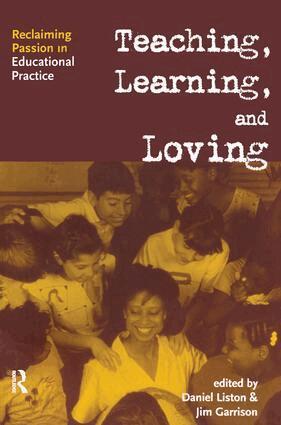
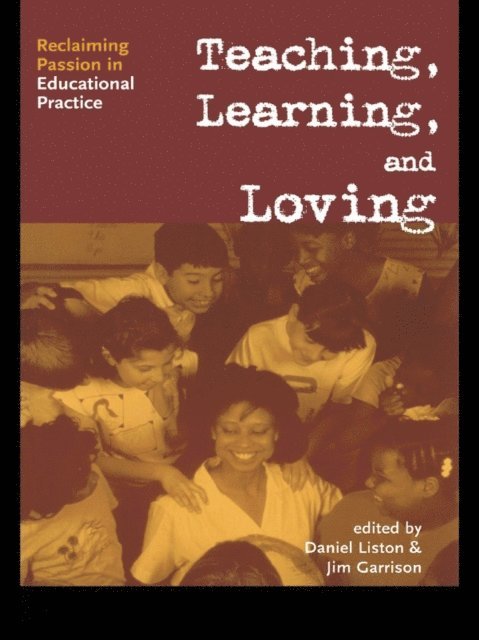
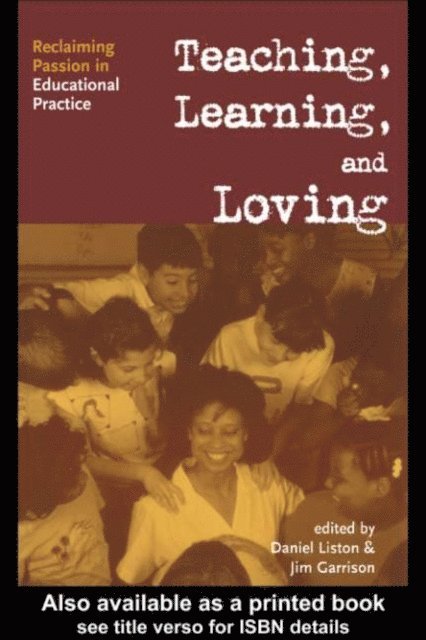
This book explores emotional aspects of daily educational practice all too often overlooked by theorists and education researchers, but well known to practitioners. These include such topics as eros, the pursuit of happiness, critical hope, vulnerability, mystery, and domestic tranquility. The contributors also examine grief, despair, discomfort, acceptance of ignorance, and loss of hope. While they explore regions outside the bounds of the explicit, cognitive, and categorical, their motivations are familiar: the desire to create hope, meaning, and mutual understanding in the pursuit of better classrooms, more equitable education, and more effective teacher education.
Häftad, Engelska, 2003
648 kr
Skickas inom 10-15 vardagar
This book explores emotional aspects of daily educational practice all too often overlooked by theorists and education researchers, but well known to practitioners. These include such topics as eros, the pursuit of happiness, critical hope, vulnerability, mystery, and domestic tranquility. The contributors also examine grief, despair, discomfort, acceptance of ignorance, and loss of hope. While they explore regions outside the bounds of the explicit, cognitive, and categorical, their motivations are familiar: the desire to create hope, meaning, and mutual understanding in the pursuit of better classrooms, more equitable education, and more effective teacher education.
Häftad, Engelska, 1995
546 kr
Skickas inom 10-15 vardagar
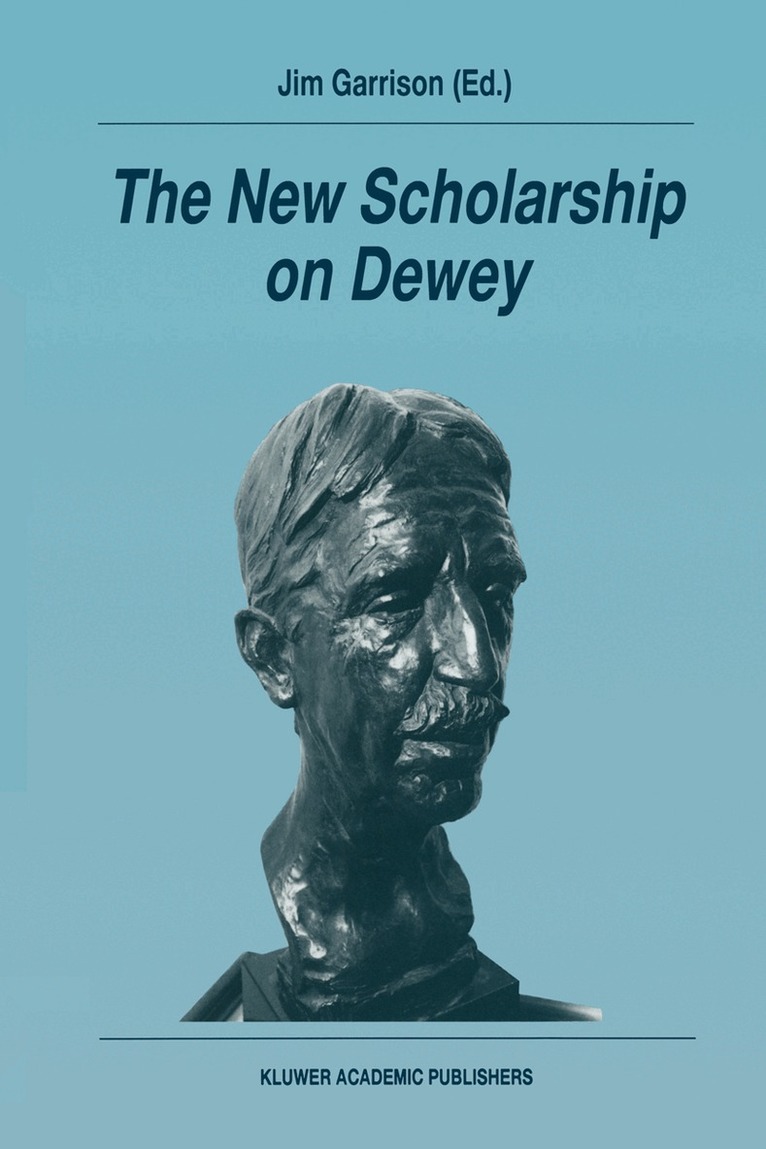
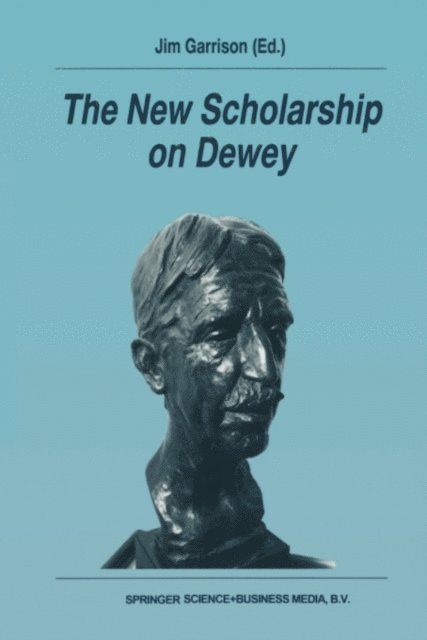
Since 1979, when Richard Rorty's Philosophy and the Mirror of Nature appeared, there has been a flood of new scholarship on the philosophy of John Dewey. Surprisingly, little of this scholarship has thus far made its way into the field of education, where Dewey's philosophy has traditionally had a wide influence. Many of the authors of this collection are philosophers who have created some of the most original and influential work in this new scholarship. Five of them -- Larry Hickman, Thomas M. Alexander, Raymond D. Boisvert, and J.E. Tiles -- have written major books that have received wide international acclaim. Among the philosophers of education some, like Philip W. Jackson, are among the best known names in the entire international field, and have kept pace with Deweyan scholarship for many years. Others are younger scholars who know the new scholarship well. Finally, two prominent feminists contribute important new work on Dewey, expanding the domain of the new scholarship on Dewey. One of them, Susan Laird, has had her work cited in the new biography of John Dewey by Robert Westbrook.
E-bok
Engelska, 2004735 kr
Läs direkt efter köp
This book explores emotional aspects of daily educational practice all too often overlooked by theorists and education researchers, but well known to practitioners. These include such topics as eros, the pursuit of happiness, critical hope, vulnerability, mystery, and domestic tranquility. The contributors also examine grief, despair, discomfort, acceptance of ignorance, and loss of hope. While they explore regions outside the bounds of the explicit, cognitive, and categorical, their motivations are familiar: the desire to create hope, meaning, and mutual understanding in the pursuit of better classrooms, more equitable education, and more effective teacher education.
E-bok
PDF, Engelska, 2004735 kr
Läs direkt efter köp
This book explores emotional aspects of daily educational practice all too often overlooked by theorists and education researchers, but well known to practitioners. These include such topics as eros, the pursuit of happiness, critical hope, vulnerability, mystery, and domestic tranquility. The contributors also examine grief, despair, discomfort, acceptance of ignorance, and loss of hope. While they explore regions outside the bounds of the explicit, cognitive, and categorical, their motivations are familiar: the desire to create hope, meaning, and mutual understanding in the pursuit of better classrooms, more equitable education, and more effective teacher education.
Inbunden, Engelska, 1988
1 049 kr
Skickas inom 10-15 vardagar
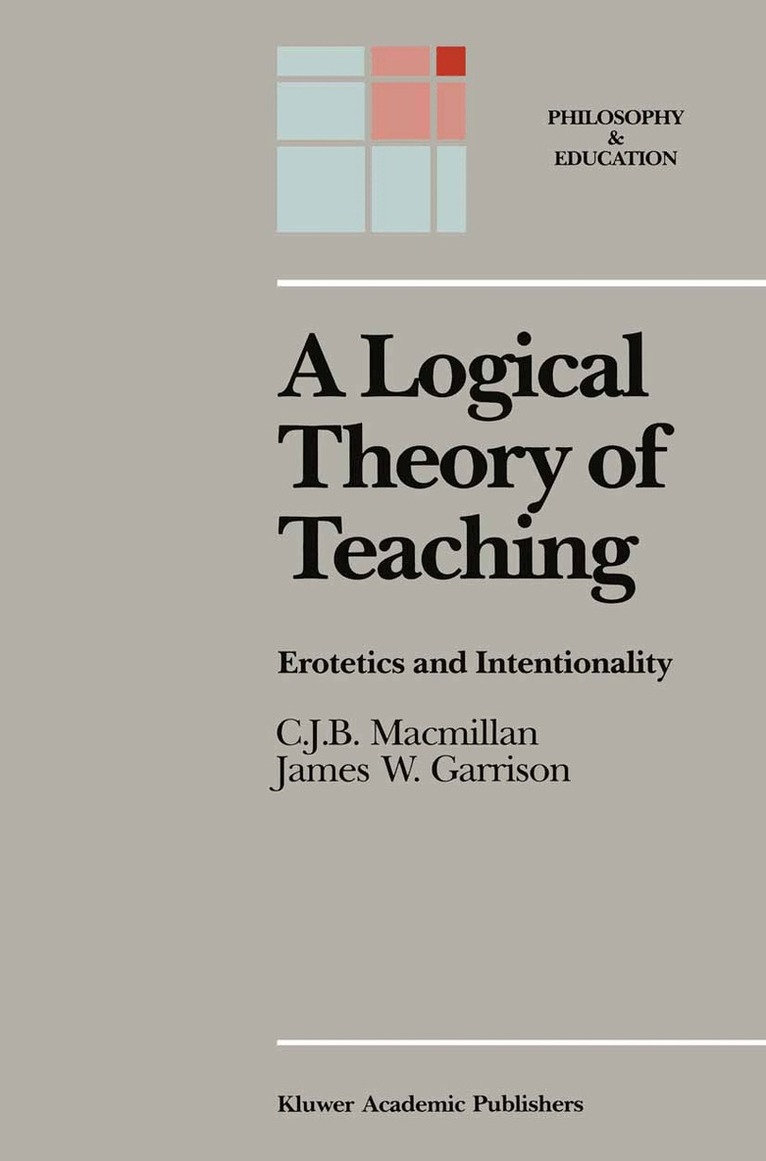
happens, how it happens, and why it happens. One place - our place, needless to say - is with one limited but central concept in education, teaching. A long philosophical tradition concerned with the nature of teaching goes back (along with everything else) to Plato, divulging most recent ly in the work of such philosophers as B.
E-bok
PDF, Engelska, 20121 416 kr
Läs direkt efter köp
happens, how it happens, and why it happens. Our assumption ought to be that this is as true in education as it is in atomic physics. But this leaves many other questions to answer. The crucial ones: What kind of science is proper or appropriate to education? How does it differ from physics? What is wrong with the prevai1~ ing, virtually unopposed research tradition in education? What could or should be done to replace it with a more adequate tradi tion? What concepts are necessary to describe and explain what we find there? It is in this realm that we find ourselves. Where to start? One place - our place, needless to say - is with one limited but central concept in education, teaching. A long philosophical tradition concerned with the nature of teaching goes back (along with everything else) to Plato, divulging most recent ly in the work of such philosophers as B. O. Smith, Scheffler, Hirst, Komisar, Green, McClellan, Soltis, Kerr, Fenstermacher, et al. An empirical tradition runs parallelto the philosophers -it has its most notable modern proponents in Gage, the Soars, Berliner, Rosen shine, but its roots can be traced to the Sophists. These two tradi tions have been at loggerheads over the centuries.
Häftad, Engelska, 2011
1 079 kr
Skickas inom 10-15 vardagar
happens, how it happens, and why it happens. Our assumption ought to be that this is as true in education as it is in atomic physics. But this leaves many other questions to answer. The crucial ones: What kind of science is proper or appropriate to education? How does it differ from physics? What is wrong with the prevai1~ ing, virtually unopposed research tradition in education? What could or should be done to replace it with a more adequate tradi tion? What concepts are necessary to describe and explain what we find there? It is in this realm that we find ourselves. Where to start? One place - our place, needless to say - is with one limited but central concept in education, teaching. A long philosophical tradition concerned with the nature of teaching goes back (along with everything else) to Plato, divulging most recent ly in the work of such philosophers as B. O. Smith, Scheffler, Hirst, Komisar, Green, McClellan, Soltis, Kerr, Fenstermacher, et al. An empirical tradition runs parallelto the philosophers -it has its most notable modern proponents in Gage, the Soars, Berliner, Rosen shine, but its roots can be traced to the Sophists. These two tradi tions have been at loggerheads over the centuries.
E-bok
PDF, Engelska, 2012668 kr
Läs direkt efter köp
Since 1979, when Richard Rorty''s Philosophy and the Mirror of Nature appeared, there has been a flood of new scholarship on the philosophy of John Dewey. Surprisingly, little of this scholarship has thus far made its way into the field of education, where Dewey''s philosophy has traditionally had a wide influence. Many of the authors of this collection are philosophers who have created some of the most original and influential work in this new scholarship. Five of them -- Larry Hickman, Thomas M. Alexander, Raymond D. Boisvert, and J.E. Tiles -- have written major books that have received wide international acclaim. Among the philosophers of education some, like Philip W. Jackson, are among the best known names in the entire international field, and have kept pace with Deweyan scholarship for many years. Others are younger scholars who know the new scholarship well. Finally, two prominent feminists contribute important new work on Dewey, expanding the domain of the new scholarship on Dewey. One of them, Susan Laird, has had her work cited in the new biography of John Dewey by Robert Westbrook.