• Fri frakt över 249 kr
  • •
  • Snabba leveranser
  • •
  • Billiga böcker
Kundservice

Du är på sajten för privatpersoner.

Företag, bibliotek eller offentlig verksamhet?

Du handlar på classic.bokus.com, där alla dina funktioner finns intakta.
Till classic.bokus.com
Bokus logotyp. Gå till startsidan.
  • Erbjudanden
  • Nyheter
  • Student
  • Topplistor
  • Barn & ungdom
  • Bokus Play
  • E-böcker
  • Pocketböcker
  • Spel & pussel

10% rabatt på allt med kod: NYSTART10 →

Sidfot

Mina sidor

    Hjälp

    • Kundservice
    • Vanliga frågor och svar
    • Frakt och leverans
    • Retur vid ångerrätt
    • Reklamera vara
    • Betalning
    • Köpvillkor
    • Allmänna villkor
    • Information om webbplatsens tillgänglighet

    Om Bokus

    • Om oss
    • Pressrum
    • För studenter
    • För företag
    • För bibliotek och offentlig verksamhet
    • För leverantörer
    • Hållbarhet

    Populärt

    • Aktuella erbjudanden
    • Presentkort
    • Studentlitteratur
    • Nya böcker
    • Topplistor
    • Signerade böcker
    • Engelska böcker

    Inspiration

    • Boktips
    • BookTok
    • Populära bokserier
    • Barnbokskaraktärer
    • Populära författare
    Logotyp för Bokus
    Följ oss på Facebook (extern länk)Följ oss på Instagram (extern länk)Följ oss på YouTube (extern länk)Följ oss på TikTok (extern länk)
    bokus @ CookiesAnpassa cookiesIntegritetspolicyKöpvillkor
    Till Citymail hemsida (extern länk)Till Budbee hemsida (extern länk)Till Postnord hemsida (extern länk)Till Schenker hemsida (extern länk)Till Early Bird hemsida (extern länk)Till Walleys hemsida (extern länk)
    1. Psykologi och pedagogik
    2. Pedagogik

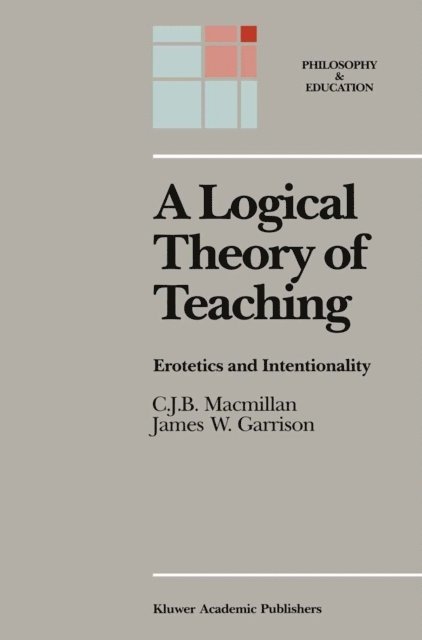
    Logical Theory of Teaching

    Erotetics and Intentionality

    AvJames W. Garrison,C.J.B. Macmillan

    E-bok
    PDF, Engelska, 2012

    1 413 kr

    Läs direkt i Bokus Reader – eller ladda ned till din enhet (PDF kräver ofta zoom och scroll på små skärmar).

    Beskrivning

    happens, how it happens, and why it happens. Our assumption ought to be that this is as true in education as it is in atomic physics. But this leaves many other questions to answer. The crucial ones: What kind of science is proper or appropriate to education? How does it differ from physics? What is wrong with the prevai1~ ing, virtually unopposed research tradition in education? What could or should be done to replace it with a more adequate tradi­ tion? What concepts are necessary to describe and explain what we find there? It is in this realm that we find ourselves. Where to start? One place - our place, needless to say - is with one limited but central concept in education, teaching. A long philosophical tradition concerned with the nature of teaching goes back (along with everything else) to Plato, divulging most recent­ ly in the work of such philosophers as B. O. Smith, Scheffler, Hirst, Komisar, Green, McClellan, Soltis, Kerr, Fenstermacher, et al. An empirical tradition runs parallelto the philosophers -it has its most notable modern proponents in Gage, the Soars, Berliner, Rosen­ shine, but its roots can be traced to the Sophists. These two tradi­ tions have been at loggerheads over the centuries.

    Produktinformation

    • Utgivningsdatum:2012-12-06
    • Språk:Engelska
    • Filformat:PDF
    • Kopieringsskydd:LCP
    • ISBN:9789400930674
    • Förlag:Springer Netherlands

    Utforska kategorier

    • Pedagogik inom Psykologi och pedagogik
    • Pedagogisk teori och filosofi inom Psykologi och pedagogik
    • Naturvetenskapens filosofi inom Naturvetenskap och teknik