James Welker – författare
Visar alla böcker från författaren James Welker. Handla med fri frakt och snabb leverans.
8 produkter
8 produkter
Queer Voices from Japan
First Person Narratives from Japan's Sexual Minorities
Inbunden, Engelska, 2007
1 873 kr
Skickas inom 5-8 vardagar
Queer Voices from Japan examines the wide range of queer voices in Japan, and the longevity that these minority communities have enjoyed in society. Mark McLelland, Katsuhiko Suganuma, and James Welker bring together historical and contemporary narratives that contribute to the study of sexual identities in Japan. These essays trace the evolution of queer voices in Japan with analyses of the presence of homosexuality in the Japanese Imperial Army, the development of Japan's first gay bars, and same-sex experiences in the pre- and post-war periods. This book offers a variety of perspectives including a range of male-to-female and female-to-male transgender voices and experiences. The broad scope of this volume makes it an invaluable text for understanding the development of Japanese sex and gender categories in the twentieth century. Queer Voices from Japan is a compelling read that will appeal to those interested in Asian studies and human sexuality.
675 kr
Skickas inom 10-15 vardagar
Queer Voices from Japan examines the wide range of queer voices in Japan, and the longevity that these minority communities have enjoyed in society. Mark McLelland, Katsuhiko Suganuma, and James Welker bring together historical and contemporary narratives that contribute to the study of sexual identities in Japan. These essays trace the evolution of queer voices in Japan with analyses of the presence of homosexuality in the Japanese Imperial Army, the development of Japan's first gay bars, and same-sex experiences in the pre- and post-war periods. This book offers a variety of perspectives including a range of male-to-female and female-to-male transgender voices and experiences. The broad scope of this volume makes it an invaluable text for understanding the development of Japanese sex and gender categories in the twentieth century. Queer Voices from Japan is a compelling read that will appeal to those interested in Asian studies and human sexuality.
876 kr
Skickas inom 7-10 vardagar
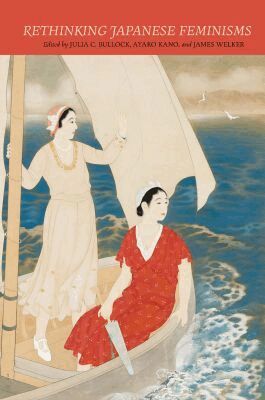
Rethinking Japanese Feminisms offers a broad overview of the great diversity of feminist thought and practice in Japan from the early twentieth century to the present. Drawing on methodologies and approaches from anthropology, cultural studies, gender and sexuality studies, history, literature, media studies, and sociology, each chapter presents the results of research based on some combination of original archival research, careful textual analysis, ethnographic interviews, and participant observation.The volume is organized into sections focused on activism and activists, employment and education, literature and the arts, and boundary crossing. Some chapters shed light on ideas and practices that resonate with feminist thought but find expression through the work of writers, artists, activists, and laborers who have not typically been considered feminist; others revisit specific moments in the history of Japanese feminisms in order to complicate or challenge the dominant scholarly and popular understandings of specific activists, practices, and beliefs. The chapters are contextualized by an introduction that offers historical background on feminisms in Japan, and a forward-looking conclusion that considers what it means to rethink Japanese feminism at this historical juncture.Building on more than four decades of scholarship on feminisms in Japanese and English, as well as decades more on women’s history, Rethinking Japanese Feminisms offers a diverse and multivocal approach to scholarship on Japanese feminisms unmatched by existing publications. Written in language accessible to students and non-experts, it will be at home in the hands of students and scholars, as well as activists and others interested in gender, sexuality, and feminist theory and activism in Japan and in Asia more broadly.
319 kr
Skickas inom 7-10 vardagar
Rethinking Japanese Feminisms offers a broad overview of the great diversity of feminist thought and practice in Japan from the early twentieth century to the present. Drawing on methodologies and approaches from anthropology, cultural studies, gender and sexuality studies, history, literature, media studies, and sociology, each chapter presents the results of research based on some combination of original archival research, careful textual analysis, ethnographic interviews, and participant observation.The volume is organized into sections focused on activism and activists, employment and education, literature and the arts, and boundary crossing. Some chapters shed light on ideas and practices that resonate with feminist thought but find expression through the work of writers, artists, activists, and laborers who have not typically been considered feminist; others revisit specific moments in the history of Japanese feminisms in order to complicate or challenge the dominant scholarly and popular understandings of specific activists, practices, and beliefs. The chapters are contextualized by an introduction that offers historical background on feminisms in Japan, and a forward-looking conclusion that considers what it means to rethink Japanese feminism at this historical juncture.Building on more than four decades of scholarship on feminisms in Japanese and English, as well as decades more on women’s history, Rethinking Japanese Feminisms offers a diverse and multivocal approach to scholarship on Japanese feminisms unmatched by existing publications. Written in language accessible to students and non-experts, it will be at home in the hands of students and scholars, as well as activists and others interested in gender, sexuality, and feminist theory and activism in Japan and in Asia more broadly.
Transfiguring Women in Late Twentieth-Century Japan
Feminists, Lesbians, and Girls‘ Comics Artists and Fans
Inbunden, Engelska, 2024
754 kr
Skickas inom 7-10 vardagar
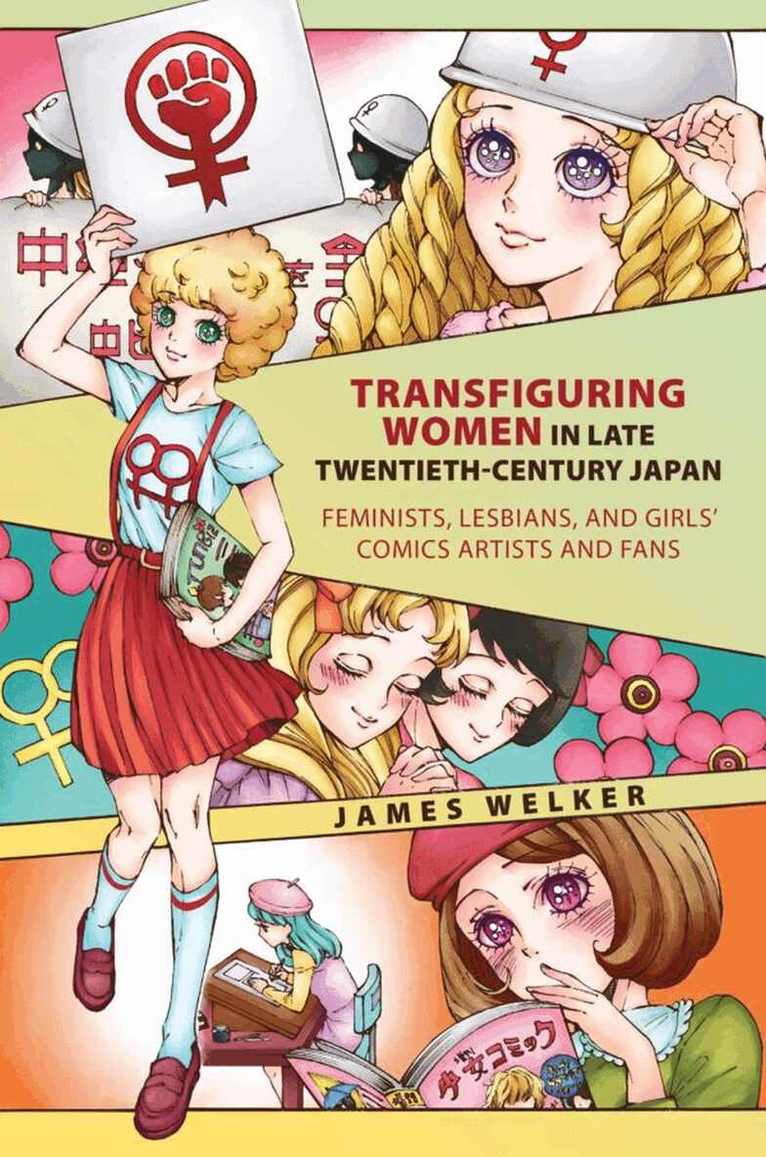
Transfiguring Women in Late Twentieth-Century Japan: Feminists, Lesbians, and Girls' Comics Artists and Fans examines three dynamic and overlapping communities of women and adolescent girls who challenged Japanese gender and sexual norms in the 1970s and 1980s. These spheres encompassed activists in the ūman ribu (women’s liberation) movement, members of the rezubian (lesbian) community, and artists and readers of queer shōjo manga (girls’ comics). Individually and collectively, they found the normative understanding of the category "women" untenable and worked to redefine and expand its meaning by transfiguring ideas, images, and practices selectively appropriated from the "West." They did so, however, while remaining firmly fixed on the local. Thus, for many, this ostensibly Western focus was not a turn away from Japan but integral to their understanding of being a woman within Japan.Following broad historical overviews of the ūman ribu, rezubian, and queer shōjo manga spheres, the book takes a deeper look through the lenses of terminology, translation, and travel to offer a window onto how acts of transfiguration reshaped what it meant to be a woman in Japan. The work draws on a vast archive that encompasses early twentieth-century dictionaries, sexology texts, and literature; postwar women’s and men’s magazines and pornography; translated feminist and lesbian texts; comics and animation; and newsletters, fanzines, and other heretofore largely unexamined ephemera. The volume’s characterization of the era is also greatly enriched by interviews with more than sixty individuals. Transfiguring Women in Late Twentieth-Century Japan demonstrates that the transfiguration of Western culture into something locally meaningful had tangible effects beyond newly (re)created texts, practices, images, and ideas within the ūman ribu, rezubian, and queer shōjo manga communities. The individuals and groups involved were themselves transformed. More broadly, their efforts forged new understandings of "women" in Japan, creating space for a greater number of public roles not bound to being a mother or a wife, as well as a greater diversity of gender and sexual expression that reached far beyond the Japanese border.
Transfiguring Women in Late Twentieth-Century Japan
Feminists, Lesbians, and Girls‘ Comics Artists and Fans
Häftad, Engelska, 2026
292 kr
Skickas inom 7-10 vardagar
Transfiguring Women in Late Twentieth-Century Japan: Feminists, Lesbians, and Girls' Comics Artists and Fans examines three dynamic and overlapping communities of women and adolescent girls who challenged Japanese gender and sexual norms in the 1970s and 1980s. These spheres encompassed activists in the ūman ribu (women’s liberation) movement, members of the rezubian (lesbian) community, and artists and readers of queer shōjo manga (girls’ comics). Individually and collectively, they found the normative understanding of the category "women" untenable and worked to redefine and expand its meaning by transfiguring ideas, images, and practices selectively appropriated from the "West." They did so, however, while remaining firmly fixed on the local. Thus, for many, this ostensibly Western focus was not a turn away from Japan but integral to their understanding of being a woman within Japan. Following broad historical overviews of the ūman ribu, rezubian, and queer shōjo manga spheres, the book takes a deeper look through the lenses of terminology, translation, and travel to offer a window onto how acts of transfiguration reshaped what it meant to be a woman in Japan. The work draws on a vast archive that encompasses early twentieth-century dictionaries, sexology texts, and literature; postwar women’s and men’s magazines and pornography; translated feminist and lesbian texts; comics and animation; and newsletters, fanzines, and other heretofore largely unexamined ephemera. The volume’s characterization of the era is also greatly enriched by interviews with more than sixty individuals. Transfiguring Women in Late Twentieth-Century Japan demonstrates that the transfiguration of Western culture into something locally meaningful had tangible effects beyond newly (re)created texts, practices, images, and ideas within the ūman ribu, rezubian, and queer shōjo manga communities. The individuals and groups involved were themselves transformed. More broadly, their efforts forged new understandings of "women" in Japan, creating space for a greater number of public roles not bound to being a mother or a wife, as well as a greater diversity of gender and sexual expression that reached far beyond the Japanese border.
1 010 kr
Skickas
The boys love (BL) genre was created for girls and women by young female manga (comic) artists in early 1970s Japan to challenge oppressive gender and sexual norms. Over the years, BL has seen almost irrepressible growth in popularity and since the 2000s has become a global media phenomenon, weaving its way into anime, prose fiction, live-action dramas, video games, audio dramas, and fan works. BL's male-male romantic and sexual relationships have found a particularly receptive home in other parts of Asia, where strong local fan communities and locally produced BL works have garnered a following throughout the region, taking on new meanings and engendering widespread cultural effects.Queer Transfigurations is the first detailed examination of the BL media explosion across Asia. The book brings together twenty-one scholars exploring BL media, its fans, and its sociocultural impacts in a dozen countries in East, Southeast, and South Asia--and beyond. Contributors draw on their expertise in an array of disciplines and fields, including anthropology, fan studies, gender and sexuality studies, history, literature, media studies, political science, and sociology to shed light on BL media and its fandoms.Queer Transfigurations reveals the far-reaching influences of the BL genre, demonstrating that it is truly transnational and transcultural in diverse cultural contexts. It has also helped bring about positive changes in the status of LGBT(Q) people and communities as well as enlighten local understandings of gender and sexuality throughout Asia.In short, Queer Transfigurations shows that, some fifty years after the first BL manga appeared in print, the genre is continuing to reverberate and transform lives.
284 kr
Skickas inom 7-10 vardagar
The boys love (BL) genre was created for girls and women by young female manga (comic) artists in early 1970s Japan to challenge oppressive gender and sexual norms. Over the years, BL has seen almost irrepressible growth in popularity and since the 2000s has become a global media phenomenon, weaving its way into anime, prose fiction, live-action dramas, video games, audio dramas, and fan works. BL’s male–male romantic and sexual relationships have found a particularly receptive home in other parts of Asia, where strong local fan communities and locally produced BL works have garnered a following throughout the region, taking on new meanings and engendering widespread cultural effects.Queer Transfigurations is the first detailed examination of the BL media explosion across Asia. The book brings together twenty-one scholars exploring BL media, its fans, and its sociocultural impacts in a dozen countries in East, Southeast, and South Asia—and beyond. Contributors draw on their expertise in an array of disciplines and fields, including anthropology, fan studies, gender and sexuality studies, history, literature, media studies, political science, and sociology to shed light on BL media and its fandoms.Queer Transfigurations reveals the far-reaching influences of the BL genre, demonstrating that it is truly transnational and transcultural in diverse cultural contexts. It has also helped bring about positive changes in the status of LGBT(Q) people and communities as well as enlighten local understandings of gender and sexuality throughout Asia. In short, Queer Transfigurations shows that, some fifty years after the first BL manga appeared in print, the genre is continuing to reverberate and transform lives.