Jan Bojö - Böcker
Visar alla böcker från författaren Jan Bojö. Handla med fri frakt och snabb leverans.
3 produkter
3 produkter
1 096 kr
Skickas inom 10-15 vardagar
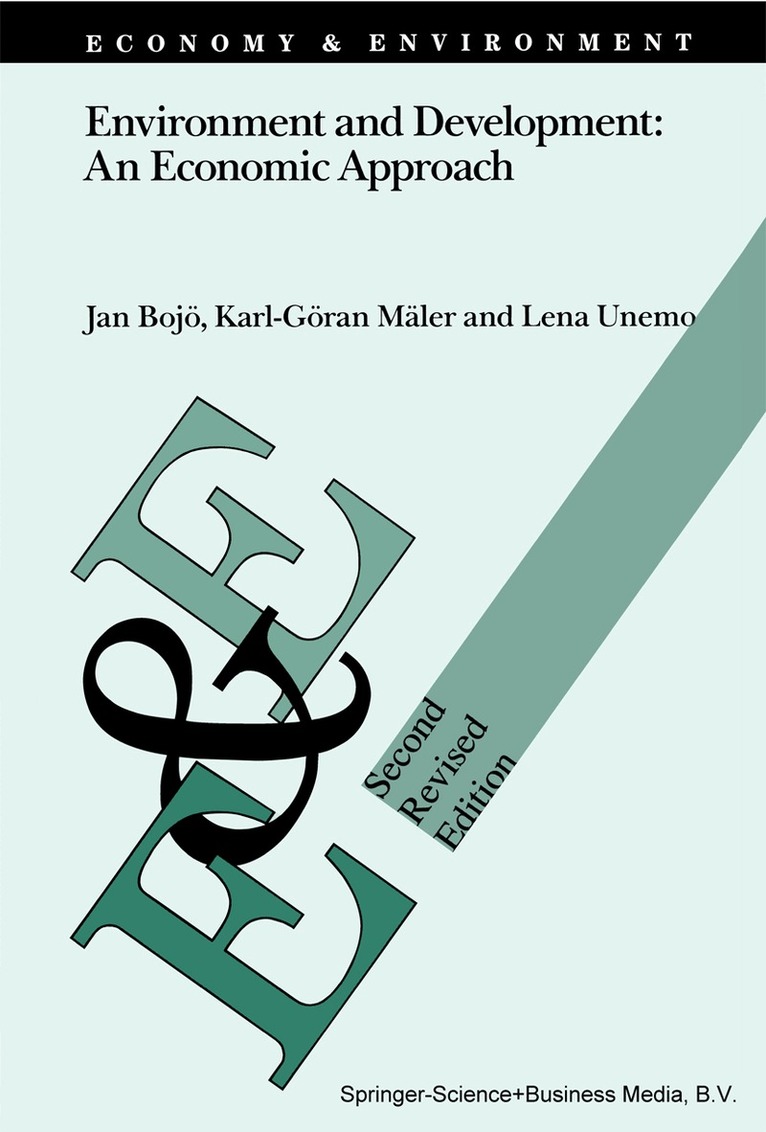
This is the second, revised edition of a text based on a report commissioned by the Swedish International Development Agency (SIDA). The main purposes of the book are: to discuss the causes of environmental degradation from an economic perspective; to provide a conceptual framework for the organization of information in order to enhance environmental decision making; to provide an overview of economic mehtods that can assist in the evaluation of environmental costs and benefits; and to give examples of applications of the theoretical methods described. Policy failures are often overlooked as an obstacle to efficient environmental management. Although the main emphasis in this book is on project level analysis, it is essential that such analyses be linked to an understanding of the (dis)incentives for environmental improvements that general economic and particular environmental policies provide. Another key feature of the book is formed by the links provided between theory and empirical illustrations. It is hoped that these will illustrate the practical usefulness as well as the difficulties of applying economics to environmental problems.This new edition has been extended to include a chapter on management of environmental resources and environmental policy instruments. The chapter also includes a discussion on common property resources, a subject which was only briefly dealt with in the first edition. Two case studies concerning policy failures have been added to the last chapter of the book.
1 096 kr
Skickas inom 10-15 vardagar
This book is the second, revised, edition of a text based on a report commissioned by the Swedish International Development Agency (SIDA). The main purposes of this book are: to discuss the causes of environmental degradation from an economic perspective; to provide a conceptual framework for the organization of information in order to enhance environmental decision making; to provide an overview of economic methods that can assist in the evaluation of environmental costs and benefits; to give examples of applications of the theoretical methods described. Policy failures are often overlooked as an obstacle to efficient environmental management. Although the main emphasis in this book is on project level analysis, it is essential that such analyses be linked to an understanding of the (dis)incentives for environmental improvements that general economic and particular environmental policies provide. Another essential feature of the book is formed by the links provided between theory and empirical illustrations. It is hoped that these will illustrate the practical usefulness, as well as the difficulties, of applying economics to environmental problems.This new edition has been extended to include a chapter on management of environmental resources and environmental policy instruments. The chapter also includes a discussion on common property resources, a subject which was only briefly dealt with in the first edition of the book. Two case studies concerning policy failures have been added to the last chapter of the book.
Del 2 - Economy & Environment
Environment and Development: An Economic Approach
Häftad, Engelska, 2011
552 kr
Skickas inom 10-15 vardagar
This book is a thoroughly revised text based on a report commissioned by the Swedish International Development Authority (SIDA). The financial grant from SIDA which made the work possible is hereby gratefully acknowledged. We gratefully accepted the offer from Kluwer Academic Publishers to revise the text. Hopefully, the text can be of interest to decision-makers, development programme personnel, teachers and the general public interested in how economics can contribute to better environmental decision-making. There are already many books on the market about environmental economics, some of them very good. What is special about this one? We do not claim to have obtained new results, but we have our own way of presenting the subject matter. In particular, we are of the opinion that policy failures are often overlooked as an obstacle to efficient environmental management. Although the main emphasis in this book is on project level analysis, it is essential that such analyses be linked to an understanding of the (dis)incentives for environmental improvements that general economic and particular environmental policies provide. Another essential feature of the book, although this is not unique, is the links provided between theory and empirical illustrations. We hope that this will illustrate to our readers the practical usefulness, but also the difficulties, of applying economics to environmental problems. In principle, this book can be read by anyone interested in the subject matter, without any formal education in economics. However, some background in microeconomic theory makes the reading easier.