Jan De Maeyer – författare
Visar alla böcker från författaren Jan De Maeyer. Handla med fri frakt och snabb leverans.
11 produkter
11 produkter
Del 8 - International & Comparative Social History
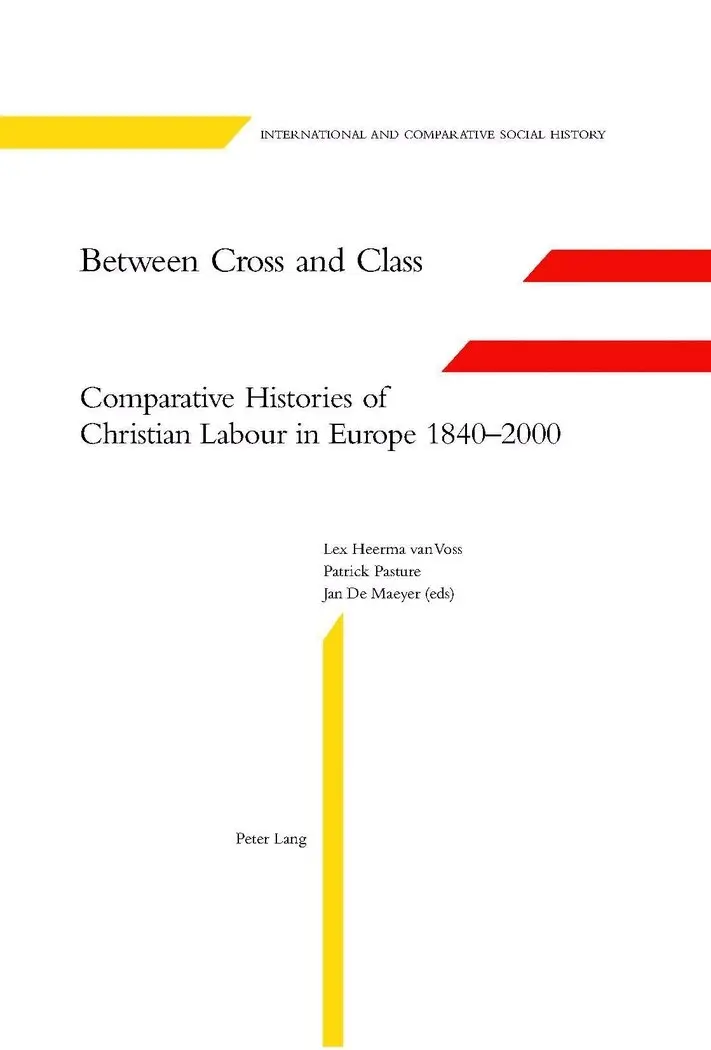
Between Cross and Class
Comparative Histories of Christian Labour in Europe 1840-2000
Inbunden, Engelska, 2005
1 084 kr
Skickas inom 5-8 vardagar
Inbunden, Engelska, 2020
1 344 kr
Skickas inom 5-8 vardagar
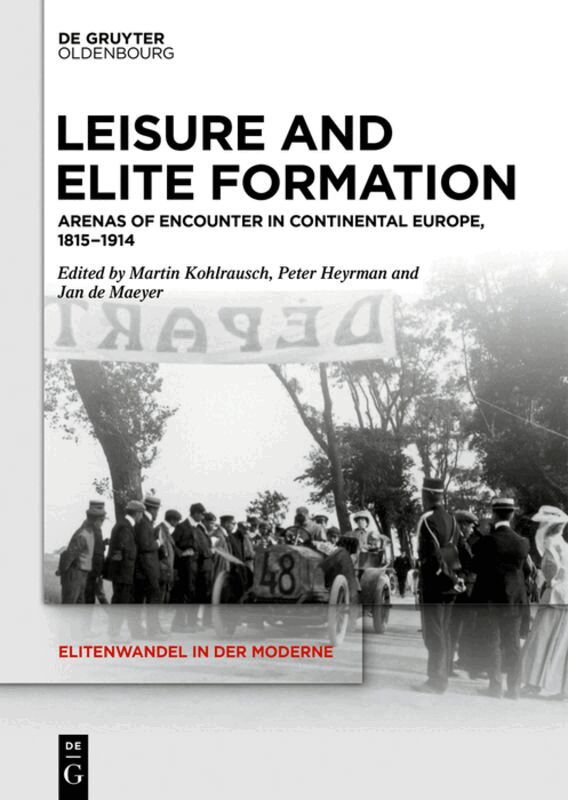
This volume investigates places where old and new elites came together, where these groups met and interacted but also where the rules and conventions for new elites were forged. The book focusses arenas of encounter and (self)representation belonging to the world of leisure and embraces also the organizations and associations which established and ran these spaces and events.
Inbunden, Engelska, 2007
549 kr
Skickas inom 5-8 vardagar
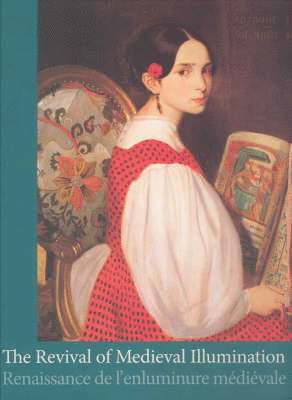
Reduced Price!Now only € 49,00 instead of € 75,00'Ce recueil, est un instrument de travail indispensable pour les chercheurs qui s'intéressent à' l'art néo-gothique, et surtout à l'art de l'enluminure'.Paul Valvekens in Revue D'Histoire Ecclésiastique, Volume 103, Issue 1, 2008The art of illumination, usually associated with the Middle Ages, experienced a spectacular revival in nineteenth-century Western Europe. This completely different context gave the illuminations another import. The output of the lay and religious workshops reveals a great artistic, stylistic, technical and typological diversity. The works illuminated go far beyond the world of exceptional and precious manuscripts and include many occasional documents, as well as golden books, devotional images, etc.Richly illustrated with unpublished masterworks, the present volume offers an overview of the important revival of medieval illumination. The fifteen authors do not limit their approach to the traditional questions of art history. Rather, they explore the historical, socio-cultural, ideological and religious components of the revival, which changed according to time and country, in order to understand the evolution and success of the art of illumination in the long nineteenth century.L’art de l’enluminure, bien connu pour le Moyen Âge, fit l’objet d’un regain d’intérêt spectaculaire au XIXe siècle. Le contexte résolument différent leur confère toutefois une autre signification. La production des ateliers civils et religieux présente une grande diversité artistique, stylistique, technique et typologique. Elle excède largement le monde des manuscrits exceptionnels et précieux et comprend nombre de documents de circonstance, de livres d’or, d’images de dévotion, etc.Abondamment illustré de chefs-d’œuvre inédits, le présent ouvrage présente pour la première fois une vue d’ensemble de l’important phénomène de la renaissance de l’enluminure médiévale. Les quinze auteurs n’ont pas voulu se limiter aux questions traditionnelles de l’histoire de l’art. Les composantes historiques, socioculturelles, idéologiques et religieuses de ce phénomène complexe, variant dans le temps et selon les pays, sont essentielles pour comprendre l’évolution et le succès de l’art de l’enluminure au XIXe siècle.
Del 7 - KADOC Studies on Religion, Culture and Society
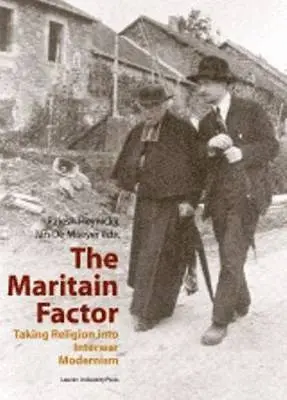
Maritain Factor
Taking Religion into Interward Modernism
Häftad, Engelska, 2010
684 kr
Skickas inom 3-6 vardagar
By studying the reception and perception of the French Catholic philosopher Jacques Maritain, this book argues that European modernist artists and intellectuals sought a primordial finality in Catholicism. The French poet, writer, and surrealist filmmaker Jean Cocteau converted under the influence of Maritain. For the painters Gino Severini, a pioneer of Futurism, and Otto Van Rees, one of the first Dadaists —both converts— Maritain played the role of spiritual counselor. And when the promoter of abstract art Michel Seuphor embraced Catholic faith in the 1930s, he, too, had extensive contact with Maritain. For all of them, the dictum of the Irish poet Brian Coffey, once a doctoral student under Maritain, applied: modern art needs a Thomist conceptual framework. However, the contributions in The Maritain Factor also show that, besides admiration, Maritain provoked irritation with his theories. Walter Benjamin for example, could only look at Maritain as a charlatan who was out to place modern art under the glass bell jar of Catholicism. The authors demonstrate that Catholic thought was not just one aspect of the manifold varieties of modernist discourses and practices, but in fact offered a basis to organize and structure this multiplicity in the 1920s and 1930s.This publication is GPRC-labeled (Guaranteed Peer-Reviewed Content)With contributions by: Philippe Chenaux, Jan De Maeyer, Michael Einfalt, Jason Harding, Rajesh Heynickx, Zoë Marie Jones, Ewoud Kieft, Mathijs Sanders, Stephen Schloesser, Stéphane Symons, Cécile Vanderpelen-Diagre, James Matthew Wilson.
Häftad, Engelska, 2013
528 kr
Skickas inom 5-8 vardagar
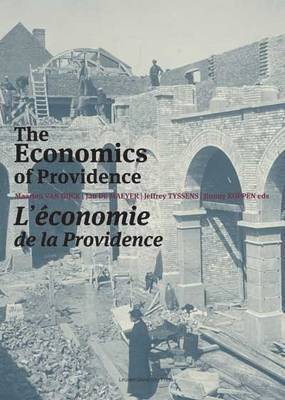
The wealth and patrimony of religious institutesDuring the French Revolution almost all monasteries and abbeys were suppressed and their possessions seized. Yet after the French Revolution many religious institutes were very successful in re-establishing themselves, sometimes accumulating large patrimonies, against the background of often hostile political forces.This book deals with the question of how the religious orders and congregations rebuilt their patrimony, a necessary prerequisite for the growth of the number of religious, educational and charitable services.The authors discuss the (real or supposed) wealth, the financial structures, and the management and juridical foundations of the orders and congregations in Italy, Spain, Portugal, France, Luxembourg, Belgium, Ireland, and the United Kingdom from the late eighteenth century to the 1930s.This publication is GPRC-labeled (Guaranteed Peer-Reviewed Content).ContributorsB. Bodinier (Université de Rouen), M. de Fátima Brandão (Universidade do Porto), M. Casta (Université de Picardie Jules Verne), J. De Maeyer (kadoc - University of Leuven), X. Dusausoit (Centre Scolaire du Sacré-Coeur de Jette), J. Frith (capa International Education, London), G. Gregorini (Università Cattolica del Sacro Cuore, Brescia), J. Koppen (VSAD Karel Cuypers), M. Luddy (University of Warwick), C. Mangion (Birkbeck, University of London), J. Oliveira (Universidade do Porto), P.M. Perluss (Université Pierre Mendes France Grenoble), R. L. Philippart (ucl et Directeur de l'Office National du Tourisme du Grand-Duché de Luxembourg), G. Rocca (Dizionario Degli Istituti di Perfezione), B. Truchet (Professeur retraitée), J. Tyssens (VUB), M. Van Dijck (Flanders Heritage and UHasselt) and Fco. J. Fernández Roca (Pablo de Olavide University de Sevilla).
Del 19 - KADOC-Artes
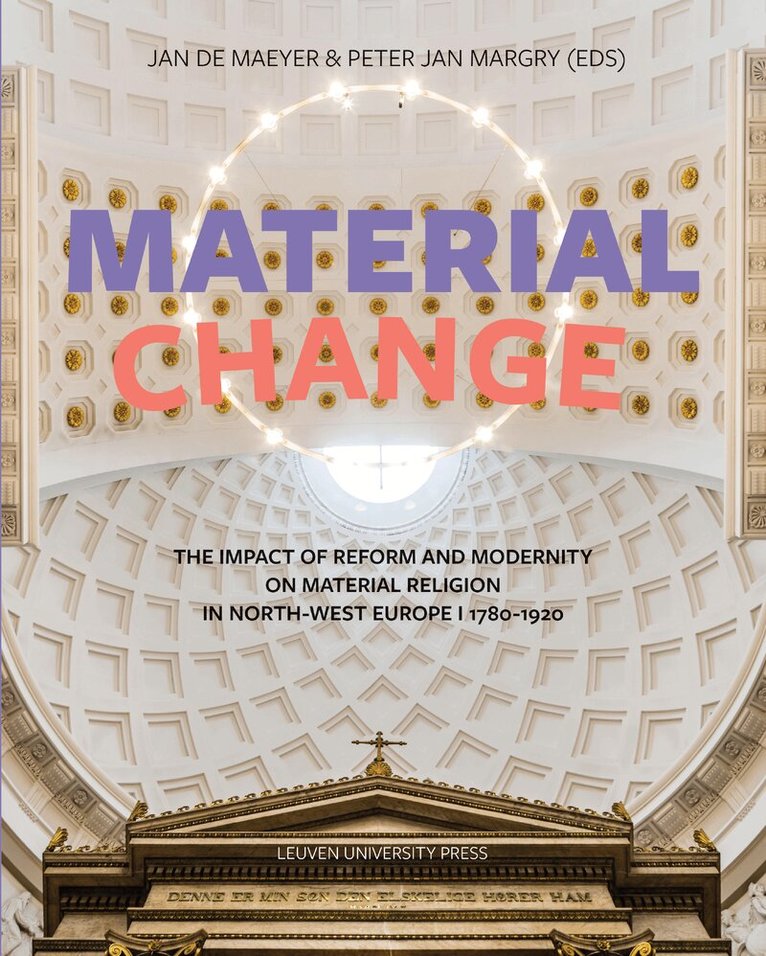
Material Change
The Impact of Reform and Modernity on Material Religion in North-West Europe, 1780-1920
Inbunden, Engelska, 2021
579 kr
Skickas inom 5-8 vardagar
The long nineteenth century (c.1780-c.1920) in Western Europe saw an unprecedented rise in the production and possession of material goods. The material culture diversified and led to a rich variety of expressions. Dovetailing with a process of confessionalisation that manifested itself quite simultaneously, material religion witnessed its heyday in this period; from church buildings to small devotional objects.The present volume analyses how various types of reform (state, societal, and ecclesiastical) that were part of the process of modernisation affected the material devotional culture within Protestantism, Anglicanism, and Roman Catholicism. Although the contributions in this book start from a comparative European perspective, the case studies mostly focus on individual countries in North-West Europe, namely Germany, Belgium, the Netherlands, the United Kingdom, Ireland, Norway, Sweden, and Denmark.The concept of 'material religion' is approached in a very inclusive way. The volume discusses, amongst others, parish infrastructures and religious buildings that are part of land and cityscapes, but also looks into interior design and decorations of chapels, churches, monasteries, cemeteries, and educational, charitable, and health institutions. It comprises the fine arts of religious painting and sculpture, the applied arts, and iconographic designs. As far as private material culture is concerned, this volume examines and presents objects related to private devotion at home, including a great variety of popular devotional and everyday life objects, such as booklets, cards, photographs, and posters.Contributors: Carsten Bach-Nielsen (Aarhus University), Timothy Brittain-Catlin (University of Cambridge), Arne Bugge Amundsen (University of Oslo), Thomas Coomans (KU Leuven), Wolfgang Cortjaens (Deutsches Historisches Museum, Berlin), Jan De Maeyer (KU Leuven), Jens Christian Eldal (Norwegian Institute for Cultural Heritage Research, Oslo), Anders Gustavsson (University of Oslo), Dagmar Hanel (Institut fur Landeskunde und Regionalgeschichte, Bonn), Mary Heimann (Cardiff University), Antoine Jacobs (independent historian), Patricia Lysaght (University College Dublin), Peter Jan Margry (University of Amsterdam / Meertens Institute (KNAW)), Caroline McGee (Trinity College Dublin), Roderick O'Donnell (independent architecture historian), Wies van Leeuwen (architecture historian), Fred van Lieburg (Vrije Universiteit Amsterdam), Tine Van Osselaer (Ruusbroec Institute / University of Antwerp), William Whyte (University of Oxford)
Inbunden, Engelska, 2008
612 kr
Tillfälligt slut
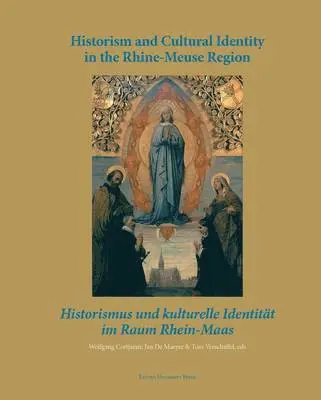
Based on the cultural insight that ‘historism’ – understood as the projection of the past into the present by artistic means, or the ‘invention of tradition’ – always occurs in close connection with the emergence of nation states, this volume describes for the first time the cultural and denominational character and development of the Maas-Rhine region during the period between the French Revolution and the First World War. Seventeen contributions shed new and revealing light on the cultural identity of this Catholic-dominated core region of Europe, using the defining term ‘historism’ as the historiographical element that unifies the book’s four sections (Social and Church Historical Context, The Organisational Structure of Ecclesiastical Art, Centres of Art, ‘Grenzgänger’: between Theory and Praxis).
Inbunden, Engelska, 2013
687 kr
Tillfälligt slut
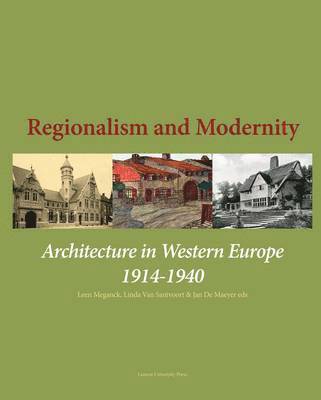
Previously published: Sources of Regionalism in the Nineteenth-Century. Architecture, Art and LiteratureThe complex and shifting relation between regionalism and modernity With its search for purity, honesty, modesty, and ‘fitness of purpose', the late 19th and early 20th century concept of architectural regionalism is seminal to the modern movement. In later historiography, however, regionalism in Europe was neglected and even labeled ‘backward'. The origins of this drastic change of perception can be traced to the 1930s, when regionalism as a positive form gradually turned into a ‘closed' form of regionalism, a folding back on one's own region as a defence mechanism in an economically and politically turbulent decade.In this book internationally renowned researchers investigate the complex and shifting relation between regionalism and modernity in the architecture of Western Europe between the two World Wars, with a focus on Belgium, France, Germany, Italy, and Great Britain. They demonstrate that regionalism cannot be separated from modernity, but is in fact a way of dealing with modernity and its contradictions. Applied to architecture, regionalism is a means to moderate modernism, to embed the design in its local surroundings. It is seen as a result of the search for identity in a modernizing and globalizing world where tensions arise between diversity and superiority and among science, aesthetics, and ideology. The employment of regional forms and concepts is then used as an adaptation strategy, a way to facilitate modernity. Rather than rejecting regionalism as an anti-modern phenomenon, this book's contributors show that we should interpret regionalism as a striving for continuity within modernity.This publication is GPRC-labeled (Guaranteed Peer-Reviewed Content)ContributorsHervé Doucet (University of Strasbourg); Kai Krauskopf (Technische Universität Dresden), Leen Meganck (Flanders Heritage Agency), Benoît Mihaïl (Police Museum Brussels), Lut Missinne (Westfälische Wilhelms-Universität Münster), Björn Rzoska (Groen), Michelangelo Sabatino (University of Houston), Vanessa Vanden Berghe (University of East London), Johan Van den Mooter (Kempens Landschap), Evert Vandeweghe (Ghent University), Jean-Claude Vigato (École nationale supérieure d'architecture de Nancy)
Häftad, Engelska, 2014
599 kr
Tillfälligt slut
Also of Interest: Religious Institutes in Western Europe in the 19th and 20th Centuries. Historiography, Research and Legal PositionA broad perspective on the role of religious institutes in social and cultural practicesThis volume examines the cultural contribution of religious institutes, men and women religious, and their role in the constitution of Catholic communities of communication in different European countries (England, Germany, Liechtenstein, the Low Countries, the Nordic Countries, Switzerland). The articles focus on social and cultural history by comparing both discourses and cultural and social practices, as well as examining international networks and cultural transference. How did religious institutes function as cultural elites in the production and mediation of knowledge, ideologies, cultural codes, and practices? What kind of discursive and operational strategies did they use to help construct and propagate social Catholicism, ultramontanism, and confessionalism, and to establish and promote the Catholic communication system? What were the central mechanisms in the production of knowledge and how were they incorporated within identity politics?The volume also takes a broad perspective on the role of religious institutes in the production and propagation of religious, cultural, and social practices, and in the socialisation of the Catholic population. The focus is on cultural practices, on the transmission and transformation of attitudes, and on the rites and customs in everyday religious and social practices.This publication is GPRC-labeled (Guaranteed Peer-Reviewed Content)
Häftad, Engelska, 2016
502 kr
Tillfälligt slut
The attraction and repulsion between the Roman Catholic Church and modernity in Europe between 1750 and 2000Emiel Lamberts (1941), professor emeritus of contemporary history at KU Leuven, is an international expert in the political and religious history of Europe in the 19th and 20th centuries.His work and the central themes in his research are the starting point in World Views and Worldly Wisdom. No less than eighteen leading international researchers put different aspects of his work in the spotlight. A recurring theme, however, is the attraction and repulsion between the Roman Catholic Church and modernity in Europe between 1750 and 2000.The ambivalent relationship with modernity is therefore the leitmotiv of the first part of this volume, whereas the second part focuses on the repositioning of the Church and the tensions between religion, ideology and politics. In this way the volume reflects Lamberts’s fascination for the history of political institutions as well as his research on Christian democracy. The contributions address – in a comparative way and from a transatlantic viewpoint – this broad period of time in history, which gave rise to different social movements and different models of society in Belgium and elsewhere.This publication is GPRC-labeled (Guaranteed Peer-Reviewed Content). Contributors: Winfried Becker (Universität Passau), Bruno Béthouart (Université du Littoral Côte d’Opale), Hans Blom (Universiteit van Amsterdam), Alfredo Canavero (Università degli Studi di Milano), Philippe Chenaux (Pontificia Università Lateranense, Roma), Andrea Ciampani (LUMSA, Roma), Jo Deferme (KU Leuven), Jan De Maeyer (KADOC KU Leuven), Henk De Smaele (Universiteit Antwerpen), Carine Dujardin (KADOC KU Leuven), Jean-Dominique Durand (Université Lyon 3), Michael Gehler (Jean Monnet Chair, Universität Hildesheim - Institut für Neuzeit- und Zeitgeschichtsforschung, Wien), Susana Monreal (Universidad Católica del Uruguay), Patrick Pasture (KU Leuven), Patrick M.W. Taveirne (The Chinese University of Hong Kong), Peter Van Kemseke (Europese Commissie, KU Leuven), Vincent Viaene (Attaché bij het Huis van Koning Filip), Els Witte (Vrije Universiteit Brussel)
Del 22 - KADOC Studies on Religion, Culture and Society
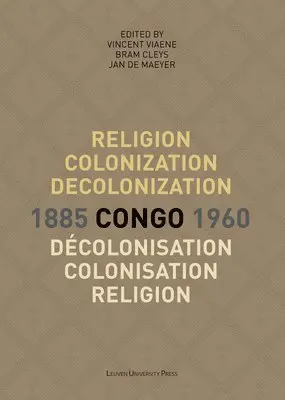
Religion, colonization and decolonization in Congo, 1885-1960. Religion, colonisation et decolonisation au Congo, 1885-1960
Häftad, Franska, 2020
305 kr
Tillfälligt slut
Religion in today's Democratic Republic of Congo has many faces: from the overflowing seminaries, the Marian shrines of the Catholic Church, the Islamic brotherhoods, and the Jewish community of Lubumbashi, to the 'African' churches of the Congolese diaspora in Brussels and Paris, the healers of Kimbanguism, the televangelism of the booming Pentecostalist churches in the great cities, the Orthodox communities of Kasai, and the 'invisible' Mai Mai warriors in the brousse of Kivu. During the colonial period religion was no less central to people's lives than it is today. More surprisingly, behind the seemingly smooth facade of missions linked closely to imperial power, also then faith and worship were marked by diversity and dynamism, tying the Congo into broader African and global movements.The contributions in this book provide insight into the multifaceted history of the interaction between religion and colonization. The authors focus on the institutional (including legal) political framework, examine the complex interaction between indigenous and 'imported' non-African religious beliefs and practices, and zoom in on the part religions played in the independence movement as well as on their reaction to independence itself.Contributors: Piet Clement (Bank of International Settlements), Bram Cleys (Vrije Universiteit Brussel), Anne Cornet (Royal Museum for Central Africa, Tervuren) Marie Dunkerley (Exeter University), Zana Aziza Etambala (Royal Museum for Central Africa, Tervuren), Anne-Sophie Gijs (Universit Catholique de Louvain), Miguel Bandeira Jer nimo (University of Coimbra), Emery Kalema Masua (University of the Witwatersrand), Sindani E. Kiangu (Universit de Kinshasa), Elisabeth Mudimbe-Boyi (Stanford University) Dominic Pistor (Simon Fraser University), Jean-Luc Vellut (Universit Catholique de Louvain), Vincent Viaene