• Fri frakt över 249 kr
  • •
  • Snabba leveranser
  • •
  • Billiga böcker
Kundservice

Du är på sajten för privatpersoner.

Företag, bibliotek eller offentlig verksamhet?

Du handlar på classic.bokus.com, där alla dina funktioner finns intakta.
Till classic.bokus.com
Bokus logotyp. Gå till startsidan.
  • Erbjudanden
  • Nyheter
  • Student
  • Topplistor
  • Barn & ungdom
  • Bokus Play
  • E-böcker
  • Pocketböcker
  • Spel & pussel

10% studentrabatt med kod TERM26

Sidfot

Mina sidor

    Hjälp

    • Kundservice
    • Vanliga frågor och svar
    • Frakt och leverans
    • Retur vid ångerrätt
    • Reklamera vara
    • Betalning
    • Köpvillkor
    • Allmänna villkor
    • Information om webbplatsens tillgänglighet

    Om Bokus

    • Om oss
    • Pressrum
    • För studenter
    • För företag
    • För bibliotek och offentlig verksamhet
    • För leverantörer
    • Hållbarhet

    Populärt

    • Aktuella erbjudanden
    • Presentkort
    • Studentlitteratur
    • Nya böcker
    • Topplistor
    • Signerade böcker
    • Engelska böcker

    Inspiration

    • Boktips
    • BookTok
    • Populära bokserier
    • Barnbokskaraktärer
    • Populära författare
    Logotyp för Bokus
    Följ oss på Facebook (extern länk)Följ oss på Instagram (extern länk)Följ oss på YouTube (extern länk)Följ oss på TikTok (extern länk)
    bokus @ CookiesAnpassa cookiesIntegritetspolicyKöpvillkor
    Till Citymail hemsida (extern länk)Till Budbee hemsida (extern länk)Till Postnord hemsida (extern länk)Till Schenker hemsida (extern länk)Till Early Bird hemsida (extern länk)Till Walleys hemsida (extern länk)
    1. Historia och arkeologi
    2. Historia
    3. Historia: särskilda händelser och ämnen
    4. Socialhistoria och kulturhistoria

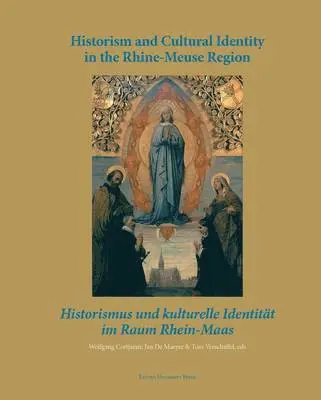
    Historism and Cultural Identity in the Rhine-Meuse Region

    Tensions between Nationalism and Regionalism in the Nineteenth Century

    AvWolfgang Cortjaens,Jan De Maeyer

    Inbunden, Engelska, 2008

    Del i serien KADOC Artes

    632 kr

    Tillfälligt slut

    Beskrivning

    Based on the cultural insight that ‘historism’ – understood as the projection of the past into the present by artistic means, or the ‘invention of tradition’ – always occurs in close connection with the emergence of nation states, this volume describes for the first time the cultural and denominational character and development of the Maas-Rhine region during the period between the French Revolution and the First World War. Seventeen contributions shed new and revealing light on the cultural identity of this Catholic-dominated core region of Europe, using the defining term ‘historism’ as the historiographical element that unifies the book’s four sections (Social and Church Historical Context, The Organisational Structure of Ecclesiastical Art, Centres of Art, ‘Grenzgänger’: between Theory and Praxis).

    Produktinformation

    • Utgivningsdatum:2008-12-17
    • Mått:216 x 279 x 38 mm
    • Vikt:2 268 g
    • Format:Inbunden
    • Språk:Engelska
    • Serie:KADOC Artes
    • Antal sidor:450
    • Förlag:Leuven University Press
    • ISBN:9789058676665

    Utforska kategorier

    • Socialhistoria och kulturhistoria inom Historia och arkeologi
    • Europas historia inom Historia och arkeologi

    Mer om författaren

    Wolfgang Cortjaens is PhD in Art History (Universität Aachen). His research focuses on 19th-century art and architecture. Jan De Maeyer is professor emeritus of contemporary church history at KU Leuven and honorary director of KADOC-KU Leuven. His research focuses on political and social Catholicism, material Christianity, and the development of religious institutions and congregations. Tom Verschaffel is professor of cultural history at KU Leuven.

    Recensioner i media

    '... een buitengewoon informatieve en fraai geïllustreerde bundel...'Lodewijk Winkeler (Nijmegen), Trajecta Jrg. 18, 2009, aflevering 2

    Innehållsförteckning

    • An Upside-down World. Regional Identity as a Catalyst for the Development of the Modern Nation-States. An Introduction Verkehrte Welt. Regionale Identität als Katalysator moderner Nationenbildung. Eine EinführungWolfgang Cortjaens, Jan De Maeyer & Tom Verschaffel1. SOCIAL AND CHURCH HISTORICAL CONTEXT/GESELLSCHAFTLICHER UND KIRCHENHISTORISCHER KONTEXTNationale Katholizismen, die (kirchen-)politische Situation und die grenzüber-schreitende Kommunikation im Raum Rhein-Mosel-Maas zwischen 1815 und dem Ende der KulturkampfzeitBernhard SchneiderIn Search of the Greatest Specificity. Some Observations on RegionalismTom VerschaffelModelllandschaft Rhein-Maas? Topographische und kulturpolitische Ordnungskrite-rien in der preußischen Kunstgeschichte des Vormärz: Karl Schnaase, Franz Kugler und Franz Mertens und die Konstruktion nationaler und regionaler ‘Schulen’Wolfgang CortjaensDie Sprachverhältnisse in Niederländisch-Limburg, unter besonderer Berück-sichtigung der kirchlichen AmtsspracheAntoine Jacobs2. THE ORGANISATIONAL STRUCTURE OF ECCLESIASTICAL ART /ORGANISATIONSSTRUKTUREN KIRCHLICHER KUNSTThe Aid Societies of the Cologne Cathedral Construction Society in the Area of Today’ s Euregion Meuse-RhineWolfgang Cortjaens & Klaus HarderingPro Arte Christiana. Catholic Art Guilds, Gothic Revival and the Cultural Identity of the Rhine-Meuse RegionJan De MaeyerKirchenschätze des Rhein-Maas-Gebietes im 19. Jahrhundert. Historisierung und Präsentation mittelalterlicher Goldschmiedekunst im Kontext medialer AneignungWolfgang Cortjaens3. CENTRES OF ART / KUNSTZENTRENThe Workshop Cuypers/Stoltzenberg. Its Beginnings (°1852) and its Consequences for the Development of Roermond as a Centre of ArtsLidwien SchiphorstRoermond as Centre for Religious ArtAntoine Jacobs & Wies van LeeuwenDie Utrechter neugotische Schule. Nationale Bestrebungen, grenzüberschreitende WirkungArjen LooyengaSprache des Materials, Politik der Form. Der katholische Kirchenbau in den linksrheinischen Teilen der preußischen Rheinprovinz und im Rhein-Maas-Gebiet 1815-1914Wolfgang CortjaensDie Entwicklung Kevelaers zum katholischen Kunstzentrum im 19. Jahrhundert. Kulturkampf und Kunst, Wallfahrt und WirtschaftPeter LingensDismantlement or Reformulation? The Dialectic of Identity in Nineteenth-Century LiègeJean-Patrick Duchesne & Isabelle Graulich4. ‘GRENZGÄNGER’: PROTAGONISTS OF INTERREGIONAL EXCHANGE /GRENZGÄNGER: INTERREGIONALER AUSTAUSCH IN THEORIE UND PRAXISDer Architekt und Bauhistoriker Lambert von Fisenne (1852-1903). Grenzenloser HistorismusAntoine JacobsReinhold Vasters (1827-1909), an Aachen Catholic and Forger. Ecclesiastical and Sacral Goldsmiths’ Art for Church and CommerceMiriam Krautwurst August Reichensperger (1808-1895), the Journeys abroad of an Art Theorist and PoliticianUdo LiessemDer Maler Jules Helbig (1821-1906), ein Grenzgänger zwischen Rhein und MaasAnna BergmansBibliography /BibliographieIndex