Jan Golinski - Böcker
Visar alla böcker från författaren Jan Golinski. Handla med fri frakt och snabb leverans.
7 produkter
7 produkter
821 kr
Skickas inom 3-6 vardagar
This text explores the complex relations between "enlightened" values and the making of scientific knowledge. Here monsters and automata, barometers and botanical gardens, polite academies and boisterous clubs are all given their due place in the landscape of enlightened Europe. The contributors examine the production of new disciplines through work with instruments and techniques; consider how institutions of public taste and conversation helped provide a common frame for the study of human and nonhuman natures; and explore the regional operations of scientific culture at the geographical fringes of Europe. Implicated in the rise of both fascism and liberal secularism, the moral and political values that shaped the Enlightenment remain controversial today. Through careful scrutiny of how these values influenced and were influenced by the concrete practices of its sciences, this book seeks to offer an entirely new sense of the Enlightenment.
298 kr
Skickas inom 7-10 vardagar
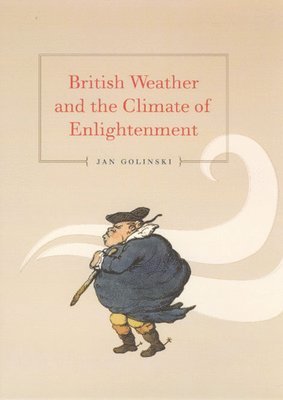
Enlightenment inquiries into weather sought to impose order on a force that had the power to alter human life and social conditions. "British Weather and the Climate of Enlightenment" reveals how a new sense of the national climate emerged in the eighteenth century from the systematic recording of the weather, and how it was deployed in discussions of the health and welfare of the population. Enlightened intellectuals hailed climate's role in the development of civilization but acknowledged that human existence depended on natural forces that would never submit to rational control. Reconsidering the Enlightenment through ideas, beliefs, and practices concerning the weather, Jan Golinski aims to reshape our understanding of the movement and its legacy for modern environmental thinking. With its combination of cultural history and the history of science, "British Weather and the Climate of Enlightenment" counters the claim that Enlightenment progress set humans against nature, instead revealing that intellectuals of the age drew characteristically modern conclusions about the inextricability of nature and culture.
786 kr
Skickas inom 7-10 vardagar
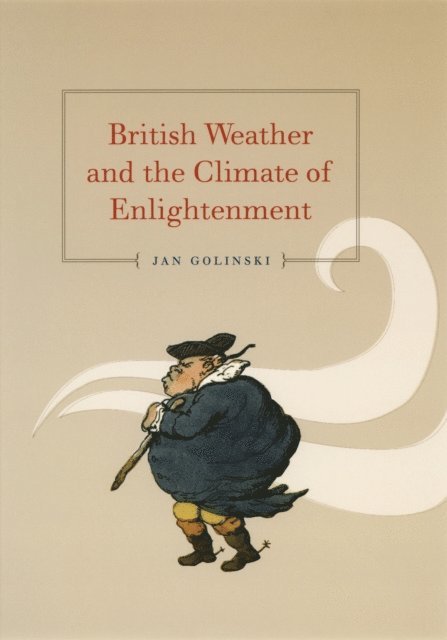
Enlightenment inquiries into weather sought to impose order on a force that had the power to alter human life and social conditions. "British Weather and the Climate of Enlightenment" reveals how a new sense of the national climate emerged in the eighteenth century from the systematic recording of the weather, and how it was deployed in discussions of the health and welfare of the population. Enlightened intellectuals hailed climate's role in the development of civilization but acknowledged that human existence depended on natural forces that would never submit to rational control. Reconsidering the Enlightenment through ideas, beliefs, and practices concerning the weather, Jan Golinski aims to reshape our understanding of the movement and its legacy for modern environmental thinking. With its combination of cultural history and the history of science, "British Weather and the Climate of Enlightenment" counters the claim that Enlightenment progress set humans against nature, instead revealing that intellectuals of the age drew characteristically modern conclusions about the inextricability of nature and culture.
Making Natural Knowledge
Constructivism and the History of Science, with a new Preface
Häftad, Engelska, 2005
353 kr
Skickas inom 7-10 vardagar
Arguably the best available introduction to constructivism, a research paradigm that has dominated the history of science for the past forty years, "Making Natural Knowledge" reflects on the importance of this theory, tells the history of its rise to prominence, and traces its most important tensions. Viewing scientific knowledge as a product of human culture, Jan Golinski challenges the traditional trajectory of the history of science as steady and autonomous progress. In exploring topics such as the social identity of the scientist, the significance of places where science is practiced, and the roles played by language, instruments, and images, "Making Natural Knowledge" sheds new light on the relations between science and other cultural domains.
275 kr
Skickas inom 7-10 vardagar
What did it mean to be a scientist before the profession itself existed? Jan Golinski finds an answer in the remarkable career of Humphry Davy, the foremost chemist of his day and one of the most distinguished British men of science of the nineteenth century. Originally a country boy from a modest background, Davy was propelled by his scientific accomplishments to a knighthood and the presidency of the Royal Society. An enigmatic figure to his contemporaries, Davy has continued to elude the efforts of biographers to classify him: poet, friend to Coleridge and Wordsworth, author of travel narratives and a book on fishing, chemist and inventor of the miners’ safety lamp. What are we to make of such a man? In The Experimental Self, Golinski argues that Davy’s life is best understood as a prolonged process of self-experimentation. He follows Davy from his youthful enthusiasm for physiological experiment through his self-fashioning as a man of science in a period when the path to a scientific career was not as well-trodden as it is today. What emerges is a portrait of Davy as a creative fashioner of his own identity through a lifelong series of experiments in selfhood.
1 126 kr
Skickas inom 7-10 vardagar
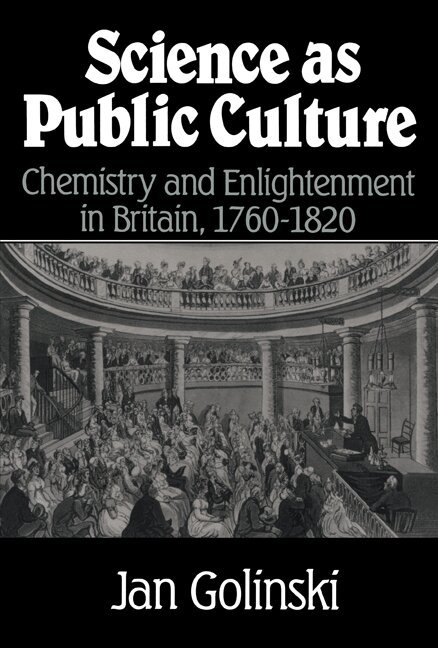
Science as Public Culture joins a growing number of studies examining science as a practical activity in specific social settings. Jan Golinski considers the development of chemistry in Britain from 1760 to 1820, and relates it to the rise and subsequent eclipse of forms of civic life characteristic of the European Enlightenment. Within this framework the careers of prominent chemists like William Cullen, Joseph Black, Joseph Priestley, Thomas Beddoes, and Humphry Davy are interpreted in a different light. The major discoveries of the time, including nitrous oxide (laughing gas) and the electrical decomposition of water, are set against the background of alternative ways of constructing science as a public enterprise. The book makes a significant contribution to our understanding of the relationship between scientific activity and processes of social and political change in a period of great transformations in chemistry and in the conditions of public life.
360 kr
Skickas inom 7-10 vardagar
Science as Public Culture joins a growing number of studies examining science as a practical activity in specific social settings. Jan Golinski considers the development of chemistry in Britain from 1760 to 1820, and relates it to the rise and subsequent eclipse of forms of civic life characteristic of the European Enlightenment. Within this framework the careers of prominent chemists like William Cullen, Joseph Black, Joseph Priestley, Thomas Beddoes, and Humphry Davy are interpreted in a different light. The major discoveries of the time, including nitrous oxide (laughing gas) and the electrical decomposition of water, are set against the background of alternative ways of constructing science as a public enterprise. The book makes a significant contribution to our understanding of the relationship between scientific activity and processes of social and political change in a period of great transformations in chemistry and in the conditions of public life.