Jane E. Everson - Böcker
Visar alla böcker från författaren Jane E. Everson. Handla med fri frakt och snabb leverans.
6 produkter
6 produkter
Del 221 - Proceedings of the British Academy
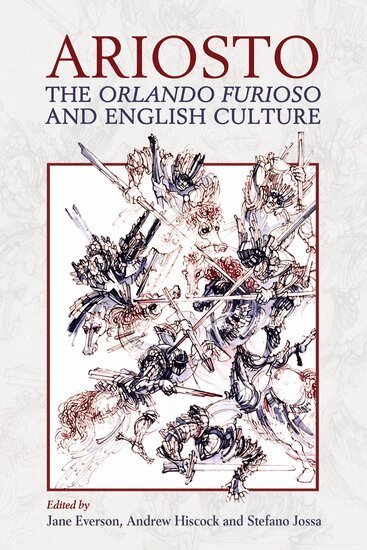
Ariosto, the Orlando Furioso and English Culture
Inbunden, Engelska, 2019
1 406 kr
Skickas inom 7-10 vardagar
Marking the fifth centenary of the publication of the first edition of the Italian masterpiece, Ariosto, the Orlando Furioso and English Culture brings together an international team of Renaissance scholars from a wide variety of disciplines to analyse in detail the diffuse impact which the epic poem had upon English culture from the Tudor century to the present day. Translated into English in the 1590s by Sir John Harington, godson of Elizabeth I, the influence of Ariosto's poem can be traced in literature, music and the visual arts, from Spenser and Milton to modern media adaptations. In addition, the collection reflects upon the ways in which successive editions and translations, examples of critical reception, rewritings and adaptations in different media (in particular opera) all shaped the rich and evolving understanding of the adventures of Orlando, Angelica, Medoro, Olympia, and Sacripante in the cultural and artistic production of England across the centuries.
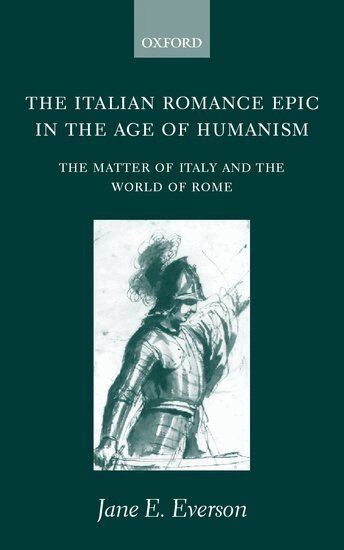
The Italian Romance Epic in the Age of Humanism
The Matter of Italy and the World of Rome
Inbunden, Engelska, 2001
3 674 kr
Skickas inom 5-8 vardagar
The immense success of the Italian romance or chivalric epic between the mid-fourteenth century and the sixteenth century constitutes a striking paradox. The flowering of the genre, between the composition of Boccaccio's Teseida and the Orlando Furioso of Ariosto occurred in precisely the same period as the emergence of Humanism and the revival of classical culture and literature based on re-readings of ancient texts. The two cultural phenomenon - of medieval, vernacular narratives and the imitation of classical texts, veneration for classical antiquity - seem antithetical. Through an analysis of aspects of both the cultural context and major literary texts, this book shows that the traditional distinction of popular versus élite culture cannot be maintained. The study reveals a process of syncretism and symbiosis through which the romance epic adapted to the challenges posed by the classical revival, absorbing and rewriting elements of classical texts into the tradition of the matter of France and the matter of Britain to create a new 'matter of Italy' - texts which appealed to all levels of society.
726 kr
Skickas inom 10-15 vardagar
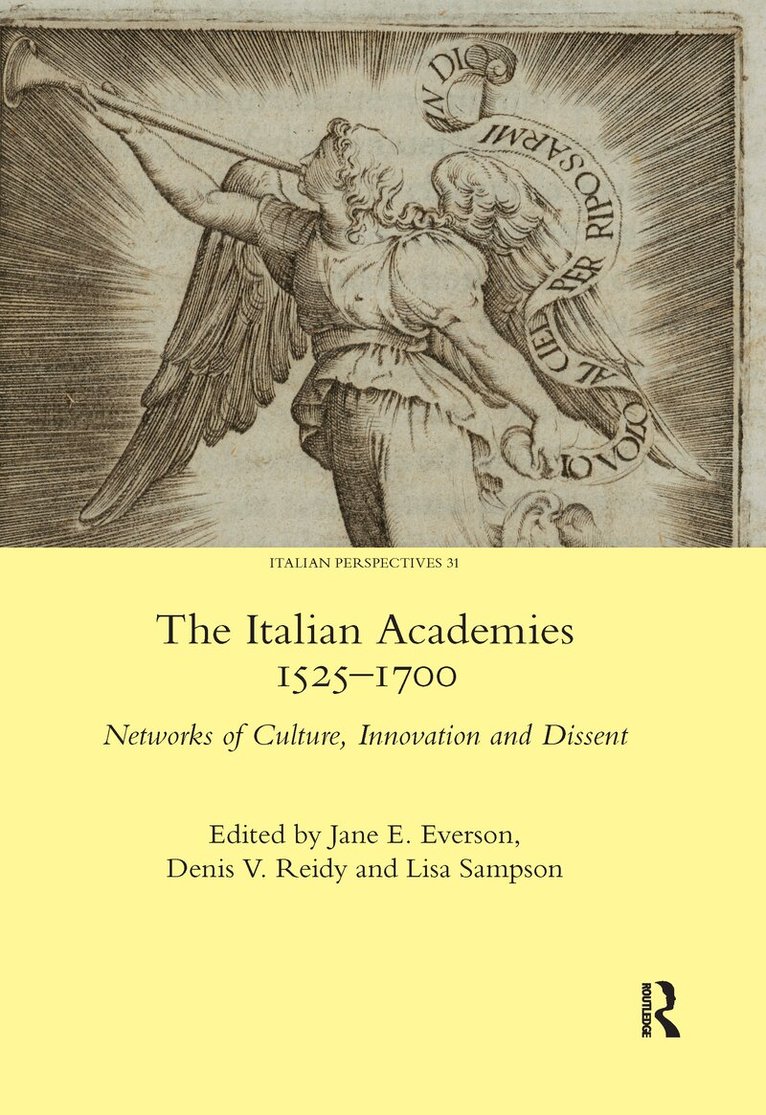
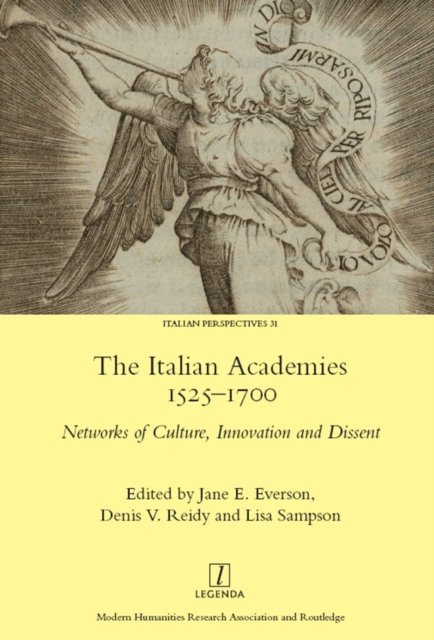
The intellectual societies known as Academies played a vital role in the development of culture, and scholarly debate throughout Italy between 1525-1700. They were fundamental in establishing the intellectual networks later defined as the ‘République des Lettres’, and in the dissemination of ideas in early modern Europe, through print, manuscript, oral debate and performance. This volume surveys the social and cultural role of Academies, challenging received ideas and incorporating recent archival findings on individuals, networks and texts. Ranging over Academies in both major and smaller or peripheral centres, these collected studies explore the interrelationships of Academies with other cultural forums. Individual essays examine the fluid nature of academies and their changing relationships to the political authorities; their role in the promotion of literature, the visual arts and theatre; and the diverse membership recorded for many academies, which included scientists, writers, printers, artists, political and religious thinkers, and, unusually, a number of talented women. Contributions by established international scholars together with studies by younger scholars active in this developing field of research map out new perspectives on the dynamic place of the Academies in early modern Italy.The publication results from the research collaboration ‘The Italian Academies 1525-1700: the first intellectual networks of early modern Europe’ funded by the Arts and Humanities Research Council and is edited by the senior investigators.
1 616 kr
Skickas inom 7-10 vardagar
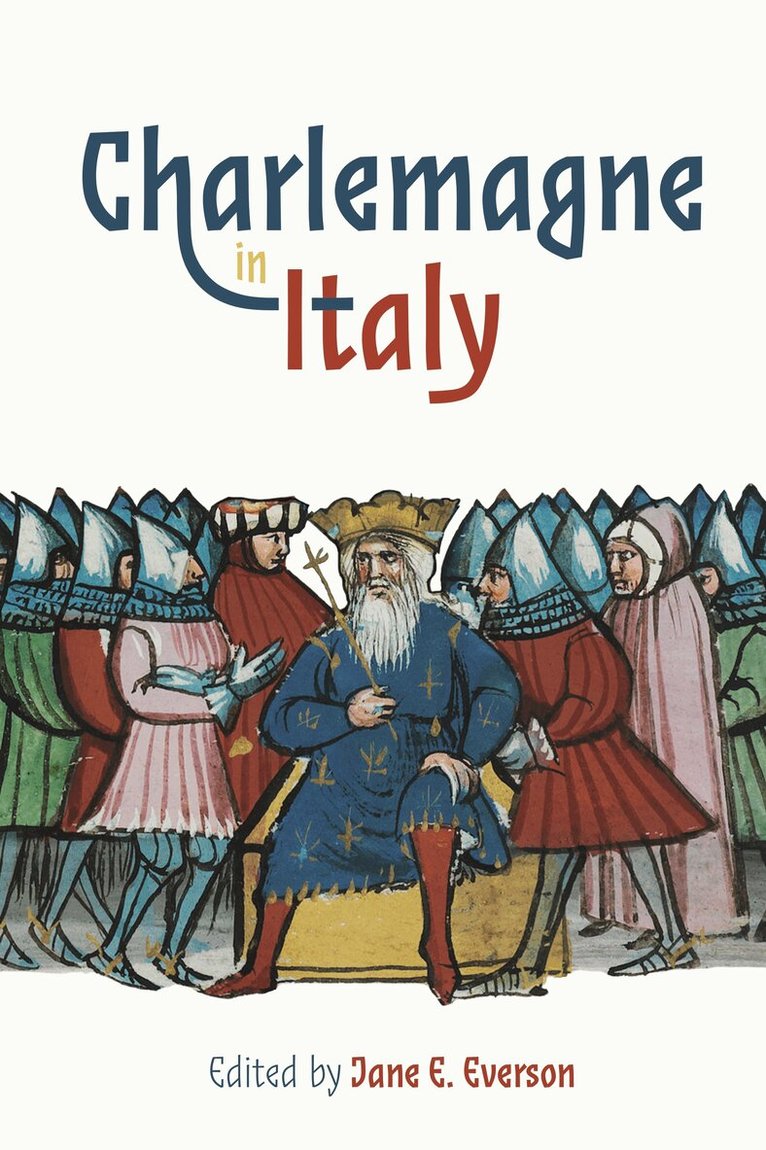
An exploration of the many depictions of Charlemagne in the Italian tradition of chivalric narratives in verse and prose.Chivalric tales and narratives concerning Charlemagne were composed and circulated in Italy from the early fourteenth to the mid-sixteenth century (and indeed subsequently flourished in forms of popular theatre which continue today). But are they history or fiction? Myth or fact? Cultural memory or deliberate appropriation? Elite culture or popular entertainment? Oral or written, performed or read? Beginning in the age of Dante with the earliest tales composed for Italians in the hybrid language of Franco-Italian, which draw inspiration from the French tradition of Charlemagne narratives, the volume considers the compositions of anonymous reciters of cantari and the prose versions of the Florentine Andrea da Barberino, before discussing the major literary contributions to the genre by Luigi Pulci, Matteo Maria Boiardo and Ludovico Ariosto. The focus throughout is on the ways in which the portrait of Charlemagne, seen as both Emperor and King of France, is persistently ambiguous, affected by the contemporary political situation and historical events such as invasion and warfare. He emerges through these texts in myriad guises, from positive and admirable to negative and despised.
822 kr
Tillfälligt slut
Italy in Crisis: 1494 is a collection of essays which were originally presented at a conference organized at the Institute of Romance Studies in London. They cover the most Important aspects of the history, literature, astrology and thought of the 1490s, when major figures such as Lorenzo de' Medici, Angelo Poliziano, Luigi Pulci, and Boiardo, the author of the Orlando Innamorato, disappeared from the Italian scene. The contributors are Alison Brown, Remo Catani, Peter Brand, Marco Dorigatti, Mark Davie, Martin McLaughlin, Letizla Panlzza and Denis Reldy.
1 335 kr
Skickas inom 10-15 vardagar
The intellectual societies known as Academies played a vital role in the development of culture, and scholarly debate throughout Italy between 1525-1700. They were fundamental in establishing the intellectual networks later defined as the ‘République des Lettres’, and in the dissemination of ideas in early modern Europe, through print, manuscript, oral debate and performance. This volume surveys the social and cultural role of Academies, challenging received ideas and incorporating recent archival findings on individuals, networks and texts. Ranging over Academies in both major and smaller or peripheral centres, these collected studies explore the interrelationships of Academies with other cultural forums. Individual essays examine the fluid nature of academies and their changing relationships to the political authorities; their role in the promotion of literature, the visual arts and theatre; and the diverse membership recorded for many academies, which included scientists, writers, printers, artists, political and religious thinkers, and, unusually, a number of talented women. Contributions by established international scholars together with studies by younger scholars active in this developing field of research map out new perspectives on the dynamic place of the Academies in early modern Italy.The publication results from the research collaboration ‘The Italian Academies 1525-1700: the first intellectual networks of early modern Europe’ funded by the Arts and Humanities Research Council and is edited by the senior investigators.