Jane Geddes - Böcker
Visar alla böcker från författaren Jane Geddes. Handla med fri frakt och snabb leverans.
7 produkter
7 produkter
524 kr
Skickas inom 7-10 vardagar
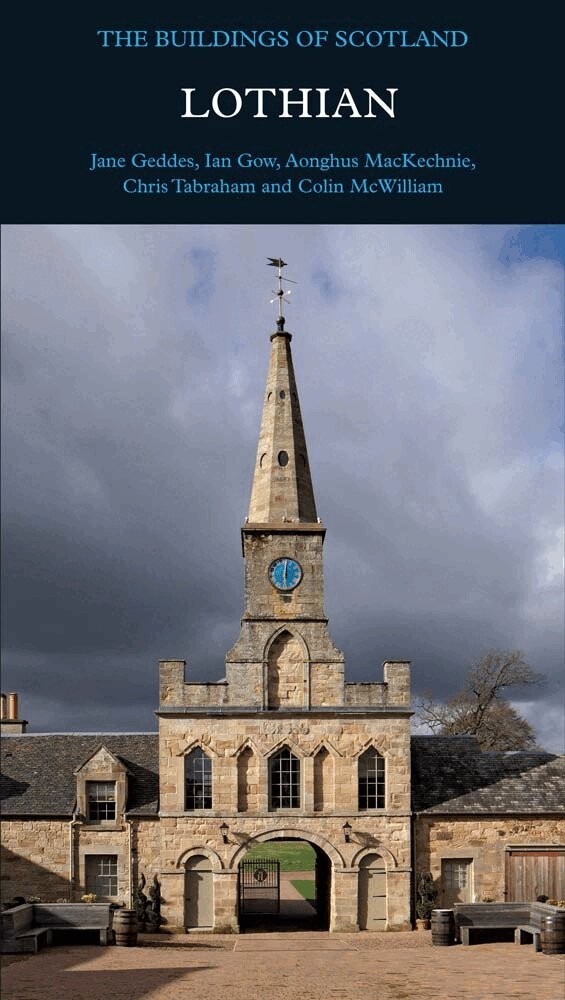
The first full revision of the first of the volumes for the Buildings of Scotland series This is the first fully revised and expanded guide to the buildings of Lothian since Colin McWilliam’s pioneering volume of 1978, with new colour photography, maps, and plans to accompany the unrivalled coverage of the area. Lothian surrounds the capital city of Edinburgh, which has done much to influence the character of its buildings. Among these are some important medieval relics, including the internationally famous Rosslyn Chapel, the royal Renaissance palace at Linlithgow, and the ruins of great castles and tower houses. Among major country houses, none are more splendid than Hopetoun and the ducal seat of Dalkeith Palace but Lothian also has the extraordinarily well-preserved Newhailes and mighty Gosford House. This is also an area of picturesque small towns and resorts along the Firth of Forth with outstanding villas for the Edwardian elite, and rural villages of unspoiled character, preserving remains of their agricultural heritage. The industrial legacy is important, including not only one of the most complete collieries in Scotland but also the world-famous Forth Rail Bridge. This volume is an essential reference for visitors and residents alike.
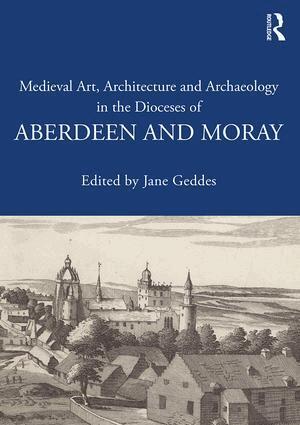
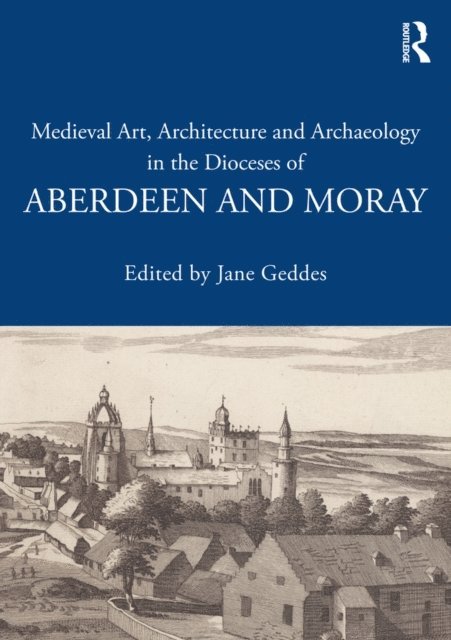
Medieval Art, Architecture and Archaeology in the Dioceses of Aberdeen and Moray
Inbunden, Engelska, 2016
2 166 kr
Skickas inom 7-10 vardagar
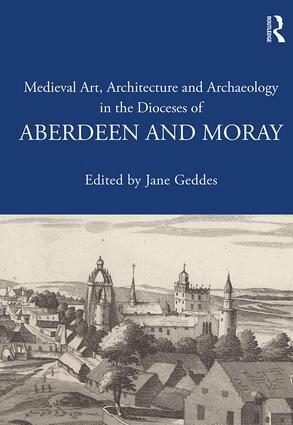
Exploring the medieval heritage of Aberdeenshire and Moray, the essays in this volume contain insights and recent work presented at the British Archaeological Association Conference of 2014, based at Aberdeen University. The opening, historical chapters establish the political, economic and administrative context of the region, looking at both the secular and religious worlds and include an examination of Elgin Cathedral and the bishops’ palaces. The discoveries at the excavations of the kirk of St Nicholas, which have revealed the early origins of religious life in Aberdeen city, are summarized and subsequent papers consider the role of patronage. Patronage is explored in terms of architecture, the dramas of the Reformation and its aftermath highlighted through essentially humble parish churches, assailed by turbulent events and personalities. The collegiate church at Cullen, particularly its tomb sculpture, provides an unusually detailed view of the spiritual and dynastic needs of its patrons. The decoration of spectacular ceilings, both carved and painted, at St Machar’s Cathedral, Provost Skene’s House and Crathes Castle, are surveyed through the eyes of their patrons and the viewers below. Saints and religious devotion feature in the last four chapters, focusing on the carved wooden panels from Fetteresso, which display both piety and a rare glimpse of Scottish medieval carnal humour, the illuminated manuscripts from Arbuthnott, the Aberdeen Breviary and Historia Gentis Scotorum.The medieval artistic culture of north-east Scotland is both battered by time and relatively little known. With discerning interpretation, this volume shows that much high-quality material still survives, while the lavish illustrations restore some glamour to this lost medieval world.
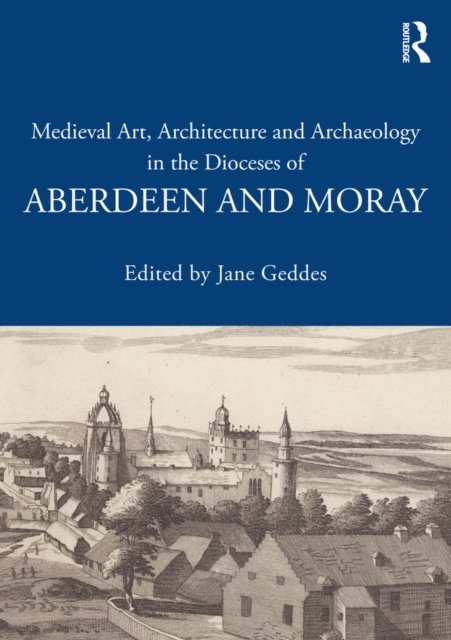
Medieval Art, Architecture and Archaeology in the Dioceses of Aberdeen and Moray
Häftad, Engelska, 2016
851 kr
Skickas inom 10-15 vardagar
Exploring the medieval heritage of Aberdeenshire and Moray, the essays in this volume contain insights and recent work presented at the British Archaeological Association Conference of 2014, based at Aberdeen University. The opening, historical chapters establish the political, economic and administrative context of the region, looking at both the secular and religious worlds and include an examination of Elgin Cathedral and the bishops’ palaces. The discoveries at the excavations of the kirk of St Nicholas, which have revealed the early origins of religious life in Aberdeen city, are summarized and subsequent papers consider the role of patronage. Patronage is explored in terms of architecture, the dramas of the Reformation and its aftermath highlighted through essentially humble parish churches, assailed by turbulent events and personalities. The collegiate church at Cullen, particularly its tomb sculpture, provides an unusually detailed view of the spiritual and dynastic needs of its patrons. The decoration of spectacular ceilings, both carved and painted, at St Machar’s Cathedral, Provost Skene’s House and Crathes Castle, are surveyed through the eyes of their patrons and the viewers below. Saints and religious devotion feature in the last four chapters, focusing on the carved wooden panels from Fetteresso, which display both piety and a rare glimpse of Scottish medieval carnal humour, the illuminated manuscripts from Arbuthnott, the Aberdeen Breviary and Historia Gentis Scotorum.The medieval artistic culture of north-east Scotland is both battered by time and relatively little known. With discerning interpretation, this volume shows that much high-quality material still survives, while the lavish illustrations restore some glamour to this lost medieval world.
349 kr
Tillfälligt slut
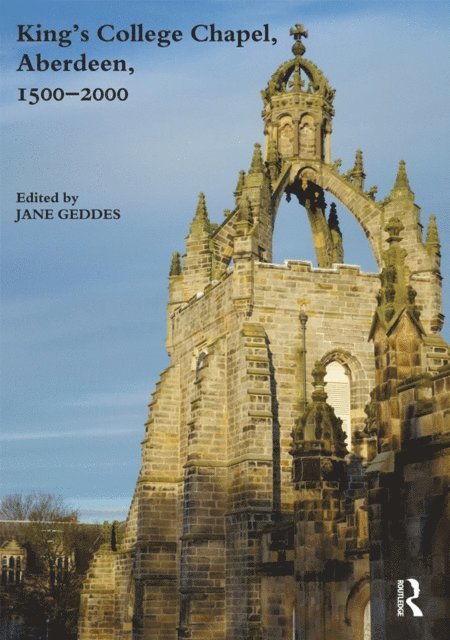
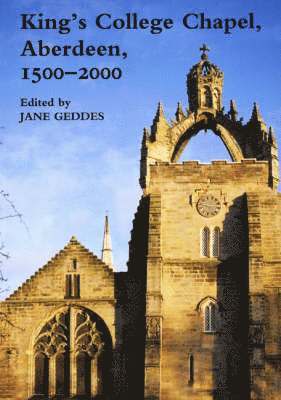
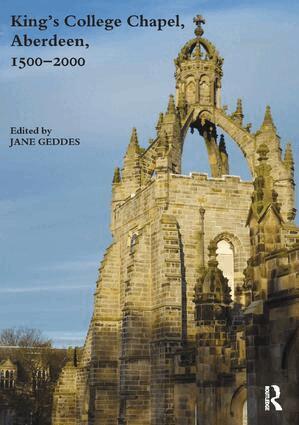
King's College Chapel is a rare survivor from pre-Reformation Scotland. Lavishly endowed by Bishop Elphinstone at the end of the Middle Ages, the chapel was spared the worst iconoclastic horrors of subsequent centuries, slumbering on with benign neglect during the Enlightenment. Even the reforming zeal of the Victorians was tempered by archaeological sensitivity. As a result, the chapel is one of the few places of worship in Scotland where the visitor may experience the unity of a medieval vision. In addition to the structure and furnishings, documentary evidence allows a very complete picture to be built up concerning its contents and use. Bishop Elphinstone's Aberdeen Breviary, defining a specifically Scottish liturgy, lay at the core of worship in the chapel. The services provided the ritual for which the elaborate choir stalls were built. This book aims to integrate Bishop Elphinstone's heritage: the liturgy and music, architecture and fittings. These serve as a spectacular reminder of the medieval riches lost elsewhere in Scotland. The quiet survival of the chapel after the Reformation of 1560 is, in its own way, equally remarkable.Used only as a store and occasional meeting room for almost 300 years, the building was dutifully maintained by the University even when funds were low. Its strident crown tower had become a symbol of the University's identity and its political allegiance to the king. The later fittings reflect the restoration of worship to the chapel in the 19th century. The 22 authors have drawn extensively on original documents from the University archive to create a multidisciplinary account of the chapel on its 500th anniversary, 2 April 2000.
492 kr
Tillfälligt slut
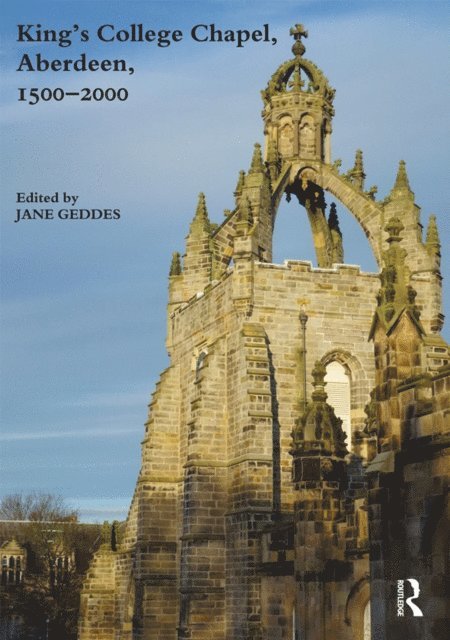
This new edition is a revised and expanded version of the book produced in 2000 to celebrate the quincentenary of King's College Chapel, Aberdeen. Since then, exciting discoveries have taken place and old ideas have been reappraised. The choir stalls and woodwork have provided a fresh seam of information about the meaning and use of the medieval chapel. Daniel MacCannell has identified new iconography in the stalls. Jane Geddes, prompted by the installation of the new organ, has investigated the original function and appearance of the great pulpitum or screen between the choir and nave and discovered the location of a magnificent lost organ loft. Mary Pryor and John Morrison have examined the great baroque biblical paintings and come up with a totally new interpretation of their iconography and function: a political warning to King Charles II. Easter Smart, the university chaplain, describes the flexible and ecumenical use of the chapel today. The revised edition appears in time to honour the quincentenary of the death of Bishop William Elphinstone, the founder of Aberdeen University, who died in 1514. This book aims to integrate his legacy to the chapel: the liturgy, music, architecture and fittings. Thanks to an unusually tolerant and conservative attitude towards religion at the university following the Reformation, the chapel has survived in a more complete medieval state than any other church in Scotland. The rich archive of university documents show how benign neglect and a fierce pride in their iconic building caused the university to maintain the structure and its furnishings even during the long centuries when it ceased to serve a religious function.
Royalty and Ritual
The landscape of power in early medieval Scotland and Europe
Häftad, Engelska, 2026
836 kr
Kommande
Medieval kings and kingship, and the rituals that define them, continue to captivate both scholars and the wider public. This interdisciplinary volume offers a Europe-wide perspective on early medieval kingship, with a particular focus on Scotland. What types of royal sites existed in the early medieval period in Scotland, and how did they vary regionally? Can we trace these sites in placenames? What rituals and other activities were associated with these sites, and what purposes did they serve? These and other questions are explored in the papers gathered together in this interdisciplinary volume. Drawing together experts in archaeology, history, placenames, folklore, poetry, and art history, the volume unpacks the story of early medieval kingship in Scotland against a European backdrop and across multiple scales, from multi-site regions and the mobile exercise of kingship, to single-site landscapes, analysis of significant objects, and the memorialisation of stories through tradition. Framed by recent archaeological excavations in Scotland, Wales, Ireland, England, and Scandinavia, this book presents a rich and innovative approach to the study of kingship in the early medieval period.
Royalty and Ritual
The landscape of power in early medieval Scotland and Europe
Inbunden, Engelska, 2026
1 589 kr
Kommande
Medieval kings and kingship, and the rituals that define them, continue to captivate both scholars and the wider public. This interdisciplinary volume offers a Europe-wide perspective on early medieval kingship, with a particular focus on Scotland. What types of royal sites existed in the early medieval period in Scotland, and how did they vary regionally? Can we trace these sites in placenames? What rituals and other activities were associated with these sites, and what purposes did they serve? These and other questions are explored in the papers gathered together in this interdisciplinary volume. Drawing together experts in archaeology, history, placenames, folklore, poetry, and art history, the volume unpacks the story of early medieval kingship in Scotland against a European backdrop and across multiple scales, from multi-site regions and the mobile exercise of kingship, to single-site landscapes, analysis of significant objects, and the memorialisation of stories through tradition. Framed by recent archaeological excavations in Scotland, Wales, Ireland, England, and Scandinavia, this book presents a rich and innovative approach to the study of kingship in the early medieval period.