Jane Holloway - Böcker
Visar alla böcker från författaren Jane Holloway. Handla med fri frakt och snabb leverans.
5 produkter
5 produkter
186 kr
Skickas
288 kr
Tillfälligt slut
182 kr
Skickas
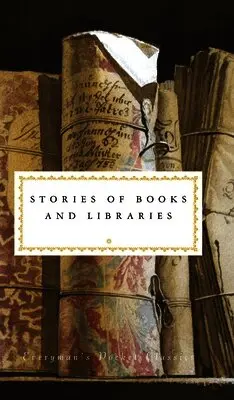
Here are libraries modest, mobile, mystical (Borges of course) and magical (Helen Oyeyemi's enchanting 'Books and Roses'); public and private, provincial and prestigious. Little that happen in Elizabeth McCracken's eccentric library did not happen in real life - even down to the murder; and it is rumoured that on 3 June 1997 the British Museum Reading Room really was visited by the ghost of Max Beerbohm's obscurest of poets, Enoch Soames...Fiction and reality merge in Cortazar's 'A Continuity of Parks'. Characters step out of their books in Fay Weldon's 'Lily Bart's Hat Shop', while Jasper Fforde's Jurisfiction operatives enter Wuthering Heights to deliver a Rage-Counselling session. Charles Lamb muses on the annoying book-borrowing habits of Samuel Taylor Coleridge; the teenage Teffi is overawed by Tolstoy; Helene Hanff in Manhattan launches her famous correspondence with a London antiquarian bookshop at 84 Charing Cross Road.Reading, as the Queen informs an appalled private secretary, is 'untidy, discursive and perpetually inviting'. And also, of course, a lot of fun. Sit comfortably, then, and begin.
158 kr
Skickas
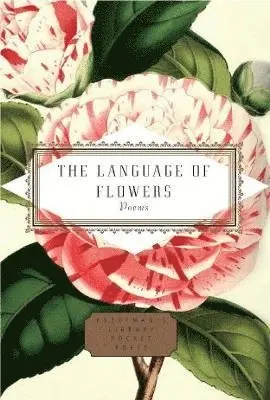
The language of flowers is as old as language itself. In the earliest poetry familiar plants were used to represent simple emotions, ideas, or states of mind: love, hope, despair, fidelity, solitude, beauty, mortality. Over time these associations entwined with myth and legend, with religious symbolism, folk and herbal lore. By the early 19th century the 'Language of Flora' had become increasingly refined, especially in England and America, where sentimental flower books listing flower meanings and illustrating them with verse were perennial bestsellers. The Everyman Language of Flowers without sacrificing the charm of its Victorian predecessors aims to provide extended, updated and rather more robust floral anthology for the 21st century, presenting poetry from ancient Greece to contemporary Britain and America, and spanning the world from Cuba to Korea, Russia to Zimbabwe. Here are Rumi and Rilke on the rose; Herrick and Louise Glück on the lily; Chaucer, Emily Dickinson and Jon Silkin on the daisy; Mary Robinson and Ted Hughes on the snowdrop; Lorenzo de Medici, John Clare and Alice Oswald on the violet; Hugo and Roethke on carnations; Ovid and Goethe on poppies; Blake and Eugenio Montale on the sunflower; Christina Rossetti on heartsease and forget-me-nots; Emily Brontë on harebells and heather, Seamus Heaney on lupins, Pasternak on night-scented stock...Eastern cultures, rich in flower associations, are well represented: there are Tang poems celebrating chrysanthemums and peonies, Zen poems about orchids and lotus flowers, poems about jasmine and marigolds from India, roses, tulips and narcissi from Persia, the Ottoman empire and the Arabic world.Flowers are arranged by season, with roses and lilies in a section of their own. In a final section poets comment directly or indirectly on the language of flowers itself. The book concludes with a selected glossary drawn from several celebrated Victorian collections.
158 kr
Skickas
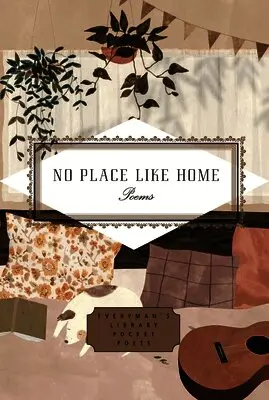
Place of refuge, place where we can be ourselves; place we long to escape from, place where we are confronted by absence and loneliness; shabby downtown apartment or idyllic country cottage. Like it or loathe it, home is where we do most of our living.Home is, of course, many things to many poets. It is Billy Collins's favourite armchair and Imtiaz Dharker's 'Living Space' in the slums of Mumbai. It is Wordsworth's 'dear Valley' of Grasmere, and Philip Larkin's Coventry, that place where nothing so famously happens. It may be somewhere we long for, perhaps unattainably: Ovid and Mahmoud Darwish lament their home countries, Kapka Kassabova seeks 'a house we can never find', while Jules Supervielle is 'Homesick for the Earth'.There is an abundance of domestic life. Attend a miserable breakfast chez Jacques Prévert; observe Wendy Cope and partner happily 'Being Boring'. Cut to Anna Barbauld's washing-day, Marilyn Nelson dusting, Buson mending his clothes and Fiona Wright contending with a Tupperware party. Peep in on Amy Lowell in the bath and John Donne in bed, Auden in the privy and Joy Harjo at the kitchen table. Here are removals and homecomings, neighbours good and bad. Inevitably, after a year of enforced domesticity, some lockdown thoughts (Anna McDonald, Pauline Prior-Pitt); Mary Oliver's dream house, Naomi Shihab Nye's homes where children live, the far-from-safe houses of U. A. Fanthorpe, and some final reflections on the idea of a dwelling place from Rumi, Emily Dickinson, John Burnside, Vinita Agrawal, Derek Walcott, Les Murray and Iman Mersal. It may not always be sweet, but there is certainly No Place Like Home.