Janet Coleman – författare
Visar alla böcker från författaren Janet Coleman. Handla med fri frakt och snabb leverans.
15 produkter
15 produkter
Inbunden, Engelska, 1996
3 752 kr
Skickas inom 5-8 vardagar
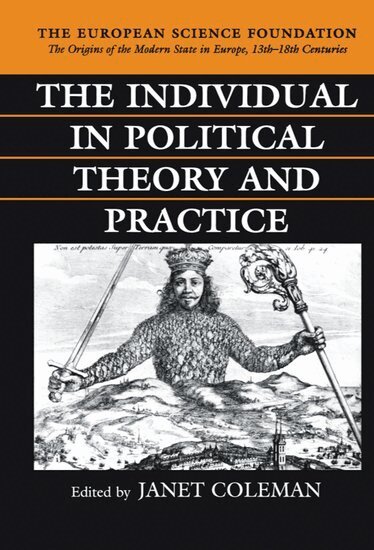
In this major study, a team of leading European scholars explores ways in which the concept of the individual developed in various areas of political and social life. The story concerns the changing nature of individual identity, community interest and corporate groups, as they were gradually redefined by common western European experiences of universal Catholicism, feudalism, civic republicanism and absolutism, Reformation and Counter-Reformation, commerce and capitalism. As European societies evolved into increasingly centralised national states, there emerged a range of religious and secular discourses which expressed the autonomy of individual agents not only as political subjects but also as private selves.
Häftad, Engelska, 2005
572 kr
Skickas inom 7-10 vardagar
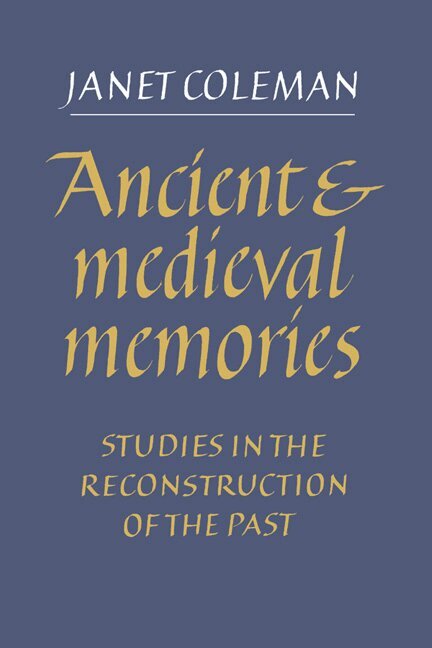
This book is an analysis of thinking, remembering and reminiscing according to ancient authors, and their medieval readers. The author argues that behind the various medieval methods in interpreting texts of the past lie two apparently incompatible theories of human knowledge and remembering, as well as two differing attitudes to matter and intellect. The book comprises a series of studies which take ancient texts as evidence of the past, and show how medieval readers and writers understood them. The studies confirm that medieval and renaissance interpretations and uses of the past differ greatly from modern interpretation and yet betray many startling continuities between modern and ancient and medieval theories.
Inbunden, Engelska, 1992
1 850 kr
Skickas inom 7-10 vardagar
This book is an analysis of thinking, remembering and reminiscing according to ancient authors, and their medieval readers. The author argues that behind the various medieval methods in interpreting texts of the past lie two apparently incompatible theories of human knowledge and remembering, as well as two differing attitudes to matter and intellect. The book comprises a series of studies which take ancient texts as evidence of the past, and show how medieval readers and writers understood them. The studies confirm that medieval and renaissance interpretations and uses of the past differ greatly from modern interpretation and yet betray many startling continuities between modern and ancient and medieval theories.
Inbunden, Engelska, 2000
1 679 kr
Skickas inom 5-8 vardagar
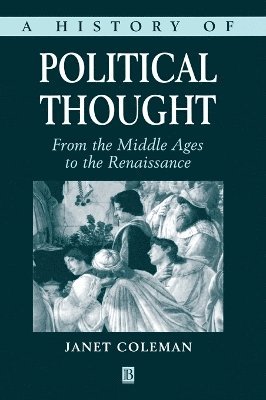
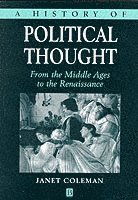
This volume continues the story of European political theorising by focusing on medieval and Renaissance thinkers. It includes extensive discussion of the practices that underpinned medieval political theories and which continued to play crucial roles in the eventual development of early-modern political institutions and debates. The author strikes a balance between trying to understand the philosophical cogency of medieval and Renaissance arguments on the one hand, elucidating why historically-suited medieval and Renaissance thinkers thought the ways they did about politics; and why we often think otherwise.
Häftad, Engelska, 2000
500 kr
Skickas inom 5-8 vardagar
This volume continues the story of European political theorising by focusing on medieval and Renaissance thinkers. It includes extensive discussion of the practices that underpinned medieval political theories and which continued to play crucial roles in the eventual development of early-modern political institutions and debates. The author strikes a balance between trying to understand the philosophical cogency of medieval and Renaissance arguments on the one hand, elucidating why historically-suited medieval and Renaissance thinkers thought the ways they did about politics; and why we often think otherwise.
Häftad, Engelska, 2000
586 kr
Skickas inom 5-8 vardagar
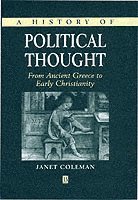
Janet Coleman's two volume history of European political theorising, from the ancient Greeks to the Renaissance is the introduction which many have been waiting for. In this volume, Coleman discusses the acknowledged great works of Greek, Roman, and early Christian writers to show how the historical contexts in which certain ideas about ethics and politics became dominant or fell from dominance, help to explain the ideas themselves. Throughout she draws on recent scholarly commentaries written by specialists in philosophy, contemporary political theory, classical languages and cultures, and on ancient and early Christian history and theology. Janet Coleman shows that the Greeks and Romans' arguments can be seen as logical and coherent if we can grasp the questions they thought it important to answer.
Häftad, Engelska, 1991
155 kr
Skickas inom 10-15 vardagar
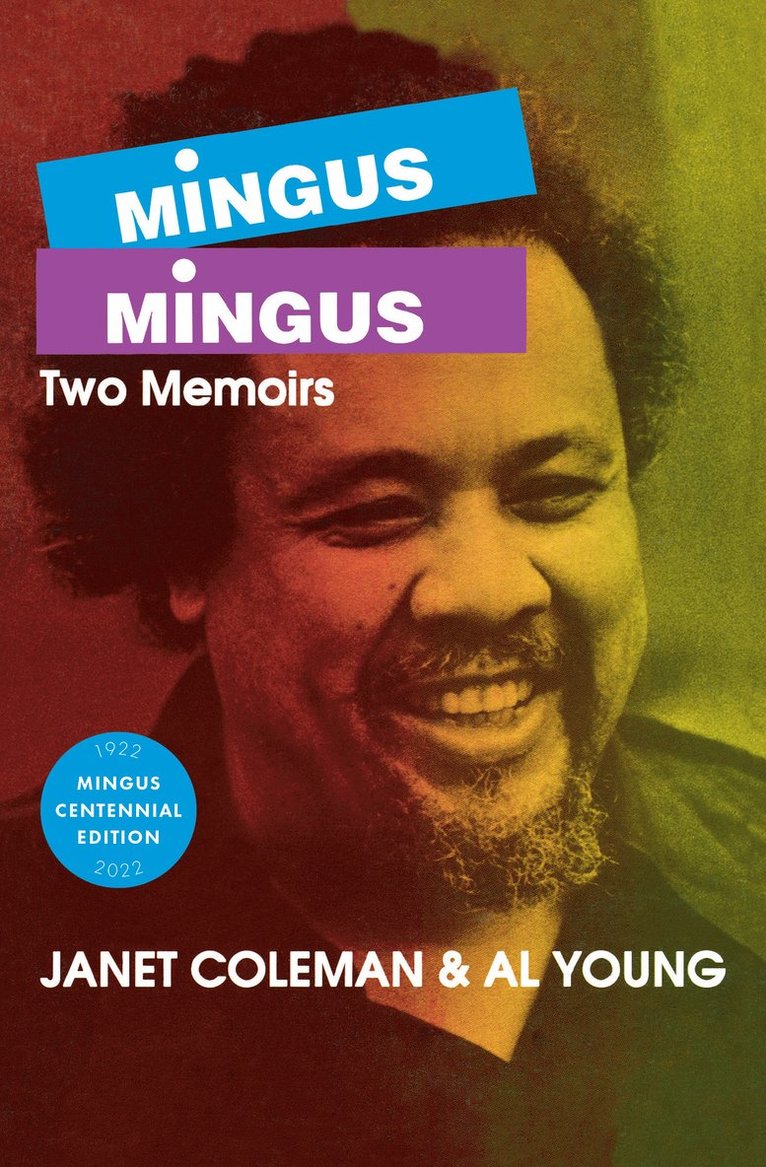
Janet Coleman and Al Young first met Charles Mingus in the 1950s at the University of Michigan. From there they followed him to New York, sitting in on Mingus’s workshops and meeting leading jazz artists. Throughout, their friendship gave them a rare view into Mingus and the social and creative forces that informed his art. This joint memoir provides a candid, unforgettable portrait of Mingus suffused with warmth, affection, and humor.
E-bok
PDF, Engelska, 20261 083 kr
Läs direkt efter köp
The second half of the fourteenth century was an important transition period both in the spheres of literary form and message, and of social, economic, and political power. First published in 1981, English Literature in History, 1350-1400 discusses fourteenth-century literature, verse and prose, in Anglo-Norman, Latin, and Middle English, and with the way in which social change-particularly the growth of lay literacy and social mobility-is expressed in the literature. Dr Coleman argues that relatively few works were meant merely to entertain, but rather to instruct, exhort, and ultimately inspire readers to criticize and reform social practice. The increasing emphasis on private responsibility, to bring the practice of Christian ethics more in line with ideals, is also apparent in the growing emphasis on authorial responsibility. This concern reflected the developing public voice of a powerful section of the population-the middle class.The book begins with the vexed question of literacy and lay education, proceeds to an exploration of the growth in the literature of social unrest, and attempts to draw some conclusions about the nature of preaching and the gradual decline of memory in favour of the written text. Finally, the book focuses on the way in which school theology filtered down into non-scholastic literature, to enlighten an enlarged readership on the issues that confronted them as private, individual Christians, and as servants and citizens devoted to the common weal.This book will help students to read fourteenth-century literature with an eye and ear better able to realize the significance of its subject matter, and to recognize the subtleties of stylistic experiment. Dr Coleman discusses in detail many of the standard texts of medieval literature (including works by Gower and Langland), presenting complex and unfamiliar ideas in a lively and engrossing way.
E-bok
Engelska, 20261 045 kr
Läs direkt efter köp
The second half of the fourteenth century was an important transition period both in the spheres of literary form and message, and of social, economic, and political power. First published in 1981, English Literature in History, 1350-1400 discusses fourteenth-century literature, verse and prose, in Anglo-Norman, Latin, and Middle English, and with the way in which social change-particularly the growth of lay literacy and social mobility-is expressed in the literature. Dr Coleman argues that relatively few works were meant merely to entertain, but rather to instruct, exhort, and ultimately inspire readers to criticize and reform social practice. The increasing emphasis on private responsibility, to bring the practice of Christian ethics more in line with ideals, is also apparent in the growing emphasis on authorial responsibility. This concern reflected the developing public voice of a powerful section of the population-the middle class.The book begins with the vexed question of literacy and lay education, proceeds to an exploration of the growth in the literature of social unrest, and attempts to draw some conclusions about the nature of preaching and the gradual decline of memory in favour of the written text. Finally, the book focuses on the way in which school theology filtered down into non-scholastic literature, to enlighten an enlarged readership on the issues that confronted them as private, individual Christians, and as servants and citizens devoted to the common weal.This book will help students to read fourteenth-century literature with an eye and ear better able to realize the significance of its subject matter, and to recognize the subtleties of stylistic experiment. Dr Coleman discusses in detail many of the standard texts of medieval literature (including works by Gower and Langland), presenting complex and unfamiliar ideas in a lively and engrossing way.
Inbunden, Engelska, 2027
276 kr
Kommande
Viola Spolin was a woman perpetually at play.There is hardly an actor, director, or theater teacher on the planet who hasn't encountered the ubiquitous theater games she developed as a young performer. She remains one of the most underappreciated figures in American cultural history, a woman whose legacy is found everywhere from experimental black-box theaters to Saturday Night Live.Heartfelt, yet unsentimental and with a full appreciation for its subject’s quirks and flaws, At Play tells the story of Spolin’s remarkable life and work. Janet Coleman, who both knew and worked with Spolin, gives a rich account of her journey from the crucible of Chicago radical politics as a child, through her training with Lee Strasberg and Stella Adler, and on to the Theater Games System that would find commercial life through Chicago’s Second City troupe. Coleman gives us a Spolin who is by turns warm and icily remote, single-minded and mercurial, quick-witted yet disdainful of the life of the mind. Coleman’s narrative includes encounters with such motley figures as L. Ron Hubbard, Paul Mazursky, Alan Alda, Wilhelm Reich, and Sanford Meisner. This is a long-overdue account of one of the most brilliant, infuriating, and utterly original artists in American history.
Inbunden, Engelska, 1899
1 107 kr
Skickas inom 3-6 vardagar
Häftad, Engelska
780 kr
Skickas inom 3-6 vardagar
499 kr
Skickas inom 3-6 vardagar
Inbunden, 1999
283 kr
Tillfälligt slut
Inbunden, Engelska, 2026
1 863 kr
Tillfälligt slut
The second half of the fourteenth century was an important transition period both in the spheres of literary form and message, and of social, economic, and political power. First published in 1981, English Literature in History, 1350–1400 discusses fourteenth-century literature, verse and prose, in Anglo-Norman, Latin, and Middle English, and with the way in which social change—particularly the growth of lay literacy and social mobility—is expressed in the literature. Dr Coleman argues that relatively few works were meant merely to entertain, but rather to instruct, exhort, and ultimately inspire readers to criticize and reform social practice. The increasing emphasis on private responsibility, to bring the practice of Christian ethics more in line with ideals, is also apparent in the growing emphasis on authorial responsibility. This concern reflected the developing public voice of a powerful section of the population—the middle class.The book begins with the vexed question of literacy and lay education, proceeds to an exploration of the growth in the literature of social unrest, and attempts to draw some conclusions about the nature of preaching and the gradual decline of memory in favour of the written text. Finally, the book focuses on the way in which school theology filtered down into non-scholastic literature, to enlighten an enlarged readership on the issues that confronted them as private, individual Christians, and as servants and citizens devoted to the common weal.This book will help students to read fourteenth-century literature with an eye and ear better able to realize the significance of its subject matter, and to recognize the subtleties of stylistic experiment. Dr Coleman discusses in detail many of the standard texts of medieval literature (including works by Gower and Langland), presenting complex and unfamiliar ideas in a lively and engrossing way.