Janet Lynne Tassell – författare
434 kr
Läs direkt efter köp
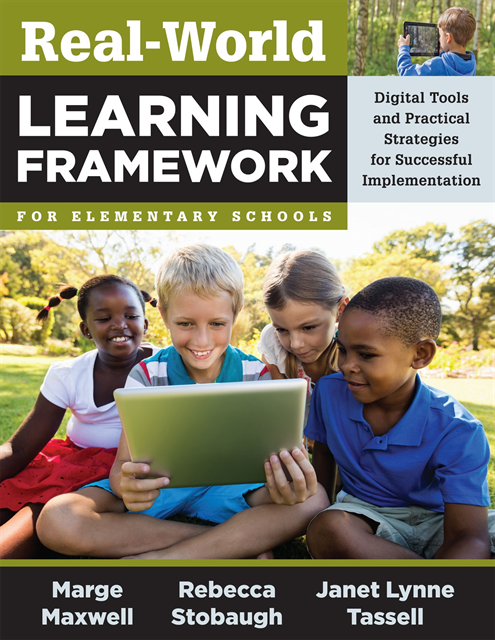
Creation in the real world is a disorganized process, and in order to foster authentic learning in the classroom, teachers must be flexible in planning and supporting learning experiences.
Bring about deeper, self-directed learning in elementary school students. This book outlines opportunities teachers and students have to exercise cognitive complexity, engagement, and technology integration through real-world project-based instruction. Part one details the Create Excellence Framework for 21st century skills, and part two offers sample lesson plans from real-world learning projects, so educators can help students take more responsibility for and find more enthusiasm in their own learning.
Benefits:
Learn each of the components of the research-based Create Excellence Framework for lesson planning and how each component connects to student content standards.Discover the five levels of real-world learning, helping students find greater fulfillment in their PBL (project-based learning).Answer questions to consider in setting up the Create Excellence Framework for real-world learning.Consult real-world examples of Create Excellence Framework–applicable learning projects that meet the guidelines of curriculum standards.Learn about many online tools and resources to promote online projects that engage students in authentic learning.
Contents
Introduction: The Create Excellence Framework for Real-World Learning
Part I:
Chapter 1—Real-World Learning
Chapter 2—Cognitive Complexity
Chapter 3—Student Engagement
Chapter 4—Technology Integration
Chapter 5—Implementation of the Create Excellence Framework
Part II:
English Language Arts Projects
Mathematics Projects
Social Studies Projects
Science Projects
References and Resources
Creativity and Technology in Mathematics Education
1 308 kr
Skickas inom 10-15 vardagar
Creativity and Technology in Mathematics Education
1 798 kr
Skickas inom 10-15 vardagar
1 672 kr
Läs direkt efter köp
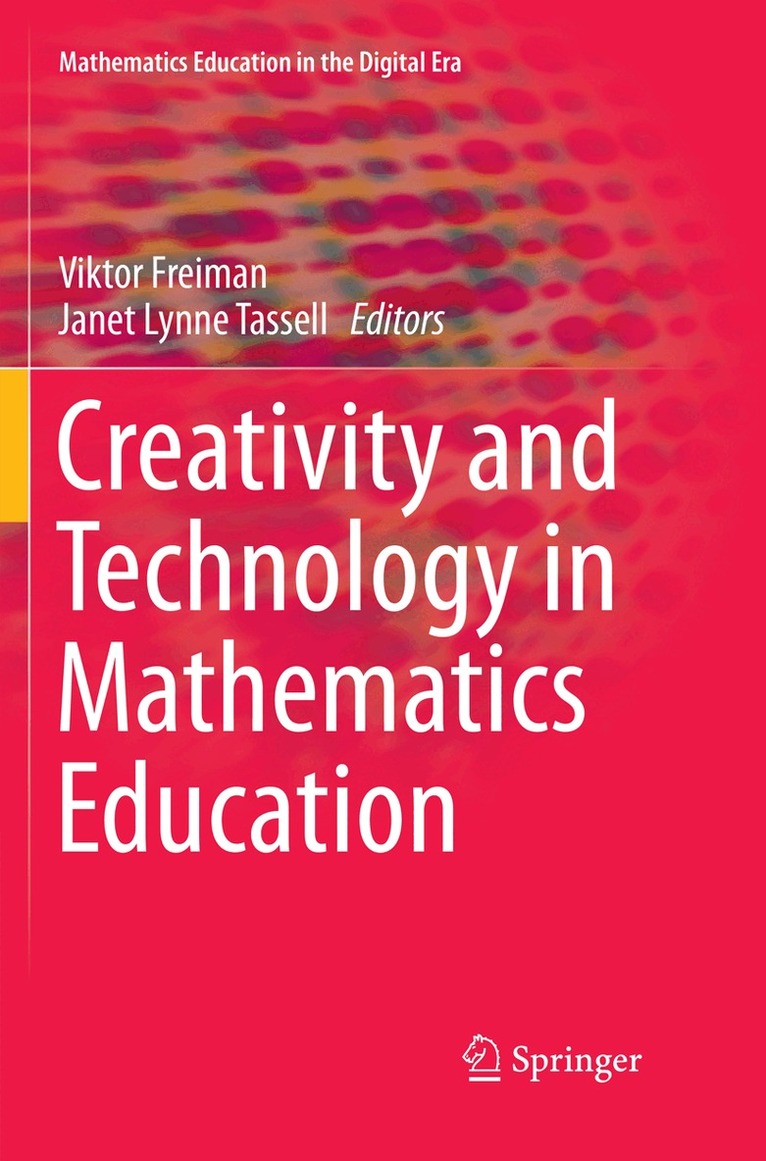
This volume provides new insights on creativity while focusing on innovative methodological approaches in research and practice of integrating technological tools and environments in mathematics teaching and learning. This work is being built on the discussions at the mini-symposium on Creativity and Technology at the International Conference on Mathematical Creativity and Giftedness (ICMCG) in Denver, USA (2014), and other contributions to the topic. The book emphasizes a diversity of views, a variety of contexts, angles and cultures of thought, as well as mathematical and educational practices. The authors of each chapter explore the potential of technology to foster creative and divergent mathematical thinking, problem solving and problem posing, creative use of dynamic, multimodal and interactive software by teachers and learners, as well as other digital media and tools while widening and enriching transdisciplinary and interdisciplinary connections in mathematics classroom. Along with ground-breaking innovative approaches, the book aims to provide researchers and practitioners with new paths for diversification of opportunities for all students to become more creative and innovative mathematics learners. A framework for dynamic learning conditions of leveraging mathematical creativity with technology is an outcome of the book as well.