Janet Y. Chen - Böcker
Visar alla böcker från författaren Janet Y. Chen. Handla med fri frakt och snabb leverans.
6 produkter
6 produkter
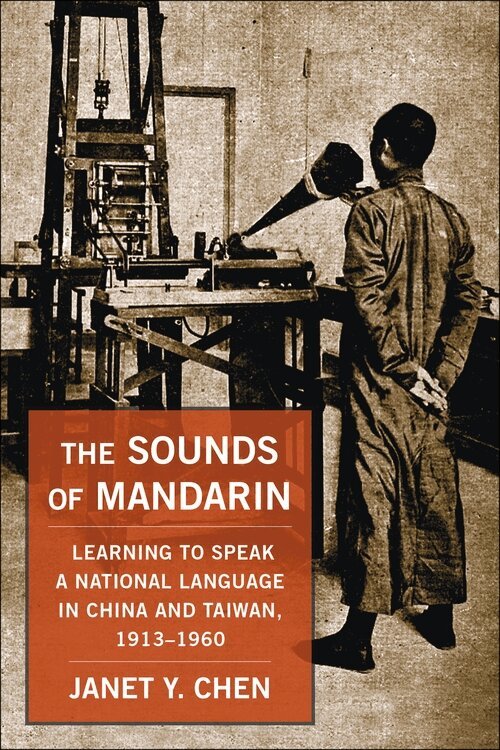
The Sounds of Mandarin
Learning to Speak a National Language in China and Taiwan, 1913–1960
Inbunden, Engelska, 2023
1 310 kr
Skickas inom 7-10 vardagar
Mandarin Chinese is the most widely spoken language in the world today. In China, a country with a vast array of regional and local vernaculars, how was this “common language” forged? How did people learn to speak Mandarin? And what does a focus on speech instead of script reveal about Chinese language and history?This book traces the surprising social history of China’s spoken standard, from its creation as the national language of the early Republic in 1913 to its journey into postwar Taiwan to its reconfiguration as the common language of the People’s Republic after 1949. Janet Y. Chen examines the process of linguistic change from multiple perspectives, emphasizing the experiences of ordinary people. After the fall of the Qing dynasty, a chorus of influential elites promoted the goal of a strong China speaking in one unified voice. Chen explores how this vision fared in practice, showing the complexities of transforming an ideological aspiration into spoken reality. She tracks linguistic change in schools, rural areas, and urban life against the backdrop of war and revolution.The Sounds of Mandarin draws on a novel aural archive of early twentieth-century sound technology, including phonograph recordings, films, and radio broadcasts. Following the uneven trajectory of standard speech, this book sheds new light on the histories of language, nationalism, and identity in China and Taiwan.
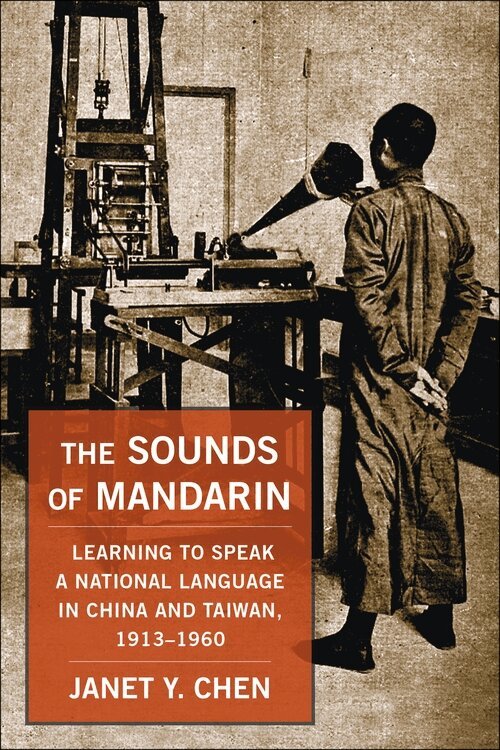
The Sounds of Mandarin
Learning to Speak a National Language in China and Taiwan, 1913–1960
Häftad, Engelska, 2023
333 kr
Skickas inom 7-10 vardagar
Mandarin Chinese is the most widely spoken language in the world today. In China, a country with a vast array of regional and local vernaculars, how was this “common language” forged? How did people learn to speak Mandarin? And what does a focus on speech instead of script reveal about Chinese language and history?This book traces the surprising social history of China’s spoken standard, from its creation as the national language of the early Republic in 1913 to its journey into postwar Taiwan to its reconfiguration as the common language of the People’s Republic after 1949. Janet Y. Chen examines the process of linguistic change from multiple perspectives, emphasizing the experiences of ordinary people. After the fall of the Qing dynasty, a chorus of influential elites promoted the goal of a strong China speaking in one unified voice. Chen explores how this vision fared in practice, showing the complexities of transforming an ideological aspiration into spoken reality. She tracks linguistic change in schools, rural areas, and urban life against the backdrop of war and revolution.The Sounds of Mandarin draws on a novel aural archive of early twentieth-century sound technology, including phonograph recordings, films, and radio broadcasts. Following the uneven trajectory of standard speech, this book sheds new light on the histories of language, nationalism, and identity in China and Taiwan.
618 kr
Skickas inom 7-10 vardagar
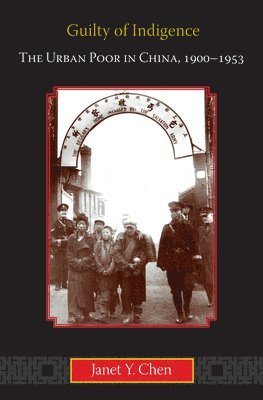
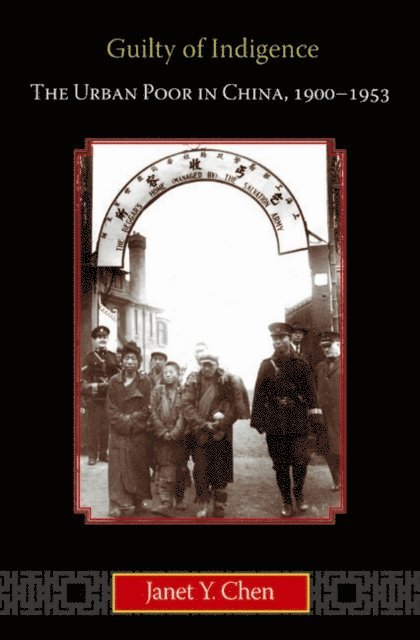
In the early twentieth century, a time of political fragmentation and social upheaval in China, poverty became the focus of an anguished national conversation about the future of the country. Investigating the lives of the urban poor in China during this critical era, Guilty of Indigence examines the solutions implemented by a nation attempting to deal with "society's most fundamental problem." Interweaving analysis of shifting social viewpoints, the evolution of poor relief institutions, and the lived experiences of the urban poor, Janet Chen explores the development of Chinese attitudes toward urban poverty and of policies intended for its alleviation. Chen concentrates on Beijing and Shanghai, two of China's most important cities, and she considers how various interventions carried a lasting influence. The advent of the workhouse, the denigration of the nonworking poor as "social parasites," efforts to police homelessness and vagrancy--all had significant impact on the lives of people struggling to survive.Chen provides a crucially needed historical lens for understanding how beliefs about poverty intersected with shattering historical events, producing new welfare policies and institutions for the benefit of some, but to the detriment of others. Drawing on vast archival material, Guilty of Indigence deepens the historical perspective on poverty in China and reveals critical lessons about a still-pervasive social issue.
284 kr
Skickas inom 7-10 vardagar
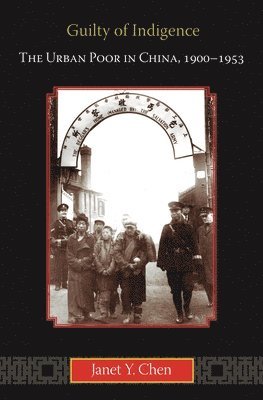
In the early twentieth century, a time of political fragmentation and social upheaval in China, poverty became the focus of an anguished national conversation about the future of the country. Investigating the lives of the urban poor in China during this critical era, Guilty of Indigence examines the solutions implemented by a nation attempting to deal with "society's most fundamental problem." Interweaving analysis of shifting social viewpoints, the evolution of poor relief institutions, and the lived experiences of the urban poor, Janet Chen explores the development of Chinese attitudes toward urban poverty and of policies intended for its alleviation. Chen concentrates on Beijing and Shanghai, two of China's most important cities, and she considers how various interventions carried a lasting influence. The advent of the workhouse, the denigration of the nonworking poor as "social parasites," efforts to police homelessness and vagrancy--all had significant impact on the lives of people struggling to survive.Chen provides a crucially needed historical lens for understanding how beliefs about poverty intersected with shattering historical events, producing new welfare policies and institutions for the benefit of some, but to the detriment of others. Drawing on vast archival material, Guilty of Indigence deepens the historical perspective on poverty in China and reveals critical lessons about a still-pervasive social issue.
754 kr
Skickas inom 7-10 vardagar
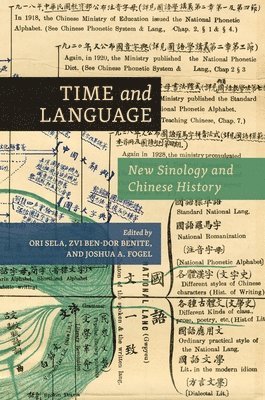
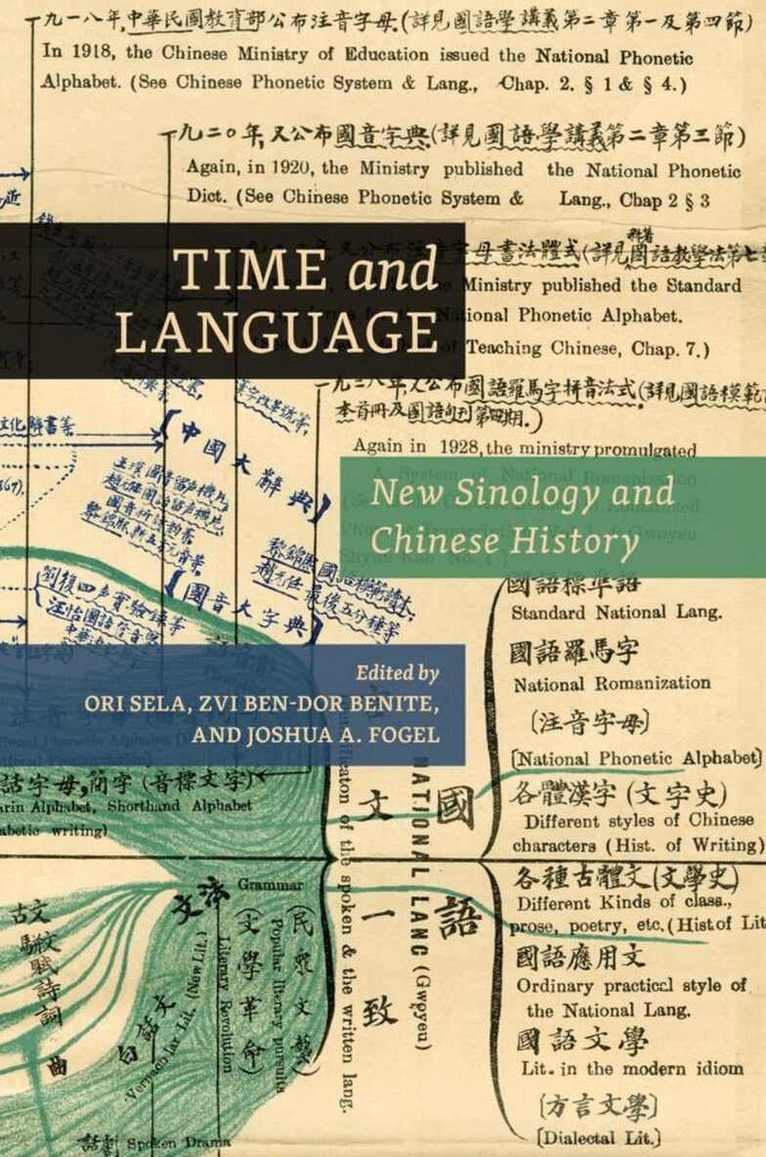
China’s past and present have been in a continuous dialogue throughout history, one that is heavily influenced by time and language: the temporal orientation and the linguistic apparatus used to express and solidify identity, ideas, and practices. Presenting a host of in-depth case studies, Time and Language: New Sinology and Chinese History argues for and demonstrates the significance of "New Sinology" by restoring the role of language/philology in the research and understanding of how modern China emerged. Reading the modern as a careful and ongoing conversation with the past renders the "new" in a different perspective. This volume is a significant step toward a new historical narrative of China’s modern history, one wherein "ruptures" can exist in tandem with continuities. The collection accentuates the deep connection between language and power—one that spans well across China’s long past—and hence the immense consequences of linguistic-related methodology to the comprehension of power structures and identity in China.Each of the essays in this volume tackles these issues, the methodological and the thematic, from a different angle but they all share the Sinological prism of analysis and the basic understanding that a much longer timeframe is required to make sense of Chinese modernity. The languages examined are diverse, including modern and classical Chinese, as well as Manchu and Japanese. Taken together they bring a spectrum of linguistic perspectives and hence a spectrum of power relations and identities to the forefront. While the essays focus on late Qing and early twentieth-century eras, they refer often to earlier periods, which are necessary to making real sense of later eras. The methodological and the thematic do not only converge, but also generate a plea for fostering and expanding this approach in current and future studies.
292 kr
Skickas inom 7-10 vardagar
China’s past and present have been in a continuous dialogue throughout history, one that is heavily influenced by time and language: the temporal orientation and the linguistic apparatus used to express and solidify identity, ideas, and practices. Presenting a host of in-depth case studies, Time and Language: New Sinology and Chinese History argues for and demonstrates the significance of "New Sinology" by restoring the role of language/philology in the research and understanding of how modern China emerged. Reading the modern as a careful and ongoing conversation with the past renders the "new" in a different perspective. This volume is a significant step toward a new historical narrative of China’s modern history, one wherein "ruptures" can exist in tandem with continuities. The collection accentuates the deep connection between language and power—one that spans well across China’s long past—and hence the immense consequences of linguistic-related methodology to the comprehension of power structures and identity in China.Each of the essays in this volume tackles these issues, the methodological and the thematic, from a different angle but they all share the Sinological prism of analysis and the basic understanding that a much longer timeframe is required to make sense of Chinese modernity. The languages examined are diverse, including modern and classical Chinese, as well as Manchu and Japanese. Taken together they bring a spectrum of linguistic perspectives and hence a spectrum of power relations and identities to the forefront. While the essays focus on late Qing and early twentieth-century eras, they refer often to earlier periods, which are necessary to making real sense of later eras. The methodological and the thematic do not only converge, but also generate a plea for fostering and expanding this approach in current and future studies.