Janice K. Gallagher - Böcker
Visar alla böcker från författaren Janice K. Gallagher. Handla med fri frakt och snabb leverans.
4 produkter
4 produkter
1 335 kr
Skickas inom 5-8 vardagar
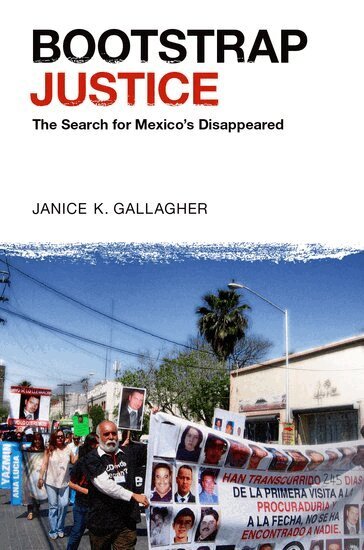
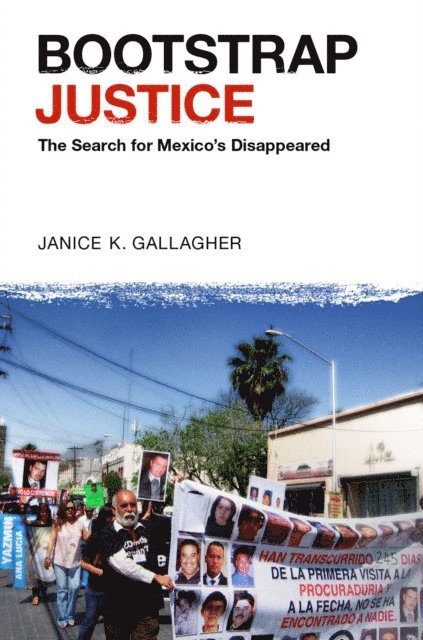
Since 2006, more than 85,000 people have disappeared in Mexico. These disappearances remain largely unsolved: disappeared people are rarely found, and the Mexican state almost never investigates or prosecutes those responsible. Despite this, people not only continue to report disappearances, but many devote their lives to answering the question, "where are they?" Given the risks and institutional barriers, why and how do people mobilize for justice in states with rampant impunity and weak rule of law? In Bootstrap Justice, Janice Gallagher leverages over a decade of ethnographic research to explain what enables the sustained mobilization of family members of the disappeared and analyze how configurations of political power between state and criminal actors shape what is possible for them to achieve. She follows three families from before the disappearance of their loved ones through their transformations into sophisticated and strategic victim advocates and activists. Gallagher supplements these individual narratives with an analysis of the evolving political opportunities for mobilization within Mexico. By centering the perspectives of people whose lives have been upended by the disappearance of their loved ones, Bootstrap Justice offers a unique window into how citizens respond to weak and corrupt institutions. Gallagher focuses on the overlooked role of informal relationships and dynamics in shaping substantive legal and human rights outcomes and highlights how pioneering independent and creative work-arounds can compensate for state inaction. While top-down efforts, such as judicial reforms, technical assistance, and changes in political leadership are important parts of addressing impunity, policymakers and scholars alike have much to learn from the bottom-up--and by following the path that citizens themselves have worn within the labyrinth of state judicial bureaucracies.
347 kr
Skickas inom 5-8 vardagar
Since 2006, more than 85,000 people have disappeared in Mexico. These disappearances remain largely unsolved: disappeared people are rarely found, and the Mexican state almost never investigates or prosecutes those responsible. Despite this, people not only continue to report disappearances, but many devote their lives to answering the question, "where are they?" Given the risks and institutional barriers, why and how do people mobilize for justice in states with rampant impunity and weak rule of law? In Bootstrap Justice, Janice Gallagher leverages over a decade of ethnographic research to explain what enables the sustained mobilization of family members of the disappeared and analyze how configurations of political power between state and criminal actors shape what is possible for them to achieve. She follows three families from before the disappearance of their loved ones through their transformations into sophisticated and strategic victim advocates and activists. Gallagher supplements these individual narratives with an analysis of the evolving political opportunities for mobilization within Mexico. By centering the perspectives of people whose lives have been upended by the disappearance of their loved ones, Bootstrap Justice offers a unique window into how citizens respond to weak and corrupt institutions. Gallagher focuses on the overlooked role of informal relationships and dynamics in shaping substantive legal and human rights outcomes and highlights how pioneering independent and creative work-arounds can compensate for state inaction. While top-down efforts, such as judicial reforms, technical assistance, and changes in political leadership are important parts of addressing impunity, policymakers and scholars alike have much to learn from the bottom-up--and by following the path that citizens themselves have worn within the labyrinth of state judicial bureaucracies.
Claim-Making in Comparative Perspective
Everyday Citizenship Practice and Its Consequences
Häftad, Engelska, 2024
234 kr
Skickas inom 7-10 vardagar
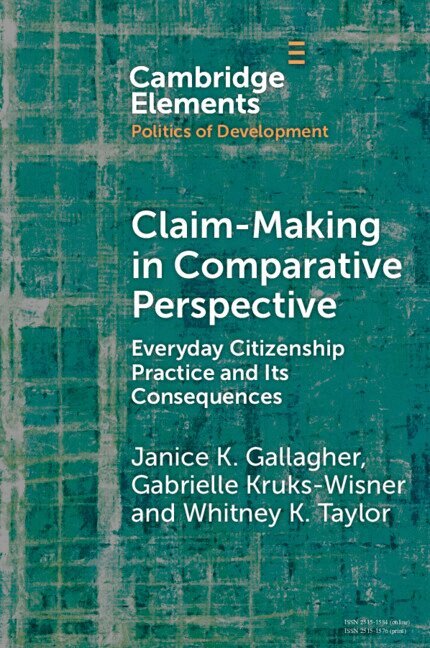
Claim-making - the everyday strategies through which citizens pursue rights fulfilment - is often overlooked in studies of political behavior, which tend to focus on highly visible, pivotal moments: elections, mass protests, high court decisions, legislative decisions. But what of the politics of the everyday? This Element takes up this question, drawing together research from Colombia, South Africa, India, and Mexico. The authors argue that claim-making is a distinct form of citizenship practice characterized by its everyday nature, which is neither fully programmatic nor clientelistic; and which is prevalent in settings marked by gaps between the state's de jure commitments to rights and their de facto realization. Under these conditions, claim making is both meaningful (there are rights to be secured) and necessary (fulfillment is far from guaranteed). Claim-making of this kind is of critical consequence, both materially and politically, with the potential to shape how citizens engage (or disengage) the state.
Claim-Making in Comparative Perspective
Everyday Citizenship Practice and Its Consequences
Inbunden, Engelska, 2024
753 kr
Skickas inom 7-10 vardagar
Claim-making - the everyday strategies through which citizens pursue rights fulfilment - is often overlooked in studies of political behavior, which tend to focus on highly visible, pivotal moments: elections, mass protests, high court decisions, legislative decisions. But what of the politics of the everyday? This Element takes up this question, drawing together research from Colombia, South Africa, India, and Mexico. The authors argue that claim-making is a distinct form of citizenship practice characterized by its everyday nature, which is neither fully programmatic nor clientelistic; and which is prevalent in settings marked by gaps between the state's de jure commitments to rights and their de facto realization. Under these conditions, claim making is both meaningful (there are rights to be secured) and necessary (fulfillment is far from guaranteed). Claim-making of this kind is of critical consequence, both materially and politically, with the potential to shape how citizens engage (or disengage) the state.