János Mátyás Kovács - Böcker
Visar alla böcker från författaren János Mátyás Kovács. Handla med fri frakt och snabb leverans.
6 produkter
6 produkter
Reform and Transformation in Eastern Europe
Soviet-type Economics on the Threshold of Change
Inbunden, Engelska, 1992
2 155 kr
Skickas inom 10-15 vardagar
Can the economics of Eastern Europe make the dramatic transition from centrally-planned to market-led economics? This book tries to understand the intellectual background behind this change and the problems of managing it.
1 476 kr
Skickas inom 10-15 vardagar
This edited volume opening the new series Revisiting Communism: Collectivist Economic Thought in Historical Perspective focuses on the concepts of ownership, the cornerstone of political economy in Soviet-type societies. The authors’ main objective is to contribute to the still unwritten chapter on collectivism in the history books of modern economic thought. They trace the lengthy evolution of economic ideas of property reform under communism leading from the doctrine of blanket nationalization to projects of moderate privatization in eight countries of Eastern Europe and China.The comparative analysis sheds light upon the tireless attempts of reform-minded economists in communist countries to populate the no man’s land of “social property” with quasi-private economic actors such as bodies of workers’ self-management and managers of state-owned companies. For a long time, these were expected to crowd out the communist nomenklatura from its actual ownership position without challenging the primacy of collective property rights. The fact that even the most radical reformers came to the conclusion that such surrogate owners would not be able to break the power of the ruling elite only on the eve of the 1989 revolutions demonstrates the immense strength of collectivist ideas. The authors coin the term “trap of collectivism” to warn those demanding nationalization or other forms of non-private ownership today: it is rather easy, even with the best intentions, to walk into this trap but it may take long decades to break out from it.
528 kr
Skickas inom 10-15 vardagar
Brave New Hungaryfocuses on the rise of a “brave new” anti-liberal regime led by Viktor Orbán who made a decisive contribution to the transformation of a poorly managed liberal democracy to a well-organized authoritarian rule bordering on autocracy during the past decade. Emerging capitalism in post-1989 Hungary that once took pride in winning the Eastern European race for catching up with the West has evolved into a reclusive, statist, national-populist system reminding the observers of its communist and pre-communist predecessors. Going beyond the self-description of the Orbán regime that emphasizes its Christian-conservative and illiberal nature, the authors, leading experts of Hungarian politics, history, society, and economy, suggest new ways to comprehend the sharp decline of the rule of law in an EU member state. Their case studies cover crucial fields of the new authoritarian power, ranging from its historical roots and constitutional properties to media and social policies. The volume presents the Hungarian “System of National Cooperation” as a pervasive but in many respects improvised and vulnerable experiment in social engineering, rather than a set of mature and irreversible institutions. The originality of this dystopian “new world” does not stem from the transition to authoritarian control per se but its plurality of meanings. It can be seen as a simulacrum that shows different images to different viewers and perpetuates itself by its post-truth variability. Rather than pathologizing the current Hungarian regime as a result of a unique master plan designed by a cynical political entrepreneur, the authors show the transnational dynamic of backsliding – a warning for other countries that suffer from comparable deadlocks of liberal democracy.
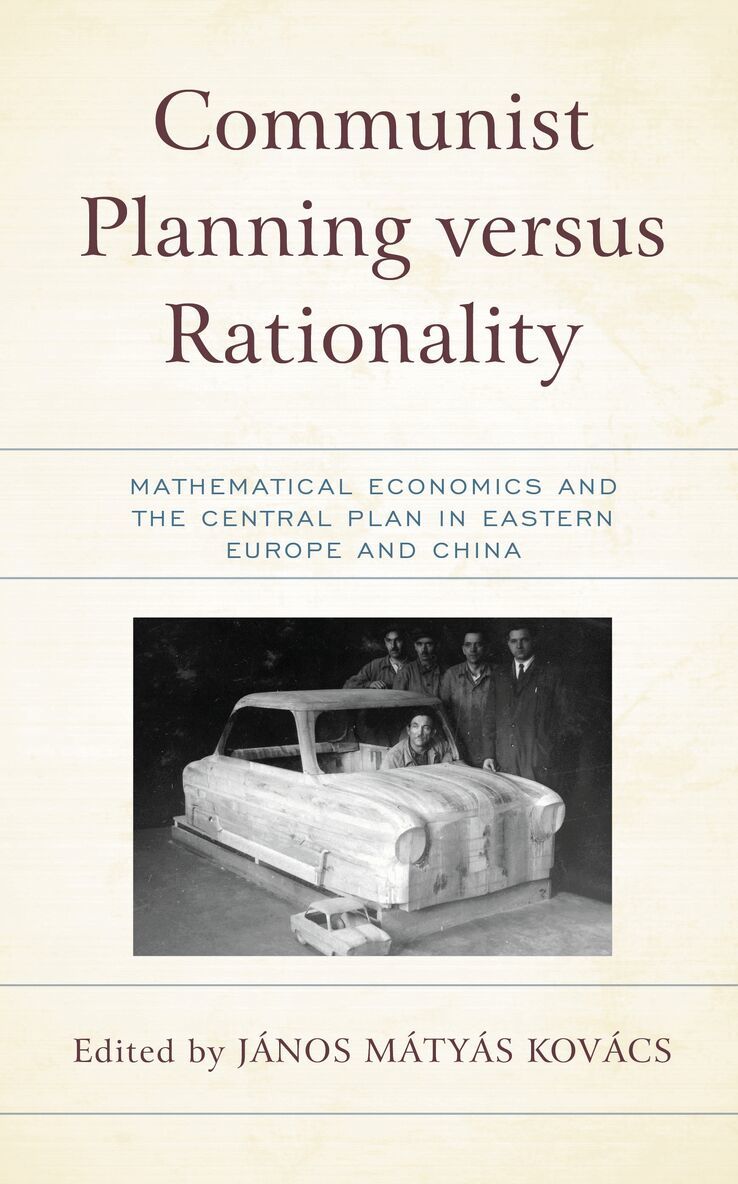
Communist Planning versus Rationality
Mathematical Economics and the Central Plan in Eastern Europe and China
Inbunden, Engelska, 2022
1 520 kr
Skickas inom 10-15 vardagar
This volume examines concepts of central planning, a cornerstone of political economy in Soviet-type societies. It revolves around the theory of “optimal planning” which promised a profound modernization of Stalinist-style verbal planning. Encouraged by cybernetic dreams in the 1950s and supporting the strategic goals of communist leaders in the Cold War, optimal planners offered the ruling elites a panacea for the recurrent crises of the planned economy. Simultaneously, their planning projects conveyed the pride of rational management and scientific superiority over the West. The authors trace the rise and fall of the research program in the communist era in eight countries of Eastern Europe, including the Soviet Union, and China, describing why the mission of optimization was doomed to fail and why the failure was nevertheless very slow. The theorists of optimal planning contributed to the rehabilitation of mathematical culture in economic research in the communist countries, and thus, to a neoclassical turn in economics all over the ex-communist world). However, because they have not rejected optimal planning as “computopia,” there is a large space left behind for future generations to experiment with Big Optimal Plans anew—based, at this time, on artificial intelligence and machine learning.
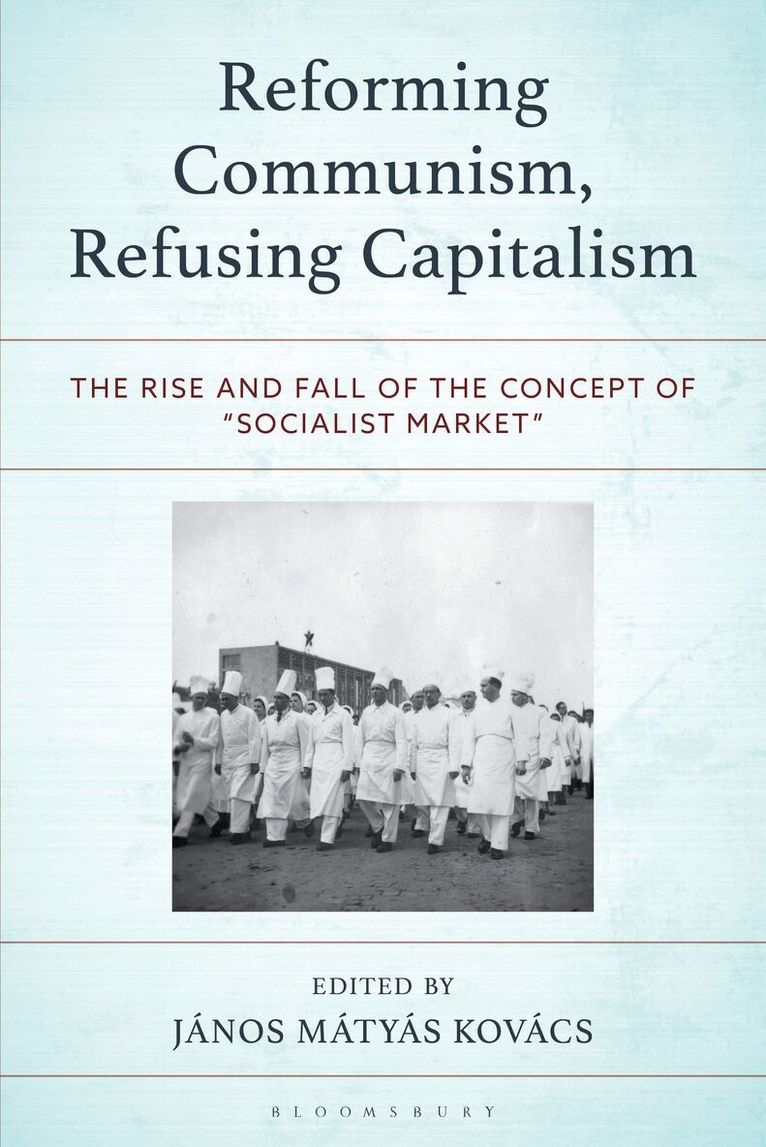
Reforming Communism, Refusing Capitalism
The Rise and Fall of the Concept of “Socialist Market”
Inbunden, Engelska, 2026
1 488 kr
Kommande
Reforming Communism, Refusing Capitalism: The Rise and Fall of the Concept of "Socialist Market" focuses on the concept of “socialist market,: a cornerstone of political economy in Soviet-type societies undergoing economic reforms from the 1950s onward. Encouraged by the success of non-capitalist mixed economies, market reformers (also called ’market socialists’) offered the communist ruling elites a remedy for the persistent crises of the planned economy. Besides optimal planning and pluralization of social ownership, this was the third major attempt under existing socialism to revise the communist utopia of a centrally planned economy free from private property and the market.The authors trace the rise and fall of marketization theories in the communist era in eight countries of Eastern Europe (including the Soviet Union) and China, describing why the mission of mixing the planned economy and the market, while refusing large-scale private ownership and accepting one-party rule, was doomed to fail. The protagonists of the socialist market contributed to the rehabilitation of certain liberal doctrines in economic research and policy in the Soviet empire and beyond, which did not develop into a coherent liberal (let alone, neoliberal) program.
1 846 kr
Skickas inom 10-15 vardagar
Does capitalism emerging in Eastern Europe need as solid ethnic or spiritual foundations as some other "Great Transformations" in the past? Apparently, one can become an actor of the new capitalist game without belonging to the German, Jewish, or, to take a timely example, Chinese minority. Nor does one have to go to a Protestant church every Sunday, repeat Confucian truisms when falling asleep, or study Adam Smith's teachings on the virtues of the market in a business course. He/she may just follow certain quasi-capitalist routines acquired during communism and import capitalist culture (more exactly, various capitalist cultures) in the form of down-to-earth cultural practices embedded in freshly borrowed economic and political institutions. Does capitalism come from outside? Why do then so many analysts talk about hybridization? This volume offers empirical insights into the current cultural history of the Eastern European economies in three fields: entrepreneurship, state governance and economic science. The chapters are based on large case studies prepared in the framework of an eight-country research project (funded by the European Commission, and directed jointly by the Center for Public Policy at the Central European University and the Institute for Human Sciences) on East-West cultural encounters in the ex-communist economies.