
JA¶rg Knieling – författare
519 kr
Läs direkt efter köp
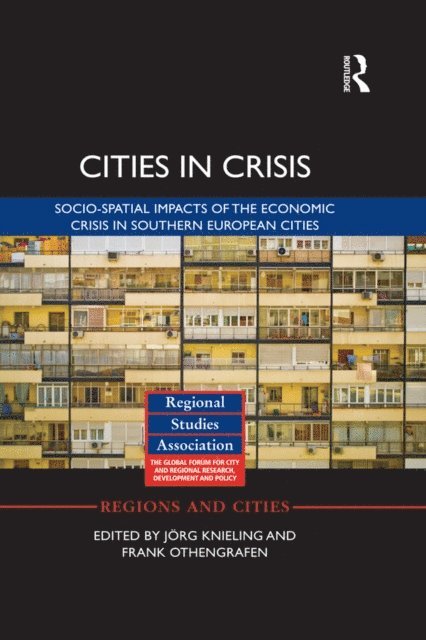
In recent years, European societies and territories have witnessed the spatial impacts of a severe financial and socio-economic crisis. This book builds on the current debate concerning how cities and urban regions and their citizens deal with the consequences of the recent financial and socio-economic crisis.
Cities in Crisis examines the political and administrative implications of austerity measures applied in southern European cities. These include cuts in local public spending and the processes of privatization of local public assets, as well as issues related to the re-scaling, recentralization or decentralization of competencies. Attention is paid to the rise of new ‘austerity regimes’, the question of their legitimacy and their spatial manifestations, and in particular to the social consequences of austerity.
The contributions to this book lay the foundation for recommendations on how to improve and consolidate qualified governance arrangements in order to better address rapid economic and social changes. Such recommendations are applicable to cities and urban regions both within and outside of Europe. It identifies possible approaches, tools and partnerships to tackle the effects of the crisis and to prepare European cities for future challenges.
538 kr
Läs direkt efter köp
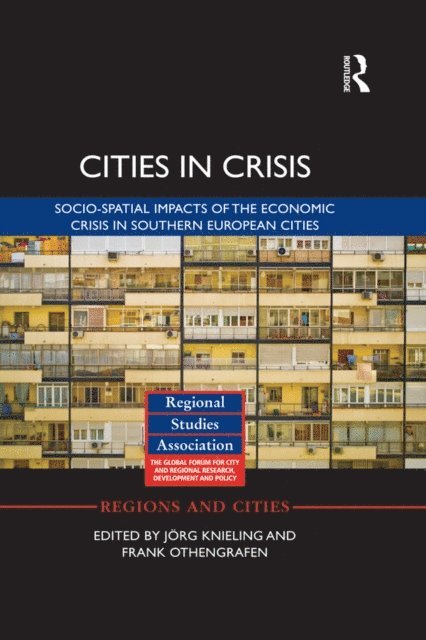
In recent years, European societies and territories have witnessed the spatial impacts of a severe financial and socio-economic crisis. This book builds on the current debate concerning how cities and urban regions and their citizens deal with the consequences of the recent financial and socio-economic crisis.
Cities in Crisis examines the political and administrative implications of austerity measures applied in southern European cities. These include cuts in local public spending and the processes of privatization of local public assets, as well as issues related to the re-scaling, recentralization or decentralization of competencies. Attention is paid to the rise of new ‘austerity regimes’, the question of their legitimacy and their spatial manifestations, and in particular to the social consequences of austerity.
The contributions to this book lay the foundation for recommendations on how to improve and consolidate qualified governance arrangements in order to better address rapid economic and social changes. Such recommendations are applicable to cities and urban regions both within and outside of Europe. It identifies possible approaches, tools and partnerships to tackle the effects of the crisis and to prepare European cities for future challenges.
824 kr
Läs direkt efter köp
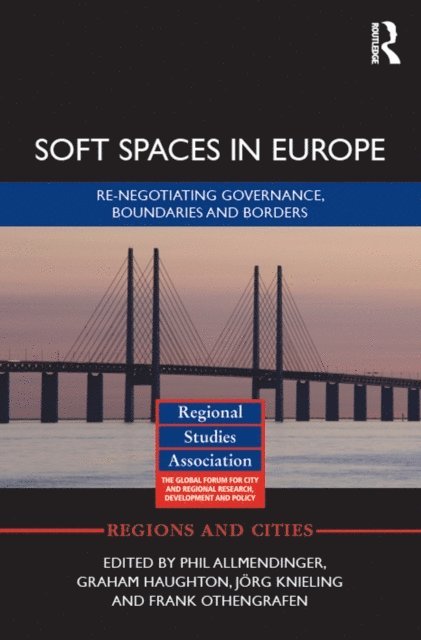
The past thirty years have seen a proliferation of new forms of territorial governance that have come to co-exist with, and complement, formal territorial spaces of government. These governance experiments have resulted in the creation of soft spaces, new geographies with blurred boundaries that eschew existing political-territorial boundaries of elected tiers of government. The emergence of new, non-statutory or informal spaces can be found at multiple levels across Europe, in a variety of circumstances, and with diverse aims and rationales.
This book moves beyond theory to examine the practice of soft spaces. It employs an empirical approach to better understand the various practices and rationalities of soft spaces and how they manifest themselves in different planning contexts. By looking at the effects of new forms of spatial governance and the role of spatial planning in North-western Europe, this book analyses discursive changes in planning policies in selected metropolitan areas and cross-border regions. The result is an exploration of how these processes influence the emergence of soft spaces, governance arrangements and the role of statutory planning in different contexts.
This book provides a deeper understanding of space and place, territorial governance and network governance.
824 kr
Läs direkt efter köp
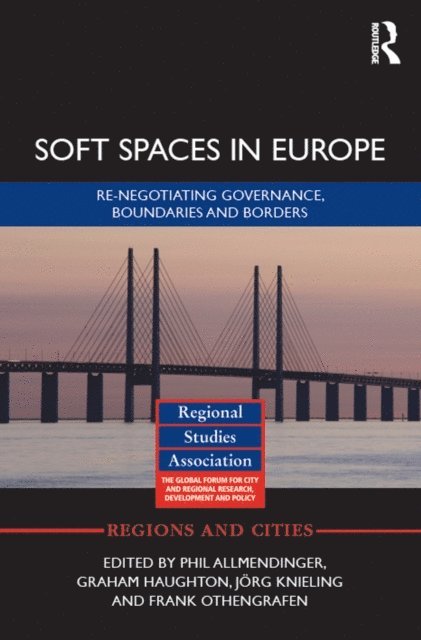
The past thirty years have seen a proliferation of new forms of territorial governance that have come to co-exist with, and complement, formal territorial spaces of government. These governance experiments have resulted in the creation of soft spaces, new geographies with blurred boundaries that eschew existing political-territorial boundaries of elected tiers of government. The emergence of new, non-statutory or informal spaces can be found at multiple levels across Europe, in a variety of circumstances, and with diverse aims and rationales.
This book moves beyond theory to examine the practice of soft spaces. It employs an empirical approach to better understand the various practices and rationalities of soft spaces and how they manifest themselves in different planning contexts. By looking at the effects of new forms of spatial governance and the role of spatial planning in North-western Europe, this book analyses discursive changes in planning policies in selected metropolitan areas and cross-border regions. The result is an exploration of how these processes influence the emergence of soft spaces, governance arrangements and the role of statutory planning in different contexts.
This book provides a deeper understanding of space and place, territorial governance and network governance.