Jason H. Dormady - Böcker
Visar alla böcker från författaren Jason H. Dormady. Handla med fri frakt och snabb leverans.
3 produkter
3 produkter
585 kr
Skickas inom 7-10 vardagar
Mormons first came to Mexico as soldiers during the Mexican-American War and later as missionaries, refugees, and settlers. Just South of Zion assembles new scholarship on the first century of Mormon history in Mexico, from 1847 to 1947. The essays cover topics such as polygamy, colonization, the role of women in Mormon local worship, indigenous intellectuals, Mormon transnational identity, and the role of violence and masculinity in Mormon identity. Representing a broad variety of scholarship from Mexican, US, and Mormon historical studies, the volume will be recognized as a useful survey of religious pluralism in Mexico. Unlike earlier books on the subject, it does not include religious testimony or confession, offering historians a chance to reconsider the significance of Mexico’s Mormon experience. A glossary of LDS terminology makes the book especially useful for students and readers new to the topic.
Conflict and Correspondence
Belonging and Urban Community in Guadalajara, Mexico, 1939–1947
Inbunden, Engelska, 2025
1 086 kr
Skickas inom 10-15 vardagar
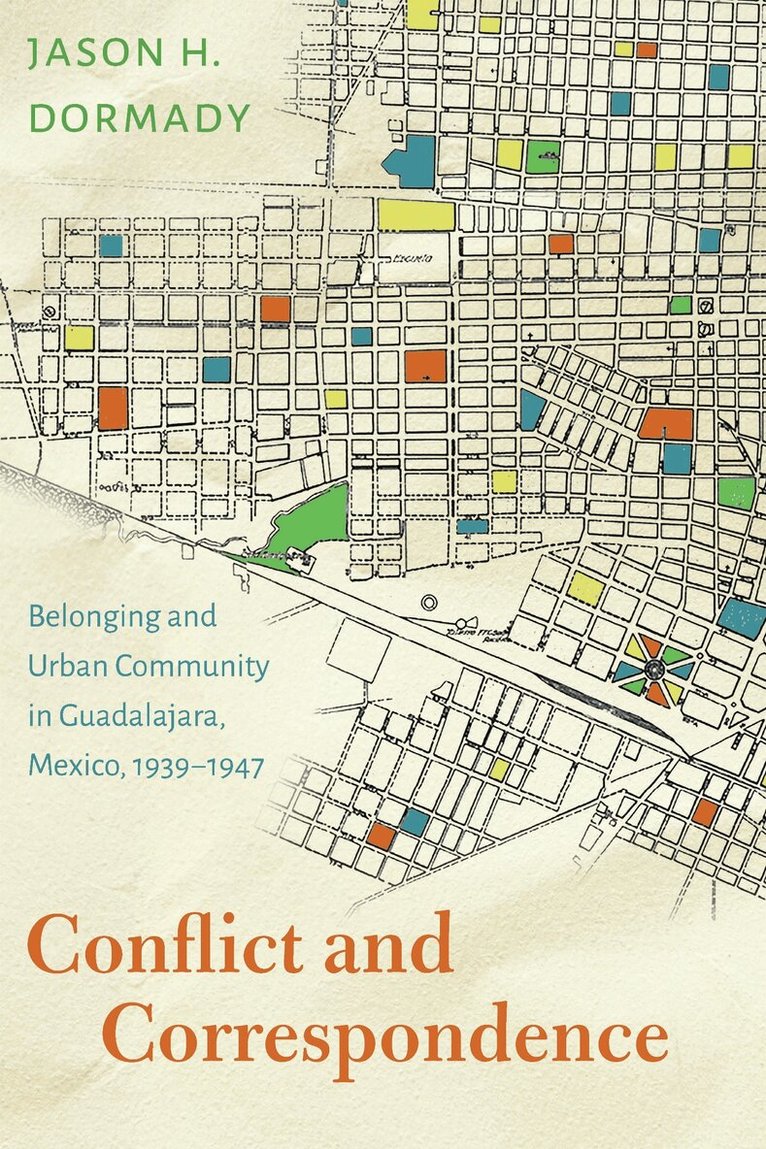
In the decades following the 1910 Mexican Revolution, Guadalajara faced immense demographic and economic transformation, stunning both longtime residents and new arrivals. The city’s population nearly tripled from 1920 to 1950, and the resultant population boom strained government resources and challenged living standards for all.In Conflict and Correspondence Jason H. Dormady examines the critical transition period when Guadalajara lost control of urban growth after 1939 and when the newly empowered state and federal governments began to exercise immense control over the development of the city in 1947. As the city changed around them, residents used petitions and letters to municipal officials to help address their feelings of alienation, isolation, and separation from the community around them. Petitions took the form of sensate, moral, recreational, spiritual, and gendered arguments about creating livable communities and avoiding the disorientation experienced by urban transformation. In the context of infrastructure failures, tight housing markets, and a dramatic aesthetic transition, petitions on these topics reinforced to residents-and, they hoped, city officials-their belonging to the community. Resident petitions reveal how everyday people lived the consequences of the 1910 revolution as they advocated for shaping space and building place in midcentury Guadalajara.
Conflict and Correspondence
Belonging and Urban Community in Guadalajara, Mexico, 1939–1947
Häftad, Engelska, 2025
321 kr
Skickas inom 10-15 vardagar
In the decades following the 1910 Mexican Revolution, Guadalajara faced immense demographic and economic transformation, stunning both longtime residents and new arrivals. The city’s population nearly tripled from 1920 to 1950, and the resultant population boom strained government resources and challenged living standards for all.In Conflict and Correspondence Jason H. Dormady examines the critical transition period when Guadalajara lost control of urban growth after 1939 and when the newly empowered state and federal governments began to exercise immense control over the development of the city in 1947. As the city changed around them, residents used petitions and letters to municipal officials to help address their feelings of alienation, isolation, and separation from the community around them. Petitions took the form of sensate, moral, recreational, spiritual, and gendered arguments about creating livable communities and avoiding the disorientation experienced by urban transformation. In the context of infrastructure failures, tight housing markets, and a dramatic aesthetic transition, petitions on these topics reinforced to residents-and, they hoped, city officials-their belonging to the community. Resident petitions reveal how everyday people lived the consequences of the 1910 revolution as they advocated for shaping space and building place in midcentury Guadalajara.