Jason Knirck – Författare
Visar alla böcker från författaren Jason Knirck. Handla med fri frakt och snabb leverans.
2 produkter
2 produkter
324 kr
Skickas inom 10-15 vardagar
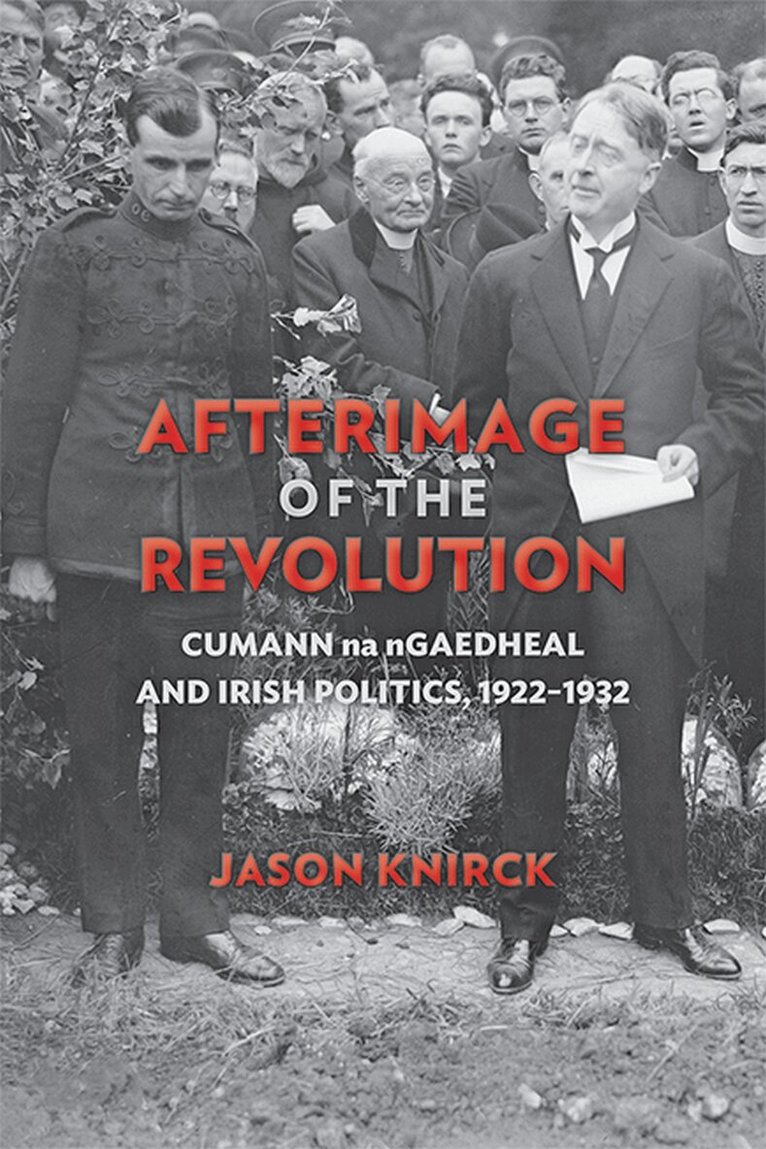
Ascending to power after the Anglo-Irish Treaty and a violent revolution against the United Kingdom, the political party Cumann na nGaedheal governed during the first ten years of the Irish Free State (1922–32). Taking over from the fallen Michael Collins and Arthur Griffith, Cumann na nGaedheal leaders such as W. T. Cosgrave and Kevin O'Higgins won a bloody civil war, created the institutions of the new Free State, and attempted to project abroad the independence of a new Ireland.In response to the view that Cumann na nGaedheal was actually a reactionary counterrevolutionary party, Afterimage of the Revolution contends that, in building the new Irish state, the government framed and promoted its policies in terms of ideas inherited from the revolution. In particular, Cumann na nGaedheal emphasised Irish sovereignty, the ""Irishness"" of the new state, and a strong sense of anticolonialism, all key components of the Sinn Féin party platform during the revolution. Jason Knirck argues that the 1920s must be understood as part of a continuing Irish revolution that led to an eventual independent republic. Drawing on state documents, newspapers, and private papers—including the recently released papers of Kevin O'Higgins—he offers a fresh view of Irish politics in the 1920s and integrates this period more closely with the Irish Revolution.
Democracy and Dissent in the Irish Free State
Opposition, Decolonisation, and Majority Rights
Inbunden, Engelska, 2023
770 kr
Skickas
A new analysis of the difficulties in normalising opposition in the Irish Free State, this book analyses the collision between nineteenth-century monolithic nationalist movements with the norms and expectations of multiparty parliamentary democracy. The Irish revolutionaries’ attempts to create a Gaelic, postcolonial state involved resolving tension between these two ideas. Smaller economically-driven parties such as the Labour and Farmers’ parties attempted to move on from the revolution’s unnatural focus on nationalist political issues while the larger revolutionary parties descended from Sinn Féin attempt to recreate or restore notions of revolutionary unity. This conflict made democracy and opposition hard to establish in the Irish Free State.