Jason Tougaw - Böcker
Visar alla böcker från författaren Jason Tougaw. Handla med fri frakt och snabb leverans.
4 produkter
4 produkter
230 kr
Skickas inom 7-10 vardagar
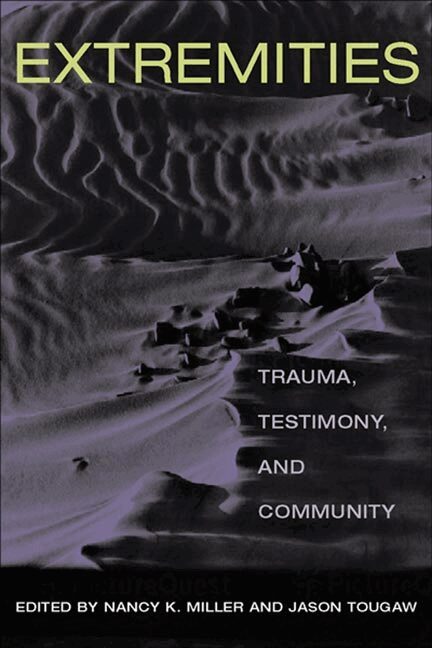
How do we come to terms with what can't be forgotten?How do we bear witness to extreme experiences that challenge the limits of language? This remarkable volume explores the emotional, political, and aesthetic dimensions of testimonies to trauma as they translate private anguish into public space. Nancy K. Miller and Jason Tougaw have assembled a collection of essays that trace the legacy of the Holocaust and subsequent events that have shaped twentieth-century history and still haunt contemporary culture. Extremities combines personal and scholarly approaches to a wide range of texts that bear witness to shocking and moving accounts of individual trauma: Toni Morrison's Beloved, Sylvia Plath's "Daddy" and "Lady Lazarus," Kathryn Harrison's The Kiss, Tatana Kellner's Holocaust art, Ruth KlÜger's powerful memoir Still Alive, and Binjamin Wilkomirski's controversial narrative of concentration camp suffering Fragments. The book grapples with the cultural and social effects of historical crises, including the Montreal Massacre, the Warsaw Ghetto Uprising, and the medical catastrophes of HIV/AIDS and breast cancer. Developing insights from autobiography, psychoanalysis, feminist theory and gender studies, the authors demonstrate that testimonies of troubling and taboo subjects do more than just add to the culture of confession–-they transform identities and help reimagine the boundaries of community. Extremities offers an original and timely interpretive guide to the growing field of trauma studies. The volume includes essays by Ross Chambers, Sandra M. Gilbert, Susan Gubar, Marianne Hirsch, Wayne Koestenbaum, Eve Kosofsky Sedgwick, and others.

479 kr
Tillfälligt slut
2 632 kr
Skickas inom 10-15 vardagar
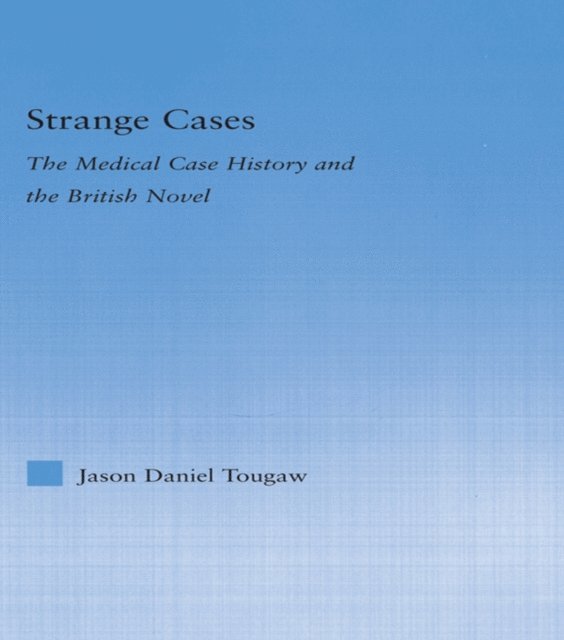
Strange Cases is the story of the mutual influence of the case history and the British novel during the eighteenth and nineteenth centuries. Fictions from Defoe's Roxana to James's The Turn of the Screw and case histories from George Cheyne's to Sigmund Freud's have found narrative impetus in pathology. The writer of a case history faces a rhetorical bind unique to the human sciences: the need to display the acumen of a scientist and the sympathy warranted to the suffering patient. Repeatedly, case historians justify their publicizing of extreme, often morbid or perverse, states of mind and body by appealing to readers to take pity on patients and to recognize the narrative as a vital social document. Diagnosis and sympathy, explicit rhetorical modes in case histories, operate implicitly in novels, shaping reader-identification. While these two narrative forms set out to fulfill an Enlightenment drive to classify and explain, they also raise social and epistemological questions that challenge some of the Enlightenment's most cherished ideals, including faith in reason, the perfectibility of humankind, and the stability of truth.
943 kr
Skickas inom 10-15 vardagar
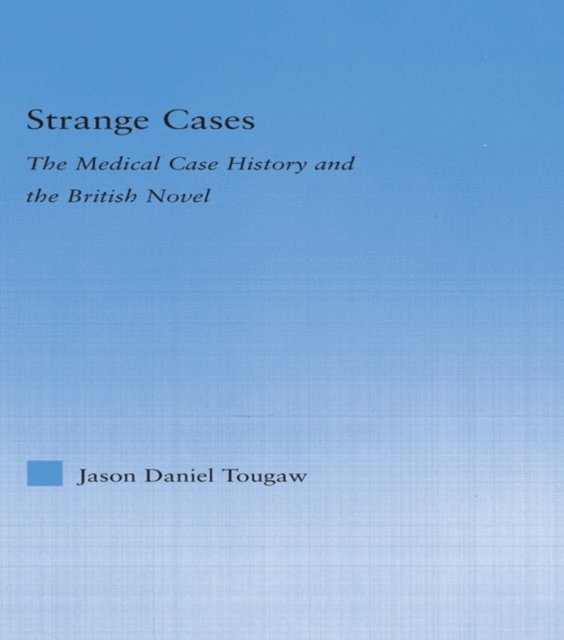
Strange Cases is the story of the mutual influence of the case history and the British novel during the eighteenth and nineteenth centuries. Fictions from Defoe's Roxana to James's The Turn of the Screw and case histories from George Cheyne's to Sigmund Freud's have found narrative impetus in pathology. The writer of a case history faces a rhetorical bind unique to the human sciences: the need to display the acumen of a scientist and the sympathy warranted to the suffering patient. Repeatedly, case historians justify their publicizing of extreme, often morbid or perverse, states of mind and body by appealing to readers to take pity on patients and to recognize the narrative as a vital social document. Diagnosis and sympathy, explicit rhetorical modes in case histories, operate implicitly in novels, shaping reader-identification. While these two narrative forms set out to fulfill an Enlightenment drive to classify and explain, they also raise social and epistemological questions that challenge some of the Enlightenment's most cherished ideals, including faith in reason, the perfectibility of humankind, and the stability of truth.