Javier Fernández-Galeano - Böcker
Visar alla böcker från författaren . Handla med fri frakt och snabb leverans.
4 produkter
4 produkter
1 095 kr
Skickas inom 10-15 vardagar
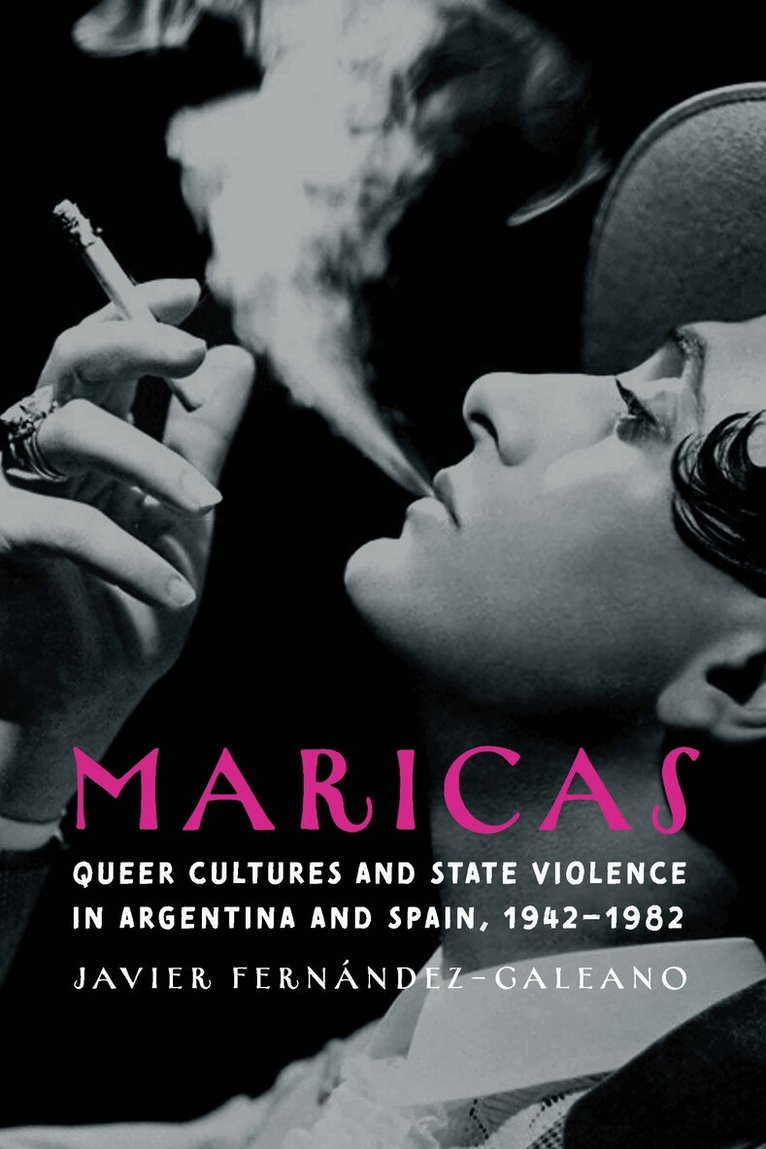
In Maricas Javier FernÁndez-Galeano traces the erotic lives and legal battles of Argentine and Spanish gender- and sexually nonconforming people who carved out their own spaces in metropolitan and rural cultures between the 1940s and the 1980s. In both countries, agents of the state, judiciary, and medical communities employed “social danger” theory to measure individuals’ latent criminality, conflating sexual and gender nonconformity with legal transgression.Argentine and Spanish queer and trans communities rejected this mode of external categorization. Drawing on Catholicism and camp cultures that stretched across the Atlantic, these communities constructed alternative models of identification that remediated state repression and sexual violence through the pursuit of the sublime, be it erotic, religious, or cultural. In this pursuit they drew ideological and iconographic material from the very institutions that were most antagonistic to their existence, including the Catholic Church, the military, and reactionary mass media. Maricas incorporates non-elite actors, including working-class and rural populations, recruits, prisoners, folk music fans, and defendants’ mothers, among others. The first English-language monograph on the history of twentieth-century state policies and queer cultures in Argentina and Spain, Maricas demonstrates the many ways queer communities and individuals in Argentina and Spain fought against violence, rejected pathologization, and contested imposed, denigrating categorization.
324 kr
Skickas inom 10-15 vardagar
In Maricas Javier FernÁndez-Galeano traces the erotic lives and legal battles of Argentine and Spanish gender- and sexually nonconforming people who carved out their own spaces in metropolitan and rural cultures between the 1940s and the 1980s. In both countries, agents of the state, judiciary, and medical communities employed “social danger” theory to measure individuals’ latent criminality, conflating sexual and gender nonconformity with legal transgression.Argentine and Spanish queer and trans communities rejected this mode of external categorization. Drawing on Catholicism and camp cultures that stretched across the Atlantic, these communities constructed alternative models of identification that remediated state repression and sexual violence through the pursuit of the sublime, be it erotic, religious, or cultural. In this pursuit they drew ideological and iconographic material from the very institutions that were most antagonistic to their existence, including the Catholic Church, the military, and reactionary mass media. Maricas incorporates non-elite actors, including working-class and rural populations, recruits, prisoners, folk music fans, and defendants’ mothers, among others. The first English-language monograph on the history of twentieth-century state policies and queer cultures in Argentina and Spain, Maricas demonstrates the many ways queer communities and individuals in Argentina and Spain fought against violence, rejected pathologization, and contested imposed, denigrating categorization.
1 202 kr
Skickas inom 7-10 vardagar
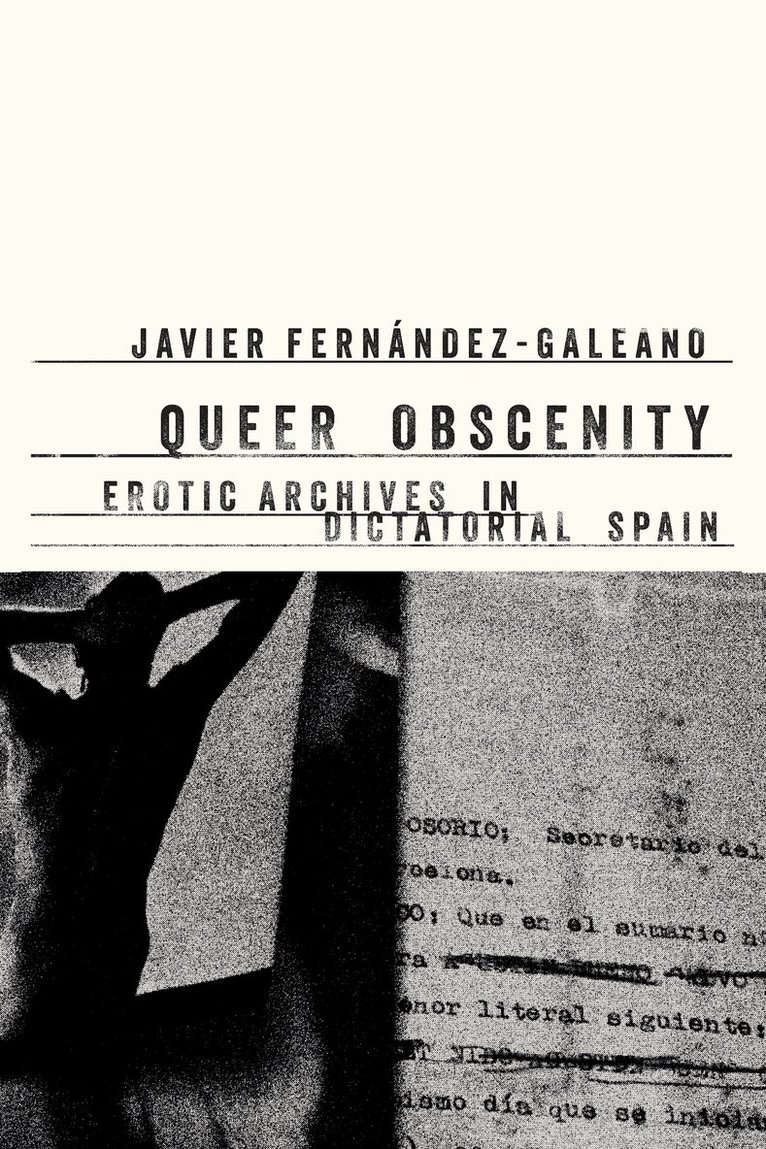
Under Spain's twentieth-century dictators, state agents not only censored, eradicated, and attempted to prevent the circulation of obscenity, but also contradictorily engaged in curation and even restoration initiatives that have bequeathed us an extensive queer pornographic archive. Javier Fernández-Galeano takes us inside the archive to demonstrate how the incongruities of the Primo de Rivera (1923–1930) and Franco (1939–1975) regimes were manifested in the regulation of erotic material cultures. The dictators' authorities destroyed "straight" pornographies while often curating and preserving "queer" erotica. While reproductions of the masterpieces of Tintoretto, Michelangelo and Botticelli were incinerated to avoid their "deviant" effects, judicial authorities could repeatedly attend the screening of an amateur film showing a gay threesome without acknowledging the irony: their concern was not that obscene material was consumed, but rather by whom.Focusing on amateur pornographers and their confiscated and censored erotica, this book adds a rich complexity to both the history and theory of pornography, demonstrating that surveillance depends entirely on documenting intimacy and preserving transgression. This book sheds new light on the production, consumption, and circulation of pornography and erotica in Spain over the course of the twentieth century, drawing connections between intimate queer desires, preservation, and erasure.
292 kr
Skickas inom 7-10 vardagar
Under Spain's twentieth-century dictators, state agents not only censored, eradicated, and attempted to prevent the circulation of obscenity, but also contradictorily engaged in curation and even restoration initiatives that have bequeathed us an extensive queer pornographic archive. Javier Fernández-Galeano takes us inside the archive to demonstrate how the incongruities of the Primo de Rivera (1923–1930) and Franco (1939–1975) regimes were manifested in the regulation of erotic material cultures. The dictators' authorities destroyed "straight" pornographies while often curating and preserving "queer" erotica. While reproductions of the masterpieces of Tintoretto, Michelangelo and Botticelli were incinerated to avoid their "deviant" effects, judicial authorities could repeatedly attend the screening of an amateur film showing a gay threesome without acknowledging the irony: their concern was not that obscene material was consumed, but rather by whom.Focusing on amateur pornographers and their confiscated and censored erotica, this book adds a rich complexity to both the history and theory of pornography, demonstrating that surveillance depends entirely on documenting intimacy and preserving transgression. This book sheds new light on the production, consumption, and circulation of pornography and erotica in Spain over the course of the twentieth century, drawing connections between intimate queer desires, preservation, and erasure.