Jay M. Harris – författare
Visar alla böcker från författaren Jay M. Harris. Handla med fri frakt och snabb leverans.
5 produkter
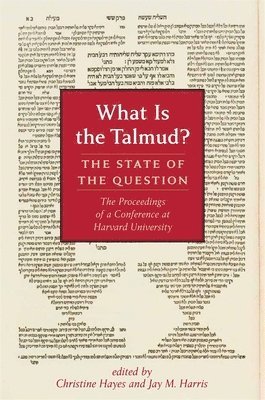
What Is the Talmud?
The State of the Question
Av Christine Hayes, Jay M. Harris
Inbunden, 2026
349 kr
Lägg i varukorg
The Babylonian Talmud, or Bavli, stands as one of the central pillars of Jewish intellectual, cultural, and religious life. But what, precisely, is this monumental and heterogenous compilation? How was it formed, redacted, and transmitted? Who composed it and for what purpose? How was it shaped by …
Pride of Jacob
Essays on Jacob Katz and His Work
Inbunden, 2002
316 kr
Lägg i varukorg
Jacob Katz (1904–1998) was one of the greatest Jewish historians of the twentieth century. A pioneer of new foci and methods, Katz brought extraordinary insights to many aspects of Jewish life and its surrounding contexts.With a keen eye for both “forests” and “trees,” Katz transformed our …
Maimonides after 800 Years
Essays on Maimonides and His Influence
Inbunden, 2008
563 kr
Lägg i varukorg
Moses Maimonides was the most significant Jewish thinker, jurist, and doctor of the Middle Ages. Author of both a monumental code of Jewish law and the most influential and controversial work of Jewish philosophy, Maimonides looms larger than any other figure in the Jewish Middle Ages.The essays in …
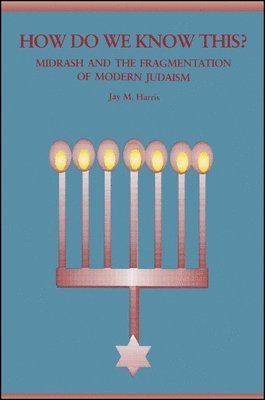
How Do We Know This?
Midrash and the Fragmentation of Modern Judaism
Häftad, 1994
414 kr
Tillfälligt slut
This book is a study of rabbinic legal interpretation (midrash) in Judaism's rabbinic, medieval, and modern periods. It shows how the rise of Reform, Conservative, and Orthodox Judaism in the modern period is tied to distinct attitudes toward the classical Jewish heritage, and specifically, toward …
Everyday Jewish Life in Imperial Russia
Av Chaeran Y. Freeze, Jay M. Harris m. fl.
Häftad, 2014
392 kr
Tillfälligt slut
This book makes accessible-for the first time in English-declassified archival documents from the former Soviet Union, rabbinic sources, and previously untranslated memoirs, illuminating everyday Jewish life as the site of interaction and negotiation among and between neighbors, society, and the …