Jay Ruby – författare
Visar alla böcker från författaren Jay Ruby. Handla med fri frakt och snabb leverans.
15 produkter
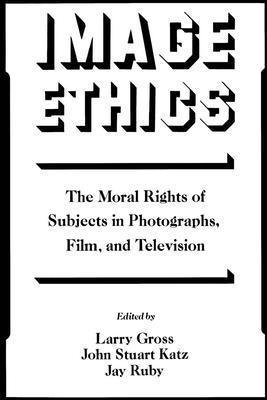
Image Ethics
The Moral Rights of Subjects in Photographs, Film, and Television
Av Katz Gross, Larry Gross m. fl.
Häftad, 1991
1418 kr
Lägg i varukorg
This book is intended for scholars and students of media and communication studies, ethics, and moral philosophy.
Image Ethics
The Moral Rights of Subjects in Photographs, Film, and Television
Av Jay Ruby, John Stuart Katz m. fl.
E-bok, 1991
1009 kr
Lägg i varukorg
This pathbreaking collection of thirteen original essays examines the moral rights of the subjects of documentary film, photography, and television. Image makers--photographers and filmmakers--are coming under increasing criticism for presenting images of people that are considered intrusive and …
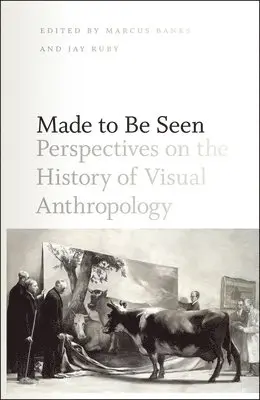
Made to Be Seen
Perspectives on the History of Visual Anthropology
Av Marcus Banks, Jay Ruby
Inbunden, 2011
1258 kr
Lägg i varukorg
"Made to be Seen" brings together leading scholars of visual anthropology to examine the historical development of this multifaceted and growing field. Expanding the definition of visual anthropology beyond more limited notions, the contributors to "Made to be Seen" reflect on the role of the …
Made to Be Seen
Perspectives on the History of Visual Anthropology
Av Marcus Banks, Jay Ruby
Häftad, 2011
484 kr
Lägg i varukorg
"Made to be Seen" brings together leading scholars of visual anthropology to examine the historical development of this multifaceted and growing field. Expanding the definition of visual anthropology beyond more limited notions, the contributors to "Made to be Seen" reflect on the role of the …
Picturing Culture
Explorations of Film and Anthropology
Av Jay Ruby
Inbunden, 2000
1229 kr
Lägg i varukorg
Here, Jay Ruby - a founder of visual anthropology - distills his 30-year exploration of the relationship of film and anthropology. Spurred by a conviction that the ideal of an anthropological cinema has not even remotely begun to be realized, Ruby argues that ethnographic filmmakers should generate …
Picturing Culture
Explorations of Film and Anthropology
Av Jay Ruby
Häftad, 2000
322 kr
Lägg i varukorg
Here, Jay Ruby - a founder of visual anthropology - distills his 30-year exploration of the relationship of film and anthropology. Spurred by a conviction that the ideal of an anthropological cinema has not even remotely begun to be realized, Ruby argues that ethnographic filmmakers should generate …
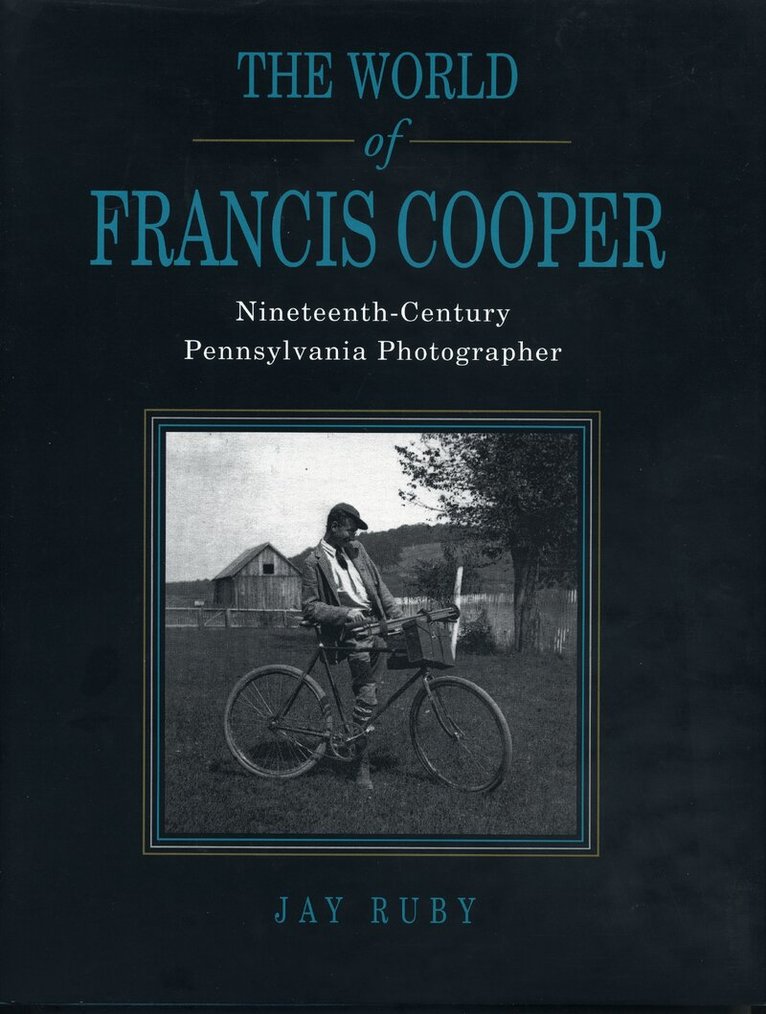
World of Francis Cooper
Nineteenth-Century Pennsylvania Photographer
Av Jay Ruby
Inbunden, 1999
976 kr
Lägg i varukorg
The World of Francis Cooper is a biographical exploration of Francis Cooper, who practiced photography as an aesthetic recreation while a medical student at the University of Pennsylvania. It offers an unusual perspective on turn-of-the century American photography by examining the work of an …
Crack in the Mirror
Reflexive Perspectives in Anthropology
Av Jay Ruby
Inbunden, 1981
1082 kr
Lägg i varukorg
Like Conrad's Marlow, whose tale of journeying into the "heart of darkness" gives us as much insight into one man's personality as it does into the mysteries of the dark world he explored, so the anthropologist's record of another culture contains more than objective, scientific data about his …
Image Ethics in the Digital Age
Av Larry Gross, John Stuart Katz m. fl.
Häftad, 2003
310 kr
Lägg i varukorg
Over the past quarter century, dramatic technological advances in the production, manipulation, and dissemination of images have transformed the practices of journalism, entertainment, and advertising as well as the visual environment itself. From digital retouching to wholesale deception, the …
Cinema of John Marshall
Av Jay Ruby
E-bok, 2014
1000 kr
Lägg i varukorg
The Cinema of John Marshall explores the life and art of the pioneering ethnographic filmmaker. Its centerpiece is an autobiographical essay in which Marshall assesses his forty-year involvement with the San peoples (Bushmen) of South Africa and his films, from the 1957 award winning The Hunters to …
Cinema of John Marshall
Av Jay Ruby
E-bok, 2014
1022 kr
Lägg i varukorg
The Cinema of John Marshall explores the life and art of the pioneering ethnographic filmmaker. Its centerpiece is an autobiographical essay in which Marshall assesses his forty-year involvement with the San peoples (Bushmen) of South Africa and his films, from the 1957 award winning The Hunters to …
Crack in the Mirror
Reflexive Perspectives in Anthropology
Av Jay Ruby
E-bok, 2016
1336 kr
Lägg i varukorg
Like Conrad''s Marlow, whose tale of journeying into the "heart of darkness" gives us as much insight into one man''s personality as it does into the mysteries of the dark world he explored, so the anthropologist''s record of another culture contains more than objective, scientific data about his …
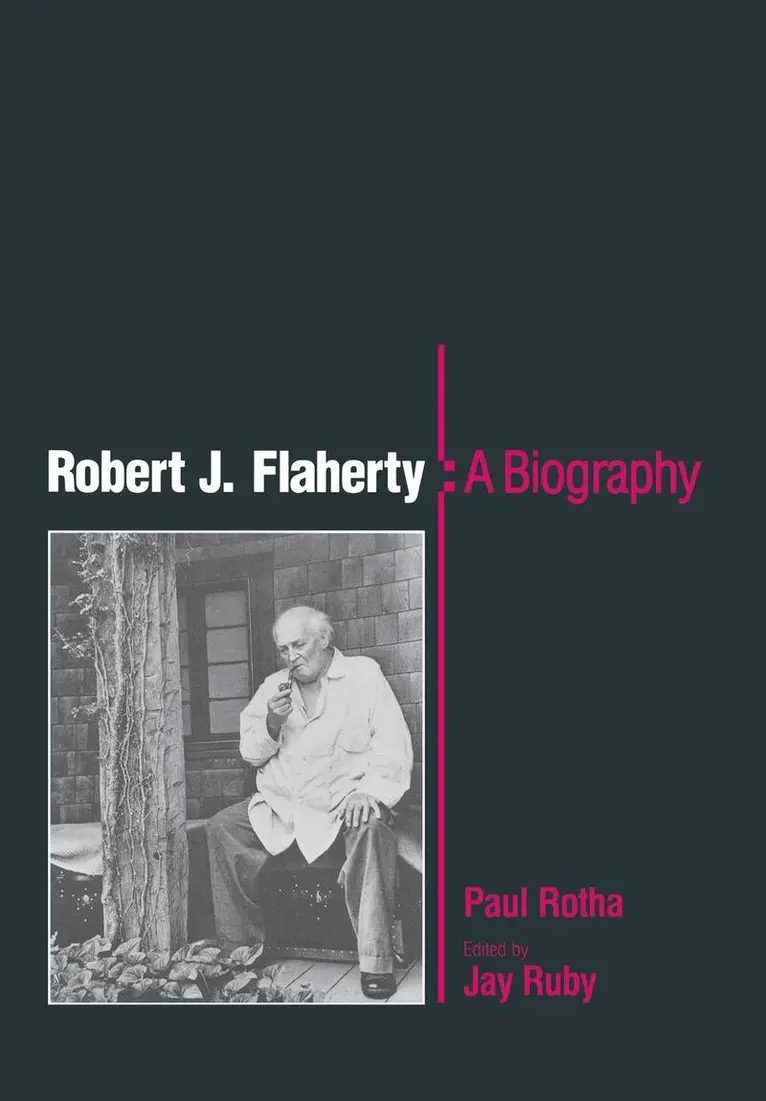
Robert J. Flaherty
A Biography
Av Paul Rotha, Jay Ruby
E-bok, 2015
1574 kr
Lägg i varukorg
Producer of Nanook of the North , Moana , Man of Aran , and other pioneering documentaries between 1920 and 1940, Robert J. Flaherty was America''s first independent film artist. Popular conceptions of Flaherty have led many either to worship his work and regard him in mythical terms or to debunk …
Robert J. Flaherty
A Biography
Av Paul Rotha, Jay Ruby
Inbunden, 1984
1376 kr
Tillfälligt slut
Producer of Nanook of the North, Moana, Man of Aran, and other pioneering documentaries between 1920 and 1940, Robert J. Flaherty was America's first independent film artist. Popular conceptions of Flaherty have led many either to worship his work and regard him in mythical terms or to debunk him …
Cinema of John Marshall
Av Jay Ruby
Inbunden, 1997
2627 kr
Tillfälligt slut
The Cinema of John Marshall explores the life and art of the pioneering ethnographic filmmaker. Its centerpiece is an autobiographical essay in which Marshall assesses his forty-year involvement with the San peoples (Bushmen) of South Africa and his films, from the 1957 award winning The Hunters to …