Jean-Christophe Merle – författare
Visar alla böcker från författaren Jean-Christophe Merle. Handla med fri frakt och snabb leverans.
15 produkter
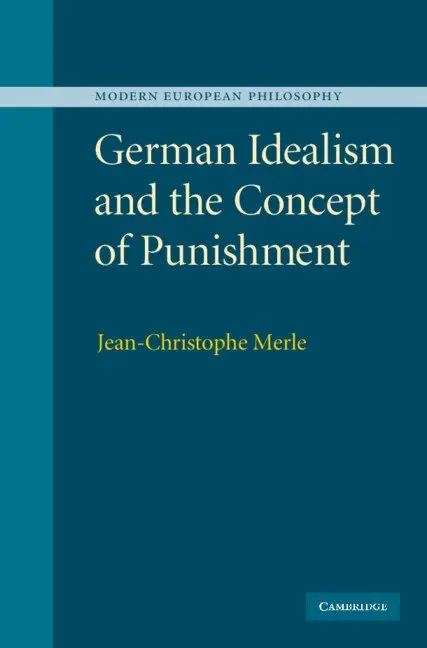
German Idealism and the Concept of Punishment
Inbunden, 2009
781 kr
Lägg i varukorg
Against the background of early modernism - a period that justified punishment by general deterrence - Kant is usually thought to represent a radical turn towards retributivism. For Kant, and later for Fichte and Hegel, a just punishment respects the humanity inherent in the criminal, and serves no …
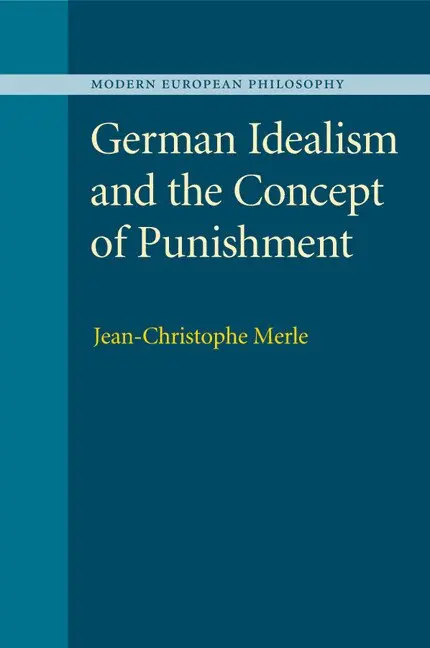
German Idealism and the Concept of Punishment
Häftad, 2015
557 kr
Lägg i varukorg
Against the background of early modernism - a period that justified punishment by general deterrence - Kant is usually thought to represent a radical turn towards retributivism. For Kant, and later for Fichte and Hegel, a just punishment respects the humanity inherent in the criminal, and serves no …
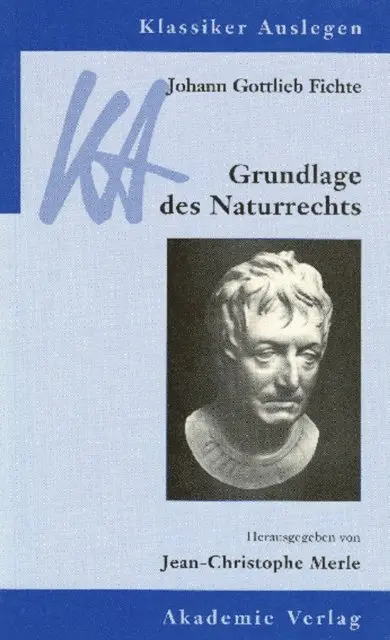
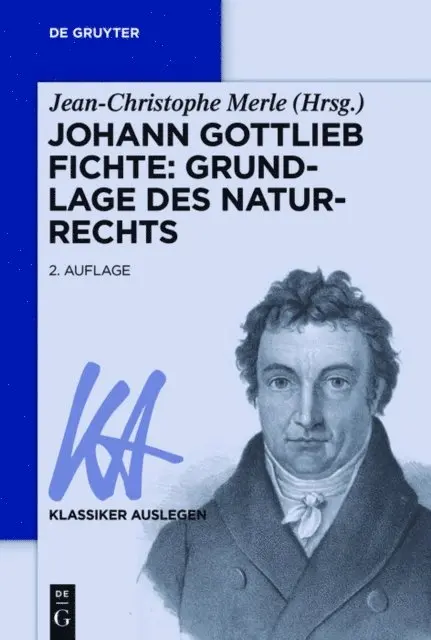
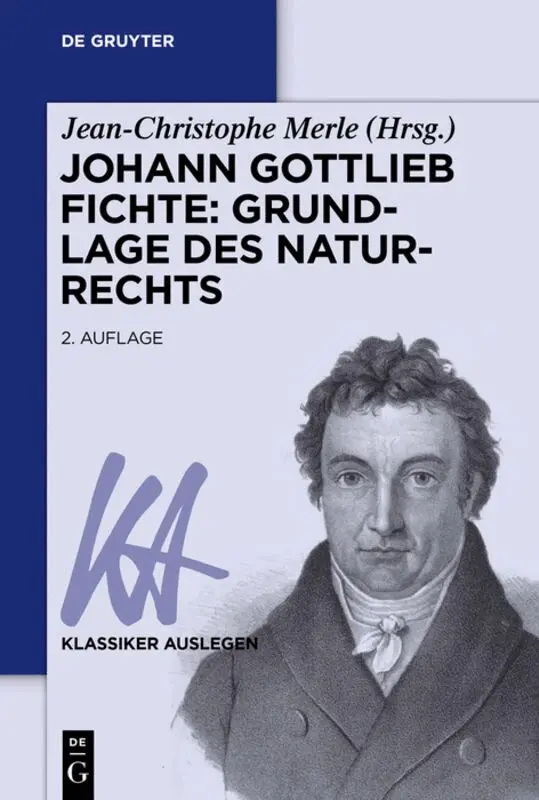
Johann Gottlieb Fichte: Grundlage des Naturrechts
E-bok, 2010
364 kr
Lägg i varukorg
Johann Gottlieb Fichtes „Grundlage des Naturrechts“ stellt einen Wendepunkt der Rechts- und Staatsphilosophie dar. Der erste Teil (1796) begründet den Begriff des Rechts und seine systematische Anwendung weder durch eine Grundanthropologie wie im klassischen Naturrecht noch, wie Kant, durch einen …
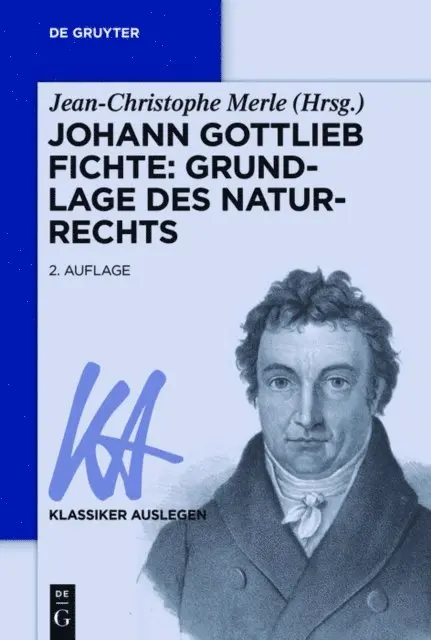
Johann Gottlieb Fichte: Grundlage des Naturrechts
E-bok, 2016
321 kr
Lägg i varukorg
Johann Gottlieb Fichtes „Grundlage des Naturrechts“ stellt einen Wendepunkt der Rechts- und Staatsphilosophie dar. Der erste Teil (1796) begründet den Begriff des Rechts und seine systematische Anwendung weder durch eine Grundanthropologie wie im klassischen Naturrecht noch, wie Kant, durch einen …
Johann Gottlieb Fichte: Grundlage des Naturrechts
E-bok, 2016
321 kr
Lägg i varukorg
Johann Gottlieb Fichtes „Grundlage des Naturrechts“ stellt einen Wendepunkt der Rechts- und Staatsphilosophie dar. Der erste Teil (1796) begründet den Begriff des Rechts und seine systematische Anwendung weder durch eine Grundanthropologie wie im klassischen Naturrecht noch, wie Kant, durch einen …
Johann Gottlieb Fichte: Grundlage des Naturrechts
Häftad, 2016
274 kr
Lägg i varukorg
Johann Gottlieb Fichtes „Grundlage des Naturrechts“ stellt einen Wendepunkt der Rechts- und Staatsphilosophie dar. Der erste Teil (1796) begründet den Begriff des Rechts und seine systematische Anwendung weder durch eine Grundanthropologie wie im klassischen Naturrecht noch, wie Kant, durch einen …
Zwischen Rechten und Pflichten – Kants ›Metaphysik der Sitten‹
Av Jean-Christophe Merle, Carola von Villiez
Inbunden, 2021
1938 kr
Lägg i varukorg
Kant nimmt in der Einleitung zur Metaphysik der Sitten eine Einteilung in innere und äußere Gesetzgebung vor. Beide leitet er aus demselben in der Grundlegung zur Metaphysik der Sitten formulierten kategorischen Imperativ ab, und fügt Letzterem weitere Elemente einer Grundanthropologie hinzu, die …
Strafen aus Respekt vor der Menschenwürde
Eine Kritik am Retributivismus aus der Perspektive des deutschen Idealismus
E-bok, 2011
1426 kr
Lägg i varukorg
Zwischen Rechten und Pflichten – Kants ›Metaphysik der Sitten‹
Av Jean-Christophe Merle, Carola von Villiez
Häftad, 2023
329 kr
Lägg i varukorg
Kant nimmt in der Einleitung zur Metaphysik der Sitten eine Einteilung in innere und äußere Gesetzgebung vor. Beide leitet er aus demselben in der Grundlegung zur Metaphysik der Sitten formulierten kategorischen Imperativ ab, und fügt Letzterem weitere Elemente einer Grundanthropologie hinzu, die …
Kant's Theory of Law
Proceedings of the Special Workshop "e;Kant's Concept of Law"e; held at the 26th World Congress of the International Association for Philosophy of Law and Social Philosophy in Belo Horizonte, 2013
Av Alexandre Trivisonno, Jean-Christophe Merle
E-bok, 2015
422 kr
Lägg i varukorg
This volume presents an extended version of the contributions presented at the workshop "e;Kant's Concept of Law"e; held at the 26th World Congress of the International Association for Philosophy of Law and Social Philosophy (IVR) in 2013. It handles issues of applied legal philosophy in …
«Leviathan-» Between the Wars
Hobbes’ Impact on Early Twentieth Century Political Philosophy
Av Luc Foisneau, Jean-Christophe Merle m. fl.
Häftad, 2005
651 kr
Lägg i varukorg
The symbol of the Leviathan came to the forefront in political theory, as the structure and the ideological justification of the state underwent radical change in at least three European countries from the early 1920s to the 1940s. Thus, the terrifying image of Leviathan has sometimes given rise to …
Spheres of Global Justice
Volume 1 Global Challenges to Liberal Democracy. Political Participation, Minorities and Migrations; Volume 2 Fair Distribution - Global Economic, Social and Intergenerational Justice
2013
1935 kr
Lägg i varukorg
Spheres of Global Justice analyzes six of the most important and controversial spheres of global justice, each concerning a specific global social good. These spheres are democratic participation, migrations, cultural minorities, economic justice, social justice, and intergenerational justice. …
Spheres of Global Justice
Volume 1 Global Challenges to Liberal Democracy. Political Participation, Minorities and Migrations; Volume 2 Fair Distribution - Global Economic, Social and Intergenerational Justice
E-bok, 2013
1942 kr
Lägg i varukorg
Spheres of Global Justice analyzes six of the most important and controversial spheres of global justice, each concerning a specific global social good. These spheres are democratic participation, migrations, cultural minorities, economic justice, social justice, and intergenerational justice. …
Spheres of Global Justice
Volume 1 Global Challenges to Liberal Democracy. Political Participation, Minorities and Migrations; Volume 2 Fair Distribution - Global Economic, Social and Intergenerational Justice
2017
1935 kr
Lägg i varukorg
Spheres of Global Justice analyzes six of the most important and controversial spheres of global justice, each concerning a specific global social good. These spheres are democratic participation, migrations, cultural minorities, economic justice, social justice, and intergenerational justice. …