Jean Liddiard - Böcker
Visar alla böcker från författaren Jean Liddiard. Handla med fri frakt och snabb leverans.
3 produkter
3 produkter
1 674 kr
Skickas inom 10-15 vardagar
Women ‘kept the home fires burning’ while their men went off to war. This is the usual image of the part played by women in the First World War, reinforced through countless posters, government exhortations and even popular songs. It is very far from the truth. As this remarkable book shows, originally published in 1987, the truth was that women showed themselves capable of undertaking many roles hitherto the sole prerogative of men, a position accepted during the emergency of war but quickly ‘righted’ once peace was restored: the women who had helped to win the war were displaced by the returning heroes from the Front.Diana Condell and Jean Liddiard selected more than 150 superb contemporary photographs, and these unique pictures, with extended captions and accompanying text, illustrate the many and varied roles played by women in the First World War. Many of the photographs had never been published before and they reveal dramatically the extent to which women took over the day-to-day running of society during the war. Fulfilling these roles helped to change women’s perceptions of themselves and their place in the social fabric: the photographs are arranged thematically to reveal this and how society’s own view of women was altered as a result.The book also tells the story of the war from the female viewpoint, assessing its effect on the women involved. It focuses in a neglected but vital part of the history of the emancipation of women and also raises questions about what sort of victory they had worked for.In quality and range this was a pioneering study. More than that, through the haunting quality of its images it creates a pathway into the mind and world of the past.
414 kr
Skickas inom 10-15 vardagar
Women ‘kept the home fires burning’ while their men went off to war. This is the usual image of the part played by women in the First World War, reinforced through countless posters, government exhortations and even popular songs. It is very far from the truth. As this remarkable book shows, originally published in 1987, the truth was that women showed themselves capable of undertaking many roles hitherto the sole prerogative of men, a position accepted during the emergency of war but quickly ‘righted’ once peace was restored: the women who had helped to win the war were displaced by the returning heroes from the Front.Diana Condell and Jean Liddiard selected more than 150 superb contemporary photographs, and these unique pictures, with extended captions and accompanying text, illustrate the many and varied roles played by women in the First World War. Many of the photographs had never been published before and they reveal dramatically the extent to which women took over the day-to-day running of society during the war. Fulfilling these roles helped to change women’s perceptions of themselves and their place in the social fabric: the photographs are arranged thematically to reveal this and how society’s own view of women was altered as a result.The book also tells the story of the war from the female viewpoint, assessing its effect on the women involved. It focuses in a neglected but vital part of the history of the emancipation of women and also raises questions about what sort of victory they had worked for.In quality and range this was a pioneering study. More than that, through the haunting quality of its images it creates a pathway into the mind and world of the past.
613 kr
Skickas inom 5-8 vardagar
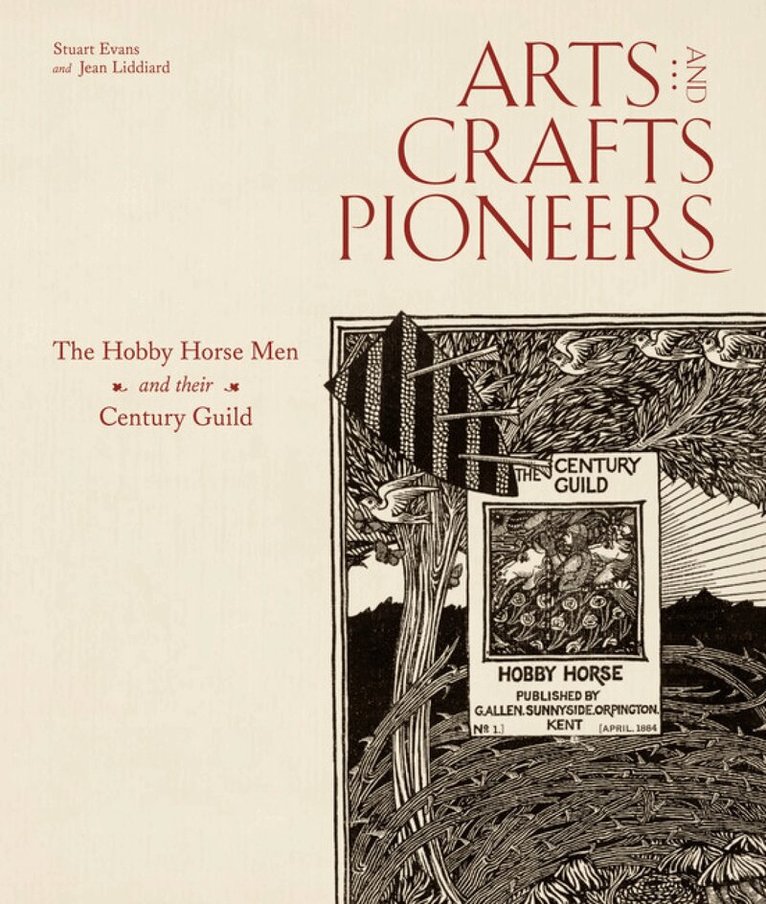
Surveying for the first time the Century Guild of Artists and its influential periodical, the Century Guild Hobby Horse, this original publication asserts the significance of the Guild in the development of the Arts and Crafts movement and its modernist successors.The founders of the Century Guild - architect Arthur Heygate Mackmurdo and his 18-year-old assistant Herbert Percy Horne (afterwards joined by the artist and poet Selwyn Image) - were driven by the ambition to answer John Ruskin’s radical call to regenerate art and society. Motivated by the concept of ‘the Unity of Art’, the Guild embraced a spectrum of arts which included architecture, painting, sculpture, metalwork, textiles and stained glass. It also reached out to music and literature, aiming to educate its public in practical form. Skilfully weaving chronology with the impressive artistic achievements of the collective, the authors also draw out the lively personalities of each of the protagonists and their wider circle. For anyone fascinated by the Arts and Crafts movement, this is essential reading.