Jean-Manuel Roubineau – författare
Visar alla böcker från författaren . Handla med fri frakt och snabb leverans.
4 produkter
4 produkter
Inbunden, Engelska, 2023
221 kr
Skickas inom 5-8 vardagar
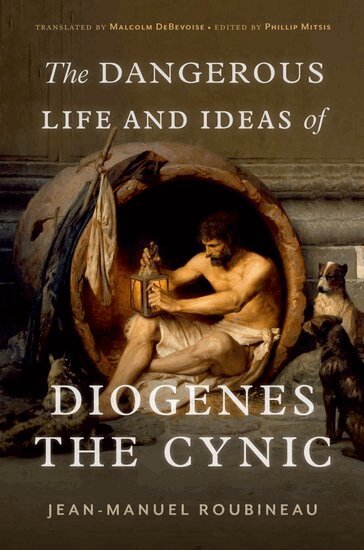
An engaging look at the founder of one of the most important philosophical schools of ancient Greece.The ancient philosopher Diogenes--nicknamed "The Dog" and decried by Plato as a "Socrates gone mad"--was widely praised and idealized as much as he was mocked and vilified. A favorite subject of sculptors and painters since the Renaissance, his notoriety is equally due to his infamously eccentric behavior, scorn of conventions, and biting aphorisms, and to the role he played in the creation of the Cynic school, which flourished from the 4th century B.C. to the Christian era. In this book, Jean-Manuel Roubineau paints a new portrait of an atypical philosopher whose life left an indelible mark on the Western collective imagination and whose philosophy courses through various schools of thought well beyond antiquity.Roubineau sifts through the many legends and apocryphal stories that surround the life of Diogenes. Was he, the son of a banker, a counterfeiter in his hometown of Sinope? Did he really meet Alexander the Great? Was he truly an apologist for incest, patricide, and anthropophagy? And how did he actually die? To answer these questions, Roubineau retraces the known facts of Diogenes' existence.Beyond the rehashed clichés, this book inspires us to rediscover Diogenes' philosophical legacy--whether it be the challenge to the established order, the detachment from materialism, the choice of a return to nature, or the formulation of a cosmopolitan ideal strongly rooted in the belief that virtue is better revealed in action than in theory.
E-bok
PDF, Engelska, 2023174 kr
Läs direkt efter köp
An engaging look at the founder of one of the most important philosophical schools of ancient Greece.The ancient philosopher Diogenes--nicknamed "The Dog" and decried by Plato as a "Socrates gone mad"--was widely praised and idealized as much as he was mocked and vilified. A favorite subject of sculptors and painters since the Renaissance, his notoriety is equally due to his infamously eccentric behavior, scorn of conventions, and biting aphorisms, and to the role he played in the creation of the Cynic school, which flourished from the 4th century B.C. to the Christian era. In this book, Jean-Manuel Roubineau paints a new portrait of an atypical philosopher whose life left an indelible mark on the Western collective imagination and whose philosophy courses through various schools of thought well beyond antiquity.Roubineau sifts through the many legends and apocryphal stories that surround the life of Diogenes. Was he, the son of a banker, a counterfeiter in his hometown of Sinope? Did he really meet Alexander the Great? Was he truly an apologist for incest, patricide, and anthropophagy? And how did he actually die? To answer these questions, Roubineau retraces the known facts of Diogenes'' existence.Beyond the rehashed clich?s, this book inspires us to rediscover Diogenes'' philosophical legacy--whether it be the challenge to the established order, the detachment from materialism, the choice of a return to nature, or the formulation of a cosmopolitan ideal strongly rooted in the belief that virtue is better revealed in action than in theory.
E-bok
Engelska, 2023174 kr
Läs direkt efter köp
An engaging look at the founder of one of the most important philosophical schools of ancient Greece.The ancient philosopher Diogenes--nicknamed "The Dog" and decried by Plato as a "Socrates gone mad"--was widely praised and idealized as much as he was mocked and vilified. A favorite subject of sculptors and painters since the Renaissance, his notoriety is equally due to his infamously eccentric behavior, scorn of conventions, and biting aphorisms, and to the role he played in the creation of the Cynic school, which flourished from the 4th century B.C. to the Christian era. In this book, Jean-Manuel Roubineau paints a new portrait of an atypical philosopher whose life left an indelible mark on the Western collective imagination and whose philosophy courses through various schools of thought well beyond antiquity.Roubineau sifts through the many legends and apocryphal stories that surround the life of Diogenes. Was he, the son of a banker, a counterfeiter in his hometown of Sinope? Did he really meet Alexander the Great? Was he truly an apologist for incest, patricide, and anthropophagy? And how did he actually die? To answer these questions, Roubineau retraces the known facts of Diogenes'' existence.Beyond the rehashed clich?s, this book inspires us to rediscover Diogenes'' philosophical legacy--whether it be the challenge to the established order, the detachment from materialism, the choice of a return to nature, or the formulation of a cosmopolitan ideal strongly rooted in the belief that virtue is better revealed in action than in theory.
Inbunden, Engelska, 2026
335 kr
Kommande
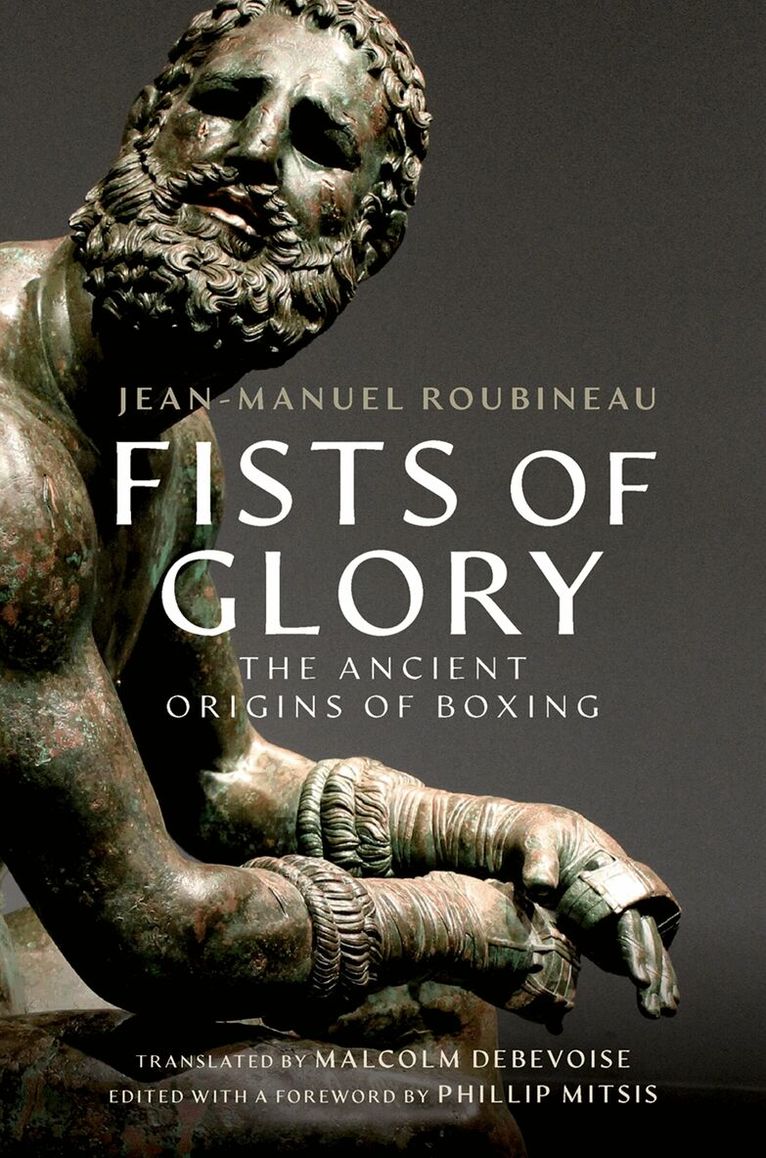
Fists of Glory provides a fascinating and intimate look at boxing from its origins in archaic Greece to its demise in late antiquity. Jean-Manuel Roubineau takes readers on a full sensory journey, replete with sights, smells, and percussive sounds, as he discusses all aspects of the sport, including rules and regulations, gear, weight classes, training regimens, cheating strategies, and boxing's relationship to other sporting contests like pankration. Roubineau's expertise as a prize-winning social historian and twenty years as an amateur boxer enable him to chart in compelling detail how ancient boxing arose and developed. He discusses the development of punching bags, a forensic exam on a boxer's skeleton, and offers detailed medical accounts of horrific wounds as well as heated arguments about the benefits and dangers of an athlete's sexual abstinence. Throughout, he also embeds boxing in the wider cultural history of the ancient Mediterranean, showing how it played a central role in Greek and Roman entertainment, religion, philosophy, and even hygiene. Fists of Glory also demonstrates how the ancient sport sheds light on modern boxing, with comparisons to the fighting styles, techniques, and careers of some of the most celebrated boxers in history. Boxing has always been an unforgiving discipline, a concentrated version of the struggle for survival. The classic writings of enthusiasts such as Jack London, Ernest Hemingway, Normal Mailer, and Joyce Carol Oates are invoked to illustrate the sport's beauty, energy, and its tragic dimensions--a perennial metaphor for life in cinema, literature, and popular culture.