Phillip Mitsis - Böcker
Visar alla böcker från författaren Phillip Mitsis. Handla med fri frakt och snabb leverans.
6 produkter
6 produkter
210 kr
Skickas inom 5-8 vardagar
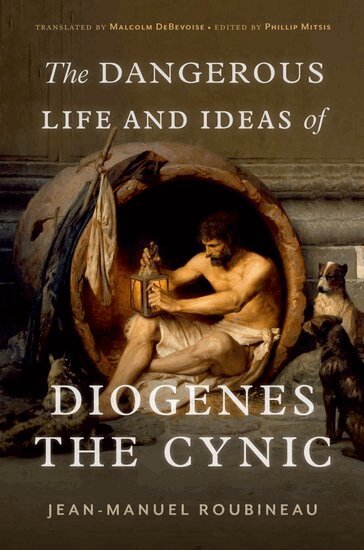
An engaging look at the founder of one of the most important philosophical schools of ancient Greece.The ancient philosopher Diogenes--nicknamed "The Dog" and decried by Plato as a "Socrates gone mad"--was widely praised and idealized as much as he was mocked and vilified. A favorite subject of sculptors and painters since the Renaissance, his notoriety is equally due to his infamously eccentric behavior, scorn of conventions, and biting aphorisms, and to the role he played in the creation of the Cynic school, which flourished from the 4th century B.C. to the Christian era. In this book, Jean-Manuel Roubineau paints a new portrait of an atypical philosopher whose life left an indelible mark on the Western collective imagination and whose philosophy courses through various schools of thought well beyond antiquity.Roubineau sifts through the many legends and apocryphal stories that surround the life of Diogenes. Was he, the son of a banker, a counterfeiter in his hometown of Sinope? Did he really meet Alexander the Great? Was he truly an apologist for incest, patricide, and anthropophagy? And how did he actually die? To answer these questions, Roubineau retraces the known facts of Diogenes' existence.Beyond the rehashed clichés, this book inspires us to rediscover Diogenes' philosophical legacy--whether it be the challenge to the established order, the detachment from materialism, the choice of a return to nature, or the formulation of a cosmopolitan ideal strongly rooted in the belief that virtue is better revealed in action than in theory.
886 kr
Skickas inom 3-6 vardagar
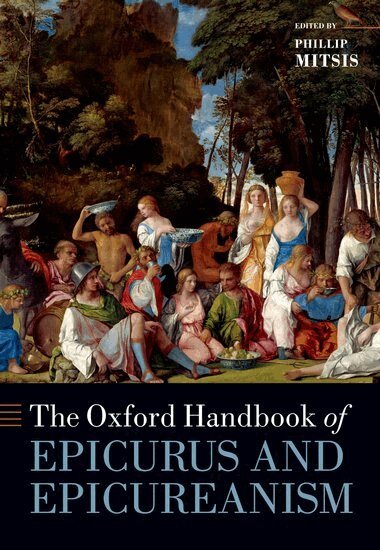
The ancient Greek philosopher Epicurus (341-270 BCE), though often despised for his materialism, hedonism, and denial of the immortality of the soul during many periods of history, has at the same time been a source of inspiration to figures as diverse as Vergil, Hobbes, Thomas Jefferson, and Bentham. This volume offers authoritative discussions of all aspects of Epicurus's philosophy and then traces out some of its most important subsequent influences throughout the Western intellectual tradition. Such a detailed and comprehensive study of Epicureanism is especially timely given the tremendous current revival of interest in Epicurus and his rivals, the Stoics. The thirty-one contributions in this volume offer an unmatched resource for all those wishing to deepen their knowledge of Epicurus' powerful arguments about happiness, death, and the nature of the material world and our place in it. At the same time, his arguments are carefully placed in the context of ancient and subsequent disputes, thus offering readers the opportunity of measuring Epicurean arguments against a wide range of opponents--from Platonists, Aristotelians and Stoics, to Hegel and Nietzsche, and finally on to such important contemporary philosophers as Thomas Nagel and Bernard Williams.The volume offers separate and detailed discussions of two fascinating and ongoing sources of Epicurean arguments, the Herculaneum papyri and the inscription of Diogenes of Oenoanda. Our understanding of Epicureanism is continually being enriched by these new sources of evidence and the contributors to this volume have been able to make use of them in presenting the most current understanding of Epicurus's own views. By the same token, the second half of the volume is devoted to the extraordinary influence of Epicurean doctrines, often either neglected or misunderstood, in literature, political thinking, scientific innovation, personal conceptions of freedom and happiness, and in philosophy generally. Taken together, the contributions in this volume offer the most comprehensive and detailed account of Epicurus and Epicureanism available in English.
2 524 kr
Skickas inom 7-10 vardagar
The ancient Greek philosopher Epicurus (341-270 BCE), though often despised for his materialism, hedonism, and denial of the immortality of the soul during many periods of history, has at the same time been a source of inspiration to figures as diverse as Vergil, Hobbes, Thomas Jefferson, and Bentham. This volume offers authoritative discussions of all aspects of Epicurus's philosophy and then traces out some of its most important subsequent influences throughout the Western intellectual tradition. Such a detailed and comprehensive study of Epicureanism is especially timely given the tremendous current revival of interest in Epicurus and his rivals, the Stoics. The thirty-one contributions in this volume offer an unmatched resource for all those wishing to deepen their knowledge of Epicurus' powerful arguments about happiness, death, and the nature of the material world and our place in it. At the same time, his arguments are carefully placed in the context of ancient and subsequent disputes, thus offering readers the opportunity of measuring Epicurean arguments against a wide range of opponents--from Platonists, Aristotelians and Stoics, to Hegel and Nietzsche, and finally on to such important contemporary philosophers as Thomas Nagel and Bernard Williams.The volume offers separate and detailed discussions of two fascinating and ongoing sources of Epicurean arguments, the Herculaneum papyri and the inscription of Diogenes of Oenoanda. Our understanding of Epicureanism is continually being enriched by these new sources of evidence and the contributors to this volume have been able to make use of them in presenting the most current understanding of Epicurus's own views. By the same token, the second half of the volume is devoted to the extraordinary influence of Epicurean doctrines, often either neglected or misunderstood, in literature, political thinking, scientific innovation, personal conceptions of freedom and happiness, and in philosophy generally. Taken together, the contributions in this volume offer the most comprehensive and detailed account of Epicurus and Epicureanism available in English.
1 333 kr
Kommande
Japan and ancient Greece. Placed side by side, these two concepts give the impression of something very strange, a sort of chimera - half Apollo, half samurai; half Venus, half geisha - set on a ground that is at once white and blue like the Cyclades, dark green and vermillion like Shintō shrines. How could two countries so distant from each other be joined together to form a coherent image, to give birth to a meaningful concept? In this groundbreaking study - translated into English for the first time - Michael Lucken analyses the manifold ways in which Japan has adopted and engaged with ancient Greece in the period from the Meiji restoration to the present. This invaluable and timely volume not only demonstrates that the influence of ancient Greece has permeated all aspects of Japanese public and cultural life, but ultimately illustrates that the reception of Classics is a global phenomenon.
Allusion, Authority, and Truth
Critical Perspectives on Greek Poetic and Rhetorical Praxis
Inbunden, Engelska, 2010
2 790 kr
Skickas inom 5-8 vardagar
Questions about how ancient Greek texts establish their authority, reflect on each other, and project their own truths have become central for a wide range of recent critical discourses. In this volume, an influential group of international scholars examines these themes in a variety of poetic and rhetorical genres. The result is a series of striking and original readings from different critical perspectives that display the centrality of these questions for understanding the poetic and rhetorical aims of ancient Greek texts. Characterized by a combination of close attention to philological detail and theoretical sophistication, the essays in this volume make a compelling case for this kind of focused, critically informed dialogue about the nature of ancient textual praxis. Students of classical literature will find a wealth of critical insights and challenging new readings of many familiar texts.
2 230 kr
Skickas inom 5-8 vardagar
The political allegiances of major Roman poets have been notoriously difficult to pin down, in part because they often shift the onus of political interpretation from themselves to their readers. By the same token, it is often difficult to assess their authorial powerplays in the etymologies, puns, anagrams, telestichs, and acronyms that feature prominently in their poetry. It is the premise of this volume that the contexts of composition, performance, and reception play a critical role in constructing poetic voices as either politically favorable or dissenting, and however much the individual scholars in this volume disagree among themselves, their readings try to do justice collectively to poetry’s power to shape political realities. The book is aimed not only at scholars of Roman poetry, politics, and philosophy, but also at those working in later literary and political traditions influenced by Rome's greatest poets.