Jeff Love - Böcker
Visar alla böcker från författaren Jeff Love. Handla med fri frakt och snabb leverans.
14 produkter
14 produkter
1 182 kr
Skickas inom 7-10 vardagar
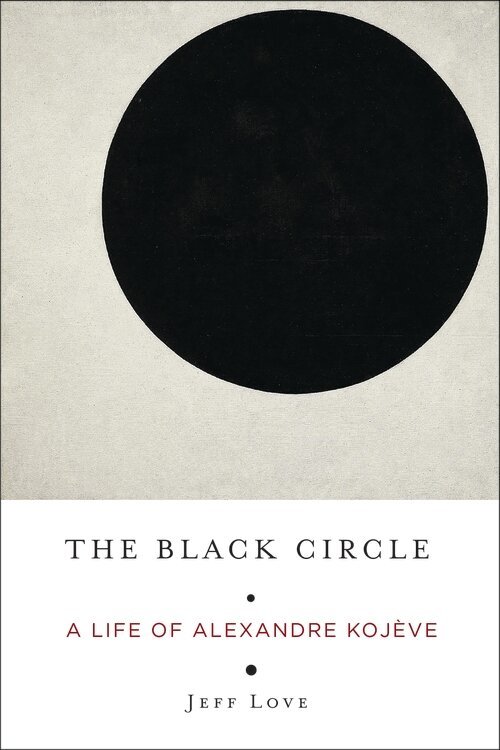
Alexandre Kojève (1902–1968) was an important and provocative thinker. Born in Russia, he spent most of his life in France. His interpretation of Hegel and his notorious declaration that history had come to an end exerted great influence on French thinkers and writers such as Raymond Aron, Georges Bataille, Maurice Merleau-Ponty, Jacques Lacan, and Raymond Queneau. An unorthodox Marxist, he was a critic of Martin Heidegger and interlocutor of Leo Strauss who played a significant role in establishing the European Economic Community; a polyglot with many unusual interests, he wrote works, mostly unpublished in his lifetime, on quantum physics, the problem of the infinite, Buddhism, atheism, and Vassily Kandinsky’s paintings.In The Black Circle, Jeff Love reinterprets Kojève’s works, showing him to be an essential thinker who challenged modern society and its valuation of individuality, self-interest, and freedom from death. Emphasizing Kojève’s neglected Russian roots, The Black Circle puts him in the context of the late-nineteenth- and early-twentieth-century Russian debates over the proper ends of human life. Love explores notions of perfection, freedom, and finality in Kojève’s account of Hegel and his neglected later works, clarifying Kojève’s emancipatory thinking and the meaning of the oft-misinterpreted “end of history.” Combining intellectual history, close textual analysis, and philosophy, The Black Circle reveals Kojève’s thought as a profound critique of capitalist individualism and a timely meditation on human freedom.
301 kr
Skickas inom 7-10 vardagar
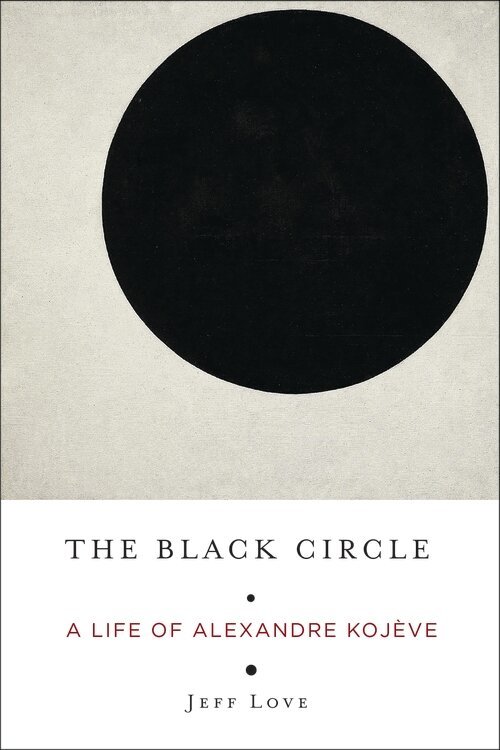
Alexandre Kojève (1902–1968) was an important and provocative thinker. Born in Russia, he spent most of his life in France. His interpretation of Hegel and his notorious declaration that history had come to an end exerted great influence on French thinkers and writers such as Raymond Aron, Georges Bataille, Maurice Merleau-Ponty, Jacques Lacan, and Raymond Queneau. An unorthodox Marxist, he was a critic of Martin Heidegger and interlocutor of Leo Strauss who played a significant role in establishing the European Economic Community; a polyglot with many unusual interests, he wrote works, mostly unpublished in his lifetime, on quantum physics, the problem of the infinite, Buddhism, atheism, and Vassily Kandinsky’s paintings.In The Black Circle, Jeff Love reinterprets Kojève’s works, showing him to be an essential thinker who challenged modern society and its valuation of individuality, self-interest, and freedom from death. Emphasizing Kojève’s neglected Russian roots, The Black Circle puts him in the context of the late-nineteenth- and early-twentieth-century Russian debates over the proper ends of human life. Love explores notions of perfection, freedom, and finality in Kojève’s account of Hegel and his neglected later works, clarifying Kojève’s emancipatory thinking and the meaning of the oft-misinterpreted “end of history.” Combining intellectual history, close textual analysis, and philosophy, The Black Circle reveals Kojève’s thought as a profound critique of capitalist individualism and a timely meditation on human freedom.
224 kr
Skickas inom 3-6 vardagar
479 kr
Skickas inom 7-10 vardagar
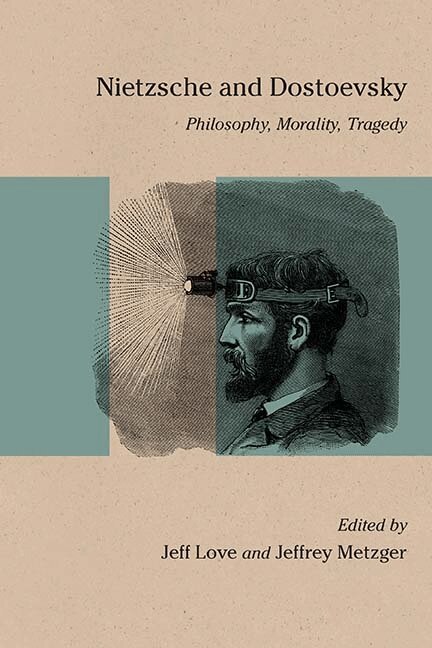
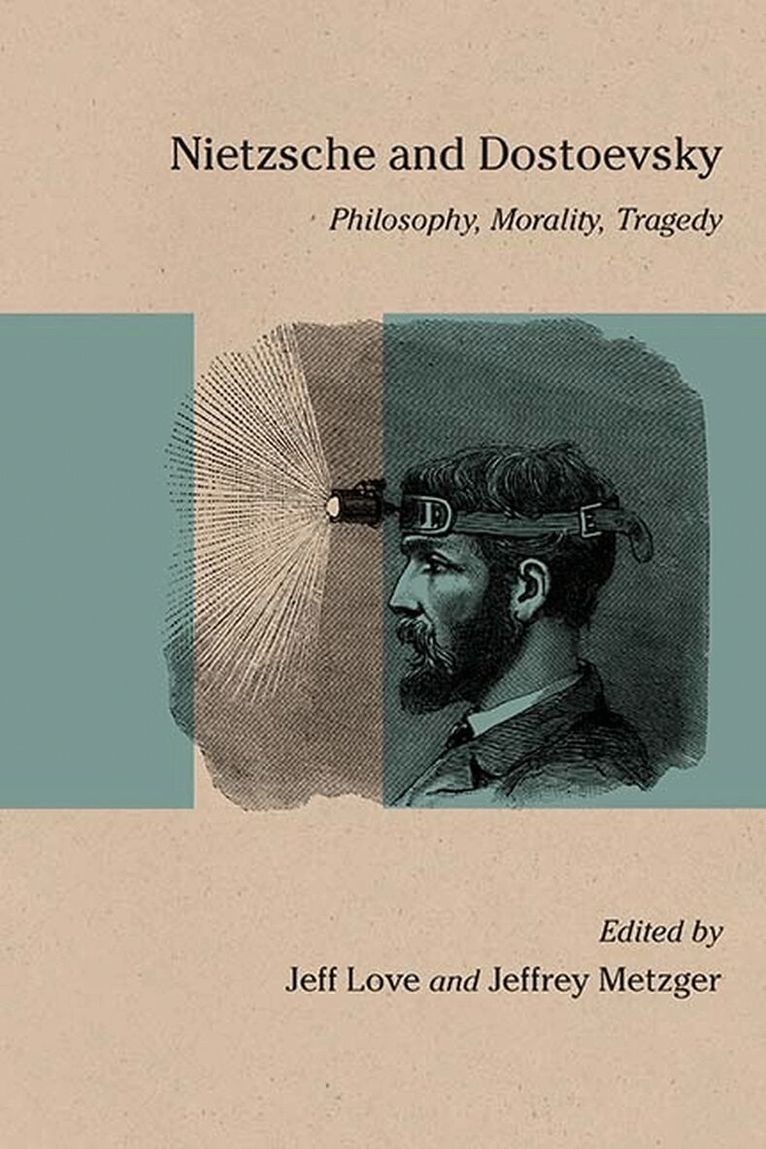
After more than a century, the urgency with which the writing of Fyodor Dostoevsky and Friedrich Nietzsche speaks to us is undiminished. Nietzsche explicitly acknowledged Dostoevsky’s relevance to his work, noting its affinities as well as itspoints of opposition. Both of them are credited with laying much of the foundation for what came to be called existentialist thought. The essays in this volume bring a fresh perspective to a relationship that illuminates a great deal of twentieth-centuryintellectual history. Among the questions taken up by contributors are the possibility of morality in a godless world, the function of philosophy if reason is not the highest expression of our humanity, the nature of tragedy when performed for a bourgeois audience, and the justification of suffering if it is not divinely sanctioned. Above all, these essays remind us of the supreme value of the questioning itself that pervades the work of Dostoevsky and Nietzsche.
1 487 kr
Skickas inom 10-15 vardagar
After more than a century, the urgency with which the writing of Fyodor Dostoevsky and Friedrich Nietzsche speaks to us is undiminished. Nietzsche explicitly acknowledged Dostoevsky’s relevance to his work, noting its affinities as well as itspoints of opposition. Both of them are credited with laying much of the foundation for what came to be called existentialist thought. The essays in this volume bring a fresh perspective to a relationship that illuminates a great deal of twentieth-centuryintellectual history. Among the questions taken up by contributors are the possibility of morality in a godless world, the function of philosophy if reason is not the highest expression of our humanity, the nature of tragedy when performed for a bourgeois audience, and the justification of suffering if it is not divinely sanctioned. Above all, these essays remind us of the supreme value of the questioning itself that pervades the work of Dostoevsky and Nietzsche.
1 698 kr
Skickas inom 10-15 vardagar
This is a concise but comprehensive guide to Tolstoy's literary and philosophical writings, focusing on aspects of his work that students find most difficult.Count Leo Nikolaevich Tolstoy (1828-1910) is one of the most important writers in the Western tradition. His two great, giant novels, "War and Peace" and "Anna Karenina", are regarded as pinnacles of the genre; they cover an enormous range of basic human experiences with a precision and probing spirit that, in the words of one critic, are simply 'unmatched by any other writer.'This guide offers students a clear introduction to Tolstoy's literary works from his major novels to the shorter novels and texts, including "Hadji Murat" and "The Death of Ivan Ilyich". The guide also covers major themes, including sex, death, authority and evil and offers an overview of Tolstoy's religious and philosophical thought. A final chapter assesses his lasting influence in the spheres of literature and culture, religion and philosophy and on major figures, including Joyce, Ghandi, Wittgenstein and Heidegger. This is a comprehensive and readable guide to one of the most remarkable writers and thinkers of the nineteenth century."Continuum's Guides for the Perplexed" are clear, concise and accessible introductions to thinkers, writers and subjects that students and readers can find especially challenging - or indeed downright bewildering. Concentrating specifically on what it is that makes the subject difficult to grasp, these books explain and explore key themes and ideas, guiding the reader towards a thorough understanding of demanding material.
361 kr
Skickas inom 10-15 vardagar
A concise but comprehensive guide to Tolstoy's literary and philosophical writings, focusing on aspects of his work that students find most difficult. Count Leo Nikolaevich Tolstoy (1828-1910) is one of the most important writers in the Western tradition. His two great, giant novels, "War and Peace" and "Anna Karenina", are regarded as pinnacles of the genre; they cover an enormous range of basic human experiences with a precision and probing spirit that, in the words of one critic, are simply 'unmatched by any other writer.'This guide offers students a clear introduction to Tolstoy's literary works from his major novels to the shorter novels and texts, including "Hadji Murat" and "The Death of Ivan Ilyich". The guide also covers major themes including sex, death, authority and evil and offers an overview of Tolstoy's religious and philosophical thought. A final chapter assesses his lasting influence in the spheres of literature and culture, religion and philosophy and on major figures including Joyce, Ghandi, Wittgenstein and Heidegger. This is a comprehensive and readable guide to one of the most remarkable writers and thinkers of the nineteenth century."Continuum's Guides for the Perplexed" are clear, concise and accessible introductions to thinkers, writers and subjects that students and readers can find especially challenging - or indeed downright bewildering. Concentrating specifically on what it is that makes the subject difficult to grasp, these books explain and explore key themes and ideas, guiding the reader towards a thorough understanding of demanding material.
1 009 kr
Skickas inom 10-15 vardagar
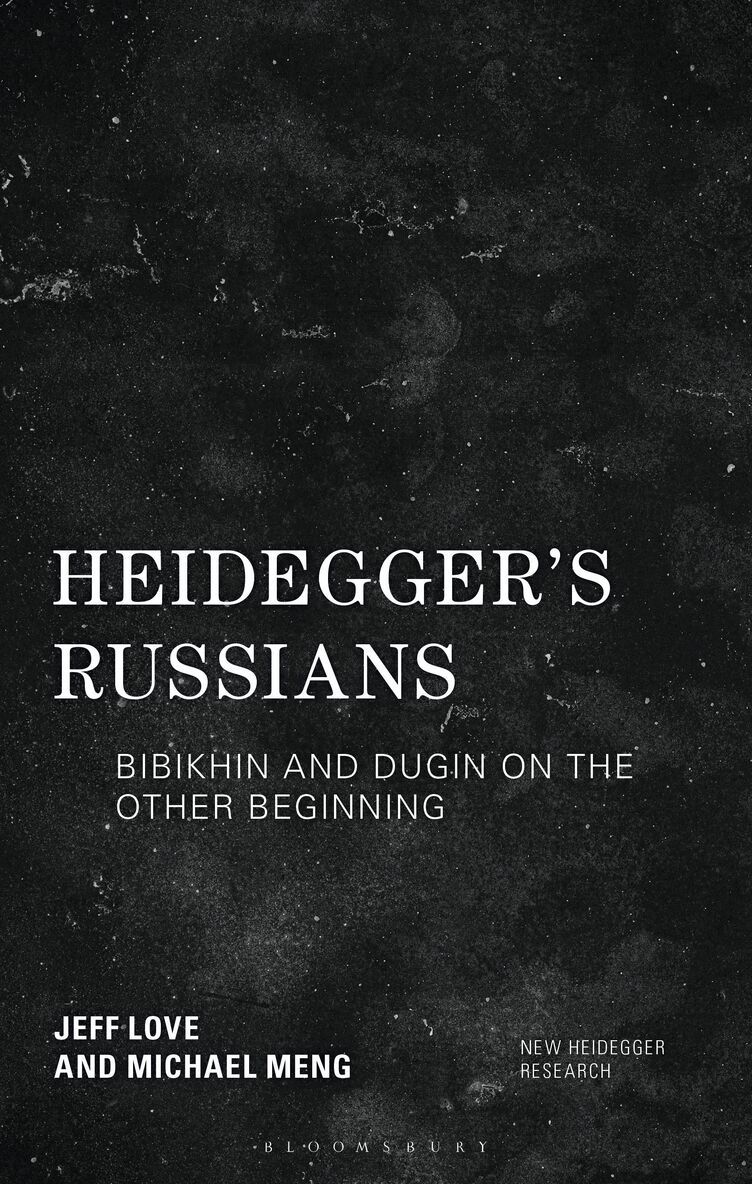
This book gives a philosophical account of Martin Heidegger’s influence on two important and hitherto understudied Russian philosophers, Aleksandr Dugin (b. 1962 -) and Vladimir Bibikhin (1938 - 2004). The book focuses on Heidegger’s thought as revolutionary and in search of bringing about an other beginning in philosophy and politics. Dugin and Bibikhin are examples of Russian thinkers inspired by Heidegger to consider revolutionary alternatives in the creation of a new beginning for Russia in the wake of the collapse of the Soviet Union in 1991. Dugin represents an attempt to assert the sovereign identity and destiny of Russia and Russian thought as against modern liberal thinking, inspired by the Enlightenment and embodied in the hegemony of the United States, the “unipolar tyrant” threatening to impose its domination on the world. Bibikhin envisages a different assertion of Russian identity that does not seek direct confrontation with other nations but a transformation in how we may think the political and the destiny of humanity in the modern technological age. If Dugin advocates struggle and a philosophy of chaos that is distinctively Russian in his view, Bibikhin advocates a coming to terms with our brief existence by taking on the burden of mortality, in his words, the “burden of the cross.” If Dugin advocates recognition of the negative and nothingness, Bibikhin advocates plenitude, a fullness that cannot be exhausted. These Russian thinkers take up major aspects of Heidegger’s philosophical work; they adapt them in intriguing ways to an extreme existential and political situation whose consequences are still very relevant to the present day, both in terms of Russia’s influence on the world stage and on the growing turn to the political right that is an international phenomenon of considerable importance.
1 572 kr
Skickas inom 10-15 vardagar
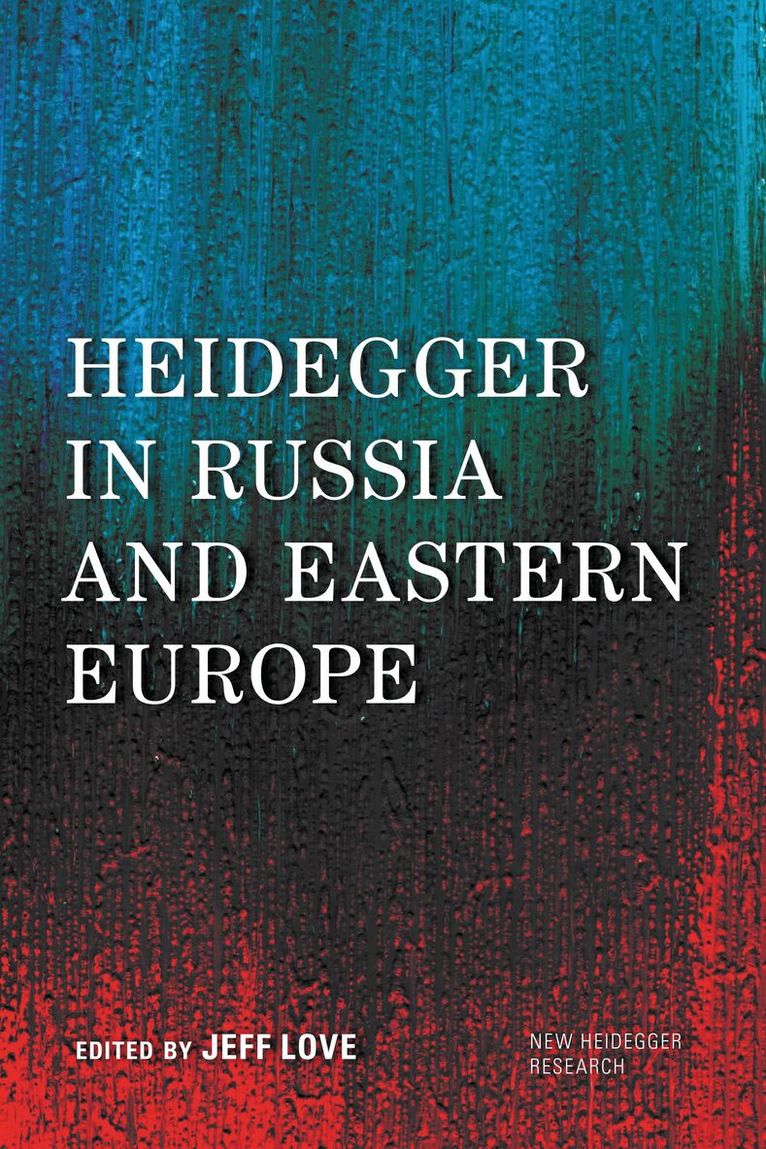
Heidegger’s influence in the twentieth century probably outstrips that of any other philosopher, at least in the so-called Continental tradition. The 'revolution' Heidegger brought about with his compelling readings of the broader philosophical tradition transformed German philosophy and spread quickly to most of Europe, the United States and Japan. This volume examines Heidegger’s influence in a region where his reception has had a remarkable and largely hidden history: Eastern Europe and Russia. The book begins by addressing two important literary influences on Heidegger: Dostoevsky and Tolstoy. It goes on to examine Heidegger’s philosophical influence, and features three crucial figures in the reception of Heidegger’s thought in Eastern Europe and Russia: Vladimir Bibikhin, Krzysztof Michalski, and Jan Patocka. Finally the volume deals with an often vexed issue in current treatments of Heidegger: the importance of Heidegger’s philosophy for politics. The book includes essays by an international team of contributors, including leading representatives of Heideggerian thought in Russia today. Heidegger’s thought plays a key role in debates over Russian identity and the geopolitical role Russia has to play in the world. The volume surveys the complicated landscape of post-Soviet philosophy, and how the rise of widely differing appropriations of Heidegger exploit familiar fault lines in the Russian reception of Western thinkers that date back to the first stirrings of a distinctively Russian philosophical tradition.
568 kr
Skickas inom 10-15 vardagar
Heidegger’s influence in the twentieth century probably outstrips that of any other philosopher, at least in the so-called Continental tradition. The 'revolution' Heidegger brought about with his compelling readings of the broader philosophical tradition transformed German philosophy and spread quickly to most of Europe, the United States and Japan. This volume examines Heidegger’s influence in a region where his reception has had a remarkable and largely hidden history: Eastern Europe and Russia. The book begins by addressing two important literary influences on Heidegger: Dostoevsky and Tolstoy. It goes on to examine Heidegger’s philosophical influence, and features three crucial figures in the reception of Heidegger’s thought in Eastern Europe and Russia: Vladimir Bibikhin, Krzysztof Michalski, and Jan Patocka. Finally the volume deals with an often vexed issue in current treatments of Heidegger: the importance of Heidegger’s philosophy for politics. The book includes essays by an international team of contributors, including leading representatives of Heideggerian thought in Russia today. Heidegger’s thought plays a key role in debates over Russian identity and the geopolitical role Russia has to play in the world. The volume surveys the complicated landscape of post-Soviet philosophy, and how the rise of widely differing appropriations of Heidegger exploit familiar fault lines in the Russian reception of Western thinkers that date back to the first stirrings of a distinctively Russian philosophical tradition.
247 kr
Skickas inom 5-8 vardagar
355 kr
Skickas inom 5-8 vardagar
1 319 kr
Skickas inom 10-15 vardagar
This book confronts the question of immortality: Is human life without immortality tolerable? It does so by exploring three attitudes to immortality expressed in the context of three revolutions, the Soviet, the Nazi and the Communist revolution in China. The book begins with an account of the radical Russian tradition of immortalism that culminates in the thought of Nikolai Fedorov (1829-1903), then contrasting this account with the equally radical finitism of Martin Heidegger (1889-1976). Both these strands are then developed in the context of modern Chinese philosophical thinking about technology and the creation of a harmonious relation to nature that reflects in turn a harmonious relation to mortality, one that eschews the radicality of both Fedorov and Heidegger by discerning a “middle way.”
1 319 kr
Skickas inom 10-15 vardagar
This book confronts the question of immortality: Is human life without immortality tolerable?