Jeff Sigafoos - Böcker
Visar alla böcker från författaren Jeff Sigafoos. Handla med fri frakt och snabb leverans.
8 produkter
8 produkter
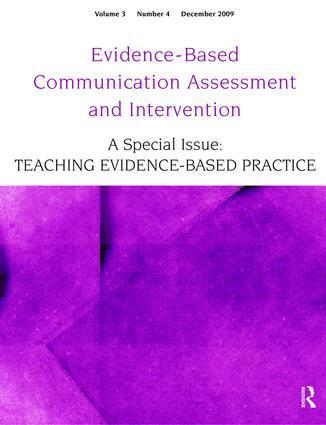
Teaching Evidence-Based Practice
A Special Issue of Evidence-Based Communication Assessment and Intervention
Inbunden, Engelska, 2017
1 952 kr
Skickas inom 10-15 vardagar
Many national professional organizations of speech-language pathologists have adopted evidence-based practice (EBP) as the preferred approach to clinical practice. This mandate brings with it an added responsibility for university programs because they need to prepare future generations of speech-language pathologists for these new demands. This special issue is the first in a peer-reviewed journal in the field that focuses on the teaching of EBP at the pre-professional level! That is, four university programs from three continents (Australia, Europe, and North America) showcase how they conceptualized and implemented their innovative approach to teaching EBP. Because many programs are in the midst of moving toward EBP, this is a must read for anyone who is teaching or learning in a university-based program in speech-language pathology. We believe that this issue will serve as a catalyst for increased scholarly discourse on this critical need.
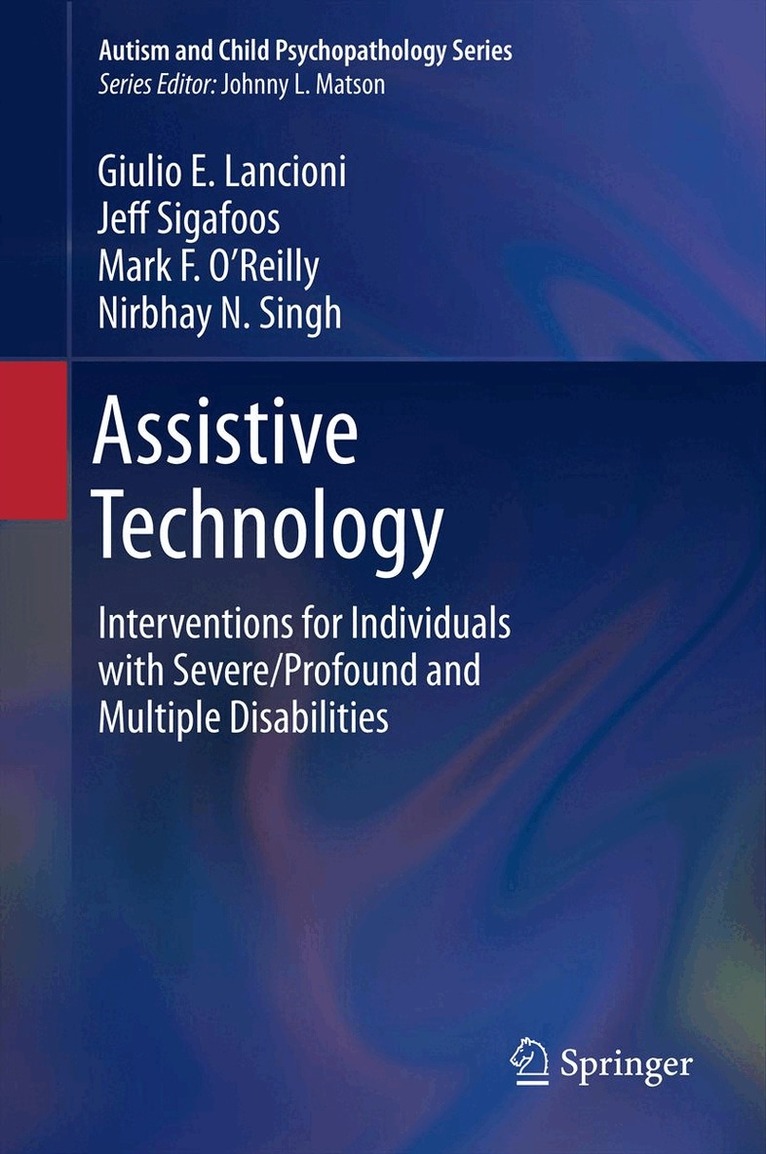
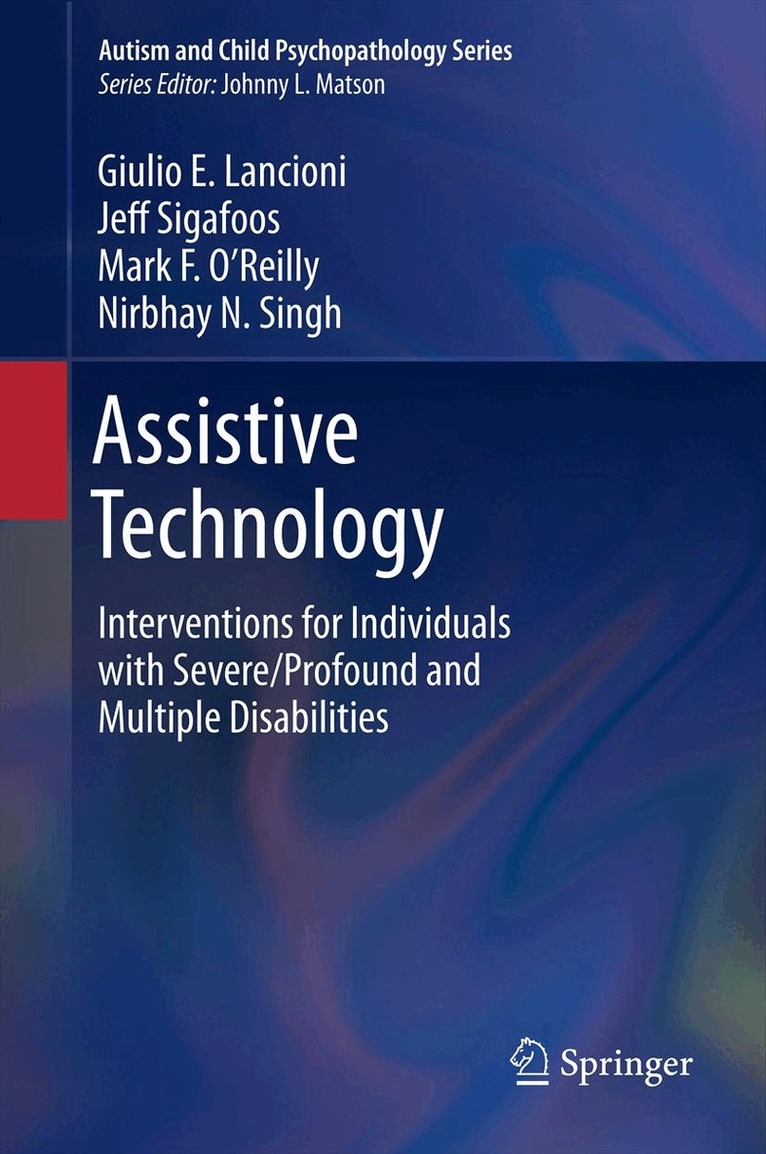
Assistive Technology
Interventions for Individuals with Severe/Profound and Multiple Disabilities
Inbunden, Engelska, 2012
1 101 kr
Skickas inom 10-15 vardagar
For people with severe/profound and multiple disabilities, managing the basic necessities of daily life often poses myriad challenges. Despite great odds, advances in assistive technology are making a difference in these individuals’ lives. Advances in microswitches, voice outcome communication aids, and computer-based systems are creating new opportunities for living independently, improving basic life skills, and reducing problem behaviors among individuals with combined motor, sensory, and intellectual disabilities.This unique volume examines how education and rehabilitation can improve the lives of even those individuals most affected by severe/profound and multiple disabilities. Interventions currently in use and in experimental stages are surveyed in terms of how they work and their applicability to clients with various needs. In addition, it examines the characteristics of developmentally disabled populations and offers guidelines for choosing suitable technologies. It presents empirical evidence on the advances in improving interaction with caregivers, control of the home environment, handling self-care tasks, and other core skills. Assistive Technology examines interventions that are innovative, respectful of the dignity of clients, and practical for ongoing use, including:• Microswitches in habilitation programs.• Speech-generating devices for communication and social development.• Instructional technology for promoting academic, work, and leisure skills.• Assistive technology for promoting ambulation.• Orientation systems for promoting movement indoors.• Assistive technology for reducing problem behaviors.A state-of-the-art guide to a growing field, Assistive Technology is an invaluable resource for researchers, clinicians, graduate students as well as clinicians and allied professionals in developmental psychology, rehabilitation and rehabilitative medicine,learning and instruction, occupational therapy, speech-language pathology, and educational technology.
Assistive Technology
Interventions for Individuals with Severe/Profound and Multiple Disabilities
Häftad, Engelska, 2014
1 101 kr
Skickas inom 10-15 vardagar
For people with severe/profound and multiple disabilities, managing the basic necessities of daily life often poses myriad challenges. Despite great odds, advances in assistive technology are making a difference in these individuals’ lives. Advances in microswitches, voice outcome communication aids, and computer-based systems are creating new opportunities for living independently, improving basic life skills, and reducing problem behaviors among individuals with combined motor, sensory, and intellectual disabilities.This unique volume examines how education and rehabilitation can improve the lives of even those individuals most affected by severe/profound and multiple disabilities. Interventions currently in use and in experimental stages are surveyed in terms of how they work and their applicability to clients with various needs. In addition, it examines the characteristics of developmentally disabled populations and offers guidelines for choosing suitable technologies. It presents empirical evidence on the advances in improving interaction with caregivers, control of the home environment, handling self-care tasks, and other core skills. Assistive Technology examines interventions that are innovative, respectful of the dignity of clients, and practical for ongoing use, including:• Microswitches in habilitation programs.• Speech-generating devices for communication and social development.• Instructional technology for promoting academic, work, and leisure skills.• Assistive technology for promoting ambulation.• Orientation systems for promoting movement indoors.• Assistive technology for reducing problem behaviors.A state-of-the-art guide to a growing field, Assistive Technology is an invaluable resource for researchers, clinicians, graduate students as well as clinicians and allied professionals in developmental psychology, rehabilitation and rehabilitative medicine,learning and instruction, occupational therapy, speech-language pathology, and educational technology.
Teaching Evidence-Based Practice
A Special Issue of Evidence-Based Communication Assessment and Intervention
Häftad, Engelska, 2010
484 kr
Skickas inom 10-15 vardagar
Many national professional organizations of speech-language pathologists have adopted evidence-based practice (EBP) as the preferred approach to clinical practice. This mandate brings with it an added responsibility for university programs because they need to prepare future generations of speech-language pathologists for these new demands.This special issue is the first in a peer-reviewed journal in the field that focuses on the teaching of EBP at the pre-professional level! That is, four university programs from three continents (Australia, Europe, and North America) showcase how they conceptualized and implemented their innovative approach to teaching EBP.Because many programs are in the midst of moving toward EBP, this is a must read for anyone who is teaching or learning in a university-based program in speech-language pathology.We believe that this issue will serve as a catalyst for increased scholarly discourse on this critical need.
660 kr
Skickas inom 7-10 vardagar
Challenging Behaviour and Developmental Disability brings together a range of evidence from different fields forming a coherent theory of challenging behaviour. The result is not only a better understanding of the nature of challenging behaviour in people with developmental disabilities, but also a clear delineation of the basic principles that guide assessment and intervention. The authors explore the various individual traits, social contexts and environmental factors that influence the development and persistence of aggression, self injury, extreme tantrums, and other forms of challenging behaviour. Ethical issues that arise in supporting individuals with challenging behaviour in typical home, school and community settings are exposed, as are difficulties of designing treatments without knowledge of the causes of behaviour.Reliance on the more typical technique-driven approach is discarded in favour of an evidence-based approach that focuses on the basic principles that underlie effective interventions. With its focus on the basic principles that underlie effective clinical practice, this book will be a tremendous asset to graduate students, beginning researchers and clinicians in psychology, special education, speech and language pathology, occupational therapy, social work and related disciplines.
1 632 kr
Skickas inom 7-10 vardagar
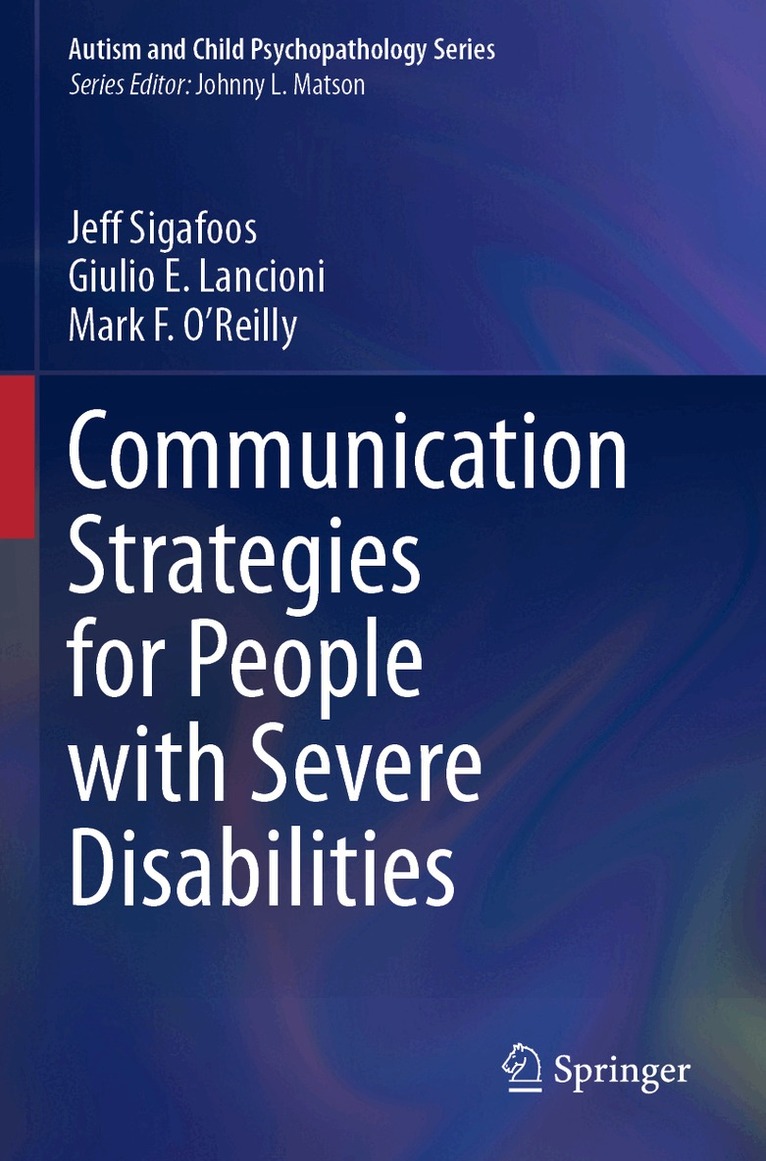
This book describes communication strategies for people with severe disabilities who are nonverbal or minimally verbal. It examines the major assessment and intervention strategies that have been developed to enable expressive and receptive communication. In addition, the book explores contemporary research focused on teaching nonverbal and minimally verbal persons to use a range of communication strategies for expressive and receptive communication. It addresses the advantages and disadvantages of each communication strategy, selecting curriculum for communication intervention programs, and assessing the communication needs of individuals with severe disabilities who are nonverbal or minimally verbal.Key areas of coverage include:Assessing communication strengths and areas of intervention need.Developing communication intervention curricula.Prelinguistic intervention.Natural gestures and manual signing strategies.Aided augmentative and alternative communication strategies, including tangible symbols, picture-based systems, speech-generating devices, and assistive technology solutions for individuals with sensory-motor impairment.Visual strategies to enhance receptive communication.Communication Strategies for People with Severe Disabilities is an invaluable resource for clinicians, therapists, and other professionals as well as researchers, professors, and graduate students in the interrelated fields of clinical child and school psychology, developmental psychology, child and adolescent psychiatry, clinical social work, applied behavior analysis, augmentative and alternative communication, special education, and speech-language pathology.
1 632 kr
Skickas inom 10-15 vardagar
This book describes communication strategies for people with severe disabilities who are nonverbal or minimally verbal. It examines the major assessment and intervention strategies that have been developed to enable expressive and receptive communication. In addition, the book explores contemporary research focused on teaching nonverbal and minimally verbal persons to use a range of communication strategies for expressive and receptive communication. It addresses the advantages and disadvantages of each communication strategy, selecting curriculum for communication intervention programs, and assessing the communication needs of individuals with severe disabilities who are nonverbal or minimally verbal.Key areas of coverage include:Assessing communication strengths and areas of intervention need.Developing communication intervention curricula.Prelinguistic intervention.Natural gestures and manual signing strategies.Aided augmentative and alternative communication strategies, including tangible symbols, picture-based systems, speech-generating devices, and assistive technology solutions for individuals with sensory-motor impairment.Visual strategies to enhance receptive communication.Communication Strategies for People with Severe Disabilities is an invaluable resource for clinicians, therapists, and other professionals as well as researchers, professors, and graduate students in the interrelated fields of clinical child and school psychology, developmental psychology, child and adolescent psychiatry, clinical social work, applied behavior analysis, augmentative and alternative communication, special education, and speech-language pathology.
825 kr
Skickas inom 10-15 vardagar
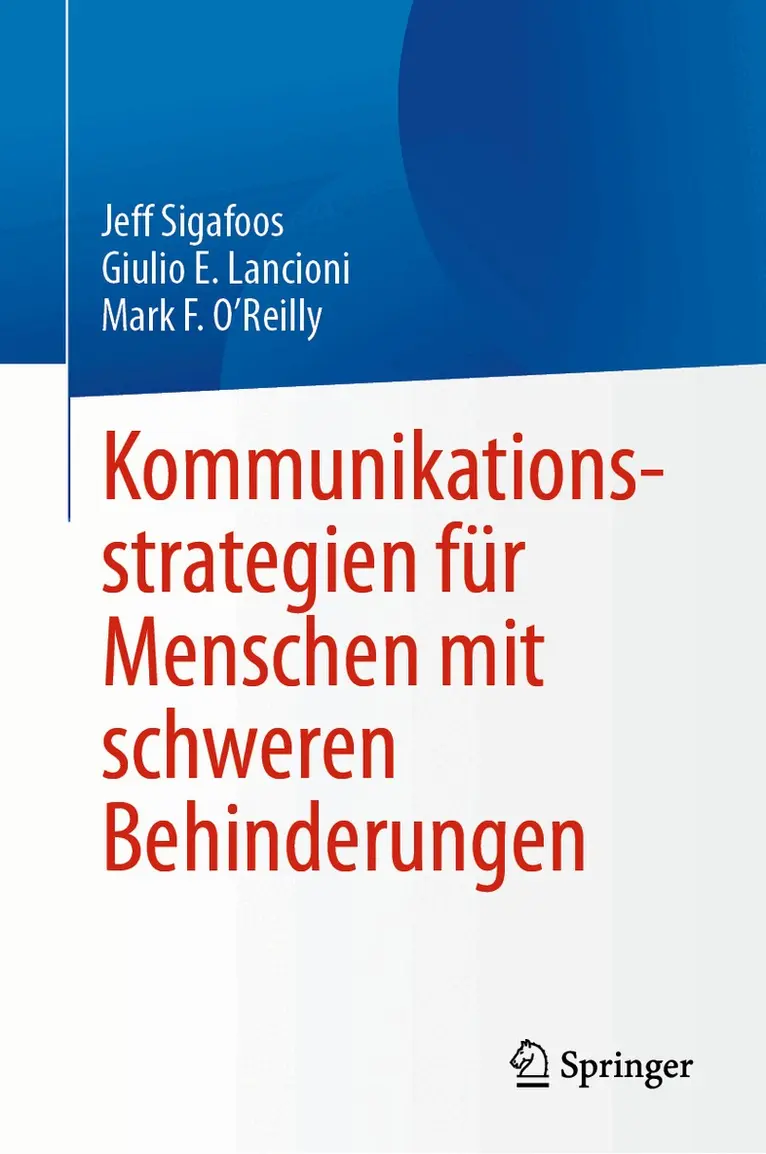
Dieses Buch beschreibt Kommunikationsstrategien für Menschen mit schweren Behinderungen, die nicht oder nur in geringem Ausmaß verbal kommunizieren können. Es untersucht die wichtigsten Diagnose- und Interventionsstrategien, die entwickelt wurden, um expressive und rezeptive Kommunikation zu ermöglichen. Darüber hinaus beleuchtet das Buch aktuelle Forschungsergebnisse, die sich mit der Vermittlung verschiedener Kommunikationsstrategien an Personen mit gering ausgeprägter oder fehlender verbaler Kommunikationsmöglichkeit befassen – sowohl im expressiven als auch im rezeptiven Bereich. Es behandelt die Vor- und Nachteile einzelner Kommunikationsstrategien, die Auswahl geeigneter Curricula für Kommunikationsinterventionen sowie die Einschätzung individueller Kommunikationsbedarfe bei Menschen mit schweren Behinderungen, die nicht oder kaum sprechen.Zentrale Themenbereiche:Einschätzung kommunikativer Stärken und InterventionsbedarfeEntwicklung von Curricula für KommunikationsinterventionenPrälinguistische InterventionNatürliche Gesten und manuelle GebärdenstrategienUnterstützte und alternative Kommunikationsformen, einschließlich greifbarer Symbole, bildbasierter Systeme, sprachgenerierender Geräte und technologischer Hilfsmittel für Personen mit sensomotorischen BeeinträchtigungenVisuelle Strategien zur Förderung rezeptiver KommunikationDieses Buch ist eine wertvolle Ressource für Fachkräfte wie Therapeut:innen, Kliniker:innen und Pädagog:innen sowie für Forscher:innen, Dozent:innen und Studierende in den Bereichen klinische Kinder- und Schulpsychologie, Entwicklungspsychologie, Kinder- und Jugendpsychiatrie, klinische Sozialarbeit, angewandte Verhaltensanalyse, Unterstützte Kommunikation, Sonderpädagogik und Sprachtherapie.