Jeffrey Knapp - Böcker
Visar alla böcker från författaren Jeffrey Knapp. Handla med fri frakt och snabb leverans.
10 produkter
10 produkter
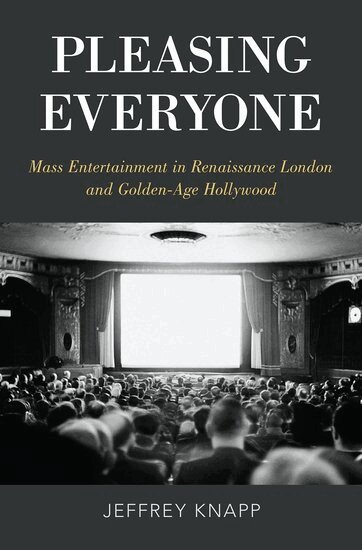
Pleasing Everyone
Mass Entertainment in Renaissance London and Golden-Age Hollywood
Inbunden, Engelska, 2017
661 kr
Skickas inom 5-8 vardagar
Shakespeare's plays were immensely popular in their own day -- so why do we refuse to think of them as mass entertainment? In Pleasing Everyone, author Jeffrey Knapp opens our eyes to the uncanny resemblance between Renaissance drama and the incontrovertibly mass medium of Golden-Age Hollywood cinema. Through fascinating explorations of such famous plays as Hamlet, The Roaring Girl, and The Alchemist, and such celebrated films as Citizen Kane, The Jazz Singer, and City Lights, Knapp challenges some of our most basic assumptions about the relationship between art and mass audiences. Above all, Knapp encourages us to resist the prejudice that mass entertainment necessarily simplifies and cheapens whatever it touches. As Knapp shows, it was instead the ceaseless pressure to please everyone that helped generate the astonishing richness and complexity of Renaissance drama as well as of Hollywood film.
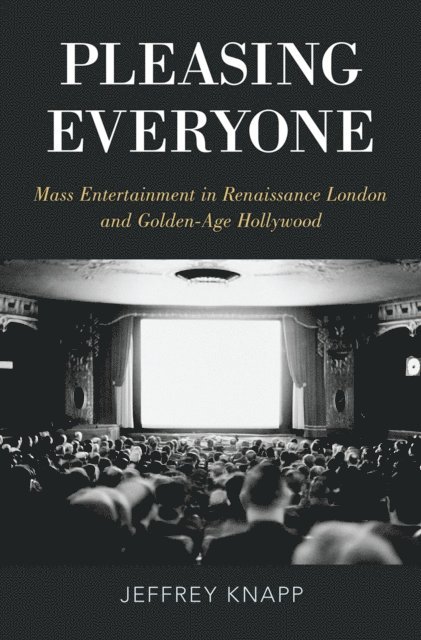
Pleasing Everyone
Mass Entertainment in Renaissance London and Golden-Age Hollywood
Häftad, Engelska, 2019
320 kr
Skickas inom 5-8 vardagar
Shakespeare's plays were immensely popular in their own day -- so why do we refuse to think of them as mass entertainment? In Pleasing Everyone, author Jeffrey Knapp opens our eyes to the uncanny resemblance between Renaissance drama and the incontrovertibly mass medium of Golden-Age Hollywood cinema. Through fascinating explorations of such famous plays as Hamlet, The Roaring Girl, and The Alchemist, and such celebrated films as Citizen Kane, The Jazz Singer, and City Lights, Knapp challenges some of our most basic assumptions about the relationship between art and mass audiences. Above all, Knapp encourages us to resist the prejudice that mass entertainment necessarily simplifies and cheapens whatever it touches. As Knapp shows, it was instead the ceaseless pressure to please everyone that helped generate the astonishing richness and complexity of Renaissance drama as well as of Hollywood film.
271 kr
Skickas inom 7-10 vardagar
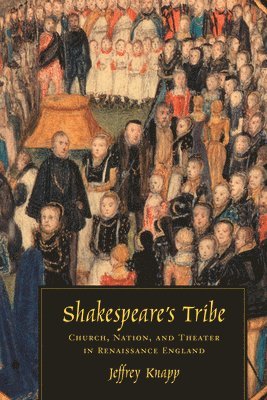
Most contemporary critics characterize Shakespeare and his tribe of fellow playwrights and players as resolutely secular, interested in religion only as a matter of politics or as a rival source of popular entertainment. Yet as Jeffrey Knapp demonstrates in this radical new reading, a surprising number of writers throughout the English Renaissance, including Shakespeare himself, represented plays as supporting the cause of true religion.To be sure, Renaissance playwrights rarely sermonized in their plays, which seemed preoccupied with sex, violence, and crime. During a time when acting was regarded as a kind of vice, many theater professionals used their apparent godlessness to advantage, claiming that it enabled them to save wayward souls the church could not otherwise reach. The stage, they argued, made possible an ecumenical ministry, which would help transform Reformation England into a more inclusive Christian society.Drawing on a variety of little-known as well as celebrated plays, along with a host of other documents from the English Renaissance, Shakespeare's Tribe changes the way we think about Shakespeare and the culture that produced him.Winner of the Best Book in Literature and Language from the Association of American Publishers' Professional/Scholarly division, the Conference on Christianity and Literature Book Award, and the Roland H. Bainton Prize for Literature from the Sixteenth Century Society and Conference.
502 kr
Tillfälligt slut
Three decades of controversy in Shakespeare studies can be summed up in a single question: Was Shakespeare one of a kind? On one side of the debate are the Shakespeare lovers, the bardolaters, who insist on Shakespeare's timeless preeminence as an author. On the other side are the theater historians who view modern claims of Shakespeare's uniqueness as a distortion of his real professional life. In "Shakespeare Only", Knapp draws on an extraordinary array of historical evidence to reconstruct Shakespeare's authorial identity as Shakespeare and his contemporaries actually understood it. He argues that Shakespeare tried to adapt his own singular talent and ambition to the collaborative enterprise of drama by imagining himself as uniquely embodying the diverse, fractious energies of the popular theater. Rewriting our current histories of authorship as well as Renaissance drama, "Shakespeare Only" recaptures a sense of the creative force that mass entertainment exerted on Shakespeare and that Shakespeare exerted on mass entertainment.
293 kr
Skickas inom 7-10 vardagar
Three decades of controversy in Shakespeare studies can be summed up in a single question: Was Shakespeare one of a kind? On one side of the debate are the Shakespeare lovers, the bardolaters, who insist on Shakespeare's timeless preeminence as an author. On the other side are the theater historians who view modern claims of Shakespeare's uniqueness as a distortion of his real professional life. In "Shakespeare Only", Knapp draws on an extraordinary array of historical evidence to reconstruct Shakespeare's authorial identity as Shakespeare and his contemporaries actually understood it. He argues that Shakespeare tried to adapt his own singular talent and ambition to the collaborative enterprise of drama by imagining himself as uniquely embodying the diverse, fractious energies of the popular theater. Rewriting our current histories of authorship as well as Renaissance drama, "Shakespeare Only" recaptures a sense of the creative force that mass entertainment exerted on Shakespeare and that Shakespeare exerted on mass entertainment.
Del 16 - New Historicism: Studies in Cultural Poetics
Empire Nowhere
England, America, and Literature from Utopia to The Tempest
Häftad, Engelska, 2021
932 kr
Skickas inom 3-6 vardagar
What caused England's literary renaissance? One answer has been such unprecedented developments as the European discovery of America. Yet England in the sixteenth century was far from an expanding nation. Not only did the Tudors lose England's sole remaining possessions on the Continent and, thanks to the Reformation, grow spiritually divided from the Continent as well, but every one of their attempts to colonize the New World actually failed. Jeffrey Knapp accounts for this strange combination of literary expansion and national isolation by showing how the English made a virtue of their increasing insularity. Ranging across a wide array of literary and extraliterary sources, Knapp argues that English poets rejected the worldly acquisitiveness of an empire like Spain's and took pride in England's material limitations as a sign of its spiritual strength. In the imaginary worlds of such fictions as Utopia, The Faerie Queene, and The Tempest, they sought a grander empire, founded on the "otherworldly" virtues of both England and poetry itself. This title is part of UC Press's Voices Revived program, which commemorates University of California Press's mission to seek out and cultivate the brightest minds and give them voice, reach, and impact. Drawing on a backlist dating to 1893, Voices Revived makes high-quality, peer-reviewed scholarship accessible once again using print-on-demand technology. This title was originally published in 1992.
Del 16 - New Historicism: Studies in Cultural Poetics
Empire Nowhere
England, America, and Literature from Utopia to The Tempest
Inbunden, Engelska, 2021
1 690 kr
Skickas inom 3-6 vardagar
What caused England's literary renaissance? One answer has been such unprecedented developments as the European discovery of America. Yet England in the sixteenth century was far from an expanding nation. Not only did the Tudors lose England's sole remaining possessions on the Continent and, thanks to the Reformation, grow spiritually divided from the Continent as well, but every one of their attempts to colonize the New World actually failed. Jeffrey Knapp accounts for this strange combination of literary expansion and national isolation by showing how the English made a virtue of their increasing insularity. Ranging across a wide array of literary and extraliterary sources, Knapp argues that English poets rejected the worldly acquisitiveness of an empire like Spain's and took pride in England's material limitations as a sign of its spiritual strength. In the imaginary worlds of such fictions as Utopia, The Faerie Queene, and The Tempest, they sought a grander empire, founded on the "otherworldly" virtues of both England and poetry itself. This title is part of UC Press's Voices Revived program, which commemorates University of California Press's mission to seek out and cultivate the brightest minds and give them voice, reach, and impact. Drawing on a backlist dating to 1893, Voices Revived makes high-quality, peer-reviewed scholarship accessible once again using print-on-demand technology. This title was originally published in 1992.
345 kr
Skickas inom 3-6 vardagar
2 009 kr
Skickas inom 3-6 vardagar
For many theatergoers and readers, Shakespeare's lofty reputation as the world's greatest playwright has turned him into an intimidating, even a forbidding figure. In Shakespeare High and Low, Jeffrey Knapp helps us to understand and enjoy Shakespeare's plays by restoring Shakespeare's own sense of them as neither high culture nor low culture, but a potent amalgam of both. Only in recognizing Shakespeare's determination to connect with every social class in his theater can we begin to grasp how his plays have managed to thrill audiences for so many centuries and across so many cultures.
411 kr
Skickas inom 3-6 vardagar
For many theatergoers and readers, Shakespeare's lofty reputation as the world's greatest playwright has turned him into an intimidating, even a forbidding figure. In Shakespeare High and Low, Jeffrey Knapp helps us to understand and enjoy Shakespeare's plays by restoring Shakespeare's own sense of them as neither high culture nor low culture, but a potent amalgam of both. Only in recognizing Shakespeare's determination to connect with every social class in his theater can we begin to grasp how his plays have managed to thrill audiences for so many centuries and across so many cultures.