Jeffrey L. Forgeng - Böcker
Visar alla böcker från författaren Jeffrey L. Forgeng. Handla med fri frakt och snabb leverans.
11 produkter
11 produkter
1 160 kr
Skickas inom 10-15 vardagar
Among the narrative traditions of the Middle Ages, the Robin Hood legend holds a unique, important, and often overlooked position. Robin Hood's uniqueness and importance begins with his status as the only English contribution to world mythology. His is also the only lasting myth to arise from the High Middle Ages and the last Western legend to achieve a sustained international appeal. Several Robin Hood ballads survive from the Middle Ages, and from the 15th to the 17th centuries he figured prominently in folk drama. Since then, he has appeared in numerous proverbs, placenames, operas, novels, children's stories, films, and television series. A tale told so often must be profoundly significant to the society that retells it. Yet in spite of its importance and popularity, the legend of Robin Hood has received surprisingly little study. This book overviews the genesis and development of the Robin Hood legend from the Middle Ages to 1700.As is appropriate for a work that bridges the divide between the worlds of fiction and history, this volume incorporates the strengths of both historical and literary approaches, respecting both the circumstances of the historic setting and the legend's status as a fictive creation. The principal focus of the book is the interaction between the text and the social context in which the legend arose and developed. The first two chapters examine the early Robin Hood tradition, including the initial nondramatic manifestations of the legend and the later dramatic representations. The volume then looks at the transformation of the legend in the 16th and 17th centuries and considers how the various elements of the legend interacted with each other and with society as a whole.
764 kr
Skickas inom 10-15 vardagar
Explore the Middle Ages, a complex and often misunderstood period in European history, through this vivid examination. Details of everyday living recreate the time period for modern readers, conveying the foreignness of the medieval world while bringing it into focus. The volume provides a two-pronged approach to history beginning with a broad sketch of the general dynamics that shaped the medieval experience while at the same time creating a detailed and clear portrait of what life would have been like for real individuals living in specific settings at the time.The reader is introduced to medieval society in the first three chapters, which include information on the life cycle, material culture, and the economy. These chapters provide an understanding of what people ate, what their social lives were like, what they wore, what kinds of jobs they had, and much more. Following are portraits of life in four specific medieval settings, offering in each case a particular example of the type: the village (Cuxham in Oxfordshire), the castle (Dover), the monastery (Cluny) and the town (Paris). Extensive use of documentary sources from each place sketch the broad contours of the social setting and provide details of the everyday experiences of real individuals. The volume concludes with an exploration of how ordinary people perceived the world in which they lived. Original games, recipes, and music are also provided to round out this rich introduction to life in medieval Europe.
764 kr
Skickas inom 10-15 vardagar
England witnessed an overall rising standard of living in the seventeenth century. Still very much an agrarian society, approximately 80% of the population lived in rural settlements, and even citydwellers were in walking distance of farmland. However, as the the century came to an end a growing proportion of the population was living in urban areas. London in particular grew from some 200,000 people in 1600 to 575,000 by 1700 and went from being the 3rd largest city in Europe to the largest. Homes were larger than previously and the wealth of a family could be determined by how many fireplaces were in the home. Clothing was another important facet of Stuart culture and not only protected the wearer against the elements but was a statement of their position in society. Clothing and homes weren't the only marker of social status, even sports and games were often divided along class lines - many in the lower classes played football while the upper-classes were consumed with billiards. Forgeng brings life in Stuart England alive for students and general readers alike. Chapters devoted to the course of life and cycles of time; the living environment; clothing and accoutrements; food and drink; and entertainments detail the day-to-day lives of those living in Stuart England; while the role of women; religion; science and technology; the military; and trade and economy are also explored.Greenwood's Daily Life through History series looks at the everyday lives of common people. This book will illuminate the lives of those living in Stuart England and provide a basis for further research. Black and white photographs, maps and charts are interspersed throughout the text to assist readers. Reference features include a timeline of historic events, sources for further reading, glossary of terms, bibliography and index.
930 kr
Skickas inom 10-15 vardagar
Experience the medieval world firsthand in this indispensable hands-on resource, and examine life as it was actually lived. The first book on medieval England to arise out of the living history movement, this volume allows readers to understand-and, if possible, recreate-what life was like for ordinary people in the days of Geoffrey Chaucer. Readers will learn not only what types of games medieval Britons played, what clothes they wore, or what food they ate, but actual rules for games, clothing patterns, and recipes. Written with impeccable detail, this volume examines all aspects of life in medieval England, down to basic fundamentals like nutrition, waste management, and table manners. Parallel situations and quoted material from The Canterbury Tales draw direct connections to Chaucer's work. Student researchers will benefit from a multitude of resources, including primary source sidebars, a chapter on online resources and digital research, information on medieval reenactments, a timeline of events, a glossary of terms, numerous illustrations, and a comprehensive print and nonprint bibliography of accessible sources. Supporting the world history curriculum and offering an interactive supplement to literature curricula, this volume is a must-have for students and interested readers.Detailed and meticulous, this volume examines all aspects of life in medieval England, down to basic fundamentals like nutrition, waste management, and table manners. Readers will explore, seasons, holidays and holy days, the prevalence and normalcy of death, the average workday, crafts and trade, decorating practices, and recreational activities like archery and falconry. Parallel situations and quoted material from The Canterbury Tales also draw direct connections to Chaucer's work.
392 kr
Skickas inom 10-15 vardagar
Explore the Middle Ages, a complex and often misunderstood period in European history, through this vivid examination. Details of everyday living recreate the time period for modern readers, conveying the foreignness of the medieval world while bringing it into focus. The volume provides a two-pronged approach to history beginning with a broad sketch of the general dynamics that shaped the medieval experience while at the same time creating a detailed and clear portrait of what life would have been like for real individuals living in specific settings at the time.The reader is introduced to medieval society in the first three chapters, which include information on the life cycle, material culture, and the economy. These chapters provide an understanding of what people ate, what their social lives were like, what they wore, what kinds of jobs they had, and much more. Following are portraits of life in four specific medieval settings, offering in each case a particular example of the type: the village (Cuxham in Oxfordshire), the castle (Dover), the monastery (Cluny) and the town (Paris). Extensive use of documentary sources from each place sketch the broad contours of the social setting and provide details of the everyday experiences of real individuals. The volume concludes with an exploration of how ordinary people perceived the world in which they lived. Original games, recipes, and music are also provided to round out this rich introduction to life in medieval Europe.
893 kr
Skickas inom 5-8 vardagar
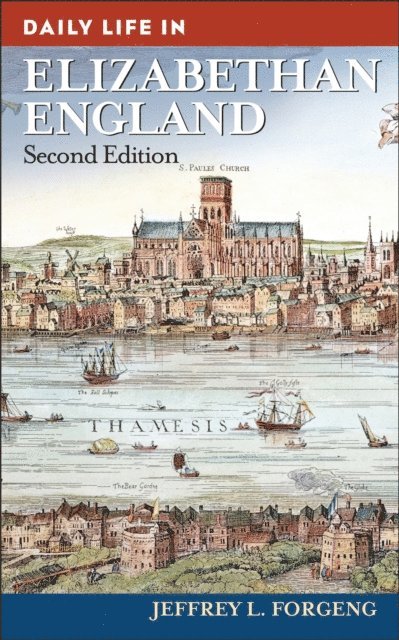
This book offers an experiential perspective on the lives of Elizabethans—how they worked, ate, and played—with hands-on examples that include authentic music, recipes, and games of the period.Daily Life in Elizabethan England: Second Edition offers a fresh look at Elizabethan life from the perspective of the people who actually lived it. With an abundance of updates based on the most current research, this second edition provides an engaging—and sometimes surprising—picture of what it was like to live during this distant time. Readers will learn, for example, that Elizabethans were diligent recyclers, composting kitchen waste and collecting old rags for papermaking. They will discover that Elizabethans averaged less than 2 inches shorter than their modern British counterparts, and, in a surprising echo of our own age, that many Elizabethan city dwellers relied on carryout meals—albeit because they lacked kitchen facilities. What further sets the book apart is its "hands-on" approach to the past with the inclusion of actual music, games, recipes, and clothing patterns based on primary sources.
805 kr
Skickas
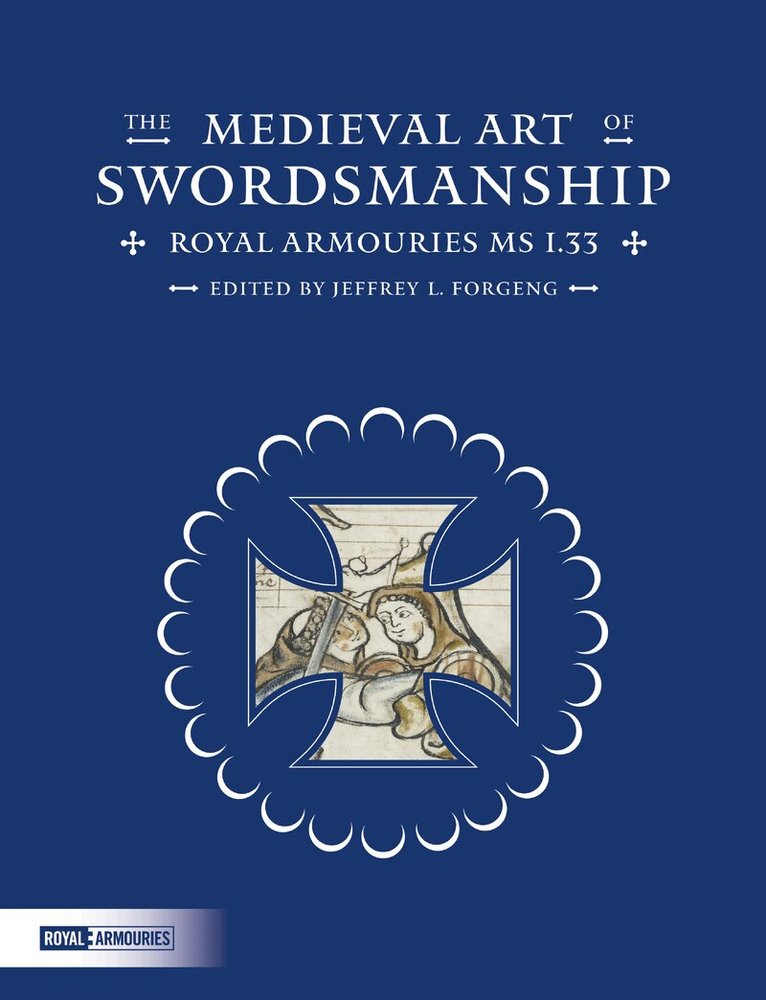
Royal Armouries Manuscript I.33, also known as the Tower Fechtbuch or the Walpurgis Manuscript, is the oldest-known manual of swordsmanship in the western canon. Dated to c.1310, it is a stunning work of late medieval art and the Armouries’ most treasured manuscript, one so famous it has become known simply by its shelf number: I.33. This new edition includes a critical introduction, transcription and translation by Jeffrey L. Forgeng, the foremost authority on I.33.
306 kr
Skickas
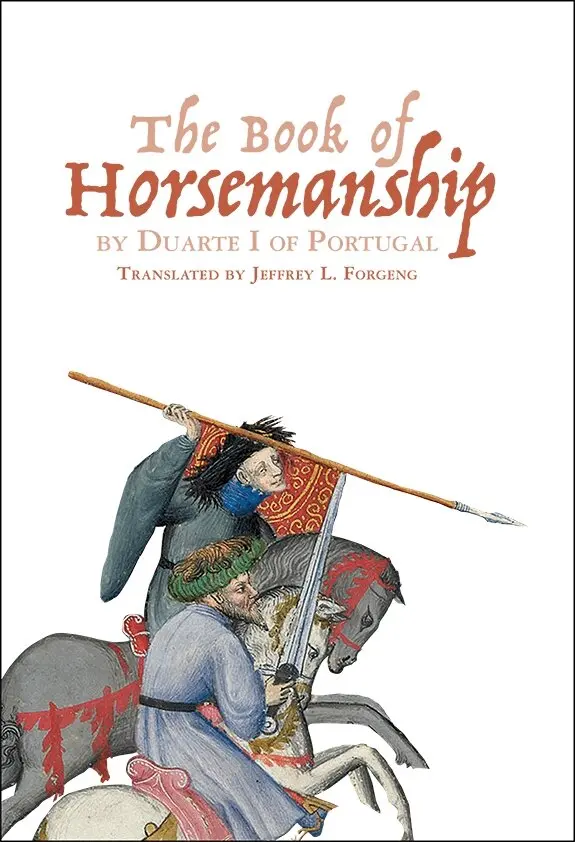
First full translation of an important treatise on chivalric horsemanship.Written around 1430, Duarte of Portugal's remarkable treatise on chivalric horsemanship, the Livro do Cavalgar (Book on Riding), is the sole substantial contemporary source to survive on the definitive physical skill of themedieval knight. It also stands out from the body of technical writings of the Middle Ages for its intelligence, insight, and intellectual versatility, ranging from psychological reflections on horsemanship and its implications for human ethics, to the details of how to couch a lance under the arm without getting it caught on armour. Under the general rubric of horsemanship Duarte covers a range of topics that include jousting, tourneying, and hunting, aswell as the physical apparatus of equestrianism and various cultural styles of riding.However, despite its importance for scholarship, its language and technical content have so far resisted proper translation, a need whichthis book fills. The introduction provides not only the background to make Duarte's text comprehensible, but for the first time offers modern audiences a systematic point of access to the subject of medieval equestrianism in general.JEFFREY L. FORGENG is curator of Arms and Armor and Medieval Art at the Worcester Art Museum, and Adjunct Professor of History at Worcester Polytechnic Institute.
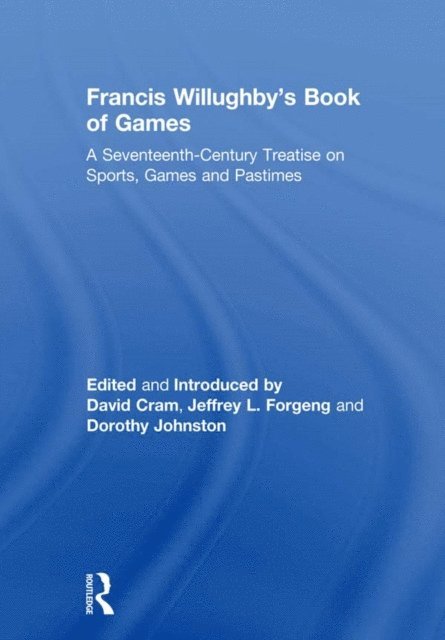
Francis Willughby's Book of Games
A Seventeenth-Century Treatise on Sports, Games and Pastimes
Inbunden, Engelska, 2003
2 012 kr
Skickas inom 10-15 vardagar
Francis Willughby's Book of Games, published here for the first time, is a remarkable work and an invaluable resource for anyone with an interest in early modern social history. Dating from the 1660s, it was left unfinished when the writer died in 1672 at the age of 36. Nevertheless, Willughby's manuscript, even in its unpolished form is a goldmine of detail providing a snapshot of mid seventeenth century life, language and culture. The manuscript itself lists a wide variety of sports, games and pastimes, including football, hurling, card games, tennis and children's games. As well as providing rules and a description of the various games (often with accompanying sketches to explain particular points) there are numerous fascinating snippets of related information (such as the care of fighting cocks), that bring the subject to life, whilst the section on children's games is particularly poignant. Besides the intrinsic interest of the subject matter, the fact that Willughby embarked on the project from a scientific perspective adds to the value of the book. Willughby had been admitted to the Royal Society in 1661 and for a number of years prior to that had been collaborating with the naturalist John Ray. It is clear that Willughby's Book of Games was highly influenced by his scientific pursuits and was an extension of his natural history work, utilising the same skills of systematic observation, description and classification. Providing not only a word-for word transcription of the Book of Games, this volume also contains a host of interpretative material to complement the original data. As well as a biography of Willughby and a detailed description of his manuscript, a substantial glossary of games and obsolete terms is provided, together with a bibliography of Willughby's literary remains and more general reference works. Taken together, this publication provides an unparalleled resource for scholars of early modern England.
2 145 kr
Skickas inom 5-8 vardagar
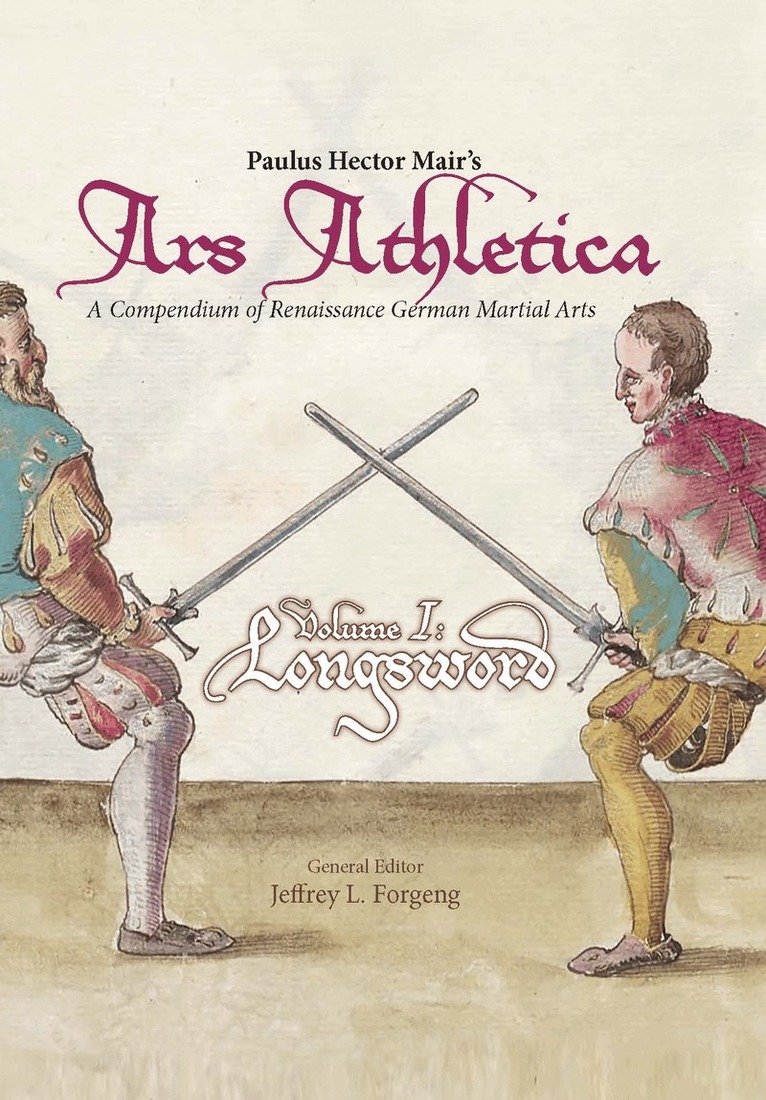
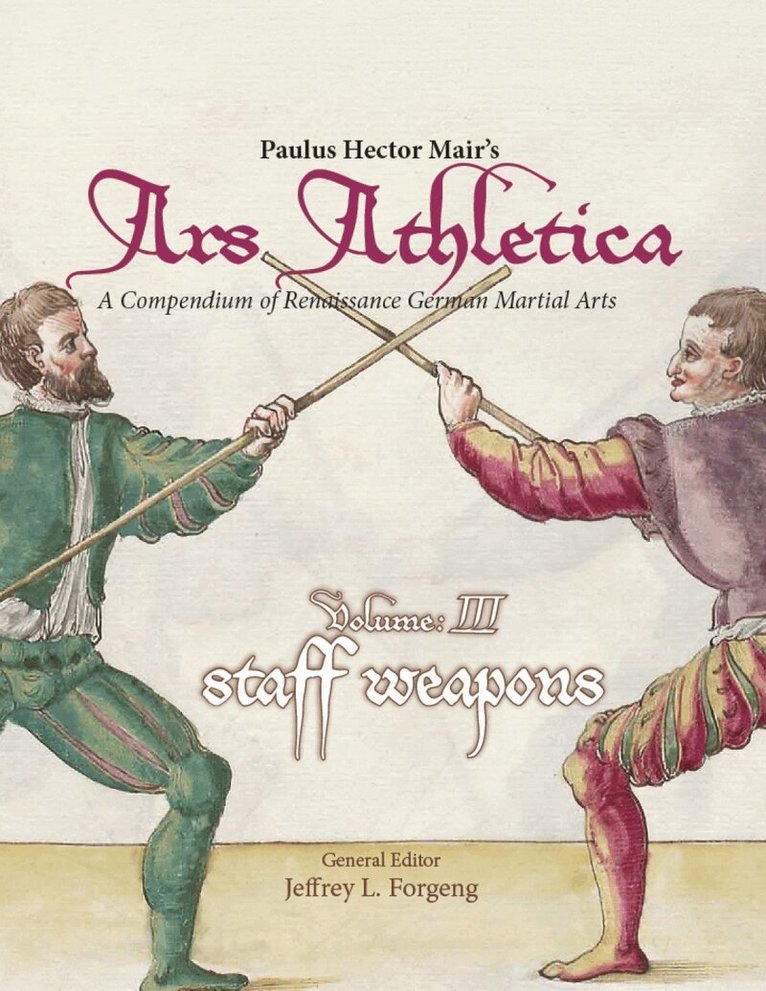
To those who study the physical culture of arms in medieval Europe, the German Fechtbücher—treatises on combat arts—are among the most important surviving documentary sources: no other region in Europe produced such an extensive body of writings on the techniques of medieval combat. Among these, the massive compendia commissioned by the scholar-swordsman Paulus Hector Mair (1517-1579) stand out as uniquely ambitious and monumental. The text survives in three manuscript copies, each consisting of two volumes, with each manuscript running to approximately 1200 pages. They include about 17 weapon-forms, from two-handed sword to rapier, armoured combat to sickle and scythe; each form consists of anywhere from 8 to 136 lavishly illustrated techniques, in many cases followed by one or more seminal texts on the form.The combination of text and image in the illustrated techniques offers obvious advantages to the understanding of a physical practice, and Mair is unique among the German masters in systematically giving instructions to both combatants, so that as one learns how to perform a technique, they also learn how to counter it. Lastly, one of the most important features of the Ars Athletica is the Latin translation, which serves as something of a Rosetta stone for interpreting the vocabulary of these long-lost martial arts. In this series, Jeffrey Forgeng, translator of the equally seminal Fechtbücher of Joachim Meyer and Hans Lecküchner, has brought together a team of translator-practitioners to tackle Mair’s opus. Over a decade of work has gone into transcribing, translating and annotating the Ars Athletica (Treatise on the Martial Arts) presenting both the original German and Latin, as well as a modern English translation.Volume One of this series presents the Longsword, which was the traditional centrepiece of the German medieval tradition and provides the core instruction through which all other weapons of the tradition can be understood. In three languages and full-colour illustrations, readers will find a complete curriculum of cuts, thrusts, disarms and grapples; even using the sword as a short spear, which forms the foundation for armoured combat—the subject of a later volume.
1 435 kr
Skickas inom 5-8 vardagar
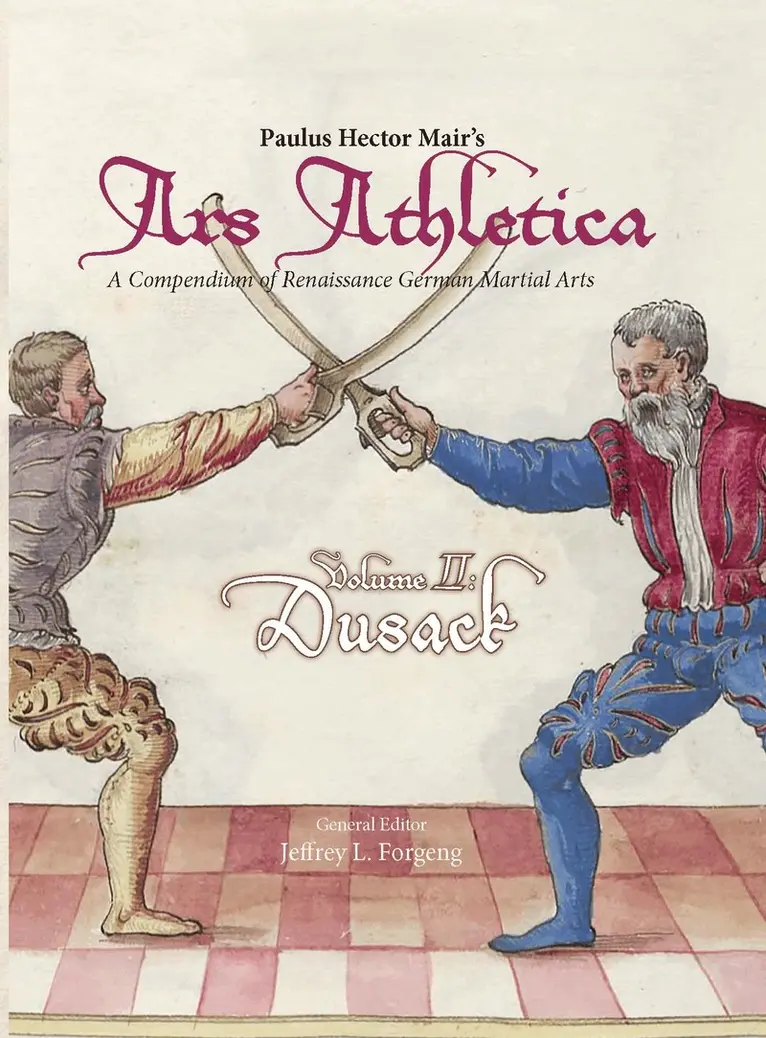
To those who study the physical culture of arms in medieval Europe, the German Fechtbücher—treatises on combat arts—are among the most important surviving documentary sources: no other region in Europe produced such an extensive body of writings on the techniques of medieval combat. Among these, the massive compendia commissioned by the scholar-swordsman Paulus Hector Mair (1517-1579) stand out as uniquely ambitious and monumental. The text survives in three manuscript copies, each consisting of two volumes, with each manuscript running to approximately 1200 pages. They include about 17 weapon-forms, from two-handed sword to rapier, armoured combat to sickle and scythe; each form consists of anywhere from 8 to 136 lavishly illustrated techniques, in many cases followed by one or more seminal texts on the form.The combination of text and image in the illustrated techniques offers obvious advantages to the understanding of a physical practice, and Mair is unique among the German masters in systematically giving instructions to both combatants, so that as one learns how to perform a technique, they also learn how to counter it. Lastly, one of the most important features of the Ars Athletica is the Latin translation, which serves as something of a Rosetta stone for interpreting the vocabulary of these long-lost martial arts. In this series, Jeffrey Forgeng, translator of the equally seminal Fechtbücher of Joachim Meyer and Hans Lecküchner, has brought together a team of translator-practitioners to tackle Mair’s opus. Over a decade of work has gone into transcribing, translating and annotating the Ars Athletica (Treatise on the Martial Arts) presenting both the original German and Latin, as well as a modern English translation.Volume Two of this series presents the Dusack, a sporting version of the older Langesmesser (long-knife) a single-edged utility sword characteristic of the German-speaking areas of Europe. Made sometimes of wood, sometimes of leather, occasionally of steel, the Dusack was the training weapon for all single-handed swords. Mair’s Dusack sequences represent one of the earliest surviving treatises on this weapon; the section ends with his redactions of some of the most famous Messer texts of the previous century.