Jeffrey Myers - Böcker
Visar alla böcker från författaren Jeffrey Myers. Handla med fri frakt och snabb leverans.
5 produkter
5 produkter
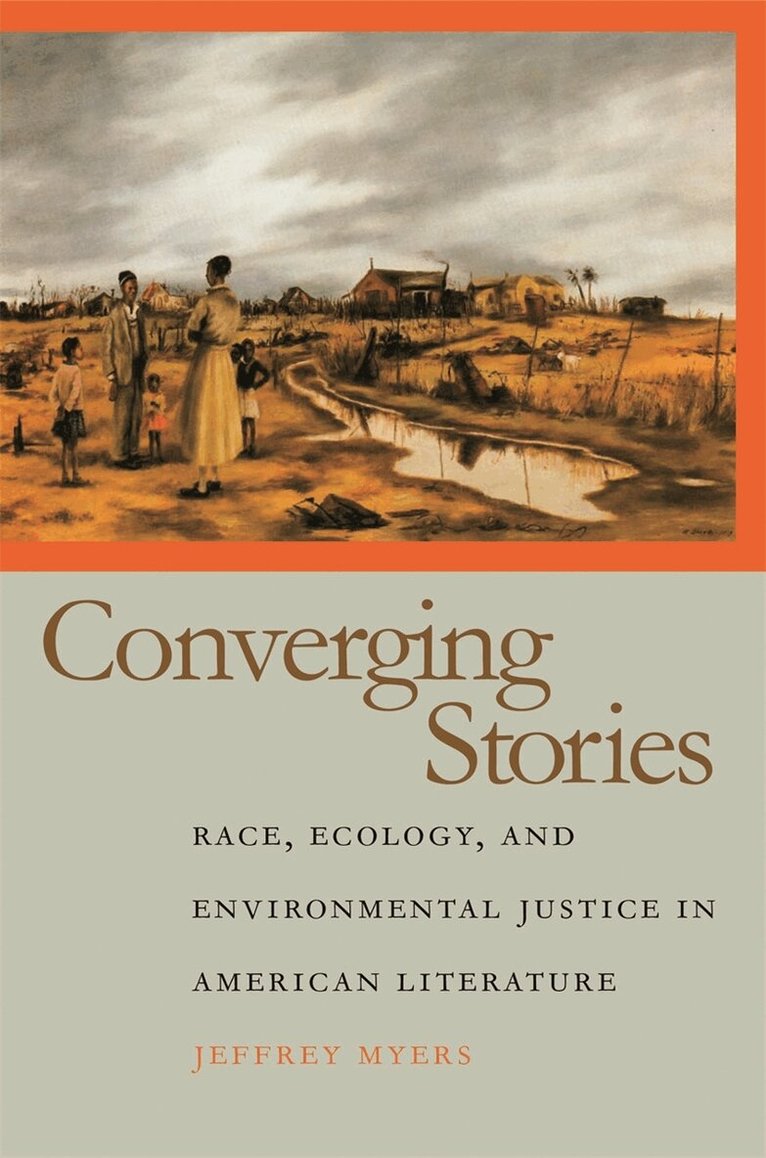
Converging Stories
Race, Ecology, and Environmental Justice in American Literature
Inbunden, Engelska, 2005
863 kr
Skickas inom 3-6 vardagar
In American literature, our discourse on the themes of race and ecology is too narrowly focused on the twentieth century and does not adequately take into account how these themes are interrelated, argues Jeffrey Myers. His new study broadens the field by looking at writings from the nineteenth century. This was an era, Myers reminds us, of renewed violence and oppression against people of color and of unprecedented environmental destruction on a continental scale. Myers focuses particularly on works that engage the notion that white racism and alienation from nature sprang from a common source.Myers first discusses the paradox of Thomas Jefferson’s agrarian vision, by which ideas espoused in his Notes on the State of Virginia can support either environmental destruction or conservation, a democratic or a racist society. Next, by looking race-critically at Thoreau’s Walden and The Maine Woods, then ecocritically at Charles Chesnutt’s The Conjure Woman and Zitkala-Sa’s Old Indian Legends and American Indian Stories, Myers traces the development of a new resistance to racial and ecological hegemony. He concludes by discussing how the antiracist, egalitarian ecocentricity in these earlier writers can be seen in contemporary writer Eddy L. Harris’s Mississippi Solo. Myers’s discussion encompasses other authors as well, including Ralph Waldo Emerson, John Muir, and Willa Cather.By looking at works by Native Americans, African Americans, European Americans, and others, and by considering forms of literature beyond the traditional nature essay, Myers expands our conceptions of environmental writing and environmental justice.
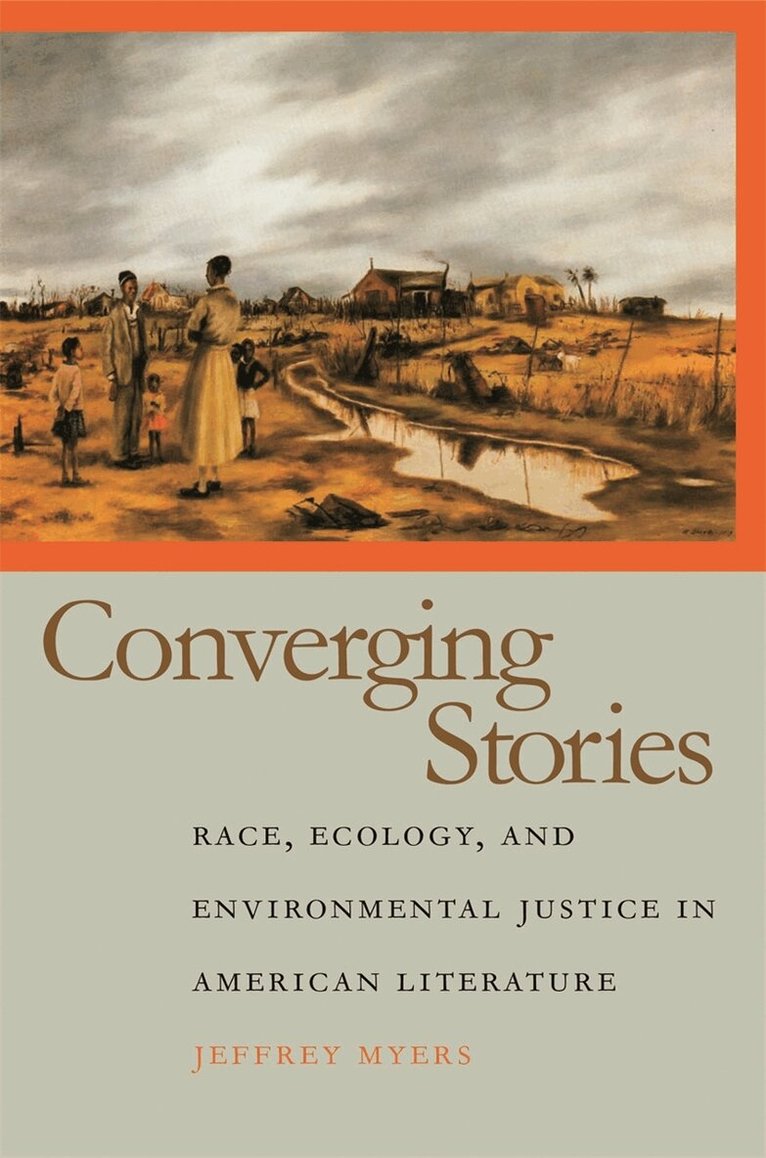
Converging Stories
Race, Ecology, and Environmental Justice in American Literature
Häftad, Engelska, 2019
591 kr
Skickas inom 3-6 vardagar
In American literature, our discourse on the themes of race and ecology is too narrowly focused on the twentieth century and does not adequately take into account how these themes are interrelated, argues Jeffrey Myers. His new study broadens the field by looking at writings from the nineteenth century. This was an era, Myers reminds us, of renewed violence and oppression against people of color and of unprecedented environmental destruction on a continental scale. Myers focuses particularly on works that engage the notion that white racism and alienation from nature sprang from a common source.Myers first discusses the paradox of Thomas Jefferson’s agrarian vision, by which ideas espoused in his Notes on the State of Virginia can support either environmental destruction or conservation, a democratic or a racist society. Next, by looking race-critically at Thoreau’s Walden and The Maine Woods, then ecocritically at Charles Chesnutt’s The Conjure Woman and Zitkala-Sa’s Old Indian Legends and American Indian Stories, Myers traces the development of a new resistance to racial and ecological hegemony. He concludes by discussing how the antiracist, egalitarian ecocentricity in these earlier writers can be seen in contemporary writer Eddy L. Harris’s Mississippi Solo. Myers’s discussion encompasses other authors as well, including Ralph Waldo Emerson, John Muir, and Willa Cather.By looking at works by Native Americans, African Americans, European Americans, and others, and by considering forms of literature beyond the traditional nature essay, Myers expands our conceptions of environmental writing and environmental justice.
213 kr
Skickas inom 5-8 vardagar
1 624 kr
Skickas inom 10-15 vardagar
Squamous cell carcinoma of the oral cavity (SCCOC) is one of the most prevalent tumors of the head and neck region. Despite improvements in treatment, the survival of patients with SCCOC has not significantly improved over the past several decades. Most frequently, treatment failure takes the form of local and regional recurrences, but as disease control in these areas improves, SCCOC treatment failures more commonly occur as distant metastasis. The presence of cervical lymph node metastasis is the most reliable adverse prognostic factor in patients with SCCOC, and extracapsular spread (ECS) of cervical lymph nodes metastasis is a particularly reliable predictor of regional and distant recurrence and death from disease. Decisions regarding elective and therapeutic management of cervical lymph node metastases are made mainly on clinical grounds as we cannot always predict cervical lymph node metastasis from the size and extent of invasion of the primary tumors. Therefore the treatment of the neck disease in the management of SCCOC remains controversial. The promise of using biomarker-based treatment decisions has yet to be fully realized due to our poor understanding of the mechanisms of regional and distant metastases of SCCOC. We will summarize the current status of investigations into SCCOC metastases and potential of these studies to impact basic research investigators and clinicians confronting SCCOC in the future.
1 624 kr
Skickas inom 10-15 vardagar
Squamous cell carcinoma of the oral cavity (SCCOC) is one of the most prevalent tumors of the head and neck region. Despite improvements in treatment, the survival of patients with SCCOC has not significantly improved over the past several decades. Most frequently, treatment failure takes the form of local and regional recurrences, but as disease control in these areas improves, SCCOC treatment failures more commonly occur as distant metastasis. The presence of cervical lymph node metastasis is the most reliable adverse prognostic factor in patients with SCCOC, and extracapsular spread (ECS) of cervical lymph nodes metastasis is a particularly reliable predictor of regional and distant recurrence and death from disease. Decisions regarding elective and therapeutic management of cervical lymph node metastases are made mainly on clinical grounds as we cannot always predict cervical lymph node metastasis from the size and extent of invasion of the primary tumors. Therefore the treatment of the neck disease in the management of SCCOC remains controversial. The promise of using biomarker-based treatment decisions has yet to be fully realized due to our poor understanding of the mechanisms of regional and distant metastases of SCCOC. We will summarize the current status of investigations into SCCOC metastases and potential of these studies to impact basic research investigators and clinicians confronting SCCOC in the future.