Jenna Gillett-Swan – författare
Visar alla böcker från författaren Jenna Gillett-Swan. Handla med fri frakt och snabb leverans.
8 produkter
8 produkter
1 004 kr
Skickas inom 7-10 vardagar
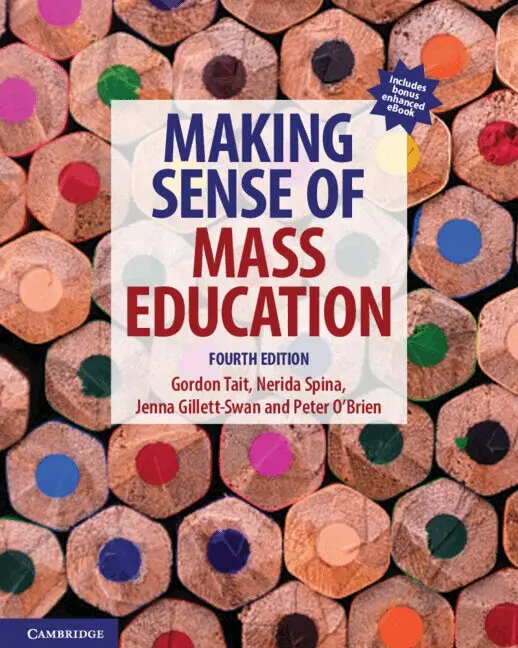
Making Sense of Mass Education provides a contemporary analysis of the ideas and issues that have traditionally dominated education research, challenging outdated preconceptions with fundamental theory and discussion. It takes a demythologising approach in assessing these issues and their relevance to schooling and education in Australia. This text examines the cultural context of education and the influence of external media and new technologies, and highlights the many forms of discrimination in education, including social class, race and gender. It looks at alternative approaches to education, including the repercussions of gathering data to measure school performance, and considers the intersection of ethics and philosophy in classroom teaching. The fourth edition expands on these issues with three new chapters: on sexuality, children's rights, and neoliberalism and the marketisation of education. Each chapter challenges and breaks down common myths surrounding these topics, encouraging pre-service teachers to think critically and reflect on their own beliefs.
E-bok
Engelska, 2023802 kr
Läs direkt efter köp
Making Sense of Mass Education provides a contemporary analysis of the ideas and issues that have traditionally dominated education research, challenging outdated preconceptions with fundamental theory and discussion. It takes a demythologising approach in assessing these issues and their relevance to schooling and education in Australia. This text examines the cultural context of education and the influence of external media and new technologies, and highlights the many forms of discrimination in education, including social class, race and gender. It looks at alternative approaches to education, including the repercussions of gathering data to measure school performance, and considers the intersection of ethics and philosophy in classroom teaching. The fourth edition expands on these issues with three new chapters: on sexuality, children''s rights, and neoliberalism and the marketisation of education. Each chapter challenges and breaks down common myths surrounding these topics, encouraging pre-service teachers to think critically and reflect on their own beliefs.
E-bok
PDF, Engelska, 2026965 kr
Läs direkt efter köp
E-bok
Engelska, 2026965 kr
Läs direkt efter köp
Häftad, Engelska, 2026
815 kr
Skickas inom 7-10 vardagar
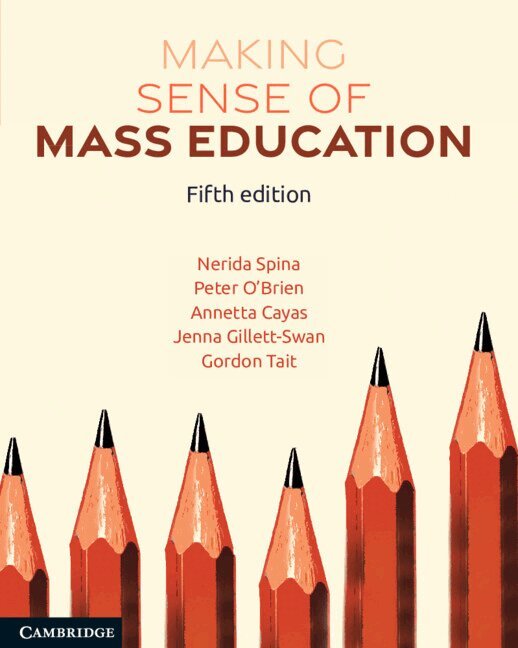
Making Sense of Mass Education gives a comprehensive overview of the cultural contexts of education, addressing and debunking important myths in the field. This book is an approachable text for undergraduate and postgraduate readers studying the Sociology and Philosophy of Education. The text covers the rise of mass schooling as a disciplinary institution, including the governance of subjectivity and the regulation of childhood and youth. It examines cultural forces on the field of education and addresses the influence of philosophical thought. In the landscape of mass education, change is constant. New topics covered in the fifth edition include education policy, teachers' work, place, online spaces and artificial intelligence. Each chapter features margin definitions and boxes exploring a range of myths, encouraging teachers to think critically. Making Sense of Mass Education continues to be pertinent for pre-service and practising teachers in Australian contexts.
Del 2 - Transdisciplinary Perspectives in Educational Research
Children’s Rights from International Educational Perspectives
Wicked Problems for Children’s Education Rights
Inbunden, Engelska, 2021
1 166 kr
Skickas inom 10-15 vardagar
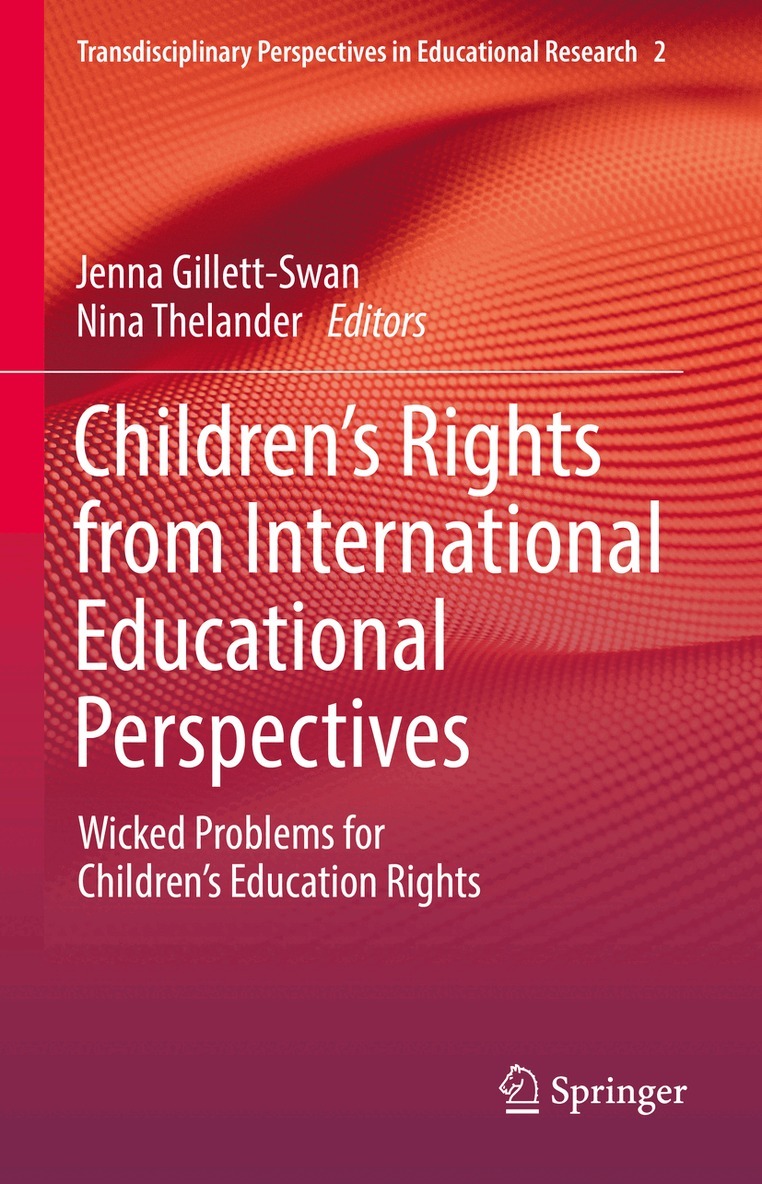
This book critically examines contemporary educational practices with a children’s rights lens. Through investigating the factors that contribute to (or hinder) the realisation of children’s rights in and through education in different contexts, it discusses how using a rights framework for education furthers the agenda for achieving international educational aims and goals. Using diverse international examples, the book provides a snapshot of the complexity of children’s rights and education. It draws on the expertise of international research teams from Australia, England, Finland, Italy, Mexico, Poland, Portugal, Scotland, Spain, Sweden, Switzerland, and the United States, and highlights wide-ranging interpretations of the same mandate across different national contexts. Beginning with a critical overview of the broader context of children’s rights in education, the book explores obligations for States and their representatives, tensions and convergences in implementation, and implications for teaching and learning. Using underutilised educational and theoretical concepts, it contributes to broadening understandings of children’s rights, education and associated theoretical frameworks. Despite a human rights framework emphasising the indivisibility, interrelatedness and interconnectedness of all rights, the ‘right to education’ (Article 28) dominates discussions about children’s rights and education. As such, equally important rights including the ‘aims of education’ (Article 29) are often less considered or absent from the conversation. Recognising that children’s education rights involve more than just access and provision, this book advocates for a much broader understanding of the nuances underpinning children’s education related rights. Chapter 10 is available open access under a Creative Commons Attribution 4.0 International License via link.springer.com.
E-bok
Engelska, 20211 039 kr
Läs direkt efter köp
This book critically examines contemporary educational practices with a children’s rights lens. Through investigating the factors that contribute to (or hinder) the realisation of children’s rights in and through education in different contexts, it discusses how using a rights framework for education furthers the agenda for achieving international educational aims and goals. Using diverse international examples, the book provides a snapshot of the complexity of children’s rights and education. It draws on the expertise of international research teams from Australia, England, Finland, Italy, Mexico, Poland, Portugal, Scotland, Spain, Sweden, Switzerland, and the United States, and highlights wide-ranging interpretations of the same mandate across different national contexts. Beginning with a critical overview of the broader context of children’s rights in education, the book explores obligations for States and their representatives, tensions and convergences in implementation, and implications for teaching and learning. Using underutilised educational and theoretical concepts, it contributes to broadening understandings of children’s rights, education and associated theoretical frameworks. Despite a human rights framework emphasising the indivisibility, interrelatedness and interconnectedness of all rights, the ‘right to education’ (Article 28) dominates discussions about children’s rights and education. As such, equally important rights including the ‘aims of education’ (Article 29) are often less considered or absent from the conversation. Recognising that children’s education rights involve more than just access and provision, this book advocates for a much broader understanding of the nuances underpinning children’s education related rights. Chapter 10 is available open access under a Creative Commons Attribution 4.0 International License via link.springer.com.
Del 2 - Transdisciplinary Perspectives in Educational Research
Children’s Rights from International Educational Perspectives
Wicked Problems for Children’s Education Rights
Häftad, Engelska, 2022
850 kr
Skickas inom 10-15 vardagar
This book critically examines contemporary educational practices with a children’s rights lens. Through investigating the factors that contribute to (or hinder) the realisation of children’s rights in and through education in different contexts, it discusses how using a rights framework for education furthers the agenda for achieving international educational aims and goals. Using diverse international examples, the book provides a snapshot of the complexity of children’s rights and education. It draws on the expertise of international research teams from Australia, England, Finland, Italy, Mexico, Poland, Portugal, Scotland, Spain, Sweden, Switzerland, and the United States, and highlights wide-ranging interpretations of the same mandate across different national contexts. Beginning with a critical overview of the broader context of children’s rights in education, the book explores obligations for States and their representatives, tensions and convergences in implementation, and implications for teaching and learning. Using underutilised educational and theoretical concepts, it contributes to broadening understandings of children’s rights, education and associated theoretical frameworks. Despite a human rights framework emphasising the indivisibility, interrelatedness and interconnectedness of all rights, the ‘right to education’ (Article 28) dominates discussions about children’s rights and education. As such, equally important rights including the ‘aims of education’ (Article 29) are often less considered or absent from the conversation. Recognising that children’s education rights involve more than just access and provision, this book advocates for a much broader understanding of the nuances underpinning children’s education related rights. Chapter 10 is available open access under a Creative Commons Attribution 4.0 International License via link.springer.com.