Jennifer L. Airey - Böcker
Visar alla böcker från författaren Jennifer L. Airey. Handla med fri frakt och snabb leverans.
5 produkter
5 produkter
1 440 kr
Skickas inom 5-8 vardagar
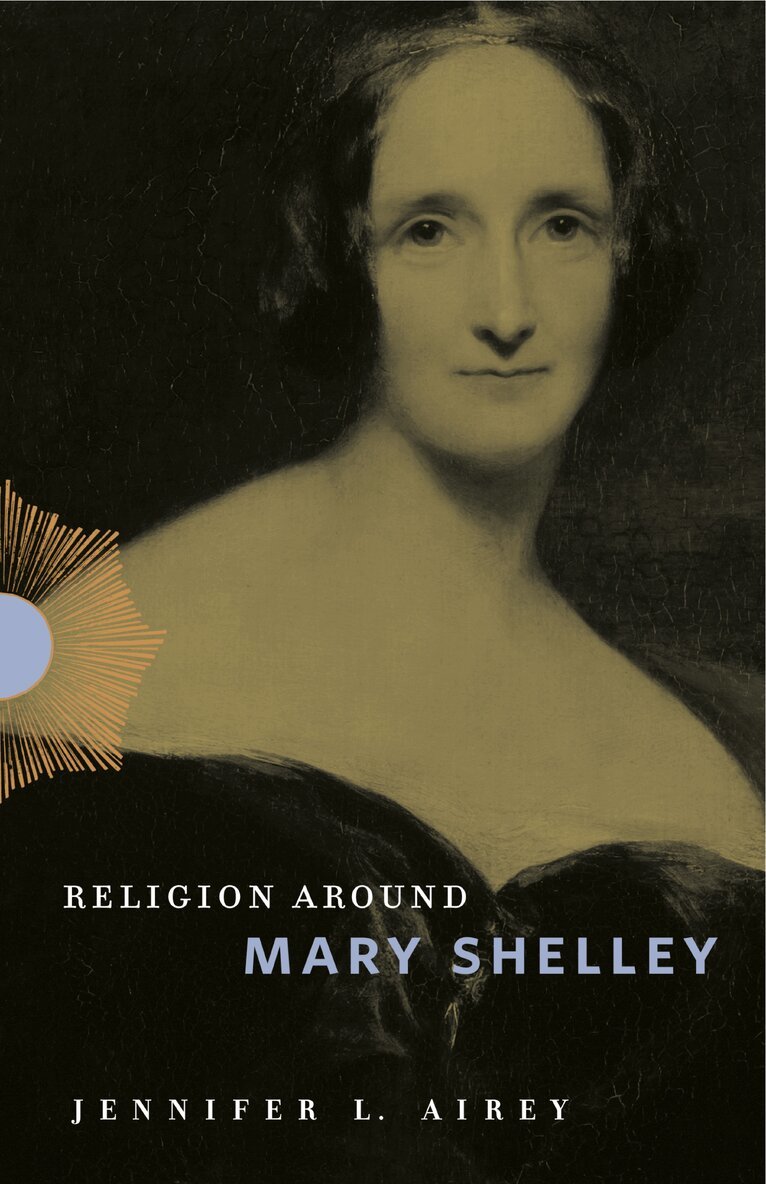
Mary Shelley lived and wrote during an age of religious instability, one that witnessed the spread of atheism, millenarianism, Methodism, Unitarianism, and Evangelicalism, among other belief systems. In this book, Jennifer L. Airey foregrounds Shelley as an important religious thinker of the Romantic period, analyzing her creative engagement with the religious controversies around her and uncovering a belief system that was both influenced by and profoundly different from those of her male Romantic counterparts.Previous assessments of religion in Shelley’s work have been limited in scope and, as Airey asserts, have tended to privilege the novels she wrote when she was married to the prominent atheist Percy Shelley and shortly after his death. Such readings imply that Shelley and her works are most interesting for what they can tell us about her husband and second-generation (and predominantly male) Romanticism. Airey’s analysis corrects this imbalance by giving equal weight to Shelley’s later work, which draws on Evangelical discourses elevating the mother as the theological and moral center of the household.Nuanced and accessible, Religion Around Mary Shelley makes visible the valuable insight that Shelley’s works offer into the complexity of religious views prominent in her cultural moment. It will appeal to specialists and nonacademics interested in the Godwin-Wollstonecraft-Shelley circle.
333 kr
Skickas inom 7-10 vardagar
Mary Shelley lived and wrote during an age of religious instability, one that witnessed the spread of atheism, millenarianism, Methodism, Unitarianism, and Evangelicalism, among other belief systems. In this book, Jennifer L. Airey foregrounds Shelley as an important religious thinker of the Romantic period, analyzing her creative engagement with the religious controversies around her and uncovering a belief system that was both influenced by and profoundly different from those of her male Romantic counterparts.Previous assessments of religion in Shelley’s work have been limited in scope and, as Airey asserts, have tended to privilege the novels she wrote when she was married to the prominent atheist Percy Shelley and shortly after his death. Such readings imply that Shelley and her works are most interesting for what they can tell us about her husband and second-generation (and predominantly male) Romanticism. Airey’s analysis corrects this imbalance by giving equal weight to Shelley’s later work, which draws on Evangelical discourses elevating the mother as the theological and moral center of the household.Nuanced and accessible, Religion Around Mary Shelley makes visible the valuable insight that Shelley’s works offer into the complexity of religious views prominent in her cultural moment. It will appeal to specialists and nonacademics interested in the Godwin-Wollstonecraft-Shelley circle.
1 286 kr
Skickas inom 11-20 vardagar
The Politics of Rape: Sexual Atrocity, Propaganda Wars, and the Restoration Stage is the first full-length study to examine representations of sexual violence on the Restoration stage. By reading theatrical depictions of sexual violence alongside political tracts, propaganda pamphlets, and circulating broadsides, this study argues that authors used dramatic representations of rape to respond to and engage with late-century upheavals in British political culture. Beginning with an examination of rape scenes in English Civil War propaganda, The Politics of Rape argues that Roundhead authors described acts of rape and atrocity to demonize their enemies, the Irish, the Catholics, and the Cavaliers. After the Restoration, propagandists and playwrights on each side of every political conflict would follow suit, altering the rhetoric of sexual violence in response to each new moment of political upheaval: The Restoration of Charles II, the Second and Third Anglo-Dutch Wars, the Popish Plot, the Exclusion Crisis, the Glorious Revolution, and the accession of William and Mary. The study offers an intensive look at British propaganda culture, gathering together a wealth of understudied pamphlet texts, and identifying a series of stock figures that recur throughout the century: The demonic Irishman, sexually violent villain of the 1641 Irish Rebellion tracts; the debauched Cavalier, the secretly Catholic royalist rapist; the poisonous Catholic bride, the malignant consort who encourages the rapes of Protestant women; the cannibal father, the evil patriarch who rapes his daughters-in-laws before ingesting his own sons as a symbol of monarchical overreach; and the ravished monarch, the male rape victim whose sexual violation protests his political disenfranchisement. The study also traces the appearance of these figures on the British stage, examining well-known works by Dryden, Rochester, Behn, Lee, and Shadwell, alongside lesser-known plays by Orrery, Howard, Settle, Crowne, Ravenscroft, Pix, Cibber, and Brady. The Politics of Rape thus offers a new method for understanding of the geo-political implications of theatrical sexual violence. Published by University of Delaware Press. Distributed worldwide by Rutgers University Press.
573 kr
Skickas inom 10-15 vardagar
The Politics of Rape: Sexual Atrocity, Propaganda Wars, and the Restoration Stage is the first full-length study to examine representations of sexual violence on the Restoration stage. By reading theatrical depictions of sexual violence alongside political tracts, propaganda pamphlets, and circulating broadsides, this study argues that authors used dramatic representations of rape to respond to and engage with late-century upheavals in British political culture. Beginning with an examination of rape scenes in English Civil War propaganda, The Politics of Rape argues that Roundhead authors described acts of rape and atrocity to demonize their enemies, the Irish, the Catholics, and the Cavaliers. After the Restoration, propagandists and playwrights on each side of every political conflict would follow suit, altering the rhetoric of sexual violence in response to each new moment of political upheaval: The Restoration of Charles II, the Second and Third Anglo-Dutch Wars, the Popish Plot, the Exclusion Crisis, the Glorious Revolution, and the accession of William and Mary. The study offers an intensive look at British propaganda culture, gathering together a wealth of understudied pamphlet texts, and identifying a series of stock figures that recur throughout the century: The demonic Irishman, sexually violent villain of the 1641 Irish Rebellion tracts; the debauched Cavalier, the secretly Catholic royalist rapist; the poisonous Catholic bride, the malignant consort who encourages the rapes of Protestant women; the cannibal father, the evil patriarch who rapes his daughters-in-laws before ingesting his own sons as a symbol of monarchical overreach; and the ravished monarch, the male rape victim whose sexual violation protests his political disenfranchisement. The study also traces the appearance of these figures on the British stage, examining well-known works by Dryden, Rochester, Behn, Lee, and Shadwell, alongside lesser-known plays by Orrery, Howard, Settle, Crowne, Ravenscroft, Pix, Cibber, and Brady. The Politics of Rape thus offers a new method for understanding of the geo-political implications of theatrical sexual violence. Published by University of Delaware Press. Distributed worldwide by Rutgers University Press.
1 169 kr
Skickas inom 5-8 vardagar
Countess Appollonia Zulmer – beautiful, rich, and popular – can have any man she wants, at least until she meets Count Wiemar. Interested only in submissive, uneducated and unworldly women, Wiemar rejects Appollonia in favour of Julia, a simple woman whose primary joy in life is to obey her husband’s will. Despondent and then furious, Appollonia vows revenge, becoming Julia’s intimate confidante, opening her eyes to the limitations of patriarchy, and convincing her that her growing feelings for Count Darlowitz, Wiemar’s best friend, are no crime.An epistolary novel about the destructive power of emotion, The Passions offers new insights into early feminism, romantic understandings of emotion and the sublime, and early nineteenth-century religious debates. It is an engrossing, powerful work of nineteenth-century literature, featuring one of the most memorable female villains of all time. Available to modern audiences for the first time, The Passions will engross literary scholars and casual readers alike.