Jennifer Lynn Stoever - Böcker
Visar alla böcker från författaren Jennifer Lynn Stoever. Handla med fri frakt och snabb leverans.
4 produkter
4 produkter
1 403 kr
Kommande
How listening shapes powerPower in Listening explores how listening shapes—and is shaped by—power. From the politics of "sad girl" Spotify playlists to the sonic architectures of surveillance and the gendered voices of Siri and Alexa, this collection investigates how sound and listening inform identity, embodiment, and social life. How does Beyoncé's remix of her "elevator incident" expose the surveillance of Black bodies? How do deaf listeners use multiple senses to navigate sound? How are Latina voices racialized through ideas of volume and tone?Building from the groundbreaking Sounding Out! blog, Power in Listening curates forty revised and expanded essays from scholars, artists, DJs, and activists across more than twenty disciplines. Together, they trace how auditory culture intersects with race, gender, sexuality, technology, and media—from radio and tape to streaming and AI.Accessible yet rigorous, this reader reveals sound studies in motion: a field that listens as a form of inquiry, protest, and care. Each essay connects theory and everyday experience, offering tools to hear the world—and each other—more critically. Power in Listening invites readers to experience listening as a social practice, a political act, and a method of understanding one's place within a resonant and contested public sphere.
357 kr
Kommande
How listening shapes powerPower in Listening explores how listening shapes – and is shaped by – power. From the politics of "sad girl" Spotify playlists to the sonic architectures of surveillance and the gendered voices of Siri and Alexa, this collection investigates how sound and listening inform identity, embodiment, and social life. How does Beyoncé's remix of her "elevator incident" expose the surveillance of Black bodies? How do deaf listeners use multiple senses to navigate sound? How are Latina voices racialized through ideas of volume and tone?Building from the groundbreaking Sounding Out! blog, Power in Listening curates forty revised and expanded essays from scholars, artists, DJs, and activists across more than twenty disciplines. Together, they trace how auditory culture intersects with race, gender, sexuality, technology, and media – from radio and tape to streaming and AI.Accessible yet rigorous, this reader reveals sound studies in motion: a field that listens as a form of inquiry, protest, and care. Each essay connects theory and everyday experience, offering tools to hear the world – and each other – more critically. Power in Listening invites readers to experience listening as a social practice, a political act, and a method of understanding one's place within a resonant and contested public sphere.
413 kr
Skickas
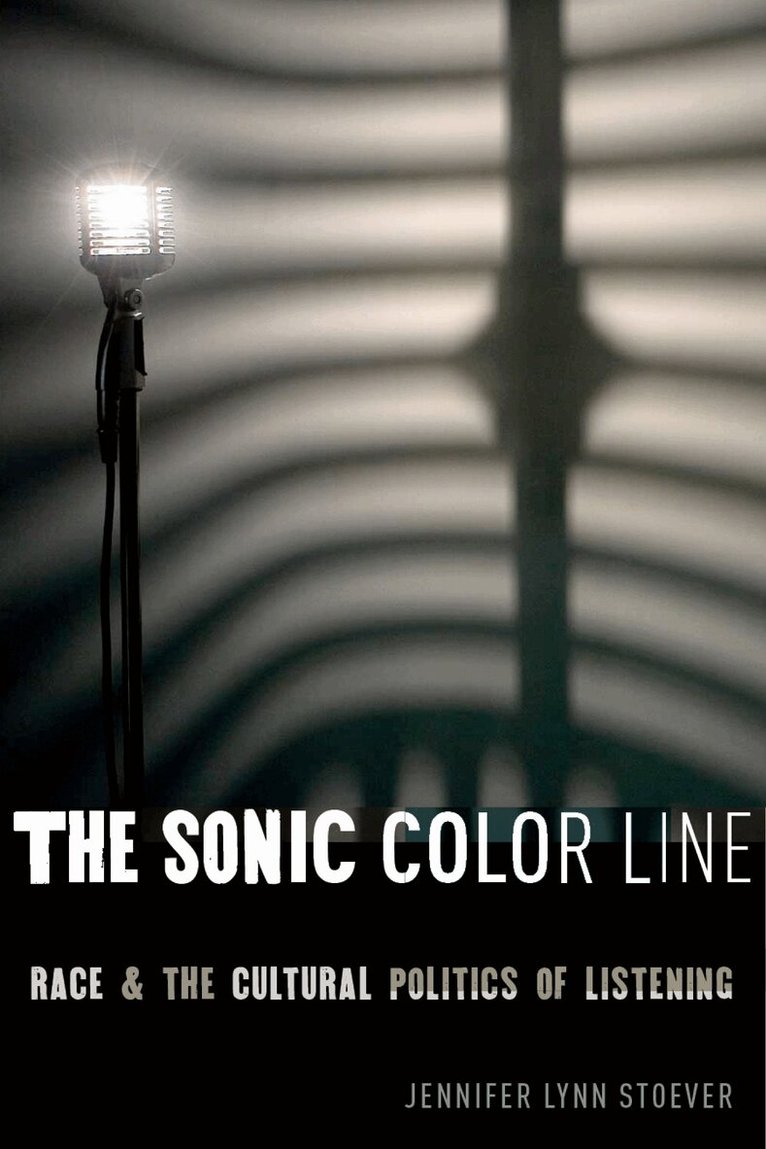
The unheard history of how race and racism are constructed from sound and maintained through the listening ear. Race is a visual phenomenon, the ability to see "difference." At least that is what conventional wisdom has lead us to believe. Yet, The Sonic Color Line argues that American ideologies of white supremacy are just as dependent on what we hear—voices, musical taste, volume—as they are on skin color or hair texture. Reinforcing compelling new ideas about the relationship between race and sound with meticulous historical research, Jennifer Lynn Stoever helps us to better understand how sound and listening not only register the racial politics of our world, but actively produce them. Through analysis of the historical traces of sounds of African American performers, Stoever reveals a host of racialized aural representations operating at the level of the unseen—the sonic color line—and exposes the racialized listening practices she figures as "the listening ear." Using an innovative multimedia archive spanning 100 years of American history (1845-1945) and several artistic genres—the slave narrative, opera, the novel, so-called "dialect stories," folk and blues, early sound cinema, and radio drama—The Sonic Color Line explores how black thinkers conceived the cultural politics of listening at work during slavery, Reconstruction, and Jim Crow. By amplifying Harriet Jacobs, Frederick Douglass, Elizabeth Taylor Greenfield, Charles Chesnutt, The Fisk Jubilee Singers, Ann Petry, W.E.B. Du Bois, and Lena Horne as agents and theorists of sound, Stoever provides a new perspective on key canonical works in African American literary history. In the process, she radically revises the established historiography of sound studies. The Sonic Color Line sounds out how Americans have created, heard, and resisted "race," so that we may hear our contemporary world differently.
1 217 kr
Skickas inom 10-15 vardagar
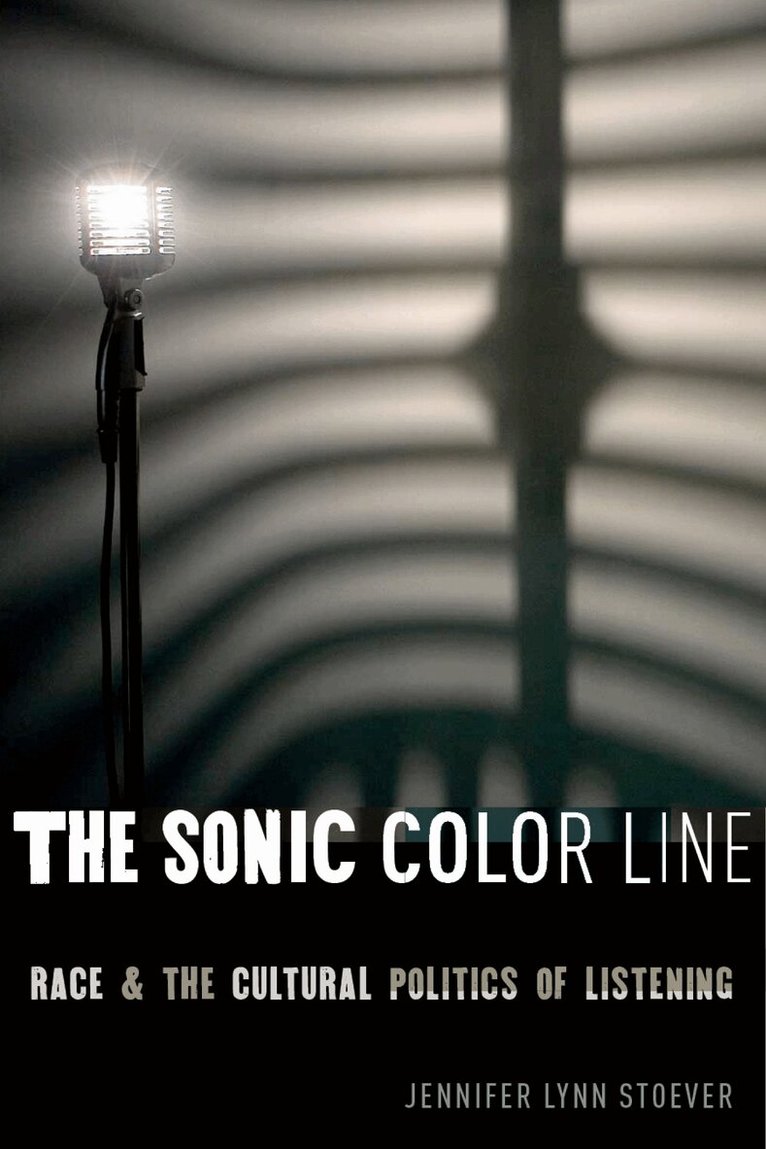
The unheard history of how race and racism are constructed from sound and maintained through the listening ear. Race is a visual phenomenon, the ability to see "difference." At least that is what conventional wisdom has lead us to believe. Yet, The Sonic Color Line argues that American ideologies of white supremacy are just as dependent on what we hear—voices, musical taste, volume—as they are on skin color or hair texture. Reinforcing compelling new ideas about the relationship between race and sound with meticulous historical research, Jennifer Lynn Stoever helps us to better understand how sound and listening not only register the racial politics of our world, but actively produce them. Through analysis of the historical traces of sounds of African American performers, Stoever reveals a host of racialized aural representations operating at the level of the unseen—the sonic color line—and exposes the racialized listening practices she figures as "the listening ear." Using an innovative multimedia archive spanning 100 years of American history (1845-1945) and several artistic genres—the slave narrative, opera, the novel, so-called "dialect stories," folk and blues, early sound cinema, and radio drama—The Sonic Color Line explores how black thinkers conceived the cultural politics of listening at work during slavery, Reconstruction, and Jim Crow. By amplifying Harriet Jacobs, Frederick Douglass, Elizabeth Taylor Greenfield, Charles Chesnutt, The Fisk Jubilee Singers, Ann Petry, W.E.B. Du Bois, and Lena Horne as agents and theorists of sound, Stoever provides a new perspective on key canonical works in African American literary history. In the process, she radically revises the established historiography of sound studies. The Sonic Color Line sounds out how Americans have created, heard, and resisted "race," so that we may hear our contemporary world differently.