Jennifer Mclerran – Författare
Visar alla böcker från författaren Jennifer Mclerran. Handla med fri frakt och snabb leverans.
5 produkter
5 produkter
742 kr
Skickas inom 10-15 vardagar
Designed as a resource for artists, writers, and behavioral scientists, this compilation of the myths and symbols of old age lists more than 400 entries ranging from Abraham and acacia through Zorya and Zurvan. Coverage includes traditional mythical figures, literary characters, the symbolic attributes of old age such as time measurement and musical instruments, animals associated with aging, objects, types of locations, and more. The result of four years' research in a variety of sources, the volume reports on the use of such symbols in art, literature, and popular culture, providing the most comprehensive coverage of myths and symbols of old age available in one volume.Entries are arranged alphabetically and include short citations indicating the sources used to compile the entry. A complete bibliography listing the full titles of all sources is also included to help readers who wish further information on a particular subject. Cross-references are used throughout to highlight related entries.
1 314 kr
Skickas inom 10-15 vardagar
Defining over 400 terms and phrases that have recently entered discourse on the visual arts, this is the first reference book specializing in explaining and applying theoretical terminology in contemporary art. Since the early 1970s, the vocabulary used to discuss visual art has expanded radically, leaving many teachers, students, artists, and critics without the accurate definitions necessary for fruitful discourse on contemporary culture. This glossary not only serves as a dictionary but as a guide to current theory and criticism of visual art and culture. Terms can be accessed alphabetically or thematically; the significant cross referencing makes this an easy dictionary to use.Many contemporary art terms have been borrowed from other disciplines or are traditionally employed in the visual arts but have been adapted for use in the contemporary art world and have therefore been assigned specific or specialized applications. These loan terms have increased the likelihood for confusion between old and new definitions, so where possible the authors have applied the terms to works of art or some aspect of visual culture. Most art glossaries and dictionaries concentrate primarily on artistic production in the visual arts—movements, styles, and names. As a complement to these types of works, this glossary of theoretical terms is essential for anyone studying contemporary visual arts and visual culture in general.
414 kr
Skickas inom 7-10 vardagar
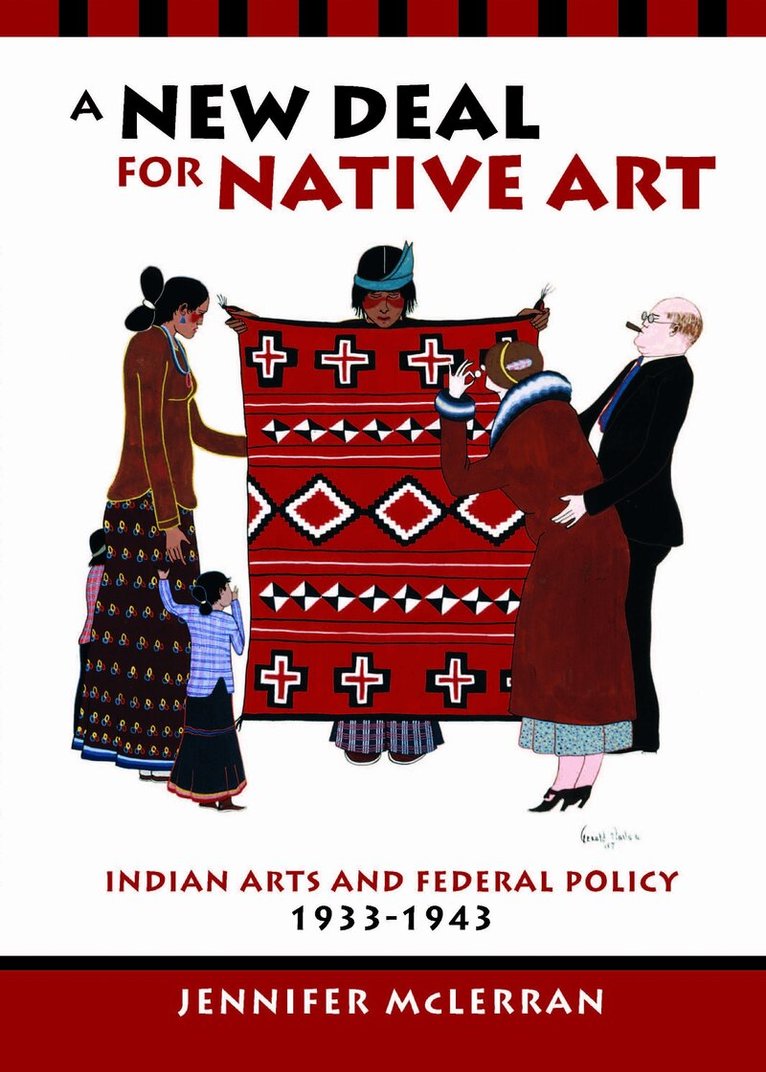
As the Great Depression touched every corner of America, the New Deal promoted indigenous arts and crafts as a means of bootstrapping Native American peoples. But New Deal administrators' romanticization of indigenous artists predisposed them to favor pre-industrial forms rather than art that responded to contemporary markets. In A New Deal for Native Art, Jennifer McLerran reveals how positioning the native artist as a pre-modern Other served the goals of New Deal programs—and how this sometimes worked at cross-purposes with promoting native self-sufficiency. She describes federal policies of the 1930s and early 1940s that sought to generate an upscale market for Native American arts and crafts. And by unraveling the complex ways in which commodification was negotiated and the roles that producers, consumers, and New Deal administrators played in that process, she sheds new light on native art’s commodity status and the artist’s position as colonial subject. In this first book to address the ways in which New Deal Indian policy specifically advanced commodification and colonization, McLerran reviews its multi-pronged effort to improve the market for Indian art through the Indian Arts and Crafts Board, arts and crafts cooperatives, murals, museum exhibits, and Civilian Conservation Corps projects. Presenting nationwide case studies that demonstrate transcultural dynamics of production and reception, she argues for viewing Indian art as a commodity, as part of the national economy, and as part of national political trends and reform efforts. McLerran marks the contributions of key individuals, from John Collier and Rene d’Harnoncourt to Navajo artist Gerald Nailor, whose mural in the Navajo Nation Council House conveyed distinctly different messages to outsiders and tribal members. Featuring dozens of illustrations, A New Deal for Native Art offers a new look at the complexities of folk art “revivals” as it opens a new window on the Indian New Deal.
374 kr
Skickas inom 7-10 vardagar
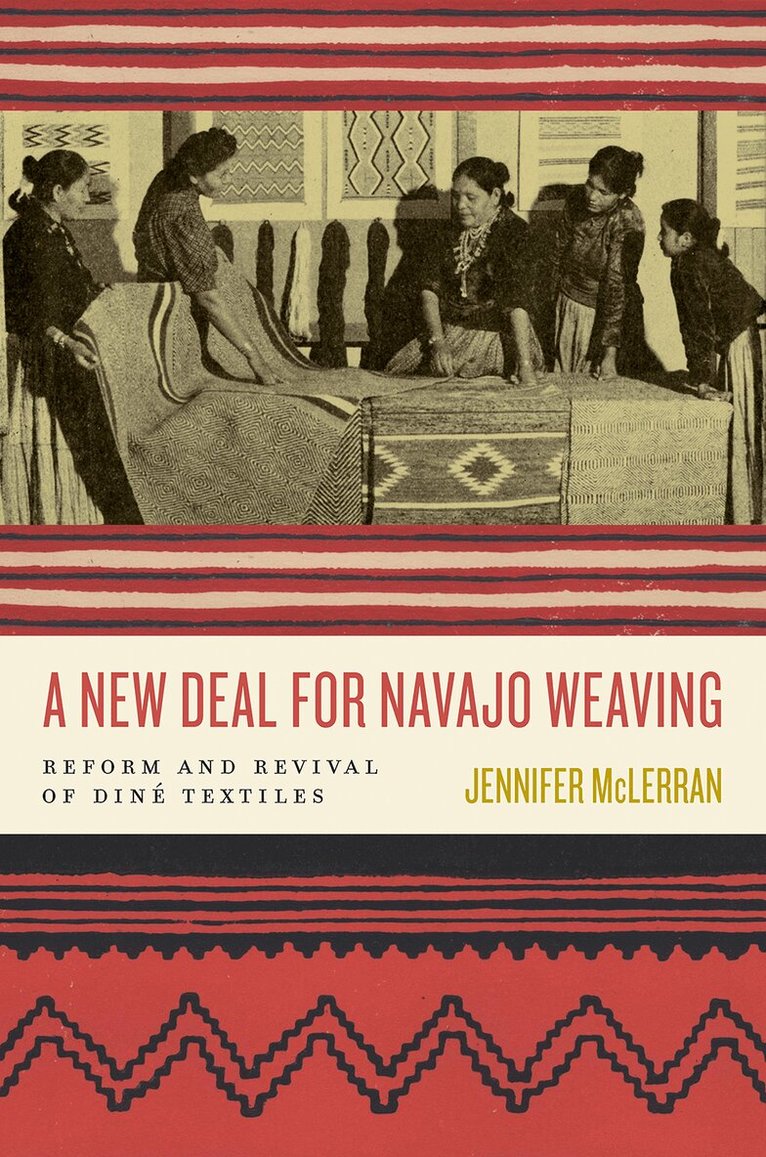
A New Deal for Navajo Weaving provides a detailed history of early to mid-twentieth-century Diné weaving projects by non-Natives who sought to improve the quality and marketability of Navajo weaving but in so doing failed to understand the cultural significance of weaving and its role in the lives of Diné women.By the 1920s the durability and market value of Diné weavings had declined dramatically. Indian welfare advocates established projects aimed at improving the materials and techniques. Private efforts served as models for federal programs instituted by New Deal administrators. Historian Jennifer McLerran details how federal officials developed programs such as the Southwest Range and Sheep Breeding Laboratory at Fort Wingate in New Mexico and the Navajo Arts and Crafts Guild. Other federal efforts included the publication of Native natural dye recipes; the publication of portfolios of weaving designs to guide artisans; and the education of consumers through the exhibition of weavings, aiding them in their purchases and cultivating an upscale market. McLerran details how government officials sought to use these programs to bring the Diné into the national economy; instead, these federal tactics were ineffective because they marginalized Navajo women and ignored the important role weaving plays in the resilience and endurance of wider Diné culture.
520 kr
Skickas inom 3-6 vardagar