Inbunden, Engelska, 2017
509 kr
Skickas inom 5-8 vardagar
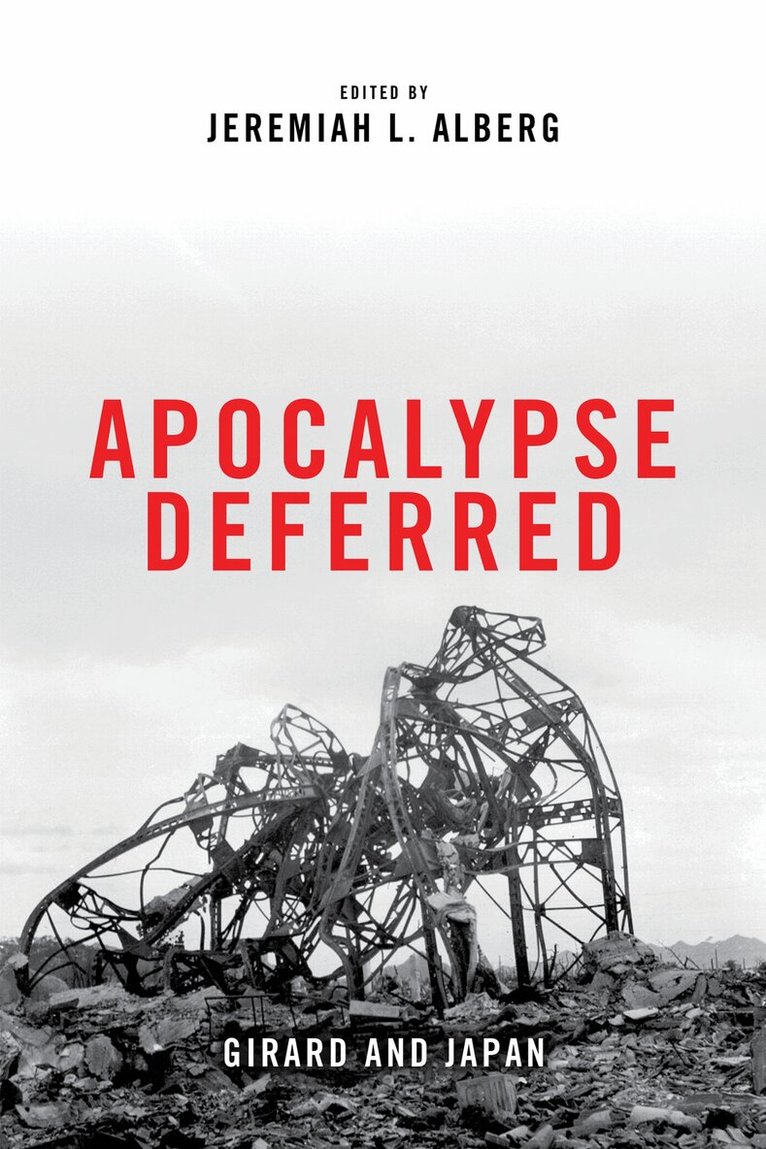
The thought of René Girard on violence, sacrifice, and mimetic theory has exerted a strong influence on Japanese scholars as well as around the world. In this collection of essays, originating from a Tokyo conference on violence and religion, scholars call on Girardian ideas to address apocalyptic events that have marked Japan's recent history as well as other aspects of, primarily, Japanese literature and culture. Girard's theological notion of apocalypse resonates strongly with those grappling with the horrors of Hiroshima and Nagasaki, as well as events such as the 2011 Tōhoku earthquake and tsunami and the Fukushima nuclear disaster. In its focus on Girard and devastating violence, the contributors raise issues of promise and peril for us all.The essays in Part I of the volume are primarily rooted in the events of World War II. The contributors employ mimetic theory to respond to the use of nuclear weapons and the threat of absolute destruction. Essays in Part II cover a wide range of topics in Japanese cultural history from the viewpoint of mimetic theory, ranging from classic and modern Japanese literature to anime. Essays in Part III address theological questions and mimetic theory, especially from a Judeo-Christian perspective. Contributors: Jeremiah L. Alberg, Jean-Pierre Dupuy, Yoko Irie Fayolle, Eric Gans, Sandor Goodhart, Shoichiro Iwakari, Mizuho Kawasaki, Kunio Nakahata, Andreas Oberprantacher, Mery Rodriguez, Thomas Ryba, Richard Schenk, OP, Roberto Solarte, Matthew Taylor, and Anthony D. Traylor.