Jeremy A. Greene - Böcker
Visar alla böcker från författaren Jeremy A. Greene. Handla med fri frakt och snabb leverans.
11 produkter
11 produkter
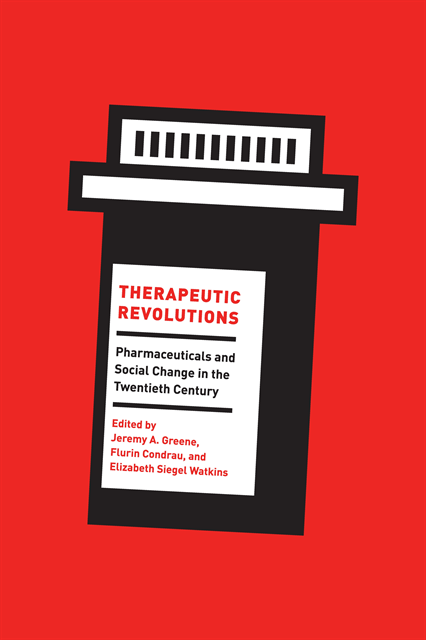
Therapeutic Revolutions
Pharmaceuticals and Social Change in the Twentieth Century
Häftad, Engelska, 2016
361 kr
Skickas inom 7-10 vardagar
When asked to compare the practice of medicine today to that of a hundred years ago, most people will respond with a story of therapeutic revolution: back then we had few effective remedies, now we have more (and more powerful) tools to fight disease, from antibiotics to psychotropics to steroids to anticancer agents. This collection challenges the historical accuracy of this revolutionary narrative and offers instead a more nuanced account of the process of therapeutic innovation and the relationships between the development of medicines and social change. These assembled histories and ethnographies span three continents and use the lived experiences of physicians and patients, consumers and providers, and marketers and regulators to reveal the tensions between universal claims of therapeutic knowledge and the actual ways they have been used and understood in specific sites, from postwar West Germany pharmacies to twenty-first century Nigerian street markets. By asking us to rethink a story we thought we knew, Therapeutic Revolutions offers invaluable insights to historians, anthropologists, and social scientists of medicine.
239 kr
Skickas inom 7-10 vardagar
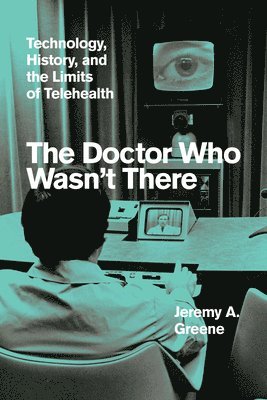
This gripping history shows how the electronic devices we use to access care influence the kind of care we receive.The Doctor Who Wasn’t There traces the long arc of enthusiasm for—and skepticism of—electronic media in health and medicine. Over the past century, a series of new technologies promised to democratize access to healthcare. From the humble telephone to the connected smartphone, from FM radio to wireless wearables, from cable television to the “electronic brains” of networked mainframe computers: each new platform has promised a radical reformation of the healthcare landscape. With equal attention to the history of technology, the history of medicine, and the politics and economies of American healthcare, physician and historian Jeremy A. Greene explores the role that electronic media play, for better and for worse, in the past, present, and future of our health.Today’s telehealth devices are far more sophisticated than the hook-and-ringer telephones of the 1920s, the radios that broadcasted health data in the 1940s, the closed-circuit televisions that enabled telemedicine in the 1950s, or the online systems that created electronic medical records in the 1960s. But the ethical, economic, and logistical concerns they raise are prefigured in the past, as are the gaps between what was promised and what was delivered. Each of these platforms also produced subtle transformations in health and healthcare that we have learned to forget, displaced by promises of ever newer forms of communication that took their place. Illuminating the social and technical contexts in which electronic medicine has been conceived and put into practice, Greene’s history shows the urgent stakes, then and now, for those who would seek in new media the means to build a more equitable future for American healthcare.
358 kr
Skickas inom 7-10 vardagar
Greene provides suggestions on how to address some of the problems inherent in medical prevention.
428 kr
Skickas inom 7-10 vardagar
In a world of growing health inequity and ecological injustice, how do we revitalize medicine and public health to tackle new problems? This groundbreaking collection draws together case studies of social medicine in the Global South, radically shifting our understanding of social science in healthcare. Looking beyond a narrative originating in nineteenth-century Europe, a team of expert contributors explores a far broader set of roots and branches, with nodes in Sub-Saharan Africa, South America, Oceania, the Middle East, and Asia. This plural approach reframes and decolonizes the study of social medicine, highlighting connections to social justice and health equity, social science and state formation, bottom-up community initiatives, grassroots movements, and an array of revolutionary sensibilities. As a truly global history, this book offers a more usable past to imagine a new politics of social medicine for medical professionals and healthcare workers worldwide. This title is also available as open access on Cambridge Core.
1 295 kr
Skickas inom 7-10 vardagar
In a world of growing health inequity and ecological injustice, how do we revitalize medicine and public health to tackle new problems? This groundbreaking collection draws together case studies of social medicine in the Global South, radically shifting our understanding of social science in healthcare. Looking beyond a narrative originating in nineteenth-century Europe, a team of expert contributors explores a far broader set of roots and branches, with nodes in Sub-Saharan Africa, South America, Oceania, the Middle East, and Asia. This plural approach reframes and decolonizes the study of social medicine, highlighting connections to social justice and health equity, social science and state formation, bottom-up community initiatives, grassroots movements, and an array of revolutionary sensibilities. As a truly global history, this book offers a more usable past to imagine a new politics of social medicine for medical professionals and healthcare workers worldwide. This title is also available as open access on Cambridge Core.
1 263 kr
Skickas inom 11-20 vardagar
The Pharmaceutical Studies Reader is an engaging survey of the field that brings together provocative, multi-disciplinary scholarship examining the interplay of medical science, clinical practice, consumerism, and the healthcare marketplace. Draws on anthropological, historical, and sociological approaches to explore the social life of pharmaceuticals with special emphasis on their production, circulation, and consumptionCovers topics such as the role of drugs in shaping taxonomies of disease, the evolution of prescribing habits, ethical dimensions of pharmaceuticals, clinical trials, and drug research and marketing in the age of globalizationOffers a compelling, contextually-rich treatment of the topic that exposes readers to a variety of approaches, ideas, and frameworksProvides an accessible introduction for readers with no previous background in this area
720 kr
Skickas inom 7-10 vardagar
The Pharmaceutical Studies Reader is an engaging survey of the field that brings together provocative, multi-disciplinary scholarship examining the interplay of medical science, clinical practice, consumerism, and the healthcare marketplace. Draws on anthropological, historical, and sociological approaches to explore the social life of pharmaceuticals with special emphasis on their production, circulation, and consumptionCovers topics such as the role of drugs in shaping taxonomies of disease, the evolution of prescribing habits, ethical dimensions of pharmaceuticals, clinical trials, and drug research and marketing in the age of globalizationOffers a compelling, contextually-rich treatment of the topic that exposes readers to a variety of approaches, ideas, and frameworksProvides an accessible introduction for readers with no previous background in this area
Prescribed
Writing, Filling, Using, and Abusing the Prescription in Modern America
Inbunden, Engelska, 2012
685 kr
Tillfälligt slut
America has had a long love affair with the prescription. It is much more than the written "script" or a manufactured medicine, professionally dispensed and taken, and worth hundreds of millions of dollars a year. As an object, it is uniquely illustrative of the complex relations among the producers, providers, and consumers of medicine in modern America. The tale of the prescription is one of constant struggles over and changes in medical and therapeutic authority. Stakeholders across the biomedical enterprise have alternately upheld and resisted, supported and critiqued, and subverted and transformed the power of the prescription. Who prescribes? What do they prescribe? How do they decide what to prescribe? These questions set a society-wide agenda that changes with the times and profoundly shifts the medical landscape.Examining drugs individually, as classes, and as part of the social geography of health care, contributors to this volume explore the history of prescribing, including over-the-counter contraceptives, the patient's experience of filling opioid prescriptions, restraints on physician autonomy in prescribing antibiotics, the patient package insert, and other regulatory issues in medicine during postwar America. The first authoritative look at the history of the prescription itself, "Prescribed" is a groundbreaking book that subtly explores the politics of therapeutic authority and the relations between knowledge and practice in modern medicine.
Prescribed
Writing, Filling, Using, and Abusing the Prescription in Modern America
Häftad, Engelska, 2012
395 kr
Skickas inom 7-10 vardagar
America has had a long love affair with the prescription. It is much more than the written "script" or a manufactured medicine, professionally dispensed and taken, and worth hundreds of millions of dollars a year. As an object, it is uniquely illustrative of the complex relations among the producers, providers, and consumers of medicine in modern America. The tale of the prescription is one of constant struggles over and changes in medical and therapeutic authority. Stakeholders across the biomedical enterprise have alternately upheld and resisted, supported and critiqued, and subverted and transformed the power of the prescription. Who prescribes? What do they prescribe? How do they decide what to prescribe? These questions set a society-wide agenda that changes with the times and profoundly shifts the medical landscape.Examining drugs individually, as classes, and as part of the social geography of health care, contributors to this volume explore the history of prescribing, including over-the-counter contraceptives, the patient's experience of filling opioid prescriptions, restraints on physician autonomy in prescribing antibiotics, the patient package insert, and other regulatory issues in medicine during postwar America. The first authoritative look at the history of the prescription itself, "Prescribed" is a groundbreaking book that subtly explores the politics of therapeutic authority and the relations between knowledge and practice in modern medicine.
337 kr
Skickas inom 7-10 vardagar
Generic drugs are now familiar objects in clinics, drugstores, and households around the world. We like to think of these tablets, capsules, patches, and ointments as interchangeable with their brand-name counterparts: why pay more for the same? And yet they are not quite the same. They differ in price, in place of origin, in color, shape, and size, in the dyes, binders, fillers, and coatings used, and in a host of other ways. Claims of generic equivalence, as physician-historian Jeremy Greene reveals in this gripping narrative, are never based on being identical to the original drug in all respects, but in being the same in all ways that matter. How do we know what parts of a pill really matter? Decisions about which differences are significant and which are trivial in the world of therapeutics are not resolved by simple chemical or biological assays alone. As Greene reveals in this fascinating account, questions of therapeutic similarity and difference are also always questions of pharmacology and physiology, of economics and politics, of morality and belief. Generic is the first book to chronicle the social, political, and cultural history of generic drugs in America.It narrates the evolution of the generic drug industry from a set of mid-twentieth-century "schlock houses" and "counterfeiters" into an agile and surprisingly powerful set of multinational corporations in the early twenty-first century. The substitution of bioequivalent generic drugs for more expensive brand-name products is a rare success story in a field of failed attempts to deliver equivalent value in health care for a lower price. Greene's history sheds light on the controversies shadowing the success of generics: problems with the generalizability of medical knowledge, the fragile role of science in public policy, and the increasing role of industry, marketing, and consumer logics in late-twentieth-century and early twenty-first century health care.
358 kr
Skickas inom 5-8 vardagar
Generic drugs are now familiar objects in clinics, drugstores, and households around the world. We like to think of these tablets, capsules, patches, and ointments as interchangeable with their brand-name counterparts: why pay more for the same? And yet they are not quite the same. They differ in price, in place of origin, in color, shape, and size, in the dyes, binders, fillers, and coatings used, and in a host of other ways. Claims of generic equivalence, as physician-historian Jeremy Greene reveals in this gripping narrative, are never based on being identical to the original drug in all respects, but in being the same in all ways that matter. How do we know what parts of a pill really matter? Decisions about which differences are significant and which are trivial in the world of therapeutics are not resolved by simple chemical or biological assays alone. As Greene reveals in this fascinating account, questions of therapeutic similarity and difference are also always questions of pharmacology and physiology, of economics and politics, of morality and belief. Generic is the first book to chronicle the social, political, and cultural history of generic drugs in America.It narrates the evolution of the generic drug industry from a set of mid-twentieth-century "schlock houses" and "counterfeiters" into an agile and surprisingly powerful set of multinational corporations in the early twenty-first century. The substitution of bioequivalent generic drugs for more expensive brand-name products is a rare success story in a field of failed attempts to deliver equivalent value in health care for a lower price. Greene's history sheds light on the controversies shadowing the success of generics: problems with the generalizability of medical knowledge, the fragile role of science in public policy, and the increasing role of industry, marketing, and consumer logics in late-twentieth-century and early twenty-first century health care.