Jeremy Youde - Böcker
Visar alla böcker från författaren Jeremy Youde. Handla med fri frakt och snabb leverans.
7 produkter
7 produkter
1 989 kr
Skickas inom 5-8 vardagar
Protecting and promoting health is inherently a political endeavor that requires a sophisticated understanding of the distribution and use of power. Yet while the global nature of health is widely recognized, its political nature is less well understood. In recent decades, the interdisciplinary field of global health politics has emerged to demonstrate the interconnections of health and core political topics, including foreign and security policy, trade, economics, and development. Today a growing body of scholarship examines how the global health landscape has both shaped and been shaped by political actors and structures. The Oxford Handbook of Global Health Politics provides an authoritative overview and assessment of research on this important and complicated subject. The volume is motivated by two arguments. First, health is not simply a technical subject, requiring evidence-based solutions to real-world problems, but an arena of political contestation where norms, values, and interests also compete and collide. Second, globalization has fundamentally changed the nature of health politics in terms of the ideas, interests, and institutions involved. The volume comprises more than 30 chapters by leading experts in global health and politics. Each chaper provides an overview of the state of the art on a given theoretical perspective, major actor, or global health issue. The Handbook offers both an excellent introduction to scholars new to the field and also an invaluable teaching and research resource for experts seeking to understand global health politics and its future directions.
1 396 kr
Skickas inom 7-10 vardagar
In the 1980s, health was a marginal issue on the international political agenda, and it barely figured into donor states' foreign aid allocation. Within a generation, health had developed a robust set of governance structures that drive significant global political action, incorporate a wide range of actors, and receive increasing levels of funding. What explains this dramatic change over such a short period of time? Drawing on the English School of international relations theory, this book argues that global health has emerged as a secondary institution within international society. Rather than being a side issue, global health now occupies an important role. Addressing global health issues-financially, organizationally, and politically-is part of how actors demonstrate their willingness and ability to help realize their moral responsibility and obligation to others. In this way, it demonstrates how global health governance has emerged, grown, and persisted-even in the face of global economic challenges and inadequate responses to particular health crises. The book also shows how English School conceptions of international society would benefit from expanding their analytical gaze to address international economic issues and incorporate non-state actors. The book begins by building a case for using the English School to understand the role of global health governance before looking at global health governance's place in international society through case studies about the growth of development assistance for health, the international response to the Ebola outbreak, and China's role within the global health governance framework..
3 698 kr
Skickas inom 10-15 vardagar
This new Handbook presents an overview of cutting-edge research in the growing field of global health security. Over the past decade, the study of global health and its interconnection with security has become a prominent and rapidly growing field of research. Ongoing debates question whether health and security should be linked; which (if any) health issues should be treated as security threats; what should be done to address health security threats; and the positive and negative consequences of ‘securitizing’ health. In academic and policy terms, the health security field is a timely and dynamic one and this handbook will be the first work comprehensively to address this agenda. Bringing together the leading experts and commentators on health security issues from across the world, the volume comprises original and cutting-edge essays addressing the key issues in the field and also highlighting currently neglected avenues for future research. The book intends to provide an accessible yet sophisticated introduction to the key topics and debates and is organised into four key parts: Health Securities: the fundamental conceptual issues, historical links between health and security and the various ways of conceptualising health as a security issue Threats: those health issues which have been most frequently discussed in security terms Responses: the wide range of contemporary security-driven responses to health threats Controversies: the securitization of health, its impact on rights and justice and the potential distortion of the global health agendaThis book will be of great interest to students of global health security, public health, critical security studies, and International Relations in general.
736 kr
Skickas inom 7-10 vardagar
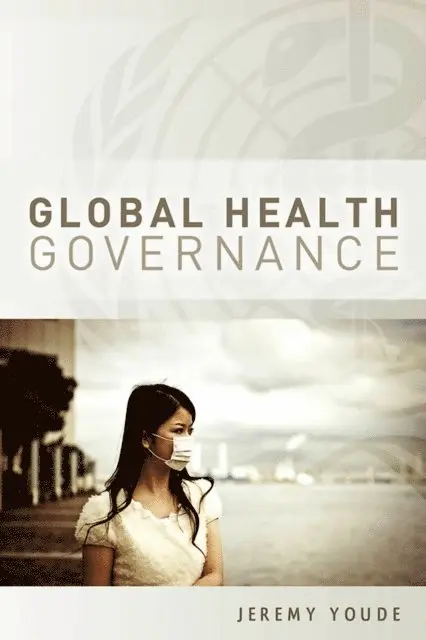
In recent years the spread of diseases such as AIDS, SARS and avian flu has pushed health issues towards the top of the international agenda. Such outbreaks have serious political, economic, and social consequences and remind the world of the necessity of global cooperation in order to deal effectively with the challenges they pose.Global Health Governance offers a comprehensive introduction to the changing international legal environment, the governmental and non-governmental actors involved with health issues, and the current regime’s ability to adapt to new crises. Part 1 focuses on the evolution of international regulations aimed at stopping the spread of health problems across borders. Over the last 150 years, the nature of such cooperation, the motivations of the parties involved, and the diseases covered, has changed radically. Part 2 examines some of the most prominent actors in global health governance today, ranging from traditional intergovernmental organizations, such as the WHO and the World Bank, to private philanthropic organizations that exist outside regular global governance structures. Part 3 concentrates on some of the most pressing issues facing global health governance today, including access to pharmaceuticals, the costs and benefits of making health a security issue, and the role of civil society organizations.Global Health Governance provides an accessible and insightful analysis of an evolving realm of global governance and cooperation. It will appeal to students of global health politics, global governance, international organization, and human security.
382 kr
Skickas inom 5-8 vardagar
In recent years the spread of diseases such as AIDS, SARS and avian flu has pushed health issues towards the top of the international agenda. Such outbreaks have serious political, economic, and social consequences and remind the world of the necessity of global cooperation in order to deal effectively with the challenges they pose.Global Health Governance offers a comprehensive introduction to the changing international legal environment, the governmental and non-governmental actors involved with health issues, and the current regime’s ability to adapt to new crises. Part 1 focuses on the evolution of international regulations aimed at stopping the spread of health problems across borders. Over the last 150 years, the nature of such cooperation, the motivations of the parties involved, and the diseases covered, has changed radically. Part 2 examines some of the most prominent actors in global health governance today, ranging from traditional intergovernmental organizations, such as the WHO and the World Bank, to private philanthropic organizations that exist outside regular global governance structures. Part 3 concentrates on some of the most pressing issues facing global health governance today, including access to pharmaceuticals, the costs and benefits of making health a security issue, and the role of civil society organizations.Global Health Governance provides an accessible and insightful analysis of an evolving realm of global governance and cooperation. It will appeal to students of global health politics, global governance, international organization, and human security.
775 kr
Skickas inom 10-15 vardagar
This new Handbook presents an overview of cutting-edge research in the growing field of global health security. Over the past decade, the study of global health and its interconnection with security has become a prominent and rapidly growing field of research. Ongoing debates question whether health and security should be linked; which (if any) health issues should be treated as security threats; what should be done to address health security threats; and the positive and negative consequences of ‘securitizing’ health. In academic and policy terms, the health security field is a timely and dynamic one and this handbook will be the first work comprehensively to address this agenda. Bringing together the leading experts and commentators on health security issues from across the world, the volume comprises original and cutting-edge essays addressing the key issues in the field and also highlighting currently neglected avenues for future research. The book intends to provide an accessible yet sophisticated introduction to the key topics and debates and is organised into four key parts: Health Securities: the fundamental conceptual issues, historical links between health and security and the various ways of conceptualising health as a security issue Threats: those health issues which have been most frequently discussed in security terms Responses: the wide range of contemporary security-driven responses to health threats Controversies: the securitization of health, its impact on rights and justice and the potential distortion of the global health agendaThis book will be of great interest to students of global health security, public health, critical security studies, and International Relations in general.
436 kr
Skickas inom 10-15 vardagar
It’s a cliché to say that diseases do not respect national borders, but the realities of this aphorism present serious and significant challenges to the global community. Health and disease are intimately connected with the movement of people, goods, and ideas that are emblematic of globalization. This book examines the various dimensions of the intersections between globalization and health, calling attention to the challenges these relationships present and the opportunities for cross-border collaboration and solidarity.