Simon Rushton - Böcker
Visar alla böcker från författaren Simon Rushton. Handla med fri frakt och snabb leverans.
8 produkter
8 produkter
694 kr
Skickas inom 10-15 vardagar
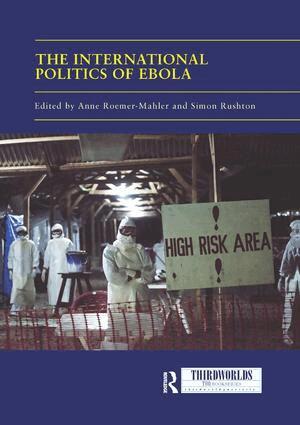
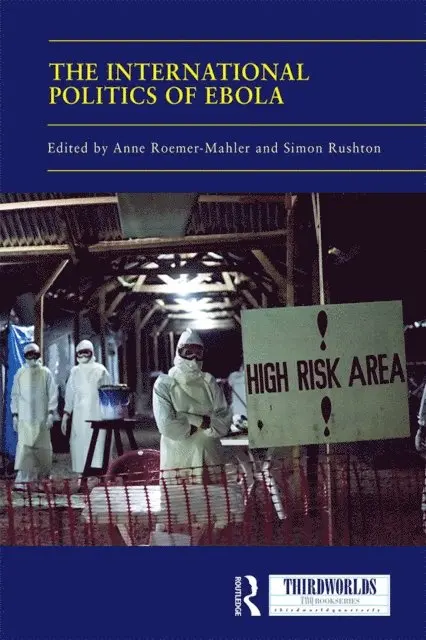
The outbreak of Ebola virus disease that gripped Liberia, Guinea and Sierra Leone through much of 2014 and 2015 was undoubtedly a health emergency, yet it was also a global political event. This book examines the international politics of the Ebola outbreak in all of its dimensions, critically assessing the global response, examining what the outbreak can tell us about contemporary global health governance, and examining the inequalities and injustices that were laid bare. In doing so, the book shows how some of the concepts, debates and findings from the growing field of global health research in International Relations can help both in furthering understanding of the Ebola crisis and also in improving policy responses to future infectious disease outbreaks. This book was originally published as a special edition of Third World Quarterly.
3 653 kr
Skickas inom 10-15 vardagar
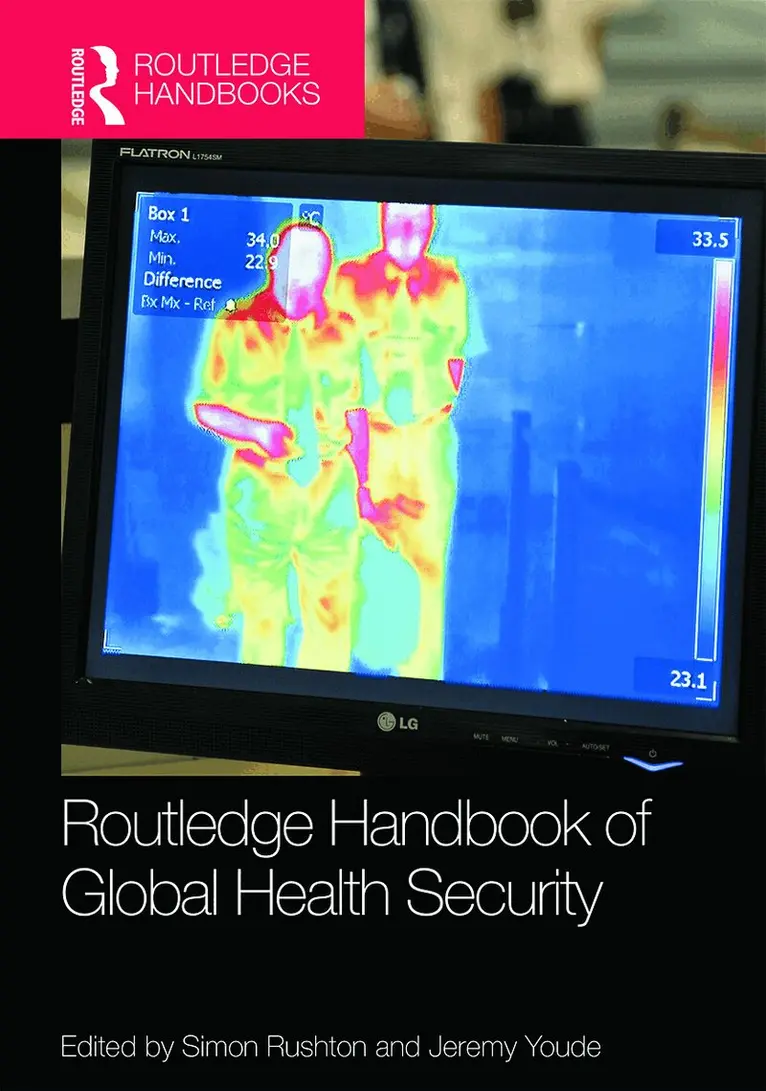
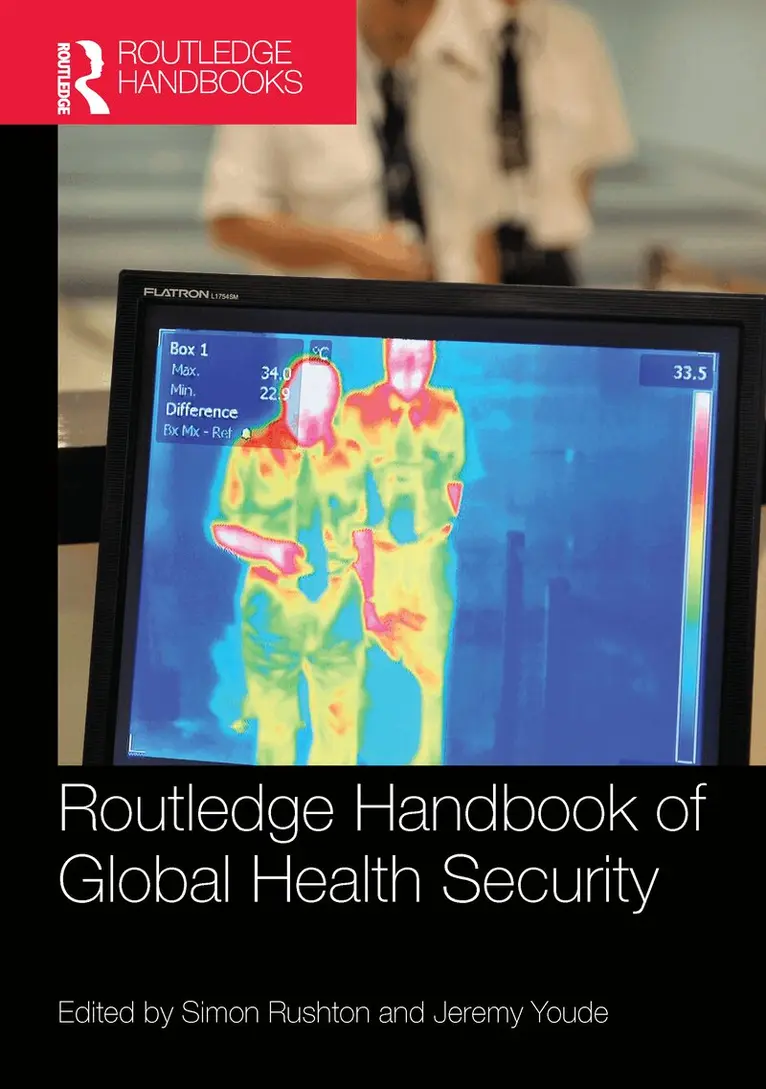
This new Handbook presents an overview of cutting-edge research in the growing field of global health security. Over the past decade, the study of global health and its interconnection with security has become a prominent and rapidly growing field of research. Ongoing debates question whether health and security should be linked; which (if any) health issues should be treated as security threats; what should be done to address health security threats; and the positive and negative consequences of ‘securitizing’ health. In academic and policy terms, the health security field is a timely and dynamic one and this handbook will be the first work comprehensively to address this agenda. Bringing together the leading experts and commentators on health security issues from across the world, the volume comprises original and cutting-edge essays addressing the key issues in the field and also highlighting currently neglected avenues for future research. The book intends to provide an accessible yet sophisticated introduction to the key topics and debates and is organised into four key parts: Health Securities: the fundamental conceptual issues, historical links between health and security and the various ways of conceptualising health as a security issue Threats: those health issues which have been most frequently discussed in security terms Responses: the wide range of contemporary security-driven responses to health threats Controversies: the securitization of health, its impact on rights and justice and the potential distortion of the global health agendaThis book will be of great interest to students of global health security, public health, critical security studies, and International Relations in general.
2 160 kr
Skickas inom 10-15 vardagar
The outbreak of Ebola virus disease that gripped Liberia, Guinea and Sierra Leone through much of 2014 and 2015 was undoubtedly a health emergency, yet it was also a global political event. This book examines the international politics of the Ebola outbreak in all of its dimensions, critically assessing the global response, examining what the outbreak can tell us about contemporary global health governance, and examining the inequalities and injustices that were laid bare. In doing so, the book shows how some of the concepts, debates and findings from the growing field of global health research in International Relations can help both in furthering understanding of the Ebola crisis and also in improving policy responses to future infectious disease outbreaks. This book was originally published as a special edition of Third World Quarterly.
778 kr
Skickas inom 10-15 vardagar
This new Handbook presents an overview of cutting-edge research in the growing field of global health security. Over the past decade, the study of global health and its interconnection with security has become a prominent and rapidly growing field of research. Ongoing debates question whether health and security should be linked; which (if any) health issues should be treated as security threats; what should be done to address health security threats; and the positive and negative consequences of ‘securitizing’ health. In academic and policy terms, the health security field is a timely and dynamic one and this handbook will be the first work comprehensively to address this agenda. Bringing together the leading experts and commentators on health security issues from across the world, the volume comprises original and cutting-edge essays addressing the key issues in the field and also highlighting currently neglected avenues for future research. The book intends to provide an accessible yet sophisticated introduction to the key topics and debates and is organised into four key parts: Health Securities: the fundamental conceptual issues, historical links between health and security and the various ways of conceptualising health as a security issue Threats: those health issues which have been most frequently discussed in security terms Responses: the wide range of contemporary security-driven responses to health threats Controversies: the securitization of health, its impact on rights and justice and the potential distortion of the global health agendaThis book will be of great interest to students of global health security, public health, critical security studies, and International Relations in general.
542 kr
Skickas inom 5-8 vardagar
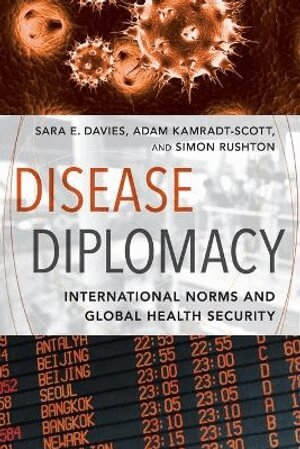
In the age of air travel and globalized trade, pathogens that once took months or even years to spread beyond their regions of origin can now circumnavigate the globe in a matter of hours. Amid growing concerns about such epidemics as Ebola, SARS, MERS, and H1N1, disease diplomacy has emerged as a key foreign and security policy concern as countries work to collectively strengthen the global systems of disease surveillance and control. The revision of the International Health Regulations (IHR), eventually adopted by the World Health Organization's member states in 2005, was the foremost manifestation of this novel diplomacy The new regulations heralded a profound shift in international norms surrounding global health security, significantly expanding what is expected of states in the face of public health emergencies and requiring them to improve their capacity to detect and contain outbreaks.Drawing on Martha Finnemore and Kathryn Sikkink's "norm life cycle" framework and based on extensive documentary analysis and key informant interviews, Disease Diplomacy traces the emergence of these new norms of global health security, the extent to which they have been internalized by states, and the political and technical constraints governments confront in attempting to comply with their new international obligations. The authors also examine in detail the background, drafting, adoption, and implementation of the IHR while arguing that the very existence of these regulations reveals an important new understanding: that infectious disease outbreaks and their management are critical to national and international security. The book will be of great interest to academic researchers, postgraduate students, and advanced undergraduates in the fields of global public health, international relations, and public policy, as well as health professionals, diplomats, and practitioners with a professional interest in global health security.
662 kr
Skickas inom 7-10 vardagar
For most Western governments, defending against the threat of infectious disease is now an accepted security priority. Deciding what resources and policies to put in place to protect populations from pandemics, however, involves difficult political choices. How can we get these decisions right? And what are we prepared to sacrifice to achieve better health security?In this book, Simon Rushton explores the politics of pandemics in the contemporary world. Looking back over three decades of public health, he traces national and international efforts to tackle infectious disease, focusing in-depth on three core areas in which securitization has been particularly successful: rapidly spreading pandemic diseases, HIV/AIDS and man-made pathogenic threats, such as biological weapons. Three central problems raised by common responses to disease as a security threat are then examined: the impact upon individuals and civil liberties; the tendency to treat the symptoms and not the underlying causes of disease outbreaks; and the limited range of diseases deemed worthy of global attention and action. Arguing against a tendency to treat global health security as a technical challenge, the book stresses the need for a vibrant, and even confrontational, political engagement around the implications of securitizing public health.
238 kr
Skickas inom 7-10 vardagar
For most Western governments, defending against the threat of infectious disease is now an accepted security priority. Deciding what resources and policies to put in place to protect populations from pandemics, however, involves difficult political choices. How can we get these decisions right? And what are we prepared to sacrifice to achieve better health security?In this book, Simon Rushton explores the politics of pandemics in the contemporary world. Looking back over three decades of public health, he traces national and international efforts to tackle infectious disease, focusing in-depth on three core areas in which securitization has been particularly successful: rapidly spreading pandemic diseases, HIV/AIDS and man-made pathogenic threats, such as biological weapons. Three central problems raised by common responses to disease as a security threat are then examined: the impact upon individuals and civil liberties; the tendency to treat the symptoms and not the underlying causes of disease outbreaks; and the limited range of diseases deemed worthy of global attention and action. Arguing against a tendency to treat global health security as a technical challenge, the book stresses the need for a vibrant, and even confrontational, political engagement around the implications of securitizing public health.
573 kr
Skickas
What role does dialogue play in peacebuilding? How can community-based activities contribute to broader peace processes? What can participatory research methods add to local efforts to build peace? In this book, the authors examine these questions through their work with two different Colombian communities who have pursued dialogue amidst ongoing violence, environmental injustice and socio-economic challenges. By reflecting on what people in these contrasting places have achieved through participatory peacebuilding, the authors explore different forms of local agency, the prospects for non-extractive academic engagement, and practical and theoretical lessons for participating in peace in other conflict-affected settings.