Jerry F. Hardisty – författare
Visar alla böcker från författaren Jerry F. Hardisty. Handla med fri frakt och snabb leverans.
5 produkter
5 produkter
Inbunden, Engelska, 2026
3 831 kr
Skickas inom 10-15 vardagar
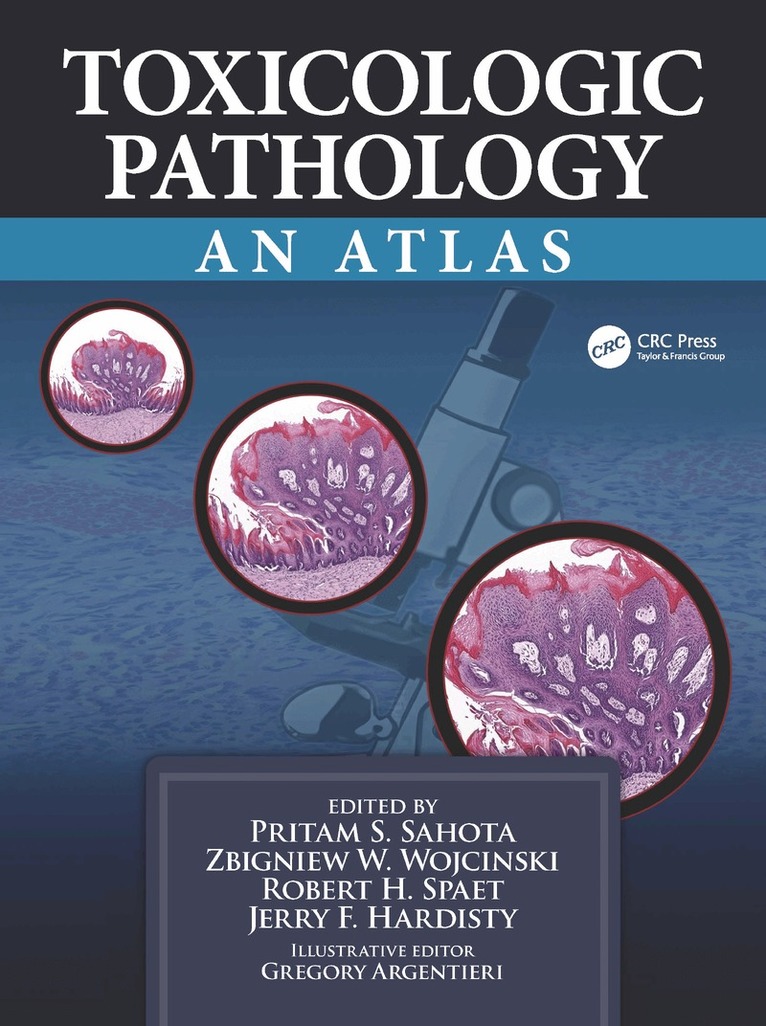
Over the past few decades, there has been an exponential growth of interest in the field of toxicologic pathology, a critical field in safety science, particularly as related to its impact on nonclinical safety in global drug development and care of the environment. Photomicrographic examples of selected nonproliferative and proliferative lesions are necessary to complement the written narratives in textbooks on toxicologic pathology. Toxicologic Pathology: An Atlas fits that need with input provided by top experts in the field. It will become a valuable reference, not only for toxicologic pathologists, but also for a wide variety of nonclinical safety scientists, especially in the pharmaceutical and biotech industries.This book provides illustrations and descriptions of commonly observed findings in toxicologic pathology (i.e., over 1100 photomicrographic examples). These illustrations add visual context to the terms and descriptions commonly used in the field. The illustrations and accompanying descriptions were prepared and peer reviewed by editors and contributors who are known experts in toxicologic pathology, toxicology, and drug development. The Atlas is designed to be practical, easy to use and written with the hope that it will become a reliable "go-to" reference that will be of interest to students and nonscientists (e.g., individuals serving on animal care and use committees) as a key, single source to understanding terminology and visualizing tissue changes described by toxicologic pathologists.
E-bok
PDF, Engelska, 20264 427 kr
Läs direkt efter köp
Over the past few decades, there has been an exponential growth of interest in the field of toxicologic pathology, a critical field in safety science, particularly as related to its impact on nonclinical safety in global drug development and care of the environment. Photomicrographic examples of selected nonproliferative and proliferative lesions are necessary to complement the written narratives in textbooks on toxicologic pathology. Toxicologic Pathology: An Atlas fits that need with input provided by top experts in the field. It will become a valuable reference, not only for toxicologic pathologists, but also for a wide variety of nonclinical safety scientists, especially in the pharmaceutical and biotech industries.This book provides illustrations and descriptions of commonly observed findings in toxicologic pathology (i.e., over 1100 photomicrographic examples). These illustrations add visual context to the terms and descriptions commonly used in the field. The illustrations and accompanying descriptions were prepared and peer reviewed by editors and contributors who are known experts in toxicologic pathology, toxicology, and drug development. The Atlas is designed to be practical, easy to use and written with the hope that it will become a reliable "e;go-to"e; reference that will be of interest to students and nonscientists (e.g., individuals serving on animal care and use committees) as a key, single source to understanding terminology and visualizing tissue changes described by toxicologic pathologists.
E-bok
Engelska, 20264 427 kr
Läs direkt efter köp
Over the past few decades, there has been an exponential growth of interest in the field of toxicologic pathology, a critical field in safety science, particularly as related to its impact on nonclinical safety in global drug development and care of the environment. Photomicrographic examples of selected nonproliferative and proliferative lesions are necessary to complement the written narratives in textbooks on toxicologic pathology. Toxicologic Pathology: An Atlas fits that need with input provided by top experts in the field. It will become a valuable reference, not only for toxicologic pathologists, but also for a wide variety of nonclinical safety scientists, especially in the pharmaceutical and biotech industries.This book provides illustrations and descriptions of commonly observed findings in toxicologic pathology (i.e., over 1100 photomicrographic examples). These illustrations add visual context to the terms and descriptions commonly used in the field. The illustrations and accompanying descriptions were prepared and peer reviewed by editors and contributors who are known experts in toxicologic pathology, toxicology, and drug development. The Atlas is designed to be practical, easy to use and written with the hope that it will become a reliable "e;go-to"e; reference that will be of interest to students and nonscientists (e.g., individuals serving on animal care and use committees) as a key, single source to understanding terminology and visualizing tissue changes described by toxicologic pathologists.
Inbunden, Engelska, 2013
2 911 kr
Tillfälligt slut
As drug development shifts over time to address unmet medical needs and more targeted therapies are developed, previously unseen pharmacological or off-target effects may occur in treatment. Designed to provide practical information for the bench toxicologic pathologist working in pharmaceutical drug research, Toxicologic Pathology: Nonclinical Safety Assessment presents a histopathologic description of lesions observed during drug development and discusses their implication in the drug development process. Divided into two sections, the book systematically assists pathologists in making a determination as to the origin and potential importance of a lesion and its relevance for assessing human risk. The first section includes eight "concept" chapters to orient pathologists in areas that are important for effective interaction with other pathologists as well as the many non-pathologists involved in drug development. The second section is made up of organ-based chapters, each including light microscopic and electron microscopic descriptions of pathological lesions, differential diagnoses, biological consequences, pathogenesis, mechanism of lesion formation, and the expected clinical pathology correlates. This volume presents critical information—both published and unpublished and gained through personal experience—to improve the quality of drug safety evaluation and to expedite and improve the efficiency of the process. This book is crafted to assist students, residents, and toxicologic pathologists in their early career phase by serving as a resource that can effectively be used as a ready reference next to the microscope. In addition, more experienced pathologists will find this volume to be invaluable during their assessments. The book is also a valuable reference for toxicologists to assist in understanding compound-related pathological findings and to provide background for working on a range of toxicological problems.
Inbunden, Engelska, 2018
3 066 kr
Tillfälligt slut
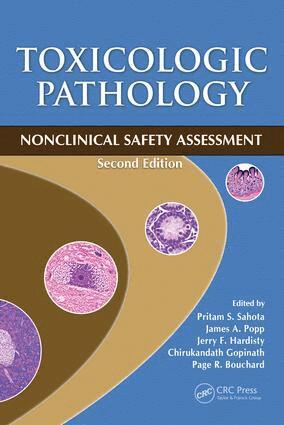
Following the success of the first edition, this book is designed to provide practical and timely information for toxicologic pathologists working in pharmaceutical drug discovery and development. The majority of the book (Organ Systems) will provide detailed descriptions of histopathological lesions observed in drug development. In addition, it will provide information to assist the pathologist in making determinations of the origin of lesions as well as its relevance to human risk.Toxicologic Pathology: Nonclinical Safety Assessment, Second Edition includes 2 new concept chapters. The first of the new chapters address approaches for the evaluation of unique therapeutic modalities such as cell therapies, gene therapies, and gene expression knockdown therapies. While these still represent new developing therapeutic approaches, there has been significant experience with the therapeutic modalities in the last 5 years. The second new chapter addresses the nonclinical safety assessment of medical devices, a topic of increasing importance that was not addressed in a unique chapter in the first edition. The other concept chapters have been updated and cover important topics including the overview of drug development; principles of nonclinical safety assessment; an introduction to toxicologic pathology; techniques used in toxicologic pathology, clinical pathology, toxicokinetics, and drug development toxicogenomics; and spontaneous lesions. The 13 organ system chapters provide the specifics related to pathologic characteristics, differential diagnosis, and interpretation of toxic responses in each organ system. These chapters are specifically important for the bench pathologist but also for the toxicologist who interacts with pathologists and function as study toxicologists and project team representatives in the drug development arena.