Jesse Prinz - Böcker
Visar alla böcker från författaren Jesse Prinz. Handla med fri frakt och snabb leverans.
3 produkter
3 produkter
1 095 kr
Skickas inom 5-8 vardagar
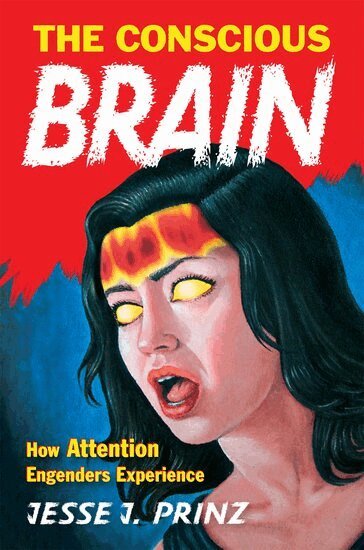
Synthesizing decades of research, The Conscious Brain advances a theory of the psychological and neurophysiological correlates of conscious experience. In the first part of the book, Prinz argues that consciousness always arises at a particular stage of perceptual processing, the intermediate level, and that consciousness depends on attention. Attention changes the flow of information and that gives rise to experience. The resulting account is called the AIR Theory, for attended intermediate-level representations. Objections to the theory are addressed. In the second part of the book, Prinz argues that all consciousness is perceptual: there is no cognitive phenomenology, no experience of motor commands, and no experience of a conscious self. This conclusions challenge popular theories in consciousness studies: the view that we can directly experience our thoughts, the view that consciousness essentially involves action, and the view that every experience includes awareness of the subject having that experience. In the third part of the book, Prinz explores the neural correlates of consciousness. He argues attention-hence consciousness-arises when populations of neurons fire in synchrony, and he responds to those who deny that consciousness could be a process in the brain. Along the way, Prinz also advances novel theories of qualia, the function of consciousness, the unity of consciousness, and the mind-body relation, defending a view called neurofunctionism. Each chapter in The Conscious Brain brings neuroscientific evidence to bear on enduring philosophical questions. Major philosophical and scientific theories of consciousness are surveyed, challenged, and extended.
1 025 kr
Skickas inom 5-8 vardagar
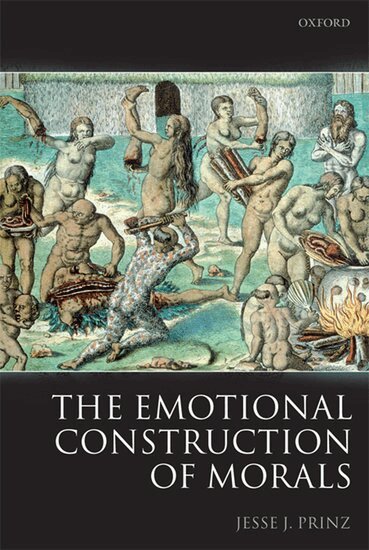
Jesse Prinz argues that recent work in philosophy, neuroscience, and anthropology supports two radical hypotheses about the nature of morality: moral values are based on emotional responses, and these emotional responses are inculcated by culture, not hard-wired through natural selection. In the first half of the book, Jesse Prinz defends the hypothesis that morality has an emotional foundation. Evidence from brain imaging, social psychology, and psychopathology suggest that, when we judge something to be right or wrong, we are merely expressing our emotions. Prinz argues that these emotions do not track objective features of reality; rather, the rightness and wrongness of an act consists in the fact that people are disposed to have certain emotions towards it. In the second half of the book, he turns to a defence of moral relativism. Moral facts depend on emotional responses, and emotional responses vary from culture to culture. Prinz surveys the anthropological record to establish moral variation, and he draws on cultural history to show how attitudes toward practices such as cannibalism and marriage change over time. He also criticizes evidence from animal behaviour and child development that has been taken to support the claim that moral attitudes are hard-wired by natural selection. Prinz concludes that there is no single true morality, but he also argues that some moral values are better than others; moral progress is possible. Throughout the book, Prinz relates his views to contemporary and historical work in philosophical ethics. His views echo themes in the writings of David Hume and Friedrich Nietzsche, but Prinz supports, extends, and revises these classic theories using the resources of cutting-edge cognitive science. The Emotional Construction of Morals will stimulate and challenge anyone who is curious about the nature and origin of moral values
410 kr
Skickas inom 5-8 vardagar
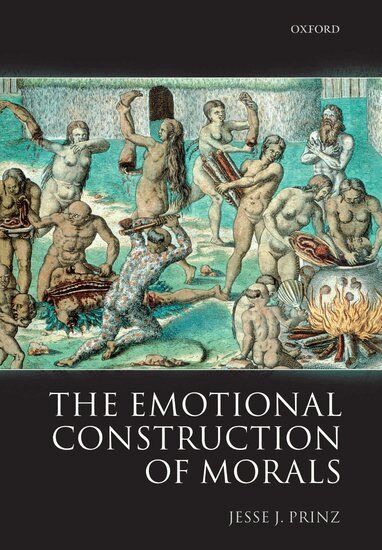
Jesse Prinz argues that recent work in philosophy, neuroscience, and anthropology supports two radical hypotheses about the nature of morality: moral values are based on emotional responses, and these emotional responses are inculcated by culture, not hard-wired through natural selection. In the first half of the book, Jesse Prinz defends the hypothesis that morality has an emotional foundation. Evidence from brain imaging, social psychology, and psychopathology suggest that, when we judge something to be right or wrong, we are merely expressing our emotions. Prinz argues that these emotions do not track objective features of reality; rather, the rightness and wrongness of an act consists in the fact that people are disposed to have certain emotions towards it. In the second half of the book, he turns to a defence of moral relativism. Moral facts depend on emotional responses, and emotional responses vary from culture to culture. Prinz surveys the anthropological record to establish moral variation, and he draws on cultural history to show how attitudes toward practices such as cannibalism and marriage change over time. He also criticizes evidence from animal behaviour and child development that has been taken to support the claim that moral attitudes are hard-wired by natural selection. Prinz concludes that there is no single true morality, but he also argues that some moral values are better than others; moral progress is possible. Throughout the book, Prinz relates his views to contemporary and historical work in philosophical ethics. His views echo themes in the writings of David Hume and Friedrich Nietzsche, but Prinz supports, extends, and revises these classic theories using the resources of cutting-edge cognitive science. The Emotional Construction of Morals will stimulate and challenge anyone who is curious about the nature and origin of moral values.